Temporary and semi-permanent bridge projects require structural components that combine strength, repeatability, fast installation, transport efficiency, and dependable quality. Among the most important components in a modular steel bridge system is the Bailey bridge panel. These panels form the primary truss units that transfer bending, shear, compression, and tension forces through the assembled bridge. Their geometry, material quality, connection accuracy, and fabrication consistency directly influence the safety, service life, and construction efficiency of the complete bridge.
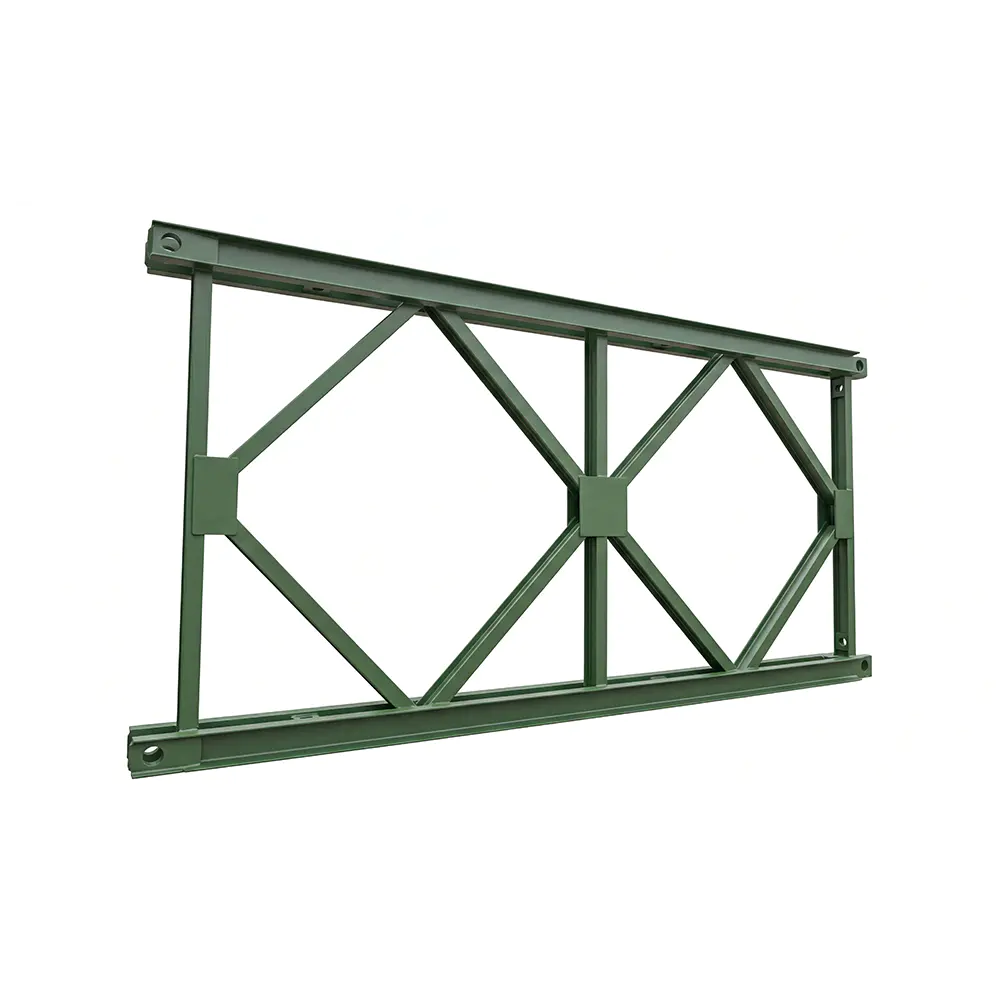
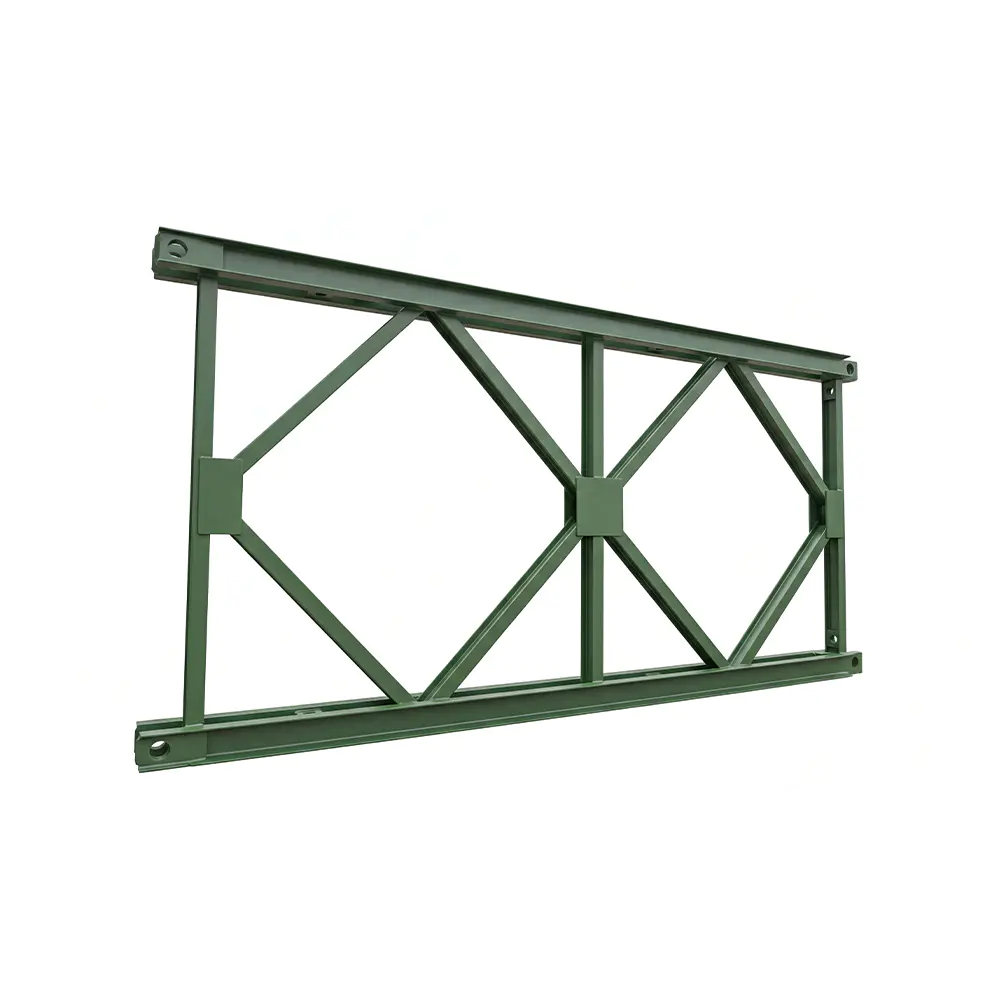
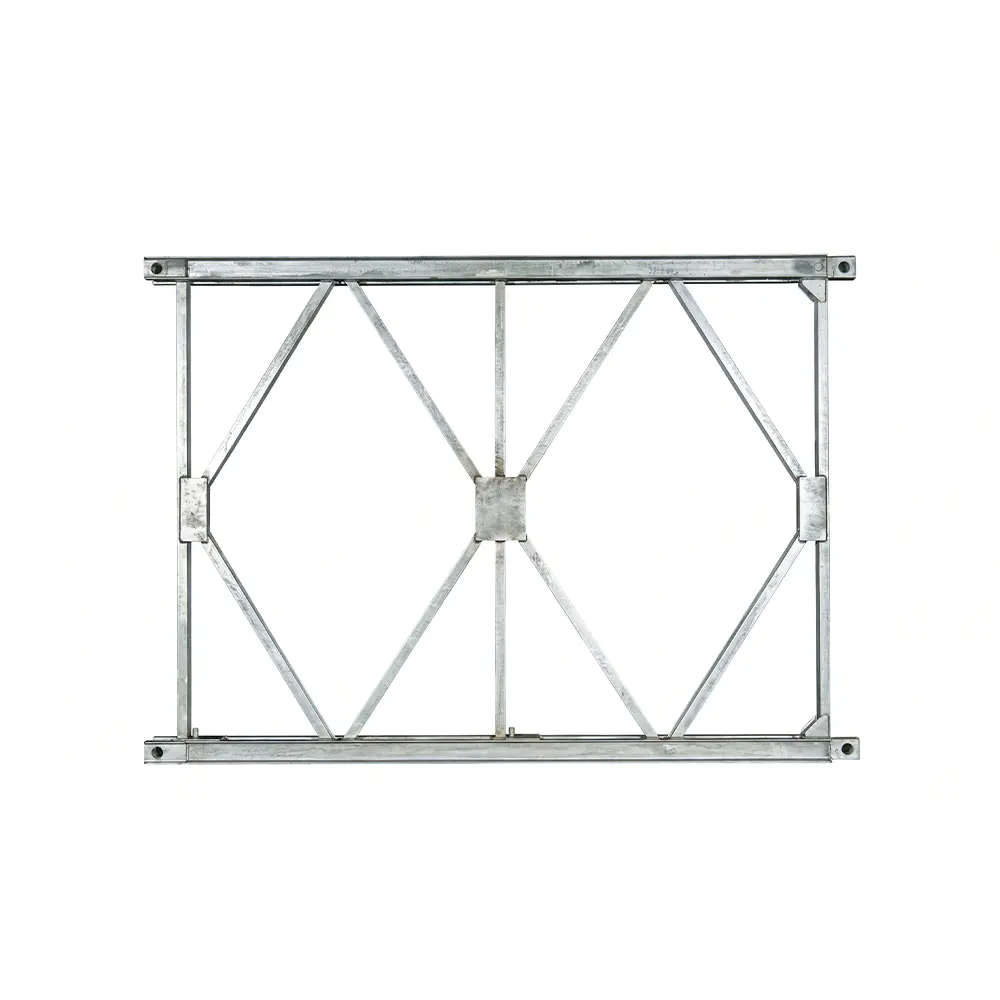
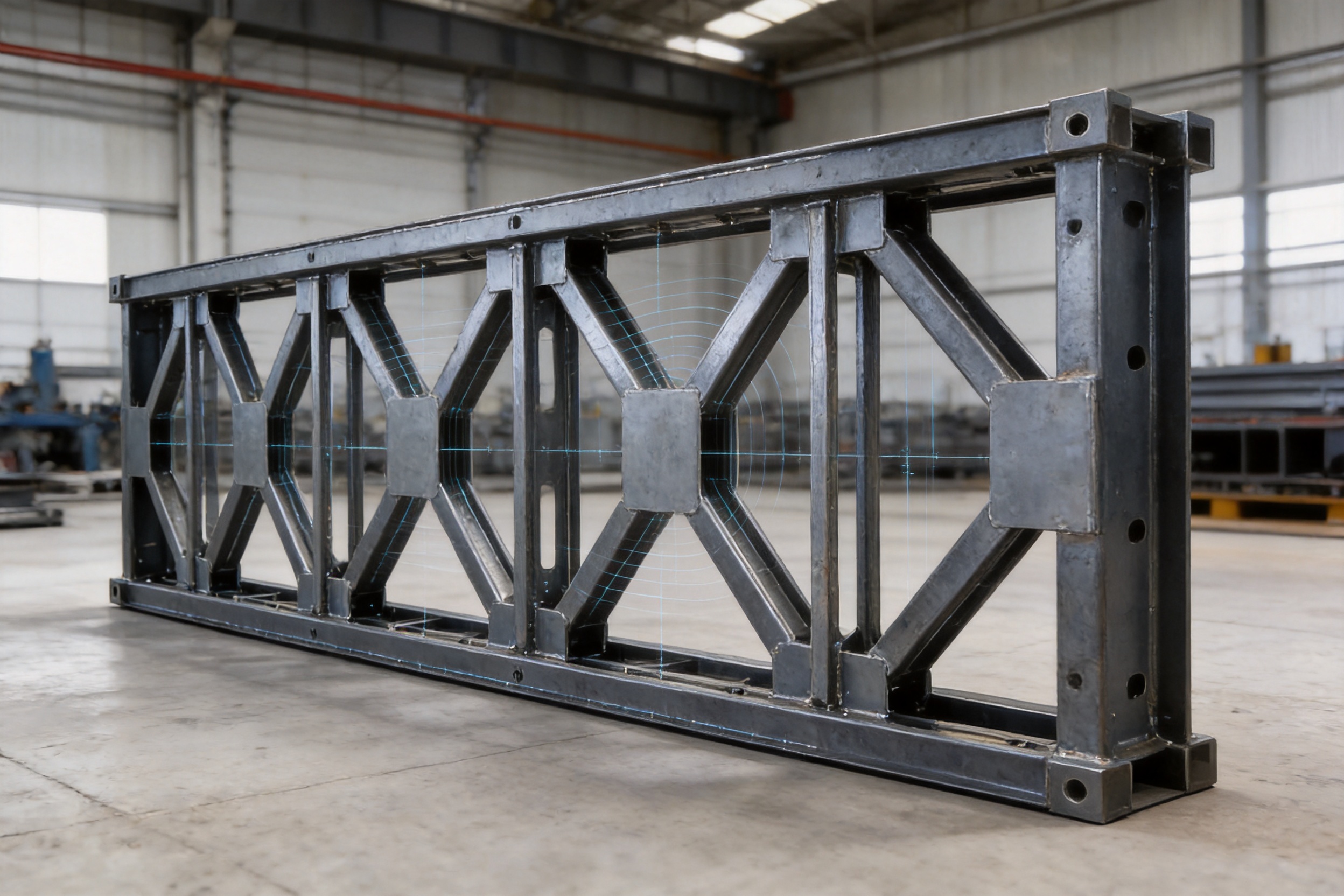
The ZK-Bailey Bridge Panel is a reinforced modular truss panel designed for demanding bridge construction, emergency access, temporary transportation routes, municipal works, water conservancy projects, railway support works, and other engineered steel applications. Its reinforced configuration uses rectangular tubes for the vertical and diagonal members, while the channel steel is strengthened with externally attached steel plates. This structural arrangement increases the load-resisting capacity of the panel while preserving the modular character that makes Bailey bridge systems practical in the field.
Compared with conventional panel arrangements, the reinforced design achieves a reported overall structural bending moment of 1593.2 kN·m and a shear force of 384.6 kN. These values represent approximately a 1.54-fold improvement in bending performance and a 1.73-fold improvement in shear performance. The result is a panel that is better suited to higher loading demands, longer service requirements, challenging site conditions, and bridge configurations where structural reserve capacity is important.
What Is a Bailey Bridge Panel?
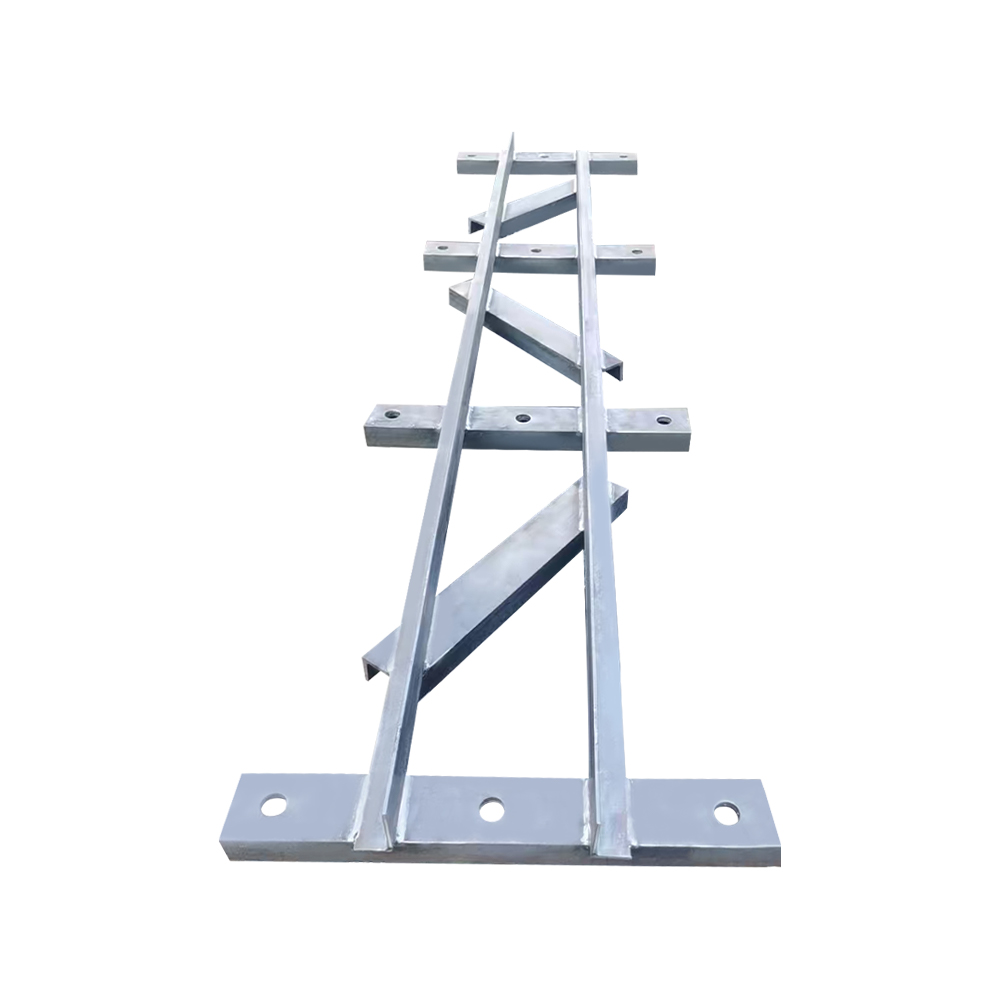
A Bailey bridge panel is a prefabricated steel truss unit used to assemble modular bridges without requiring the complete bridge to be fabricated as one large structure. Individual panels are connected longitudinally and transversely to create a continuous bridge truss. Depending on the bridge design, panels can be arranged as single, double, triple, or other reinforced configurations to meet span and loading requirements.
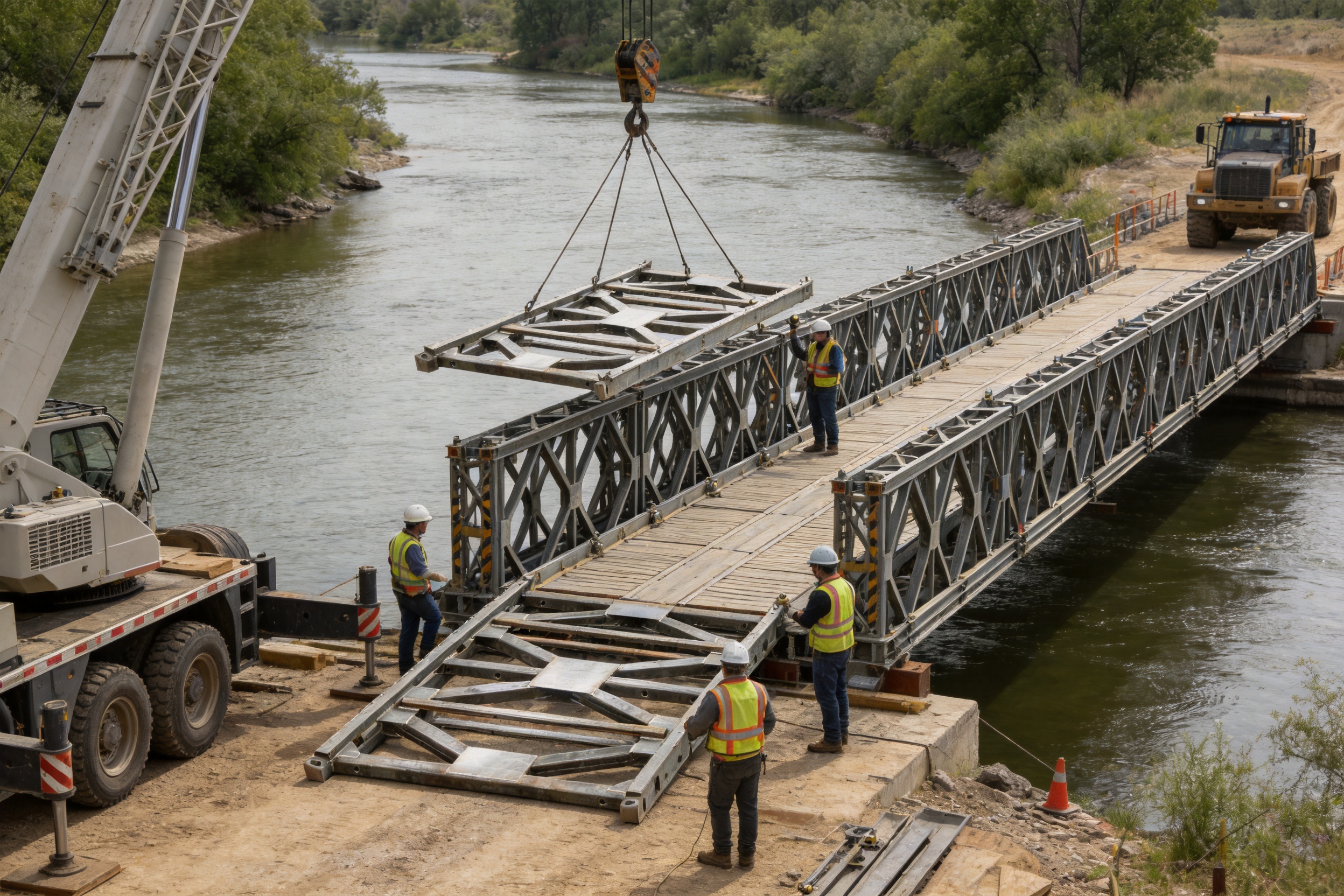
The modular principle provides several practical benefits. Components can be manufactured under controlled factory conditions, transported to the project site in manageable units, and assembled using standardized connections. This reduces the amount of heavy fabrication required at the construction site. It also enables components to be dismantled, relocated, reused, or stored for future emergency and infrastructure projects.
A Bailey panel must perform more than a simple supporting function. It forms part of a structural system that may experience vehicle loading, wind pressure, impact effects, vibration, temperature changes, erection-stage forces, and repeated assembly and disassembly. The panel therefore requires an appropriate balance between strength, stiffness, dimensional precision, weld quality, surface protection, and connection reliability.
The ZK-Bailey Bridge Panel is designed around this balance. Its structural configuration increases the performance of the main load-carrying members while maintaining the recognizable dimensions and modular logic required for integration with a wider Bailey bridge system.
Product Structure and Main Specifications
The panel uses rectangular tubes for the vertical and diagonal members. Compared with lighter or less rigid member arrangements, rectangular tubes can provide efficient resistance in multiple directions and can improve the stability of the truss framework. Their closed-section geometry also contributes to a clean, compact structural profile and allows the panel to maintain a consistent external envelope.
The channel steel portion is reinforced by externally attached steel plates. This reinforcement increases the effective steel area in critical regions and improves the capacity of the panel to resist bending and shear. The external plates also provide a practical way to strengthen the panel without changing the overall modular concept or requiring a completely different bridge assembly method.
Item |
Specification |
Product |
ZK-Bailey Bridge Panel |
Outer dimensions |
3163 × 2234 × 176 mm |
Center distance dimensions |
3048 × 2134 mm |
Primary material |
Q355B structural steel |
Reported bending moment |
1593.2 kN·m |
Reported shear force |
384.6 kN |
Vertical and diagonal members |
Rectangular tubes |
Channel reinforcement |
Externally attached steel plates |
The outer dimensions determine the physical envelope required for transportation, storage, lifting, and assembly. The center distance dimensions are especially important during bridge planning because they define the principal spacing between corresponding structural reference points. Accurate control of these dimensions ensures that panels can be connected consistently and that the completed truss remains aligned with the bridge deck, transoms, bracing, and other modular components.
Because Bailey bridges are assembled from repeated units, dimensional variation can accumulate over the length of a bridge. A small deviation in one panel may become a larger alignment problem when many panels are connected in sequence. Factory-controlled production and inspection are therefore essential to maintain interchangeability and reduce adjustment work at the project site.
Q355B Steel for Structural Reliability
The panel is manufactured from Q355B steel, a widely used structural steel grade for engineered steel products. The designation indicates a nominal yield strength level appropriate for load-bearing structural applications, while the “B” quality classification is associated with defined material requirements and impact performance under specified conditions. The actual design and use of the panel must always be evaluated according to the applicable project standards, load combinations, connection details, and environmental conditions.
Material selection affects more than nominal strength. A suitable structural steel must also provide consistent weldability, predictable forming behavior, resistance to brittle failure under applicable service conditions, and reliable performance during fabrication. Q355B is commonly selected for structural members where a combination of strength, fabrication suitability, and availability is required.
For a modular panel, material traceability is particularly valuable. Each batch of steel should be associated with relevant material documentation, production records, and inspection results. Traceability supports quality control throughout cutting, forming, welding, assembly, and final inspection. It also helps project owners and contractors organize maintenance records when panels are used repeatedly or transferred between projects.
In practical terms, the use of Q355B allows the reinforced panel to achieve higher structural performance without relying solely on a substantial increase in overall dimensions. This can help preserve compatibility with modular bridge systems while improving the capacity of the individual panel.
Enhanced Bending Performance
Bending resistance is a central consideration in bridge truss design. When a bridge spans between supports, the assembled truss must resist global bending caused by traffic, equipment, construction loads, and other applied forces. The top and bottom chords generally develop compression and tension forces, while the web members distribute and transfer shear through the truss.
The reported structural bending moment of the reinforced panel is 1593.2 kN·m. This represents a 1.54-fold improvement compared with the reference performance of the corresponding conventional configuration. The improvement indicates that the reinforced arrangement can provide greater resistance to global flexural demand, subject to the complete bridge design and applicable engineering verification.
The external steel plates attached to the channel steel contribute to the increased section capacity. By adding material in structurally effective locations, the reinforcement can increase the section modulus and improve the ability of the member to resist bending stresses. The rectangular tube members also contribute to the rigidity of the panel framework and help maintain the geometric stability of the truss.
Higher bending capacity can be advantageous in several situations. It may allow engineers to evaluate longer spans, greater live loads, more demanding construction sequences, or additional design reserve. It can also be useful where the bridge must accommodate variations in vehicle loading or where the temporary bridge is expected to remain in place for an extended period.
However, bending performance should never be considered in isolation. The complete bridge must be checked for deflection, buckling, lateral stability, connection capacity, bearing conditions, fatigue effects, deck behavior, foundation response, and erection-stage stability. The panel provides a high-performance building block, but bridge safety depends on the complete engineered system.
Increased Shear Capacity
Shear forces are particularly important near supports, at panel connections, around loading points, and in short-span bridge arrangements. A truss panel must transfer vertical reactions and distribute forces through its diagonal and vertical members. Localized shear demand can become critical when heavy vehicles, construction equipment, or concentrated loads pass close to supports.
The reinforced panel has a reported shear force capacity of 384.6 kN, representing approximately a 1.73-fold improvement in performance. This improvement is greater than the reported increase in bending performance, highlighting the effectiveness of the reinforced member arrangement in resisting transverse and web-related forces.
Rectangular tubes used for the vertical and diagonal members provide a stable cross-section for force transfer. Their geometry can improve resistance to local distortion and contribute to more predictable load paths. The externally attached steel plates further increase the strength of the channel steel in areas where shear transfer and connection behavior are important.
Improved shear capacity may provide additional flexibility when planning bridge supports, launching operations, temporary access roads, and construction-stage loading. It can also enhance the robustness of the bridge when vehicle positions vary or when the bridge experiences dynamic effects caused by traffic movement.
As with bending, the stated shear value should be used as part of a complete design verification rather than as a standalone project approval. Engineers should assess the load path from the deck through transoms and panels to bearings, piers, foundations, and the ground. Connection resistance, local buckling, bearing stress, bolt behavior, and interaction between bending and shear must also be evaluated.
Advantages Over Conventional and Lower-Capacity Panel Designs
The principal advantage of the reinforced panel is its increased structural performance within a modular format. Some high-capacity bridge systems require substantially heavier or more specialized components. In contrast, the reinforced configuration strengthens critical members while retaining the practical dimensions needed for prefabricated bridge assembly.
The following advantages distinguish the panel from conventional or lightly reinforced alternatives:
Higher bending resistance: The reported bending moment of 1593.2 kN·m gives the panel greater capacity to resist global flexural demand than the reference design. This can be valuable for heavy-duty temporary bridges and projects where structural reserve is a priority.
Higher shear resistance: A reported shear force of 384.6 kN provides improved performance near supports and high-shear regions. The 1.73-fold improvement is particularly relevant to short spans, heavy loading, and concentrated reaction zones.
Efficient reinforcement: External steel plates strengthen the channel steel without abandoning the modular panel concept. This approach can improve load-bearing capacity while avoiding a complete redesign of the field assembly process.
Stable member geometry: Rectangular tubes provide efficient vertical and diagonal members with resistance in more than one principal direction. Their closed profiles can also help reduce susceptibility to certain forms of local distortion.
Standardized dimensions: The defined outer and center distance dimensions support repeatable fabrication and systematic bridge planning. Standardization is important when panels must be combined with other modular bridge components.
Reusable construction value: A properly fabricated steel panel can be dismantled, inspected, stored, and reused. This is advantageous for contractors, government agencies, emergency response organizations, and infrastructure owners managing multiple projects.
Reduced site fabrication: Factory-manufactured panels arrive as prepared structural units. Site personnel can focus on foundation preparation, lifting, bolting, alignment, deck installation, and final inspection instead of performing extensive steel fabrication beside the bridge.
Adaptability: Bailey panels can be configured for temporary bridges, emergency crossings, semi-permanent access, construction access, guide beams, support structures, and other engineered applications, subject to design verification.
Transport practicality: Modular panels can be moved using ordinary project logistics planning more easily than a fully assembled bridge. Their manageable dimensions support phased delivery to remote or difficult sites.
These advantages do not mean that a reinforced panel is automatically suitable for every span or load condition. They mean that the panel offers a stronger and more versatile starting point for a properly engineered modular bridge system.
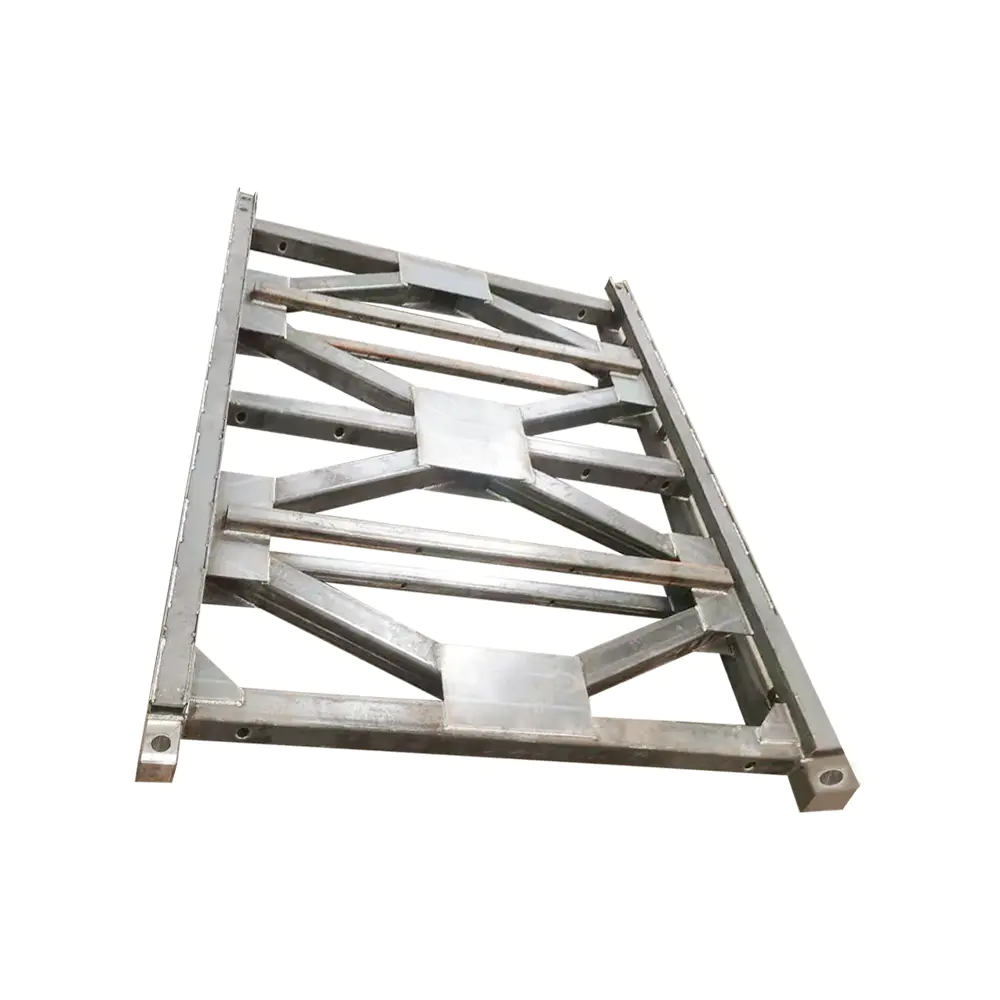
ZK-Bailey Bridge Panel
Manufacturing Approach and Process Control
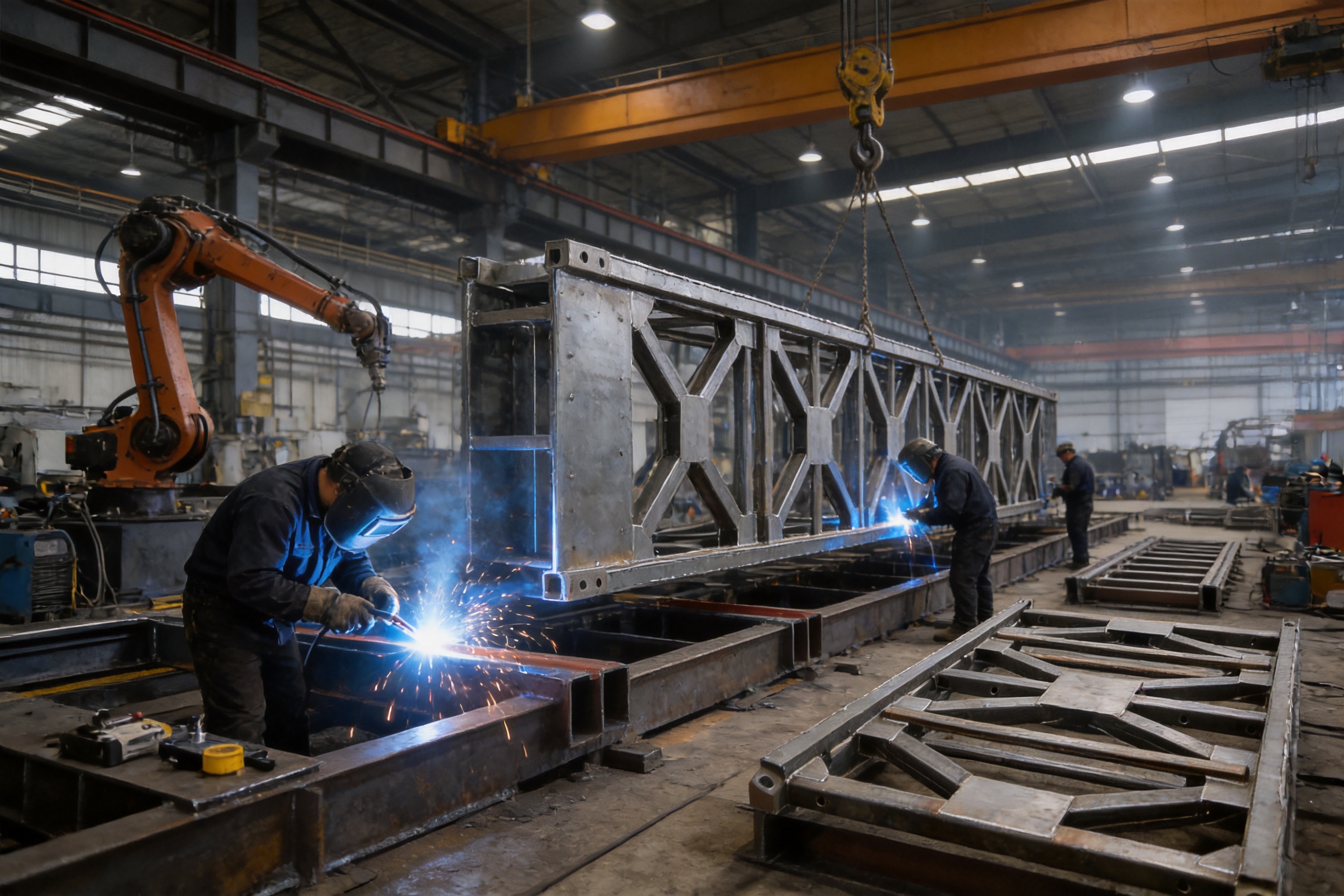
The performance of a steel bridge panel depends on the relationship between design, material, fabrication, and inspection. A strong specification can be undermined by inaccurate cutting, poor fit-up, inconsistent welding, distortion, inadequate surface preparation, or incomplete final inspection. For this reason, manufacturing must be organized as a controlled sequence rather than as a collection of isolated workshop activities.
The manufacturing process begins with technical review. Production personnel examine drawings, dimensions, material grades, connection details, reinforcement locations, welding requirements, tolerances, lifting points, and inspection requirements. This review helps identify potential fabrication conflicts before steel is cut. It also provides an opportunity to confirm how the panel will integrate with associated bridge components.
Material Receiving and Identification
When Q355B steel enters production, the material should be checked against purchasing and technical documents. Plate thickness, tube dimensions, channel sections, surface condition, and heat or batch identification should be recorded. Material identification must be preserved throughout processing so that finished members can be traced back to their source.
Visible defects, excessive corrosion, lamination indications, edge damage, or dimensional irregularities should be evaluated before fabrication. Proper material receiving procedures reduce the chance that unsuitable steel will enter the cutting and welding stages.
Precision Cutting
Accurate cutting is important because the panel contains repeated members that must meet at controlled angles and connection locations. CNC or other controlled cutting equipment can be used to produce consistent lengths, end preparations, holes, and profiles. Accurate cutting reduces manual correction, supports better fit-up, and helps limit cumulative dimensional error.
Cut edges should be checked for excessive roughness, thermal damage, unwanted notches, or deviations from the required profile. Where welding preparation is required, bevel geometry and root conditions should be controlled to support complete and consistent welds.
Forming and Component Preparation
Rectangular tubes, channel steel, and reinforcement plates must be prepared so that their contact surfaces and connection areas are suitable for assembly. Plates may require straightening, drilling, edge preparation, or controlled forming. The objective is to produce components that fit accurately in jigs and fixtures without excessive force or uncontrolled gaps.
Controlled preparation is especially important for external reinforcement plates. If a reinforcement plate is not positioned correctly, its contribution to section strength may be reduced and local stress concentrations may develop. Correct alignment also helps preserve the intended outer dimensions of the panel.
Jig-Based Assembly
Jigs and fixtures support repeatability during assembly. A properly designed fixture holds the chord, vertical members, diagonal members, channel sections, and reinforcement plates in their intended positions before final welding. This reduces dependence on visual estimation and helps maintain panel squareness, member spacing, connection locations, and overall geometry.
Jig-based production is especially beneficial for a modular product because many panels may be manufactured for one bridge or for inventory. Repeated use of controlled fixtures helps each panel remain interchangeable. It also improves production efficiency by reducing repeated measuring and manual rechecking.
Controlled Welding
Welding is one of the most important stages in steel panel production. Welded joints must provide reliable force transfer between the primary members and reinforcement components. Welding procedures should be selected according to the steel grade, thickness, joint configuration, required penetration, expected loading, and applicable standards.
Good welding control includes appropriate joint preparation, clean surfaces, correct consumables, suitable preheating where required, controlled heat input, appropriate welding sequence, and inspection of completed welds. Welders should follow approved procedures and maintain consistency across repeated panels.
Welding sequence also affects distortion. If heat is introduced unevenly, the panel may warp or develop out-of-square conditions. Balanced welding, temporary restraints, staged assembly, and controlled cooling can reduce distortion. When correction is necessary, it should be carried out using approved methods that do not compromise the steel or welds.
Dimensional Inspection and Correction
After primary welding, the panel should be checked for overall length, height, width, diagonal dimensions, center distances, member alignment, connection positions, and local distortion. Inspection equipment may include calibrated measuring tools, templates, levels, squares, and appropriate dimensional control instruments.
Dimensional inspection is not merely a cosmetic activity. Incorrect geometry can affect bridge alignment, deck installation, bolt fit-up, load distribution, and the ability of adjacent panels to connect. Early correction is more efficient than attempting to resolve alignment problems during field erection.
Weld and Surface Inspection
Visual inspection is a basic requirement for identifying undercut, overlap, cracks, porosity, incomplete fusion indications, excessive spatter, and other visible conditions. Depending on project requirements, additional non-destructive testing may be applied to selected or critical welds. Possible methods include magnetic particle, ultrasonic, or other suitable inspection techniques.
Inspection planning should reflect the structural importance of the joint, the loading condition, the weld type, and the governing project standard. Inspection records should be retained with production documentation so that each completed panel has a clear quality history.
Surface Preparation and Protective Coating
Steel bridge panels may be exposed to rain, humidity, mud, deicing materials, industrial atmospheres, or coastal conditions. Surface protection is therefore important for maintaining long-term durability. Before coating, the steel surface should be cleaned and prepared to remove oil, rust, scale, weld spatter, and other contaminants.
The coating system should be selected according to the intended service environment, expected exposure, maintenance plan, and customer requirements. Proper application requires controlled surface cleanliness, suitable environmental conditions, correct coating thickness, adequate curing, and inspection for holidays, runs, thin areas, and damage.
Edges, welds, corners, bolt areas, and reinforcement interfaces often require special attention because they can be more difficult to coat uniformly. Good coating practice helps reduce corrosion and preserves the structural section over repeated use.
Final Assembly and Load-Path Review
Before dispatch, representative components or completed panels may be checked for connection fit, bolt-hole alignment, interface dimensions, lifting arrangements, and compatibility with related modular parts. This final stage provides an opportunity to confirm that the panel remains practical for field erection.
A load-path review can also help identify whether the fabricated geometry reflects the design intent. Members should meet at the expected nodes, reinforcement should be properly integrated, and no unauthorized modifications should be present. Final release should be based on documented inspection results rather than appearance alone.
Engineering Strengths of the Manufacturer
Zhenjiang Jinhao Road & Bridge Supporting Engineering Co., Ltd. is a China-based enterprise involved in the design, manufacturing, erection, and leasing of Bailey bridges, bridge launching gantry systems, hanging baskets, pier formwork, and steel formwork products. Its development from construction material and metal processing activities into a broader bridge-supporting engineering company provides a practical foundation for producing components that must function as part of complete construction systems.
The company operates in Shangdang Town Industrial Park, Dantu District, Zhenjiang City, Jiangsu Province. Its location near major transportation routes and rail infrastructure supports the movement of steel products, fabrication materials, and finished bridge components. Logistics capability is important for modular bridge manufacturing because panels may need to be delivered to construction sites in different regions and sometimes under urgent schedules.
The company’s product range includes Bailey steel bridges, Type 321 Bailey truss sections, HD200 or Type 200 Bailey truss sections, triangular and diamond hanging baskets, bridge steel formwork, pier formwork, launching systems, and related engineered steel structures. This broader product experience is relevant to panel manufacturing because bridge projects often require more than one isolated component. The ability to understand trusses, formwork, launching equipment, and temporary support structures helps improve coordination between related systems.
Engineering support is another important strength. A supplier that provides only steel components may leave contractors to resolve system planning, compatibility, and erection issues independently. A supplier with design and system-planning experience can contribute to product selection, bridge configuration, reinforcement decisions, transport planning, and construction sequencing.
Customization is also valuable. Bridge sites differ in span, width, traffic loading, foundation conditions, access restrictions, environmental exposure, and erection method. Standardized Bailey components provide the base system, while engineered adjustments and project-specific planning help ensure that the selected configuration is appropriate for the actual application.
The company’s services include customized fabrication, design and system planning, technical support, and quality management. Together, these services support a more integrated procurement process. Contractors and project owners can discuss not only the panel itself but also how the panel will be used, connected, transported, erected, inspected, and maintained.
Applications of the Reinforced Panel
Temporary Traffic Bridges
Temporary traffic bridges are used when an existing bridge is being repaired, when a road must cross an excavation, or when an infrastructure project requires a temporary diversion. The reinforced panel provides a modular structural unit for bridge systems that can be installed within a planned construction window and removed after permanent works are completed.
Its higher bending and shear performance can be advantageous where traffic loads are significant or where the temporary bridge must accommodate construction vehicles in addition to ordinary road traffic. The final bridge arrangement must be designed for the required vehicle class, span, width, speed, and service duration.
Emergency and Disaster-Response Bridges
Floods, earthquakes, landslides, bridge failures, and other emergencies can interrupt road access. Modular steel bridge panels are useful in emergency response because they can be transported, assembled, and adapted more quickly than many permanent bridge solutions. A reinforced panel can provide valuable structural capacity when relief vehicles, engineering equipment, and supply trucks require access.
Emergency projects often involve uneven ground, limited working space, uncertain site information, and demanding logistics. These conditions make standardized components, clear erection procedures, reliable connections, and technical support especially important.
Semi-Permanent Bridges
Some projects require a bridge for months or years while permanent infrastructure is planned, funded, or constructed. In these circumstances, a modular Bailey bridge can serve as a semi-permanent solution when properly designed, protected, inspected, and maintained.
The Q355B material and reinforced panel arrangement may provide an appropriate basis for extended service, but durability depends on the coating system, drainage, inspection frequency, traffic management, fatigue considerations, and site environment. Semi-permanent use should be supported by a maintenance plan rather than treated as an indefinite temporary installation.
Construction Access and Heavy Equipment Routes
Large civil engineering projects often need temporary routes for cranes, excavators, concrete trucks, lifting equipment, and material deliveries. A modular steel bridge can provide access across rivers, drainage channels, rail corridors, construction excavations, and incomplete sections of roadway.
The reinforced panel is suitable for consideration where construction traffic produces high wheel loads or repeated loading cycles. The bridge design must account for axle configuration, vehicle frequency, dynamic effects, turning behavior, and the possibility of nonuniform loading.
Water Conservancy and Municipal Engineering
Water conservancy projects frequently require temporary crossings over channels, sluices, reservoirs, embankments, and construction diversions. Municipal projects may require access across urban waterways, road excavations, utility corridors, or rail interfaces. A prefabricated panel system can reduce the duration of disruption and simplify later removal.
In such environments, corrosion protection, drainage, debris management, and foundation stability deserve particular attention. The panel is a structural component, while the complete crossing must be adapted to water levels, hydraulic conditions, clearance requirements, and local regulations.
Railway and Industrial Engineering
Railway maintenance and industrial development may require temporary bridges, erection supports, material access routes, or construction platforms. Modular bridge panels can be used in engineered support systems where rapid installation and future relocation are valuable.
Railway and industrial applications often impose strict requirements for clearance, vibration control, construction sequencing, and load restrictions. Technical review is necessary to confirm that the selected panel configuration and associated components meet those requirements.
Other Structural Uses
Bailey bridge panels can also be configured for guide beams, arches, tower columns, gantry hangers, bridge erection equipment, climbing formwork systems, and other temporary structural arrangements. These applications may use panels in different orientations or force conditions from ordinary road bridges. Each application requires a specific structural assessment because the panel may experience axial compression, tension, lateral force, local bearing, or combined loading.
Installation and Field Erection Considerations
The success of a modular bridge depends on both component quality and field assembly. Before erection begins, the contractor should confirm foundation levels, bearing locations, approach conditions, access for cranes or lifting equipment, component inventories, assembly drawings, lifting plans, and safety controls.
Panels should be inspected upon arrival. Any transport damage, coating damage, bent member, distorted connection, missing fastener, or contamination in connection areas should be recorded and addressed before installation. Components should be stored on suitable supports above standing water and arranged to prevent accidental impact or unsafe handling.
During assembly, panels must be placed in the correct orientation and connected using the specified fasteners, pins, transoms, bracing members, and deck components. Bolts should be installed and tightened according to the approved procedure. Temporary supports and erection bracing must remain in place until the structure has adequate stability.
Alignment should be checked progressively rather than waiting until the entire bridge has been assembled. Early checks of panel spacing, truss verticality, deck level, transverse alignment, and bearing position can prevent cumulative errors. The bridge should not be opened to traffic until final inspection confirms that the complete system is correctly assembled and suitable for its intended load.
Launching operations require special care because the partially assembled bridge may experience force patterns different from those in its final supported condition. Nose sections, rollers, launching beams, temporary supports, and counterweights must be designed and used according to the erection plan. The reinforced panel may improve structural reserve, but it does not eliminate the need for a controlled launching procedure.
Quality Management and Documentation
Quality management for bridge panels should cover the entire production cycle. Important records may include material certificates, cutting records, welding procedure information, welder qualifications where applicable, dimensional inspection reports, non-destructive testing results, coating records, repair records, and final release documents.
Consistent documentation benefits manufacturers, contractors, and owners. It helps demonstrate conformity with project requirements, supports troubleshooting, and provides a reference for future reuse. When a panel is moved between projects, its history can assist engineers in deciding whether additional inspection, repair, repainting, or load restrictions are necessary.
Quality management should also include nonconformance control. If a panel does not meet a dimensional, welding, coating, or material requirement, the condition should be identified, evaluated, repaired if permitted, and reinspected. Uncontrolled field modification can create hidden weaknesses. Any change to a structural member should be reviewed by qualified technical personnel.
For reusable modular products, inspection after demobilization is equally important. Panels should be checked for impact damage, permanent deformation, corrosion, elongated holes, cracked welds, missing parts, and coating deterioration. A maintenance program based on regular inspection extends service life and improves reliability across multiple installations.
Economic and Operational Benefits
The economic value of a reinforced Bailey panel includes more than its initial purchase price. A modular panel can reduce project duration, decrease site fabrication, simplify transportation, and support repeated use. These factors influence total project cost and schedule performance.
Higher structural capacity may reduce the need for additional reinforcement or excessive member duplication in certain bridge configurations. It may also provide greater flexibility when evaluating traffic requirements and construction equipment. The actual savings depend on span, loading, site conditions, transportation distance, erection method, and the design selected by the project engineer.
Factory production can improve labor efficiency because repetitive fabrication is performed in a controlled environment with suitable tools, fixtures, and inspection procedures. Site crews can then focus on assembly tasks that are easier to plan and supervise. Faster erection may reduce road closures, traffic disruption, equipment standby time, and exposure to adverse weather.
Reusability supports a lower lifecycle cost. A panel that can be dismantled and redeployed provides value beyond one project. Government agencies and contractors managing emergency bridge inventories can use standardized components for multiple applications, provided each reuse is supported by inspection and engineering review.
Selection Guidance for Buyers and Engineers
When selecting a Bailey bridge panel, buyers should first define the intended application. Important information includes the clear span, bridge width, design vehicle, traffic frequency, construction vehicle type, service duration, support arrangement, deck system, environmental exposure, and erection method.
The purchaser should confirm the panel dimensions and interface requirements with the complete bridge design. Center distance, outer envelope, connection holes, transom seating, bracing locations, and deck clearances must match the selected system. Compatibility should be verified before ordering large quantities.
Material requirements should be clearly stated. The use of Q355B should be supported by appropriate documentation and should be consistent with the design code and project specifications. If the bridge will be used in a cold climate, marine environment, high-humidity area, or corrosive industrial atmosphere, additional material and coating requirements may be necessary.
Buyers should also ask for information about manufacturing tolerances, weld inspection, surface treatment, coating thickness, packaging, lifting points, marking, and replacement parts. A clear quality plan reduces uncertainty and improves project coordination.
Technical support is especially important for buyers who are not familiar with Bailey bridge design. The supplier should understand the difference between product capacity and complete bridge capacity, explain the limitations of the panel, and provide information that allows a qualified engineer to complete the project design.
Safety and Design Responsibility
A bridge panel is not a substitute for professional structural design. The reported bending and shear values provide important product performance information, but the final bridge capacity depends on the entire system. Engineers must consider span, supports, loading, buckling, deflection, connections, foundations, lateral restraint, wind, seismic effects where applicable, fatigue, impact, temperature, and erection stages.
Bridge components should be used only within approved design conditions. Unauthorized drilling, cutting, welding, heating, or reshaping can alter the load path and invalidate the original performance. If field modifications are necessary, they should be reviewed and approved by qualified engineering personnel before work begins.
Operational controls may include speed limits, lane restrictions, axle-load limits, inspection intervals, signage, barriers, and traffic monitoring. These controls are part of the bridge safety system and should reflect the design assumptions.
Construction workers should receive appropriate training for lifting, working at height, bolting, temporary bracing, launching, and inspection. A detailed erection method statement and risk assessment should be prepared before assembly.
Why Reinforced Modular Design Matters
Infrastructure projects increasingly require solutions that are strong enough for modern loading, fast enough for urgent construction schedules, and flexible enough to respond to changing site conditions. A reinforced modular bridge panel addresses these needs through a combination of higher capacity and standardized construction.
The key value is not simply a larger numerical bending or shear rating. It is the combination of performance, repeatability, manufacturability, transportability, and system compatibility. The rectangular tube members, externally reinforced channel steel, Q355B material, controlled dimensions, and factory production process work together to produce a practical structural component.
For contractors, this can mean more predictable procurement and erection. For infrastructure owners, it can mean a reusable asset with a broader range of possible applications. For engineers, it provides a stronger modular element that can be considered in temporary, emergency, semi-permanent, and construction-support designs.
The panel also reflects the importance of integrated manufacturing. Design data must be translated accurately into steel processing, assembly, welding, inspection, coating, and delivery. A supplier with experience in Bailey bridges, launching systems, hanging baskets, pier formwork, and related steel structures is better positioned to understand how individual products interact within a construction project.
Questions and Answers
What is the primary purpose of the reinforced Bailey bridge panel?
The panel is used as a modular truss component for temporary, emergency, semi-permanent, and construction-access bridge systems. It can also be adapted for selected engineered support applications such as guide beams, gantry structures, tower columns, and formwork-related systems.
What makes this panel different from a conventional Bailey panel?
The reinforced design uses rectangular tubes for vertical and diagonal members and adds external steel plates to the channel steel. According to the provided performance data, the arrangement increases the overall structural bending moment to 1593.2 kN·m and the shear force to 384.6 kN.
What is the reported improvement in performance?
The reported bending performance is approximately 1.54 times that of the reference configuration, while the reported shear performance is approximately 1.73 times that of the reference configuration. These values should be applied within a complete structural design and verified against the relevant project standards.
What material is used to manufacture the panel?
The specified material is Q355B structural steel. Material certificates, traceability, fabrication requirements, and inspection procedures should be confirmed for each project.
What are the panel dimensions?
The outer dimensions are 3163 × 2234 × 176 mm. The center distance dimensions are 3048 × 2134 mm. These dimensions should be checked against the bridge configuration and associated components before procurement.
Can the panel be used for permanent bridges?
It is primarily suited to modular temporary, emergency, semi-permanent, and construction-support applications. A permanent application would require a project-specific engineering assessment, durability design, fatigue evaluation, connection verification, foundation design, and approval under the applicable regulations.
Can the panels be reused?
Yes, modular steel panels are generally suitable for reuse when they are inspected after removal and found to be free from unacceptable deformation, cracks, corrosion, damaged holes, defective welds, and other conditions that could affect performance. Each reuse should be evaluated for the new loading and service conditions.
How does factory manufacturing improve product quality?
Factory manufacturing allows material identification, controlled cutting, jig-based assembly, controlled welding, dimensional inspection, surface preparation, coating, and final quality documentation to be organized in a repeatable process. This reduces the variability commonly associated with extensive field fabrication.
Can the manufacturer provide customized bridge solutions?
The company provides customized fabrication, design and system planning, technical support, and quality management. Project-specific customization should be based on the required span, loading, width, environment, erection method, and interface with other bridge components.
What information should be provided when requesting a quotation?
A quotation request should include the intended application, span, bridge width, design vehicle, traffic frequency, required quantity, service duration, project location, environmental conditions, delivery schedule, erection method, coating requirements, and any applicable standards or drawings.
Does a higher-capacity panel remove the need for engineering design?
No. The panel is one part of a complete bridge system. Qualified engineers must verify the bridge configuration, load combinations, connections, buckling, deflection, bearings, foundations, lateral stability, erection stages, and operating restrictions.
Conclusion
The ZK-Bailey Bridge Panel provides a reinforced solution for modular steel bridge construction. Its rectangular tube vertical and diagonal members, externally attached steel plate reinforcement, Q355B structural steel, and controlled modular dimensions create a strong and practical basis for demanding temporary and semi-permanent bridge applications.
With a reported bending moment of 1593.2 kN·m and shear force of 384.6 kN, the panel offers significant performance improvements over the reference configuration. The approximately 1.54-fold increase in bending performance and 1.73-fold increase in shear performance can provide valuable additional capacity for traffic bridges, emergency crossings, construction access routes, municipal projects, water conservancy works, railway support, and other engineered steel structures.
Its value is strengthened by the manufacturer’s broader capabilities in bridge design, fabrication, erection, leasing, launching systems, hanging baskets, pier formwork, and steel formwork. These capabilities support an integrated approach in which the panel is considered not as an isolated product but as part of a complete bridge and construction system.
For successful use, the panel should be selected, designed, fabricated, installed, inspected, and maintained according to the requirements of the specific project. When supported by proper engineering and quality management, reinforced modular panels can help infrastructure teams achieve reliable structural performance, faster construction, flexible reuse, and efficient response to changing transportation and construction needs.
References
1. Product technical information for the reinforced ZK-Bailey Bridge Panel, including dimensions, material grade, structural configuration, bending performance, and shear performance.
2. General principles of modular Bailey bridge design, assembly, erection, inspection, and reuse.
3. Structural steel fabrication practice covering material traceability, cutting, fit-up, welding, dimensional control, inspection, and protective coating.
4. Engineering guidance for temporary bridges, emergency bridges, semi-permanent crossings, construction access bridges, and temporary support structures.
5. General structural engineering principles for bending, shear, buckling, connection design, load paths, bridge erection stages, and serviceability verification.


 Français
 Español
 عربى