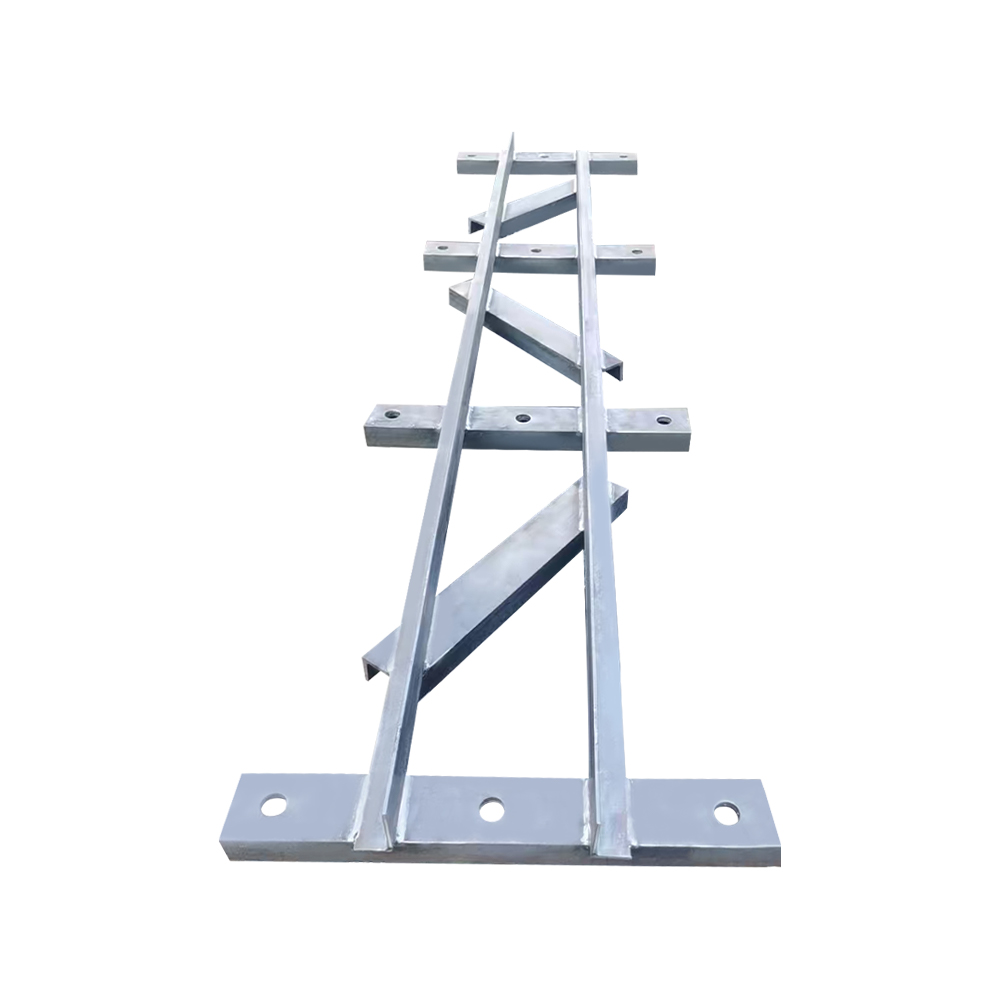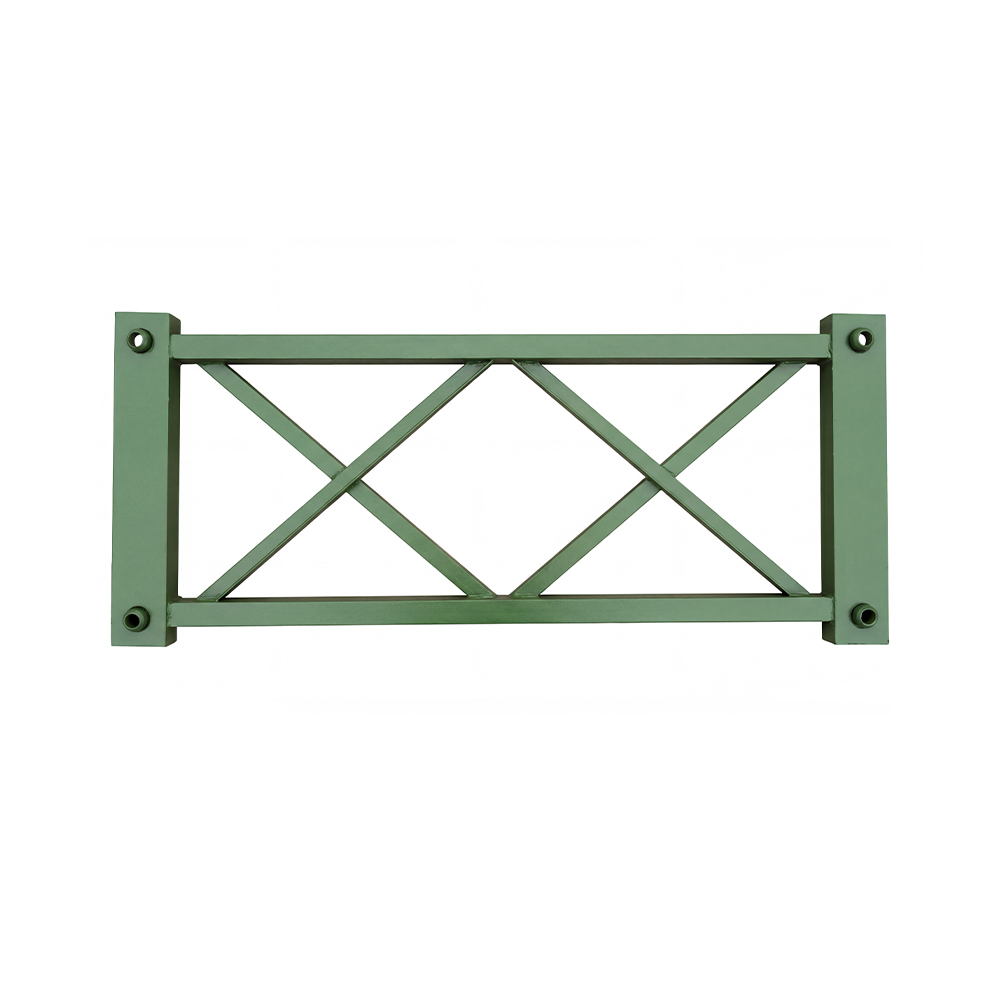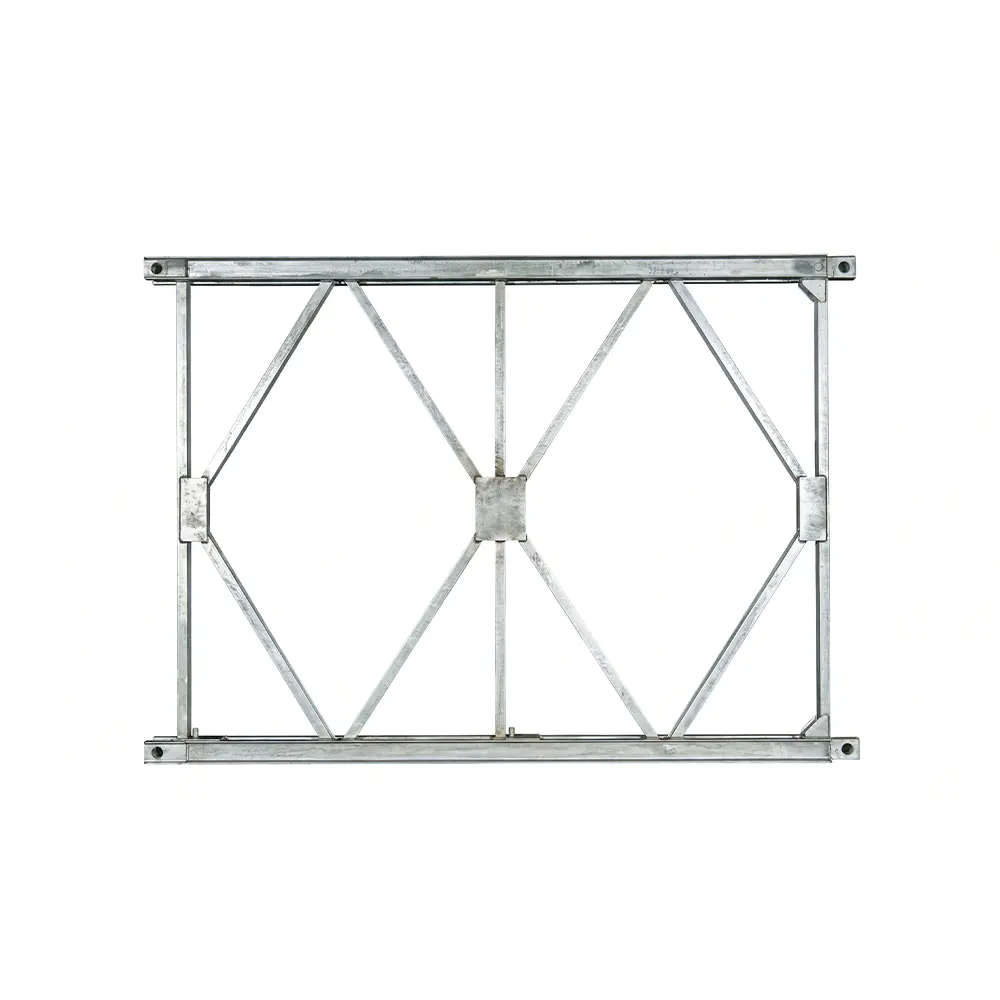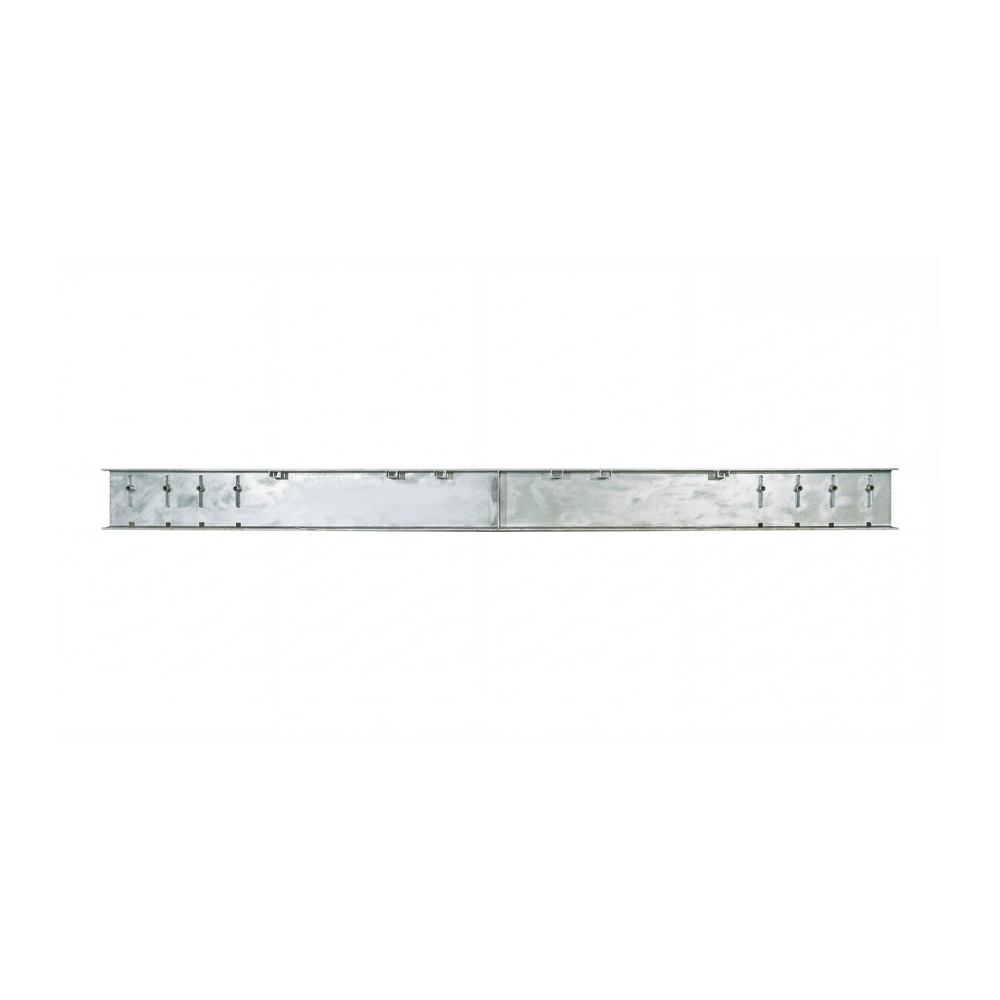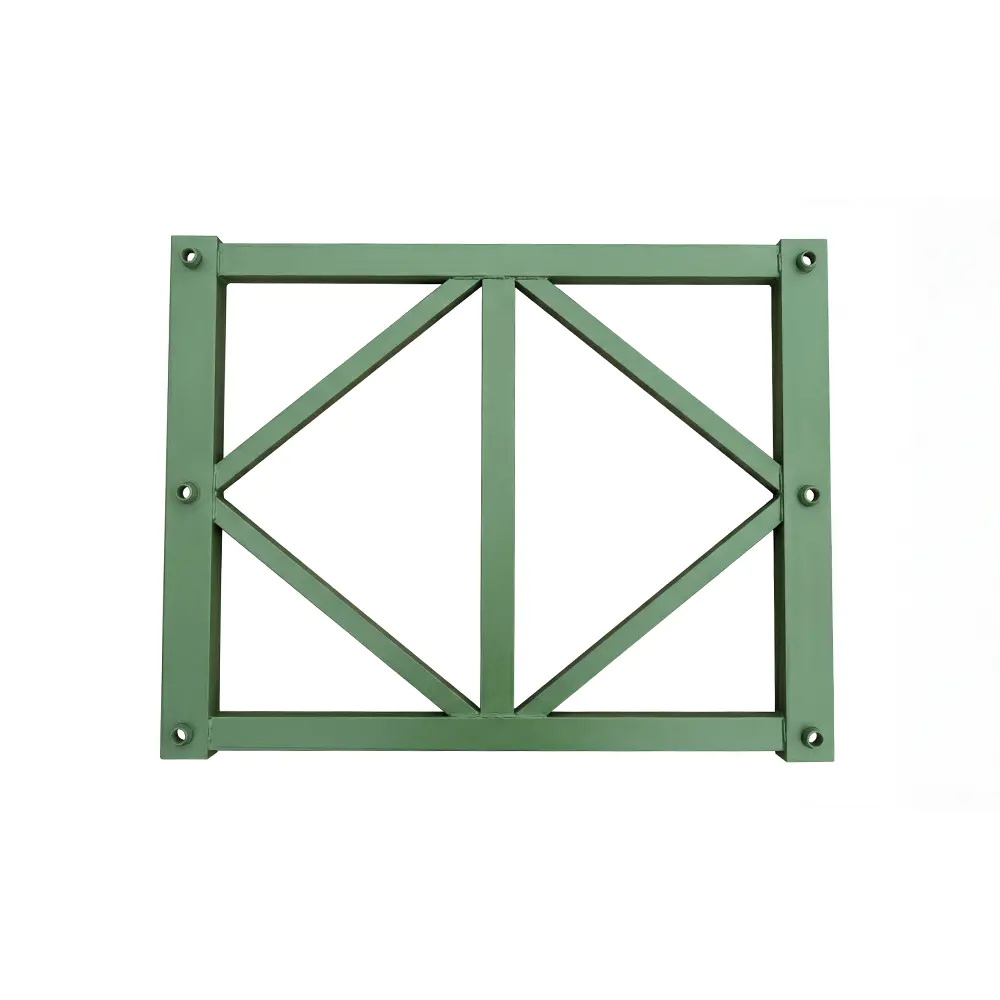
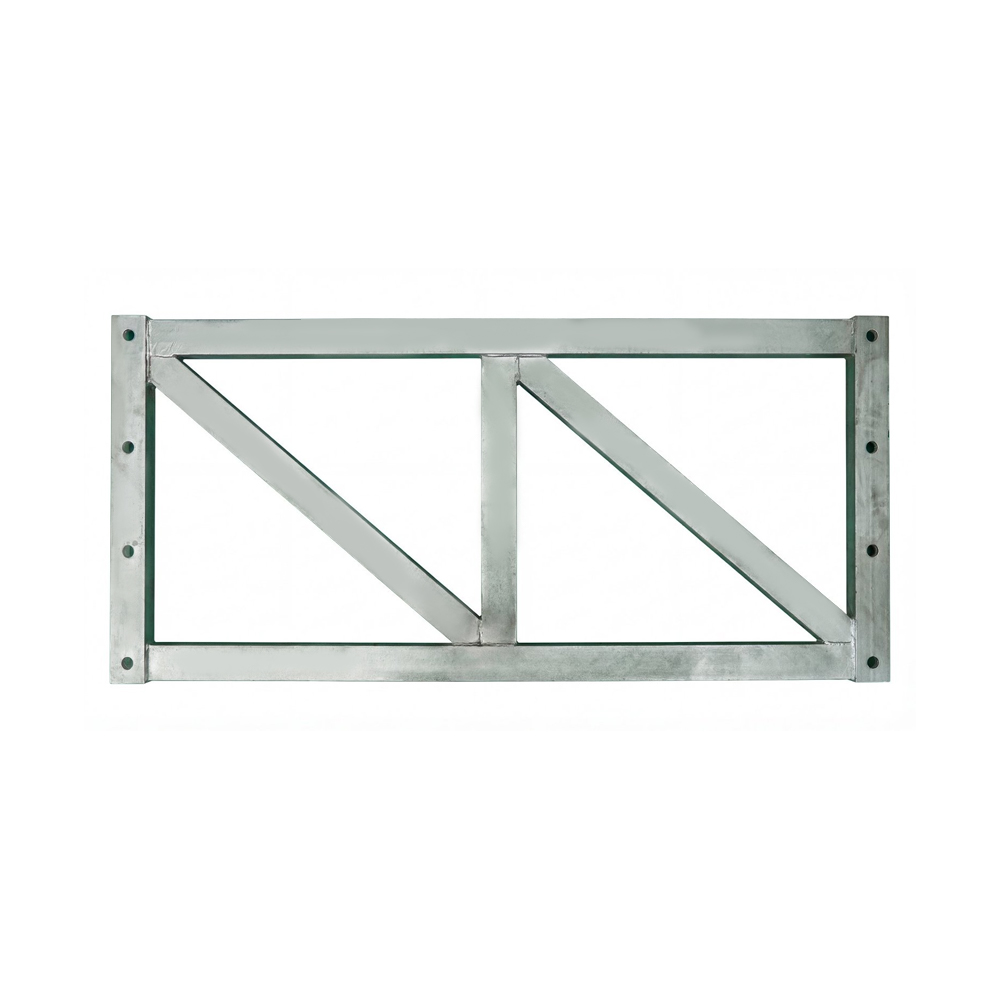
The HD200 Vertical Support Frame is a critical structural component used in Type HD200 Bailey bridges, heavy-duty modular truss systems, large formwork support structures, and emergency engineering installations. Although its appearance is relatively simple, this frame performs an essential role in the overall force-transfer system. It helps carry vertical loads, maintains the correct relationship between adjacent truss members, limits structural deformation, and contributes to the prevention of overturning and instability.
In a complete HD200 bridge system, the vertical support frame does not work as an isolated product. It operates together with horizontal support frames, strengthening chords, truss panels, bracing members, deck systems, and foundation supports. These components form a three-dimensional structural arrangement capable of transferring traffic loads, construction loads, wind effects, and temporary erection forces safely toward the foundations.
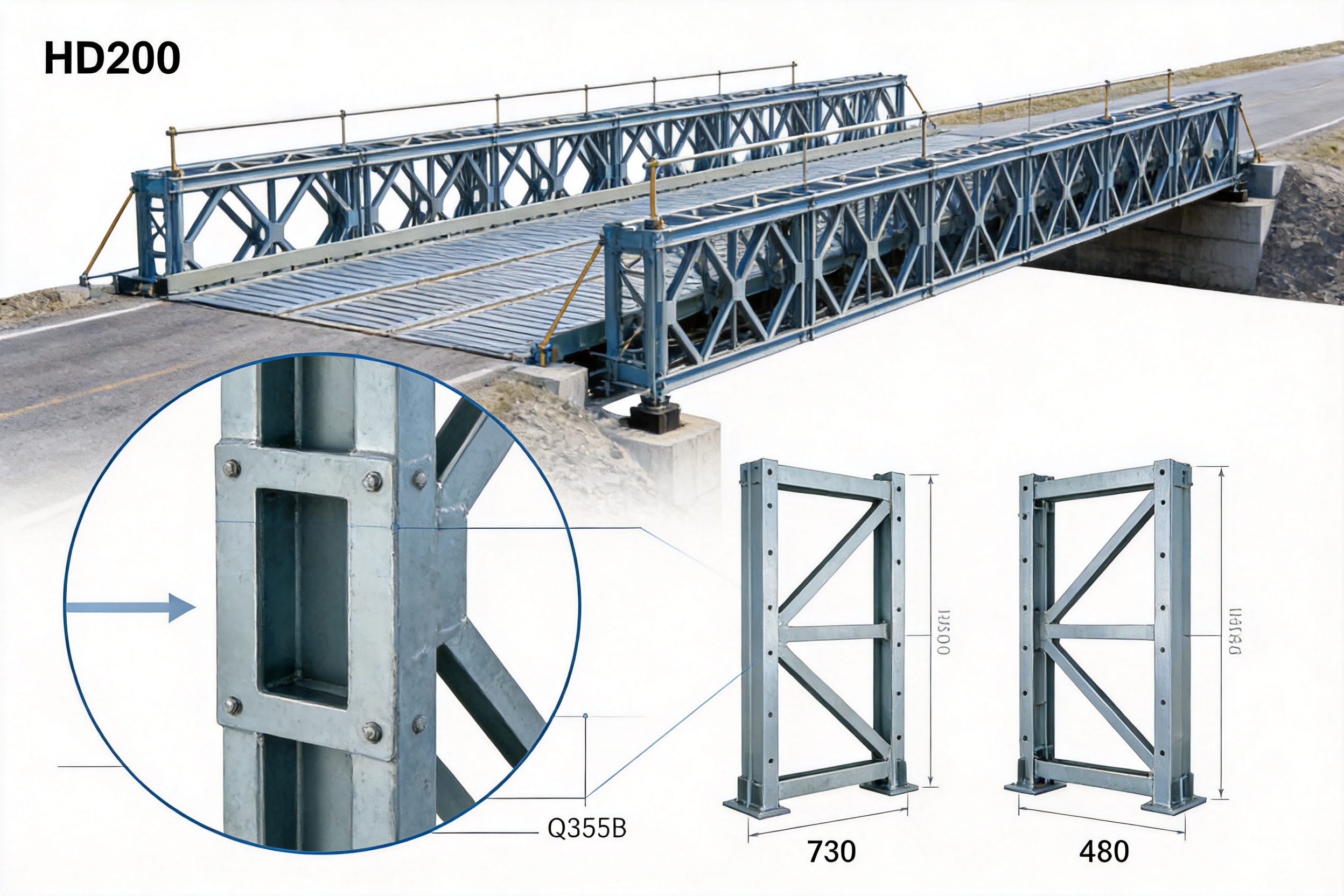
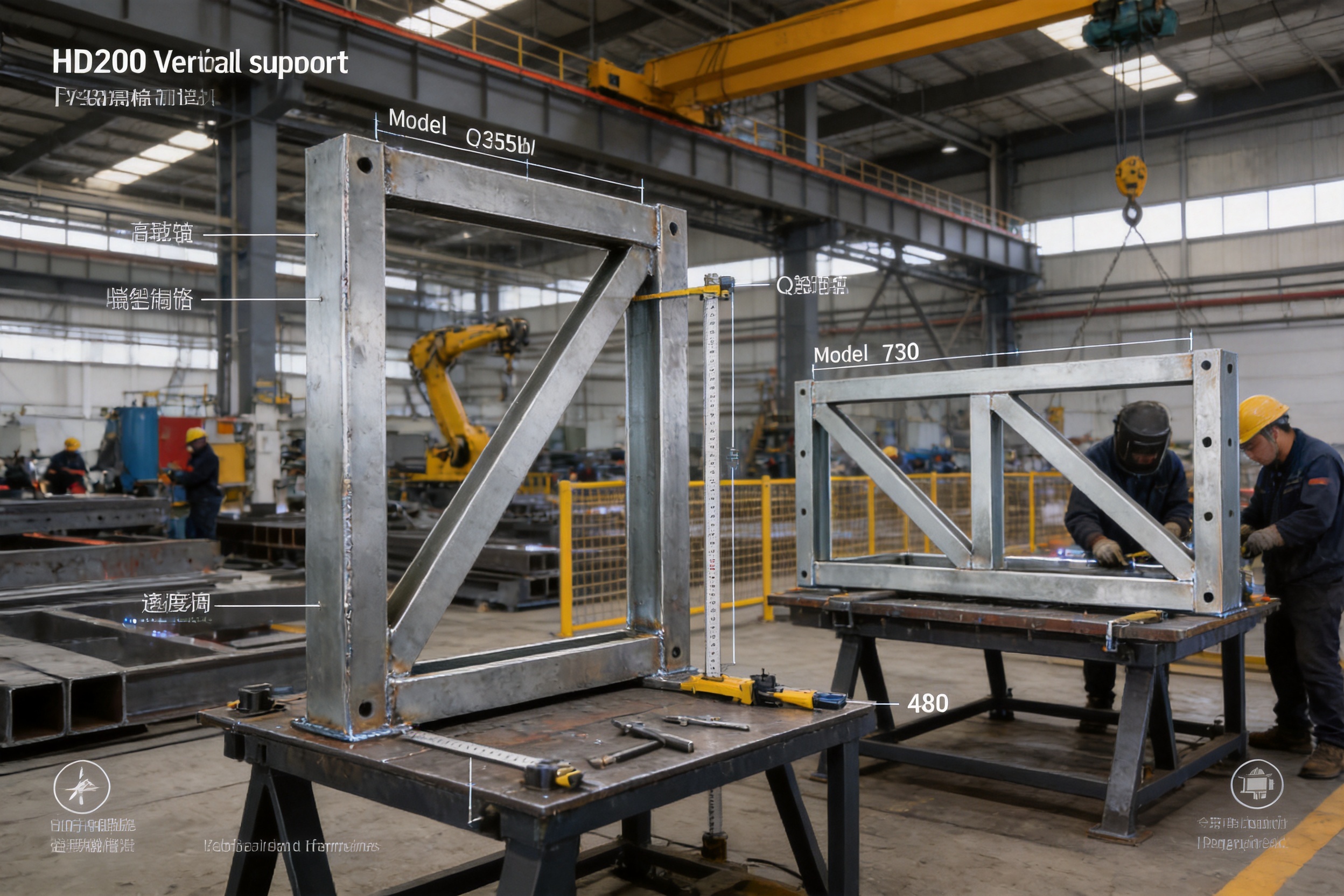
The Type HD200 Vertical Support Frame is available in two principal specifications: Model 730 and Model 480. These models correspond to different HD200 truss spacing arrangements and allow engineers to select a suitable configuration according to the required structural width, load path, and project layout. Both specifications are manufactured from Q355B structural steel and are designed for demanding bridge, industrial, municipal, and emergency applications.
With external dimensions of 1774 × 820 × 50 mm for the Model 730 and 1774 × 570 × 50 mm for the Model 480, the product is engineered to provide a dependable vertical support interface while remaining compatible with modular construction methods. Its standardized dimensions, material characteristics, and connection logic make it suitable for repeated assembly, dismantling, transportation, maintenance, and redeployment.
Type HD200 - Vertical Support Frame For Bailey Bridge
1. The Role of a Vertical Support Frame in an HD200 Bridge
A modular steel bridge must maintain structural continuity even though it is assembled from individual components. The vertical support frame is one of the members that allows separate truss sections to act together as a stable structural system. It supports the vertical arrangement of the bridge, connects associated members, and helps maintain the intended geometry during service and erection.
Under vertical loading, the bridge deck transfers forces to floor beams and then to the main trusses. The trusses distribute the loads along the span and toward the supports. In this process, the vertical support frame helps control the relative position of truss components and transfers forces between vertically arranged members. It also assists in maintaining the dimensional accuracy required for the proper installation of horizontal frames and strengthening elements.
The frame is particularly important in systems with significant height-to-width ratios. If a temporary support tower, truss assembly, or formwork structure becomes too slender, it may experience excessive lateral movement, local deformation, or an increased risk of instability. By establishing a dependable vertical connection and working with horizontal restraint members, the vertical support frame contributes to a more balanced and closed structural force path.
In practical engineering, stability is not determined by a single component. It depends on the interaction of compression members, tension members, bracing, connections, foundations, and temporary restraints. The HD200 Vertical Support Frame forms part of this interaction. It provides a repeatable structural interface that enables project engineers to create a stable assembly rather than relying on improvised site connections.
The frame can be used in bridge systems spanning approximately 9.144 to 60.96 meters, subject to the selected bridge arrangement, loading requirements, support conditions, design verification, and applicable standards. For high-load applications such as HS25-class and similar heavy-duty requirements, the product can be incorporated into an engineered HD200 system designed for the specific project.
2. Main Product Specifications
The two standard specifications allow the HD200 system to adapt to different truss spacing requirements. The Model 730 is used where a wider frame arrangement is required, while the Model 480 is intended for the corresponding narrower spacing arrangement. Selecting the correct model is essential because the frame must align accurately with the associated truss and horizontal support members.
| Item |
Model 730 |
Model 480 |
| Product type |
HD200 vertical support frame |
HD200 vertical support frame |
| External dimensions |
1774 × 820 × 50 mm |
1774 × 570 × 50 mm |
| Center distance dimensions |
1694 × (250 + 230 + 250) mm |
| Material |
Q355B structural steel |
| Typical system compatibility |
HD200 wider spacing arrangement |
HD200 narrower spacing arrangement |
The listed dimensions provide a standardized basis for design and assembly. The 1774 mm overall height supports compatibility with the HD200 system, while the different widths accommodate the corresponding spacing configurations. The stated center distance dimensions are important for connection alignment and should be checked against the complete bridge arrangement before fabrication, shipment, or installation.
Q355B steel is widely used in structural applications where a balance of strength, weldability, toughness, and fabrication performance is required. Material selection should always be verified through project documentation and quality records. For critical bridge and temporary works, the steel grade, plate thickness, weld procedure, dimensional tolerances, and inspection requirements should be controlled as part of a complete quality management process.
3. Structural Advantages of the HD200 Vertical Support Frame
3.1 Contribution to Vertical Load Transfer
The primary advantage of the vertical support frame is its contribution to an orderly vertical load path. Loads must move from the bridge deck to the main truss, from the truss to the support arrangements, and finally to the foundation or temporary bearing system. A standardized vertical frame helps maintain the intended relationship between these elements and reduces the possibility of irregular force transfer caused by inaccurate field fabrication.
When combined with the correct horizontal support frames and strengthening chords, the product helps create a stable three-dimensional structure. This arrangement is more dependable than a two-dimensional truss assembly that lacks sufficient transverse restraint. The resulting system can better resist deformation caused by traffic, construction activities, wind, eccentric loading, and erection operations.
3.2 Improved Resistance to Deformation
Temporary bridges and support systems are often exposed to changing loads. Heavy vehicles may move across the deck, construction equipment may be positioned at localized points, and erection loads may shift as components are installed. These conditions can cause deflection, lateral displacement, or local distortion if the structure is not adequately braced.
The vertical support frame helps limit undesirable movement by maintaining the vertical geometry of the HD200 arrangement. Its structural role is especially valuable where the temporary system must remain aligned over an extended service period or where repeated loading could amplify small dimensional errors.
3.3 Compatibility with Modular Assembly
One of the major benefits of the product is its compatibility with modular construction. Standardized components can be manufactured in batches, stored for future projects, transported efficiently, and assembled using established procedures. This approach reduces dependence on site-specific fabrication and allows contractors to reuse components across different bridge or support projects.
Modular compatibility also supports rapid emergency response. When a road, railway, or municipal route is disrupted, a standardized HD200 system can be planned and assembled more quickly than a completely custom steel structure. The vertical support frame becomes part of an established inventory rather than a one-time component requiring extensive redesign.
3.4 Interchangeability and Maintenance Efficiency
Interchangeability is another important advantage. When components are produced according to consistent dimensions and connection requirements, replacement parts can be selected more easily. A damaged or worn frame can be removed and replaced without redesigning the entire support arrangement, provided that the replacement is compatible and the engineer confirms its suitability.
This feature is particularly useful for contractors, bridge rental companies, emergency organizations, and infrastructure authorities that maintain inventories of modular bridge components. Standardization helps reduce spare-parts complexity, simplify inspections, and improve the utilization rate of stored equipment.
3.5 Adaptability to Multiple Engineering Uses
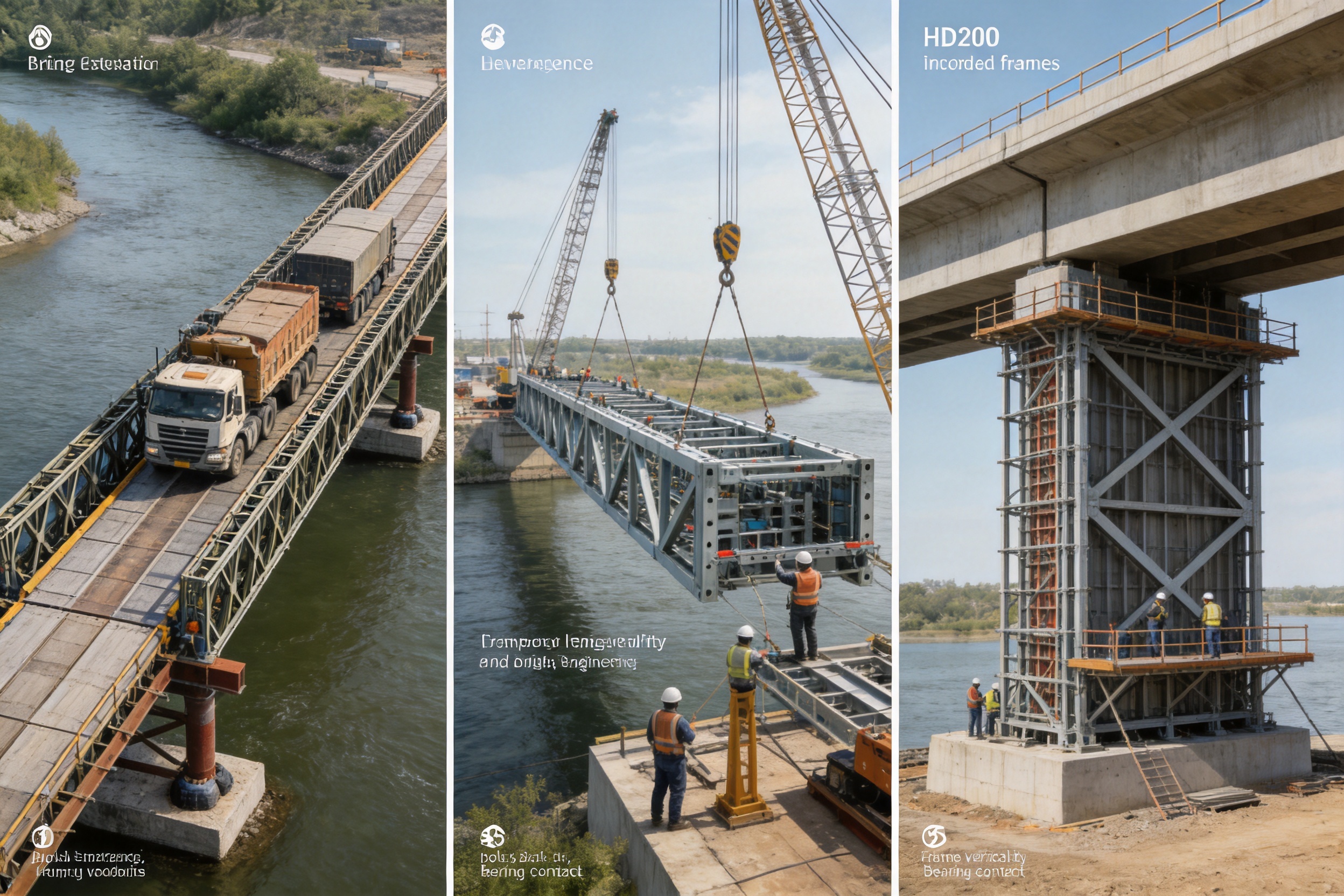
The same structural logic that makes the vertical support frame suitable for Bailey bridges also allows it to be used in other engineered systems. Applications may include large formwork supports, temporary towers, construction platforms, guide structures, erection arrangements, and emergency rescue systems. The suitability of the frame in each application must be verified through structural calculations and a project-specific assembly design.
Its adaptability comes from the combination of standardized geometry, steel construction, modular connections, and compatibility with strengthening members. Instead of functioning as a specialized one-purpose product, it can support a broader family of temporary and semi-permanent steel structures.
4. Advantages Compared with Non-Standard or Lower-Quality Alternatives
Many temporary structures fail to deliver reliable performance not because the general concept is unsuitable, but because component dimensions, materials, fabrication quality, or connection details are inconsistent. Compared with non-standard alternatives, a properly manufactured HD200 Vertical Support Frame offers several practical advantages.
4.1 Controlled Geometry
Accurate geometry is essential in a modular bridge. If a frame is too high, too low, twisted, or incorrectly spaced, the surrounding truss panels may not align correctly. Forced assembly can introduce residual stress, connection difficulty, or uneven load distribution. Factory-controlled dimensions reduce these risks and provide a better starting point for site installation.
Dimensional control is also important when components are used repeatedly. A frame that fits correctly on one project but not another may indicate inconsistent manufacturing. Standard production procedures help preserve the interchangeability expected from a modular system.
4.2 Reliable Material Performance
The use of Q355B structural steel provides a known material basis for engineering evaluation. In contrast, unverified steel or mixed-grade material can create uncertainty regarding yield strength, weldability, toughness, and long-term behavior. Traceable material procurement and documentation allow engineers and quality inspectors to confirm that the frame meets the intended design assumptions.
Material control is particularly important in heavy-load bridge systems. The frame may be exposed to repeated stress cycles, impact effects, construction loads, and environmental conditions. Selecting and documenting the appropriate steel grade helps reduce uncertainty and supports responsible structural design.
4.3 Better Integration with the Complete System
A product designed specifically for the HD200 system is more likely to integrate correctly with related components than a generic steel bracket or site-fabricated support. The correct external dimensions and center distances help ensure that horizontal support frames, strengthening chords, truss sections, and bracing members connect as intended.
This system-level compatibility can reduce installation time and avoid modifications such as field cutting, drilling, or welding. Fewer unauthorized modifications mean fewer opportunities for weakening the component or creating stress concentrations.
4.4 Reduced Project Risk
Using standardized, professionally fabricated components can reduce project risk in several ways. It supports more predictable quantities, clearer installation procedures, easier inspection, and more consistent performance. It also makes it easier for engineering teams to prepare erection drawings, component schedules, and inspection checklists.
These benefits are valuable when a project has a short construction window. Emergency bridges, temporary detours, and construction access bridges must often be installed under difficult conditions. Reducing uncertainty before the components reach the site can have a direct effect on safety and schedule control.
5. Manufacturing Process and Quality Control
The performance of a vertical support frame depends not only on its design but also on the way it is manufactured. A professional production process should control every stage, from raw-material purchasing to final packing. The objective is to produce a component with the required strength, geometry, weld quality, surface condition, and system compatibility.
5.1 Engineering Review and Production Planning
Manufacturing begins with a review of the product drawings, dimensions, material requirements, connection details, and intended system configuration. The production team confirms whether the requested product is Model 730 or Model 480 and checks the relevant center distances before releasing the work order.
Production planning should identify the required steel sections or plates, cutting schedules, welding procedures, inspection points, handling equipment, and final packaging requirements. This preparation reduces errors caused by incomplete information and helps maintain consistency across multiple production batches.
5.2 Raw-Material Inspection
Before fabrication, steel materials should be checked against purchase specifications. Typical controls include material grade, thickness, dimensions, surface condition, identification marks, and supporting material documentation. Q355B steel should be clearly identified to prevent accidental substitution with an unsuitable grade.
Materials with excessive corrosion, lamination, cracking, severe deformation, or other defects should not be incorporated into critical structural members without proper engineering evaluation. Clear material segregation in the workshop helps maintain traceability throughout the manufacturing process.
5.3 Precision Cutting and Preparation
Steel components must be cut to the required dimensions before assembly. Depending on the production arrangement, cutting may be performed using controlled thermal or mechanical processes. The selected method should provide clean edges and minimize excessive distortion.
After cutting, edges may require cleaning, deburring, straightening, or preparation for welding. Proper preparation supports stable fit-up and reduces the likelihood of incomplete fusion, excessive gaps, or irregular weld profiles. These details are important because small fabrication errors can accumulate during assembly.
5.4 Assembly in Controlled Fixtures
Assembly fixtures are valuable for maintaining the frame’s overall dimensions and relative member positions. Rather than relying only on manual measurement, controlled jigs or templates help hold components in the correct location during tack welding and final welding.
Fixtures can improve repeatability between units and reduce angular distortion. They also support more efficient production because workers can position components consistently without recreating the geometry for every frame. For modular bridge products, repeatability is a core manufacturing advantage.
5.5 Welding Process Control
Welding is one of the most important manufacturing operations for a steel support frame. The welding method, consumables, preheating requirements, welding sequence, and inspection procedures should be selected according to the material, joint design, thickness, and project requirements.
Qualified welding personnel should follow approved procedures. Weld surfaces should be free from excessive spatter, undercut, cracks, visible porosity, incomplete fusion, and other unacceptable conditions. Where specified by the project or applicable standards, visual inspection may be supplemented by nondestructive testing.
Welding sequence also matters. Excessive heat input or an unbalanced sequence can distort the frame and affect its external dimensions. A controlled sequence, suitable clamping, and appropriate cooling practice can help maintain the required geometry while achieving sound welded joints.
5.6 Dimensional Inspection
After fabrication, the frame should be inspected for height, width, center distances, straightness, squareness, connection alignment, and visible deformation. The Model 730 and Model 480 must be checked against their respective dimensions rather than treated as interchangeable products.
Inspection tools may include calibrated measuring tapes, steel rules, levels, squares, gauges, and other suitable instruments. For important orders, dimensional inspection records can be maintained for each batch or individual component. Such documentation supports quality assurance and provides useful information during installation.
5.7 Surface Treatment and Protection
Steel components used outdoors may be exposed to rain, humidity, dust, salt, industrial pollutants, and repeated handling. Surface preparation and protective coating should therefore be selected according to the expected service environment, storage conditions, and project requirements.
Before coating, the surface should be cleaned of oil, dirt, loose scale, welding residue, and other contaminants. The coating system may include a primer and one or more finishing layers, depending on the specified corrosion-protection requirements. Coating thickness, coverage, curing, and damage repair should be controlled during production.
For components that will be transported or stored before installation, packaging should protect connection areas and coated surfaces from impact. Proper stacking and lifting procedures can prevent unnecessary distortion during handling.
6. Manufacturing Strengths of Jinhao Road & Bridge
Zhenjiang Jinhao Road & Bridge Supporting Engineering Co., Ltd. has developed its business around the design, manufacture, erection, and leasing of Bailey bridges, bridge launching gantry systems, hanging baskets, pier formwork, and other steel formwork products. This broader product capability is relevant to the production of HD200 components because it gives the company experience across multiple types of temporary and permanent-support steel structures.
The company operates from an industrial area in Dantu District, Zhenjiang, Jiangsu Province, China. Its location provides access to established transportation routes, industrial supply chains, metal-processing resources, and logistics services. These conditions support the efficient procurement of steel, production scheduling, component storage, and shipment to domestic and international project sites.
One of the company’s strengths is its ability to provide more than an individual steel component. Customers may require assistance with bridge configuration, structural planning, erection sequences, support arrangements, or the integration of multiple products. A supplier that understands Bailey bridges, launching systems, formwork, and related steel structures can offer more coordinated technical communication than a general fabrication workshop.
The company’s product range includes Type 321 Bailey truss sections, HD200 or Type 200 Bailey truss sections, triangular and diamond hanging baskets, bridge steel formwork, and associated engineered steel structures. This product portfolio supports a system-based approach in which the vertical support frame can be evaluated together with the truss, strengthening chord, horizontal support frame, and other structural members.
Jinhao also provides customized fabrication, design and system planning, technical support, and quality management. These services are important when the standard product must be incorporated into a project with unusual span requirements, site restrictions, foundation limitations, transport constraints, or a specific erection method.
7. Application in Bailey Bridges
In a Bailey bridge application, the HD200 Vertical Support Frame may be incorporated into a single-level or multi-level truss arrangement, depending on the design requirements. The selected bridge configuration must consider span, traffic loading, bridge width, truss spacing, support conditions, lateral bracing, deck arrangement, and erection method.
For bridges serving construction traffic, the frame helps support a system designed to withstand repeated movement of trucks, equipment, and materials. For emergency bridges, rapid assembly and predictable component compatibility are often more important than architectural appearance. For semi-permanent installations, corrosion protection, inspection access, fatigue considerations, and maintenance planning become increasingly significant.
The frame may also be used in arrangements that function as guide beams, tower columns, gantry support structures, bridge erection machines, or climbing formwork systems. In each case, the product should be used only within a properly engineered system. A component suitable for one load path may not be suitable for another without verification.
Engineering teams should review temporary conditions as carefully as final service conditions. During erection, the structure may have incomplete bracing, uneven support, lifting forces, or temporary eccentric loads. The vertical support frame must therefore be considered in the erection design rather than evaluated only after the bridge is fully assembled.
8. Application in Large Formwork and Support Systems
Large bridge formwork and construction support systems often require strong, reusable steel components that can be assembled into towers or frames. The HD200 Vertical Support Frame can help create a stable support arrangement for formwork, access structures, and temporary construction platforms when the complete configuration is designed and verified by qualified personnel.
In formwork applications, the critical issues may include concentrated loads, uneven loading, vibration, concrete placement sequence, horizontal pressure, working-platform loads, and foundation settlement. The frame can contribute to the vertical support structure, but its suitability depends on the full tower arrangement and the connection of all bracing and restraint members.
Reusable modular formwork supports can provide economic benefits because components may be redeployed across multiple projects. Their value is improved when the components are easy to inspect, transport, assemble, and repair. Standardized HD200 parts are well suited to inventory-based construction operations in which the same equipment supports different bridge or civil engineering projects.
9. Application in Emergency and Rescue Engineering
Emergency bridge construction requires speed, organization, and reliable equipment. Floods, earthquakes, landslides, road failures, and other events may isolate communities or interrupt the movement of rescue teams and supplies. Modular Bailey bridge systems can provide a temporary route while permanent infrastructure is repaired or rebuilt.
The HD200 Vertical Support Frame supports this emergency role by contributing to a standardized, rapidly deployable structural system. Its dimensions and material specification can be incorporated into preplanned equipment inventories, allowing authorities and contractors to estimate component quantities, transportation needs, lifting requirements, and assembly labor before an emergency occurs.
Emergency use does not eliminate the need for engineering control. Site investigation, foundation assessment, span confirmation, traffic management, wind evaluation, and installation inspection remain necessary. The advantage of a standardized product is that these tasks can be performed using known component information rather than an entirely unfamiliar structure.
10. Foundation and Site Considerations
A strong vertical frame cannot compensate for an inadequate foundation. The foundation or bearing arrangement must be capable of receiving the transferred loads without excessive settlement, sliding, rotation, or local crushing. Before installation, the project team should evaluate soil conditions, water levels, scour potential, existing structures, access routes, and the required temporary or permanent bearing system.
Where foundation bearing capacity is limited, the bridge arrangement may require additional supports, larger bearing areas, ground improvement, piles, grillages, or a revised span configuration. The vertical support frame can help form a stable structural system, but it should not be regarded as a substitute for foundation design.
Site tolerances should also be controlled. Uneven support elevations can introduce unwanted forces into the truss and support frame. Surveying, leveling, temporary restraint, and staged tightening of connections can help ensure that the structure is erected in the intended position.
11. Installation and Inspection Recommendations
Before installation, all components should be checked against the packing list and erection drawings. The Model 730 and Model 480 frames should be separated and clearly identified to prevent incorrect substitution. Components should be inspected for bending, cracks, coating damage, missing connection parts, and deformation caused by transport.
During assembly, workers should use appropriate lifting equipment and follow the approved erection sequence. The frame should be positioned without forcing misaligned members into place. If alignment problems occur, the cause should be investigated rather than corrected through unauthorized heating, cutting, drilling, or welding.
Connections should be installed using the specified bolts, pins, fasteners, or other approved joining methods. Bolt installation should follow the project requirements for fit, tightening, locking, and inspection. Any damaged or unserviceable connection hardware should be replaced with compatible parts.
After installation, the complete system should be checked for verticality, lateral alignment, connection completion, bracing continuity, bearing contact, and visible deformation. A qualified engineer or responsible technical professional should confirm that the structure is ready for loading.
During service, periodic inspections should look for corrosion, loose or missing fasteners, cracking, local buckling, coating failure, excessive deflection, impact damage, foundation movement, and changes in the surrounding site. Inspection frequency should reflect the bridge’s use, environment, traffic level, and project duration.
12. Why System-Level Supply Is More Valuable Than Component-Only Purchasing
Purchasing a vertical support frame as an isolated steel item may appear straightforward, but successful bridge construction depends on compatibility among many components. A system-level supplier can help verify whether the selected model matches the truss spacing, whether the required number of frames is available, and whether strengthening chords and horizontal support frames are included in the overall arrangement.
System-level technical communication can also reduce procurement mistakes. Customers may need a complete bill of materials, erection drawings, loading information, replacement components, packing instructions, or site support. A supplier with experience in Bailey bridge systems is better positioned to identify missing elements before they create delays at the project site.
Jinhao’s combined capabilities in bridge products, launching equipment, hanging baskets, and steel formwork provide a foundation for this type of coordinated service. Its approach can support contractors, government organizations, infrastructure owners, and engineering companies that need both products and practical technical cooperation.
13. Customization and Project Support
Although the HD200 Vertical Support Frame is based on standardized specifications, projects may differ in loading, environmental exposure, transport limitations, assembly methods, and required documentation. Customization may involve quantities, coating systems, packaging, identification marks, inspection documentation, or coordination with a complete bridge configuration.
For a project requiring customized fabrication, the customer should provide the span, deck width, design loading, intended service period, site conditions, erection method, applicable standards, and expected delivery schedule. These details allow the manufacturer and engineering team to confirm whether the standard frame is suitable or whether additional design work is required.
Technical support may also include system planning, component scheduling, erection guidance, and quality documentation. The most effective cooperation begins early, before material purchasing and production release. Early coordination helps prevent dimensional conflicts and allows logistics to be planned around the complete project rather than a single component.
14. Sustainability and Lifecycle Value
Modular steel bridge components provide lifecycle benefits because they can be dismantled and reused. Unlike many temporary structures that become waste after one project, Bailey bridge elements can be inspected, repaired, stored, and redeployed. This reduces the need to manufacture an entirely new structure for every temporary crossing or construction access route.
The HD200 Vertical Support Frame contributes to this lifecycle model through its standardized form and compatibility with a broader modular system. Proper maintenance, corrosion control, and inventory management can extend its useful service period. Components that remain structurally sound may be reused in different configurations after engineering review.
Steel is also a recyclable material. At the end of its service life, a frame can be processed through established steel recycling channels, subject to local procedures and contamination controls. Responsible lifecycle management should include safe dismantling, accurate condition assessment, and separation of reusable components from materials requiring disposal or recycling.
15. Selecting the Correct Model
The choice between Model 730 and Model 480 should be based on the HD200 system arrangement and the required spacing. The Model 730 has an external width of 820 mm, while the Model 480 has an external width of 570 mm. These dimensions are not simply interchangeable variations; they correspond to different structural layouts.
Before ordering, the purchaser should confirm the truss type, frame spacing, bridge width, connection arrangement, quantity, and project drawings. If the component is being used in a support tower, formwork system, or special erection arrangement, the designer should verify that the selected model is appropriate for the specific force path.
Correct model selection improves installation efficiency, reduces the need for modifications, and supports the intended load distribution. It also simplifies future replacement because the component can be identified by a clear and consistent specification.
16. Frequently Asked Questions
16.1 What is the primary function of the HD200 Vertical Support Frame?
Its primary function is to support and stabilize the vertical arrangement of an HD200 Bailey bridge or related truss system. It helps transfer vertical forces, maintain structural geometry, limit deformation, and work with horizontal support frames and strengthening chords to create a stable three-dimensional system.
16.2 What are the available specifications?
The product is available in Model 730 and Model 480. The Model 730 has external dimensions of 1774 × 820 × 50 mm, while the Model 480 has external dimensions of 1774 × 570 × 50 mm. Both use Q355B structural steel and share the stated center distance arrangement of 1694 × (250 + 230 + 250) mm.
16.3 How should I choose between Model 730 and Model 480?
The choice depends on the HD200 truss spacing and the design configuration. The wider Model 730 and narrower Model 480 should not be selected based only on appearance or availability. The project drawings, truss arrangement, horizontal support frames, and connection dimensions should be checked before ordering.
16.4 Can this product be used for heavy-duty bridge applications?
It is intended for HD200 heavy-duty modular bridge and truss systems, including applications associated with large spans and high loading requirements. However, the final capacity of a bridge depends on the complete structural arrangement, loading, span, support conditions, connections, bracing, and foundation. A qualified engineer must verify the complete design.
16.5 Is the frame suitable for emergency bridge construction?
Yes, it can be incorporated into emergency bridge systems where standardized, reusable steel components are needed. Emergency installation still requires site investigation, foundation assessment, engineering approval, erection planning, and inspection before the bridge is opened to traffic.
16.6 Can it be used in formwork support structures?
It may be used in large formwork support systems or temporary construction structures when the complete arrangement has been designed for the relevant loads and site conditions. The support frame should not be used outside its intended structural role without professional verification.
16.7 What quality controls are important during manufacturing?
Important controls include material verification, dimensional inspection, cutting accuracy, fixture-controlled assembly, welding procedure control, weld inspection, straightness checks, surface preparation, protective coating, packaging, and final documentation. These controls help ensure that the product is compatible with the modular system.
16.8 What information should be supplied when requesting a quotation?
Useful information includes the required model, quantity, bridge or support-system application, span, width, loading, project location, coating requirements, delivery schedule, inspection documentation, and any special packaging or marking requirements. Providing complete information helps the manufacturer prepare an accurate technical and commercial response.
16.9 Does the vertical support frame replace foundation design?
No. The frame contributes to the superstructure or support arrangement, but the foundation must independently be designed or assessed for the transferred loads, settlement, sliding, rotation, scour, and local bearing conditions.
16.10 Can the frame be reused?
Modular steel frames are generally intended to support repeated use when they remain within acceptable structural condition. Before reuse, each component should be inspected for cracks, deformation, corrosion, damaged connections, and coating failure. Reuse should be approved according to the project’s engineering and safety requirements.
17. Conclusion
The Type HD200 Vertical Support Frame for Bailey bridges is a fundamental component in the construction of stable, reusable, and heavy-duty modular steel systems. Its role extends beyond simple vertical support. By maintaining the geometry of the HD200 arrangement and working with horizontal frames, strengthening chords, truss sections, and foundations, it helps create a coordinated structural force path.
The two standard specifications, Model 730 and Model 480, provide flexibility for different HD200 spacing arrangements. The use of Q355B structural steel, standardized dimensions, modular compatibility, and repeatable fabrication gives the product advantages over improvised or non-standard alternatives. These advantages are especially valuable in emergency bridges, construction access bridges, large formwork supports, temporary towers, and semi-permanent infrastructure.
Manufacturing quality is central to product performance. Controlled material procurement, precision cutting, fixture-based assembly, qualified welding, dimensional inspection, surface protection, and careful logistics all contribute to a more reliable component. The broader capabilities of Zhenjiang Jinhao Road & Bridge Supporting Engineering Co., Ltd. in bridge systems, launching gantries, hanging baskets, formwork, design planning, fabrication, erection, leasing, and technical support strengthen its ability to provide coordinated engineering solutions.
For contractors, infrastructure owners, government organizations, and engineering companies, the greatest value comes from treating the vertical support frame as part of a complete system. Correct model selection, professional design, suitable foundations, controlled erection, and regular inspection are essential for safe performance. When these requirements are addressed, the HD200 Vertical Support Frame can provide a durable and adaptable foundation for modern modular bridge and temporary works engineering.
References
1. Product technical information for the Type HD200 Vertical Support Frame for Bailey Bridge, including dimensions, material, and model specifications.
2. General engineering principles for modular steel bridges, temporary bridges, emergency bridge systems, and reusable truss structures.
3. Structural steel fabrication and welding quality-control practices for bridge and temporary works components.
4. Guidance on the design, erection, inspection, maintenance, and reuse of modular steel bridge systems.
5. General principles of temporary works design, foundation assessment, structural stability, and construction-stage load management.


 Français
 Español
 عربى