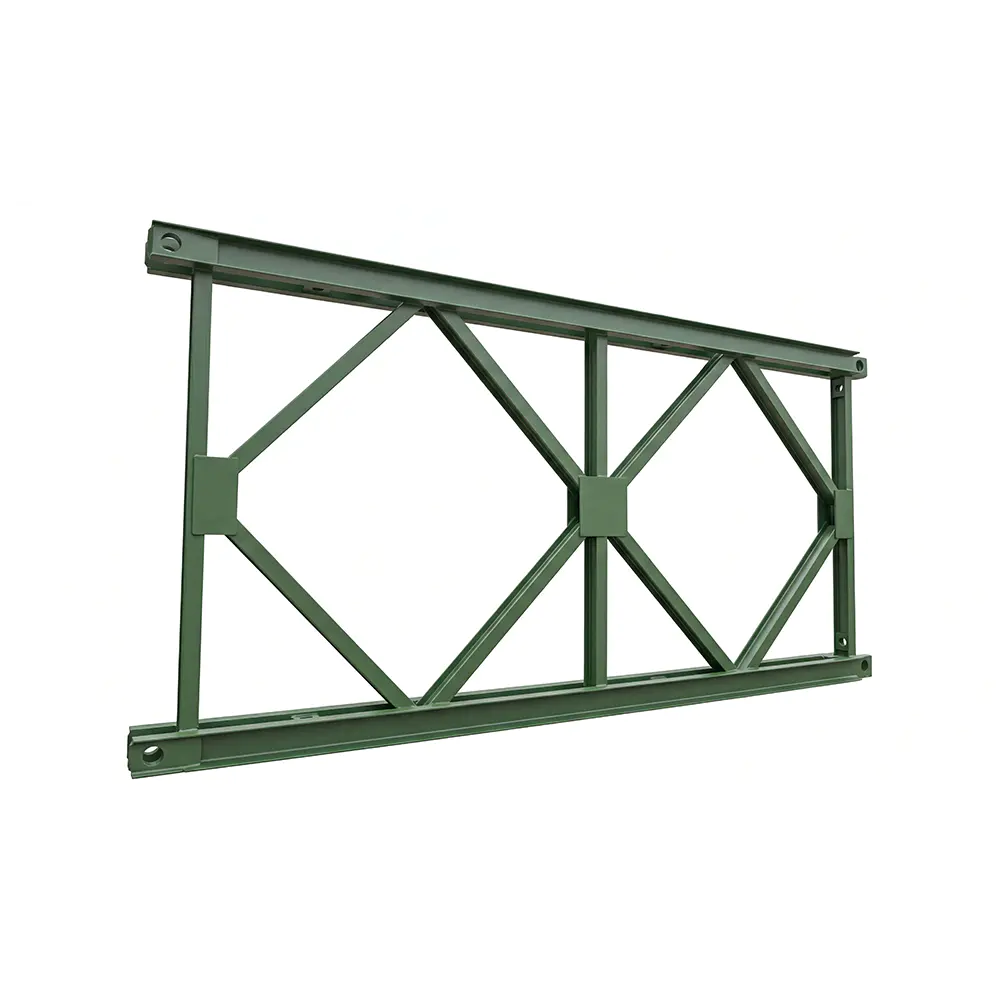
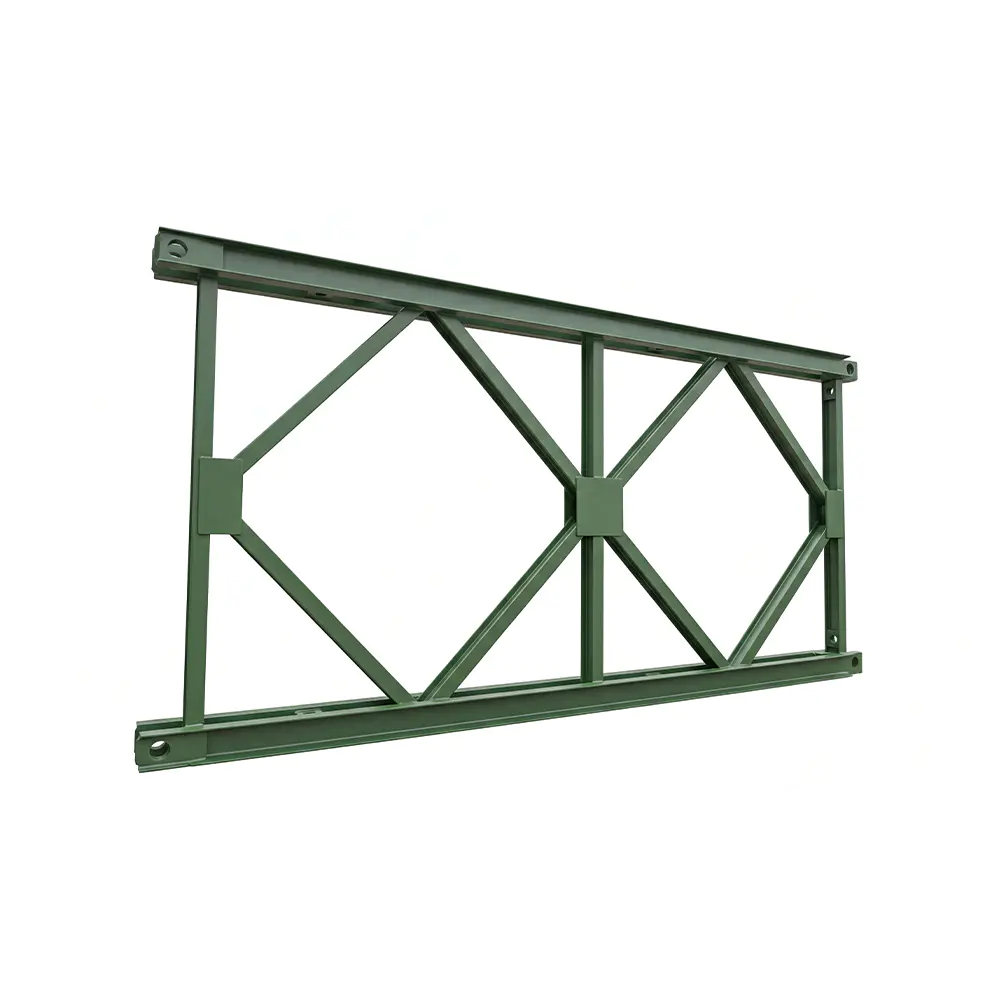
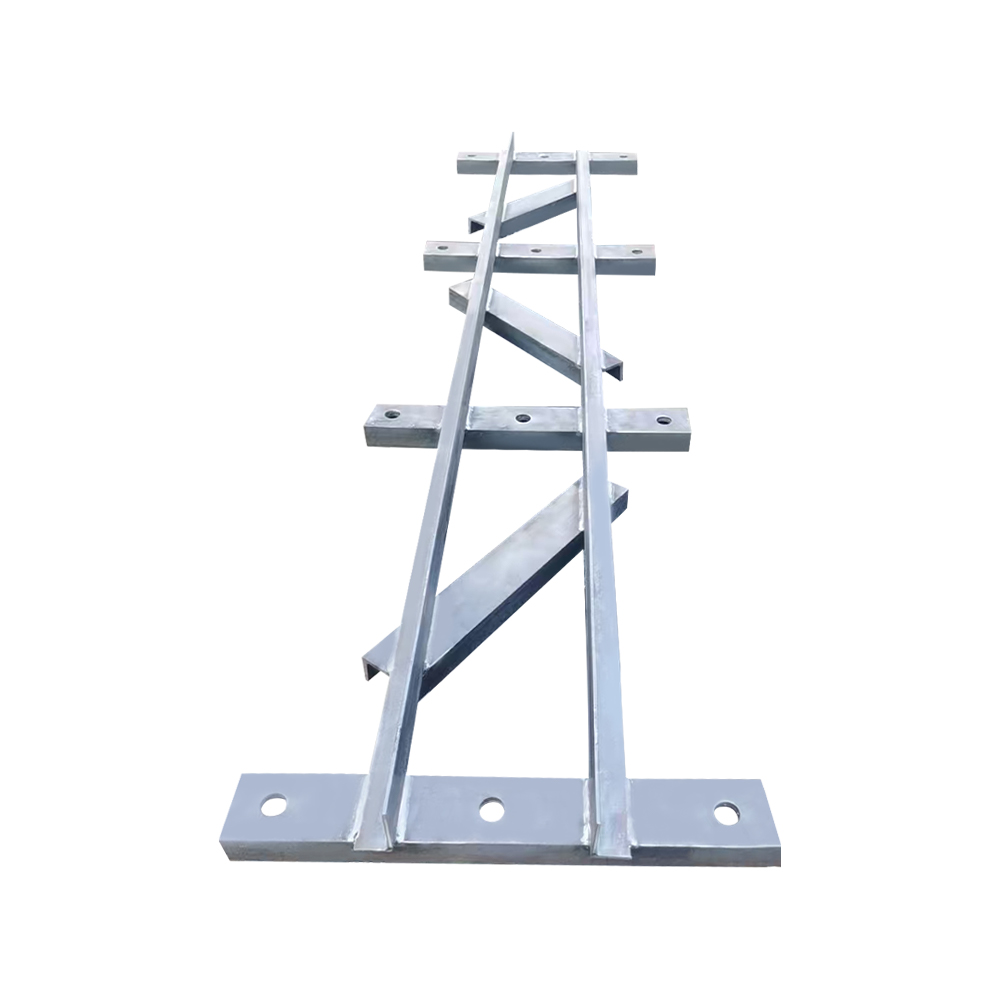
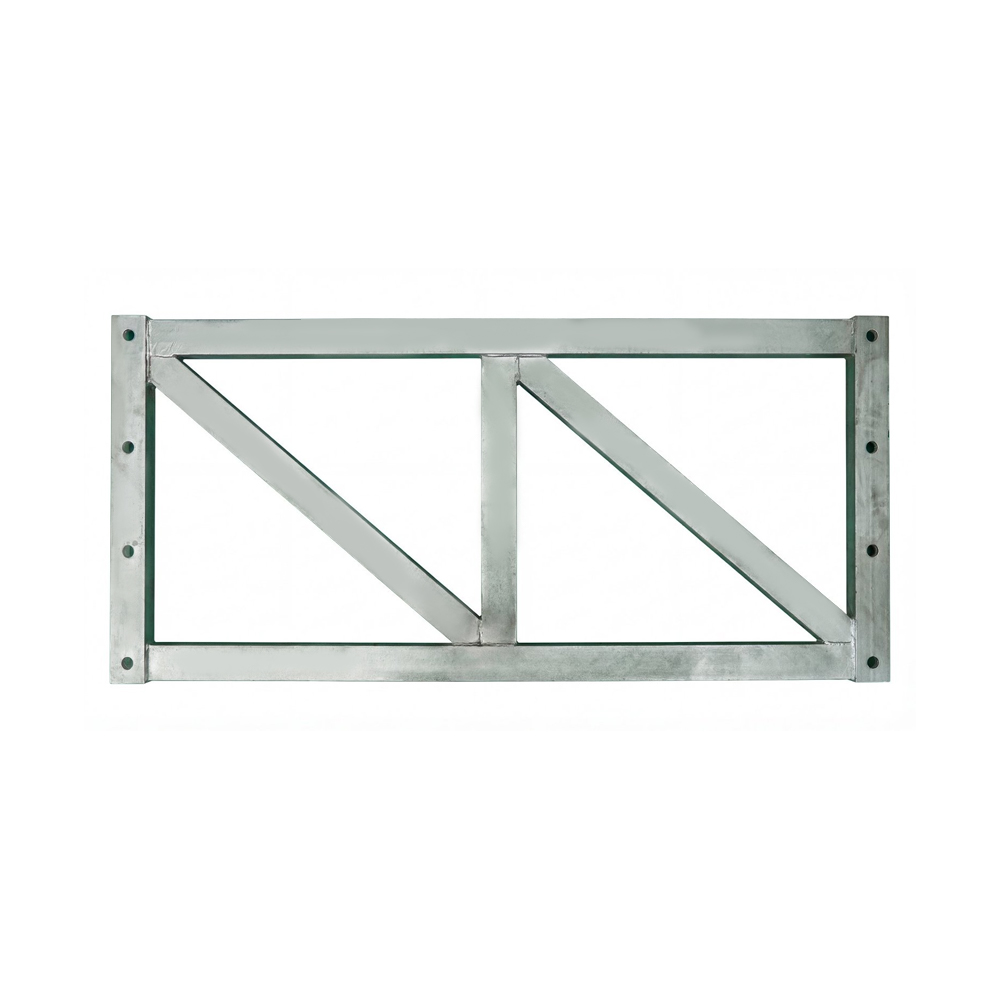
Pre-cambered Bailey bridge panels are an important component of modular steel bridge systems designed for rapid construction, temporary access, emergency response, and semi-permanent infrastructure. By combining standardized dimensions, high-strength structural steel, factory-controlled geometry, and simple field assembly, these panels provide an efficient alternative to conventional cast-in-place or fully welded bridge construction.
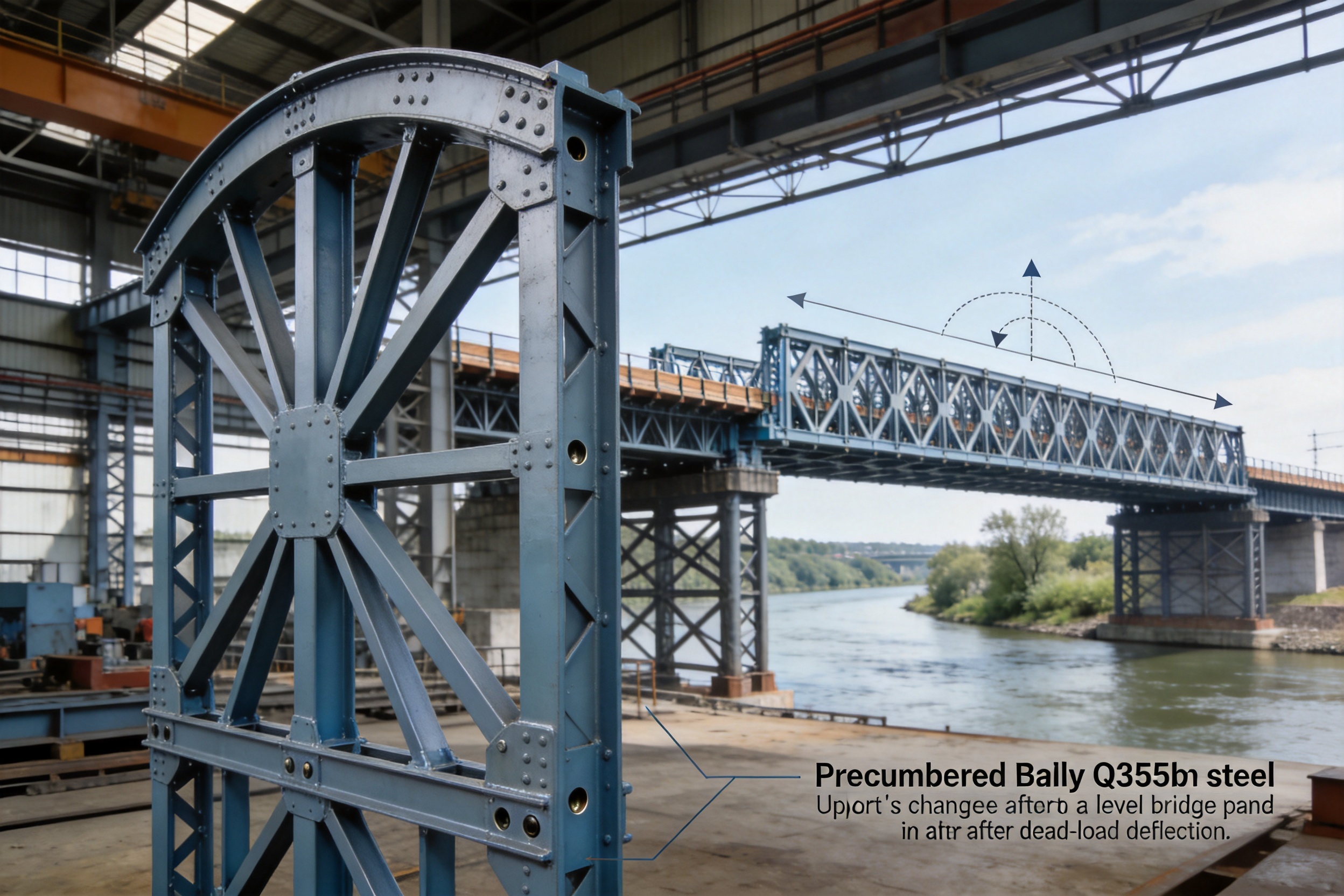
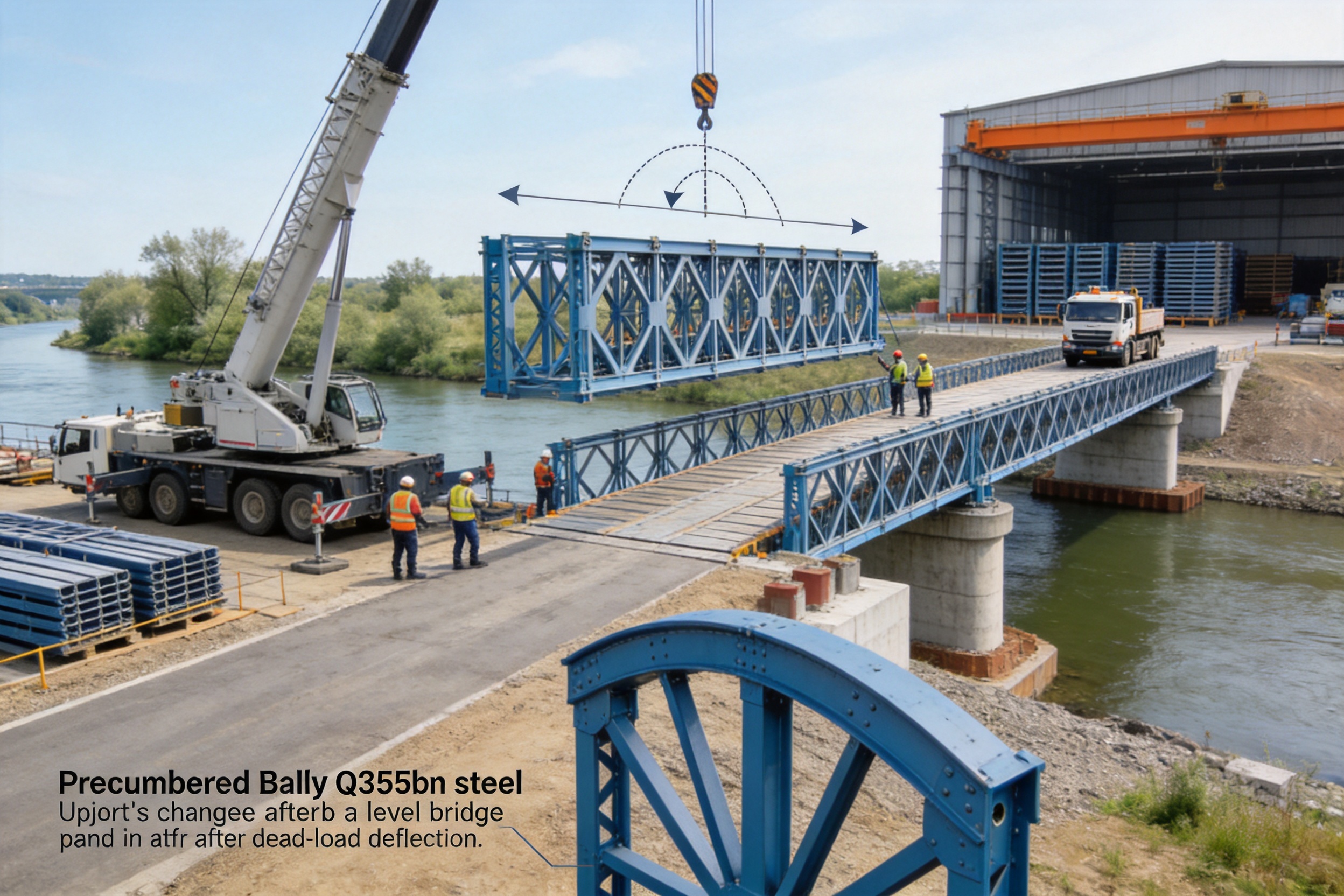
The YG Bailey bridge panel is manufactured with a preset camber during the fabrication process. This pre-camber is introduced to compensate for the deflection that naturally occurs when the assembled bridge is subjected to its own weight and service loads. After installation, the completed structure can essentially achieve zero deflection under its self-weight, helping it satisfy practical bridge deflection requirements and maintain a stable, usable deck profile.
This design approach provides significant value to contractors, government agencies, infrastructure developers, emergency-response organizations, and bridge leasing companies. A modular panel can be transported, handled, assembled, disassembled, stored, and reused more efficiently than many conventional bridge components. At the same time, the standardized form allows different bridge configurations to be developed for varying spans, traffic conditions, site restrictions, and construction schedules.
Manufactured by Zhenjiang Jinhao Road & Bridge Supporting Engineering Co., Ltd., the YG panel is part of a broader range of Bailey bridge systems, bridge launching gantries, hanging baskets, pier formwork, and engineered steel structures. The company combines design support, fabrication, erection, leasing, technical service, and quality management to provide a complete solution rather than supplying isolated steel components.
Understanding the Pre-Cambered Bailey Bridge Panel
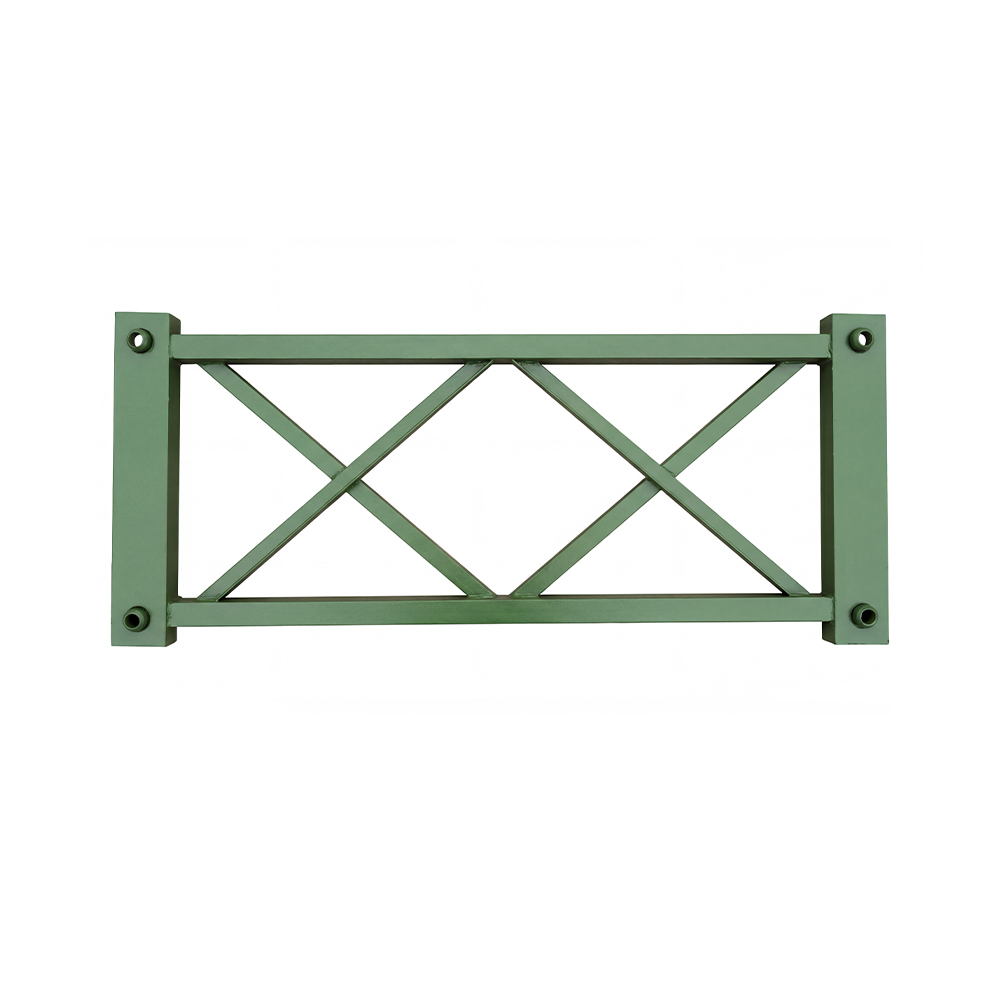
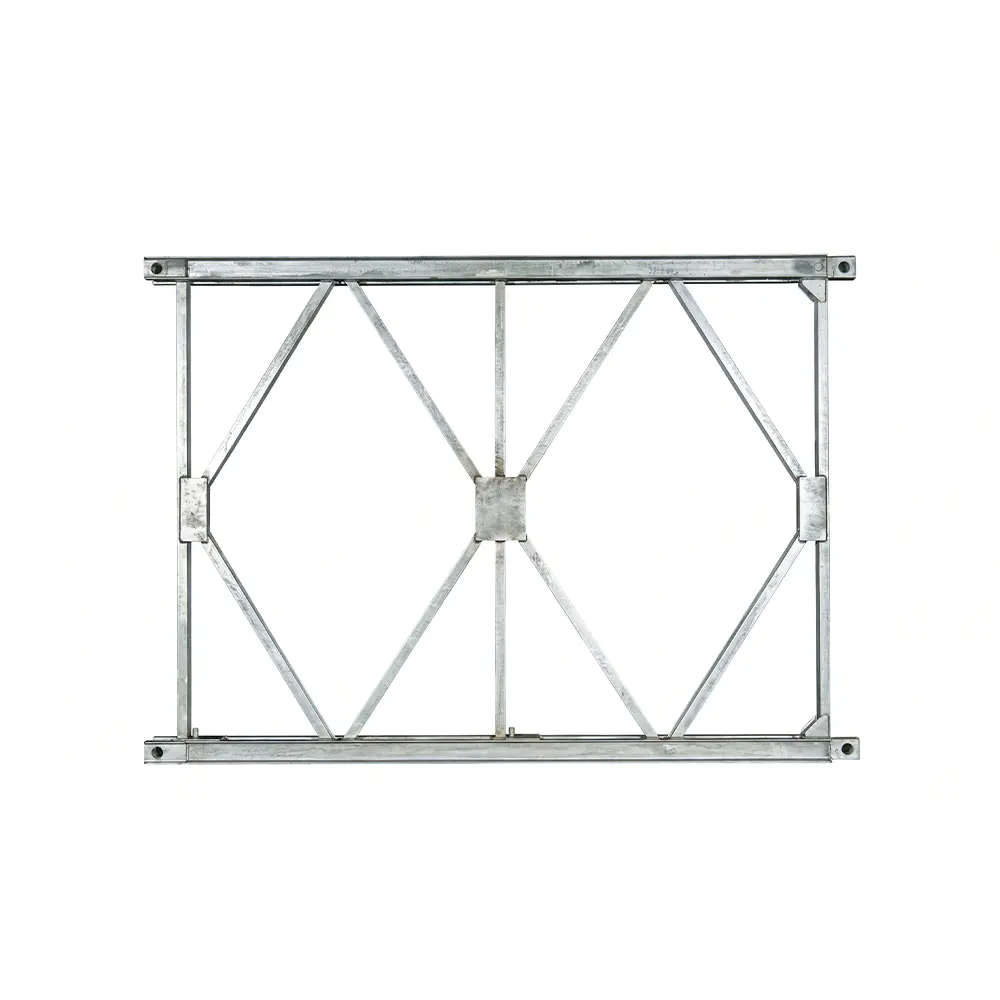
A Bailey bridge panel is a modular truss unit used to form the main load-bearing sides of a temporary or semi-permanent steel bridge. Multiple panels are connected longitudinally to create the required bridge length, while additional panels can be arranged transversely or vertically to increase structural capacity and stiffness. Cross beams, stringers, deck elements, bracing, connection components, and approach structures complete the bridge system.
The panel’s truss configuration creates structural depth without requiring a solid steel girder of equivalent height. This makes it possible to achieve a favorable strength-to-weight relationship while retaining manageable component dimensions. Panels can be transported by standard road vehicles, positioned with common lifting equipment, and connected at the site using established modular bridge assembly methods.
The YG Bailey bridge panel has external dimensions of 3115 × 1500 × 176 mm and is manufactured from Q355B steel. The standardized dimensions support compatibility with a modular construction system and make it easier for contractors to plan transportation, storage, lifting, and assembly operations.
| Item |
Specification |
| Product |
YG Bailey Bridge Panel |
| Structural category |
Pre-Cambered Bailey Truss |
| External dimensions |
3115 × 1500 × 176 mm |
| Material |
Q355B steel |
| Primary function |
Modular truss component for temporary, emergency, construction access, and semi-permanent bridges |
| Typical system applications |
Road bridges, access bridges, gantry cranes, guide beams, erection systems, and other engineered steel structures |
Although a panel is a standardized component, its performance depends on the complete bridge arrangement. Span length, bridge width, traffic loading, panel layering, support conditions, lateral bracing, deck configuration, wind exposure, foundation settlement, and local design regulations must be reviewed by qualified engineers before construction. The panel is therefore best understood as a precision-manufactured part of a coordinated bridge system.
Why Pre-Camber Matters in Modular Bridge Construction
Every bridge structure experiences deflection under load. Even when the materials remain within their elastic range, the self-weight of the steelwork, deck, connections, and accessories creates bending effects. Traffic, construction equipment, pedestrians, wind, and temporary loads can increase this movement. If a bridge is assembled without considering anticipated deflection, the deck may develop an undesirable sag or may fail to meet specified serviceability criteria.
Pre-camber addresses this issue by introducing a controlled upward curvature during fabrication. The panel is not manufactured as a perfectly straight member. Instead, its geometry is adjusted so that, after assembly and loading, the structural line moves toward the intended level profile. When the bridge’s own weight is applied, the pre-camber offsets the corresponding downward movement.
The practical result is a bridge that can essentially achieve zero deflection under its own weight, subject to the final design, support conditions, actual component tolerances, and site installation quality. This improves the visual and functional performance of the bridge and helps the completed system meet applicable deflection requirements.
Pre-camber also supports more predictable construction planning. Contractors can work with a component whose geometry has been considered before delivery, rather than attempting to correct excessive sag at the construction site. Factory-controlled camber is generally more consistent than ad hoc field adjustments, especially when many panels must be combined into a long bridge structure.
Benefits for Deck Alignment
A stable deck profile is important for vehicle movement, construction traffic, material transport, and pedestrian access. Excessive sag can create discomfort, reduce operating efficiency, increase impact effects, and complicate connections between the modular bridge and the approach road. A pre-cambered panel helps preserve the intended elevation and reduces the risk that the assembled bridge will require extensive corrective work.
Benefits for Structural Serviceability
Strength is not the only measure of bridge performance. A structure may have adequate ultimate load capacity while still experiencing excessive movement in everyday use. Pre-camber contributes to serviceability by helping control the visible and functional effects of dead-load deflection. It is particularly valuable for temporary bridges that must be assembled quickly but still provide dependable access during construction or emergency operations.
Benefits for Repeated Use
Bailey bridge components are often disassembled and reused at different sites. A well-controlled original geometry supports consistent performance across multiple installations. Before reuse, panels should be inspected for deformation, cracking, corrosion, damaged holes, worn connection areas, and other conditions that could affect their structural behavior. The original pre-camber remains an important part of the component’s design characteristics, but its condition must be verified after each project.
Material Selection: Q355B Structural Steel
The YG Bailey bridge panel is manufactured from Q355B steel. This structural steel grade is widely used for load-bearing fabricated steel products and is selected for its combination of strength, weldability, toughness, and suitability for industrial processing. Its use allows the panel to support the repeated handling and structural demands associated with modular bridge construction.
Material selection affects more than nominal strength. A bridge panel must withstand fabrication operations, lifting, transportation, assembly, connection forces, service loads, and environmental exposure. The steel must also be compatible with the cutting, forming, welding, straightening, inspection, and surface-treatment processes required to produce a reliable truss component.
Q355B provides a practical balance between structural performance and manufacturability. It allows the production team to fabricate standardized panels efficiently while maintaining the mechanical properties expected of an engineered bridge component. Material documentation and inspection procedures should be maintained throughout production so that the finished panel can be traced to its specified steel grade.
Strength and Weight Efficiency
A modular truss panel uses its upper and lower chords, vertical members, diagonal members, and connection zones to distribute forces through a triangulated structural arrangement. This configuration can deliver substantial load-bearing capacity without the mass associated with a solid plate girder of comparable depth. Lower component weight benefits transportation, lifting, site handling, and emergency deployment.
Weight efficiency is especially important where bridges must be installed in remote areas, across damaged roads, over canals, or in locations with limited crane access. A panel that can be handled using commonly available equipment reduces dependence on specialized heavy-lift machinery and can shorten the time between delivery and opening.
Durability Considerations
Steel bridge panels may be exposed to rain, humidity, mud, deicing materials, industrial pollutants, and coastal environments. Proper surface preparation, protective coating, drainage, storage, and maintenance are essential for long service life. The precise treatment system should be selected according to the project environment and the owner’s requirements.
Durability also depends on preventing water accumulation around connection areas and ensuring that damaged coatings are repaired promptly. During periodic inspections, attention should be given to chord surfaces, weld zones, bolt holes, bearing areas, deck supports, and locations where debris or moisture may collect.
Manufacturing Process and Quality-Control Strengths
The performance of a pre-cambered panel begins with controlled manufacturing. A modular bridge component cannot be treated as ordinary fabricated steel because small dimensional errors may accumulate when many panels are connected into a long structure. The manufacturing process must therefore control material identity, cutting accuracy, member geometry, weld quality, camber, hole locations, surface condition, and final inspection.
Zhenjiang Jinhao Road & Bridge Supporting Engineering Co., Ltd. has developed from a business focused on construction materials, industrial materials, and metal processing materials into a comprehensive enterprise engaged in bridge design, manufacturing, erection, and leasing. This development gives the company experience across multiple stages of the bridge lifecycle and supports a practical understanding of how components perform in the field.
Engineering Review and Production Planning
Before fabrication begins, production personnel review the panel drawings, material requirements, connection details, dimensional tolerances, and pre-camber requirements. The production plan should identify the sequence of cutting, assembly, welding, correction, inspection, and coating. Clear process planning helps reduce variation between individual panels and supports repeatable production.
For customized bridge projects, engineering review can also consider span, bridge width, design loading, panel arrangement, support conditions, deck system, launching method, and site access. This is an important advantage over suppliers that only provide standard components without application guidance. Modular products are most effective when their use is coordinated with the complete bridge arrangement.
Material Receiving and Identification
Steel plates, sections, and other raw materials should be checked when received. The inspection process may include verification of grade, dimensions, surface condition, quantity, and supporting material documentation. Clear identification prevents unintended substitution and helps maintain traceability from raw material to finished panel.
Material storage should protect steel from unnecessary contamination, severe corrosion, and deformation. Components should be supported adequately and arranged so that identification marks remain visible. Organized storage improves production efficiency and reduces the risk of using an incorrect material during fabrication.
Precision Cutting and Component Preparation
Accurate cutting is necessary for the correct fit of chord members, verticals, diagonals, gussets, connection plates, and reinforcing components. Modern fabrication methods can use controlled cutting equipment and production templates to achieve consistent dimensions. Edges should be prepared according to the applicable welding procedure and checked for unacceptable damage or irregularities.
Correct component preparation reduces the need for excessive force during assembly. It also helps preserve the intended geometry of the panel and limits distortion during welding. In a pre-cambered product, this control is particularly important because the fabrication sequence must produce a planned curvature rather than an accidental deformation.
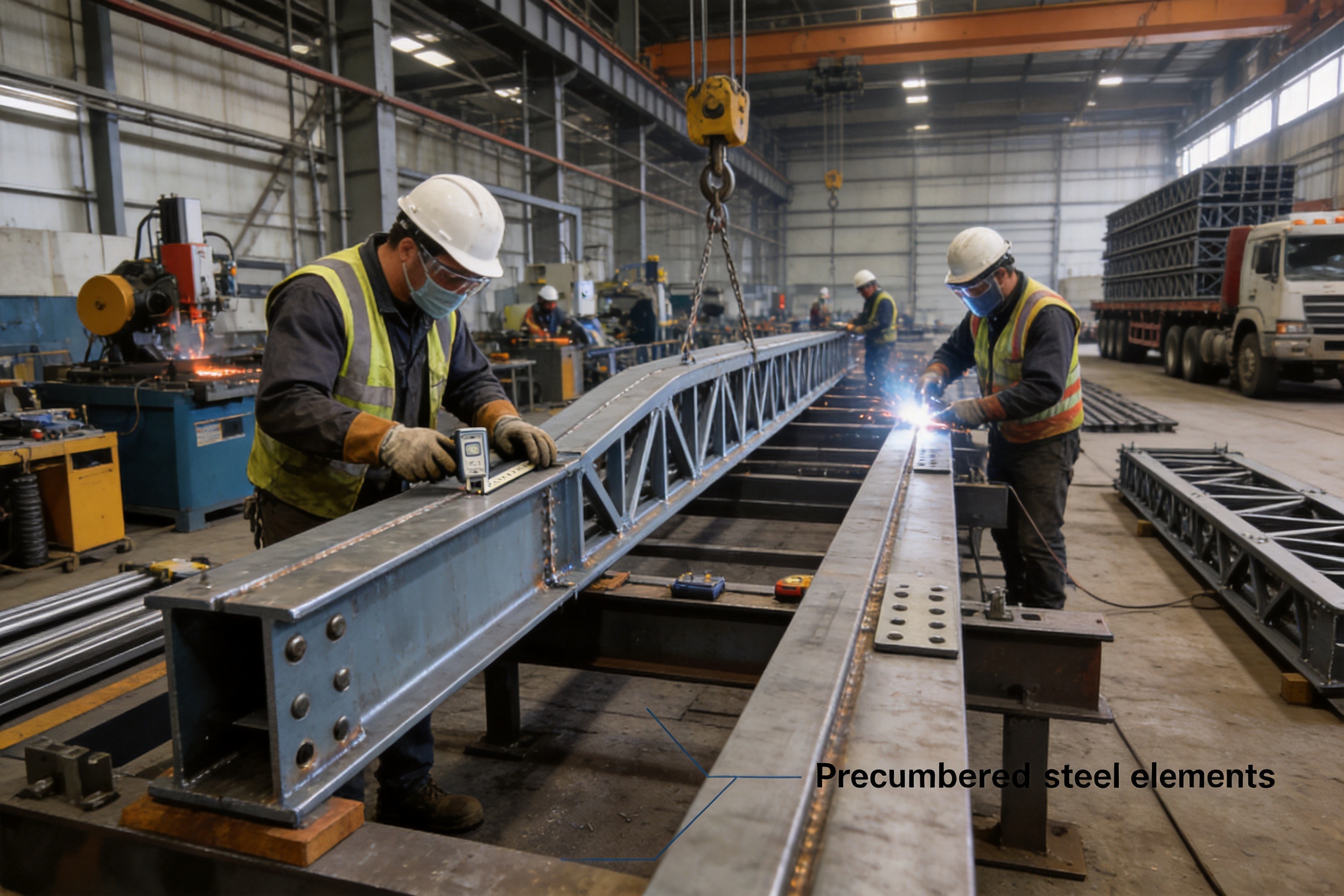
Jig Assembly and Camber Control
Assembly jigs and fixtures can be used to position members accurately before welding. A controlled jig helps maintain the specified relationship between the panel’s chords and web members. It also provides a practical method for introducing and checking the preset camber.
Camber control should be treated as a measurable production characteristic. The panel is positioned according to the required fabrication geometry, and measurements are taken at defined reference points. The objective is to ensure that the finished panel has a consistent shape and that the pre-camber does not vary beyond the applicable tolerance.
Using fixtures rather than relying solely on manual measurement improves repeatability. It allows workers to assemble multiple panels using the same reference geometry and reduces the possibility that individual units will have noticeably different curvature. Consistency is valuable when panels are connected in series, stacked in multiple layers, or combined into a wider bridge arrangement.
Welding and Distortion Management
Welding is a critical stage in the manufacture of a steel truss panel. Heat input can cause shrinkage, angular distortion, and local deformation. If these effects are not managed, the completed panel may deviate from its intended dimensions or camber.
Effective production practice includes appropriate joint preparation, controlled welding sequences, suitable fixtures, qualified procedures, and inspection of completed welds. Welding should be carried out by trained personnel using procedures appropriate for the specified steel and connection design. The sequence may be arranged to balance heat input and minimize distortion across the panel.
After welding, the panel can be checked for alignment, chord straightness, member position, connection-hole accuracy, and camber. Where correction is needed, it should be performed using controlled methods that do not damage the steel or introduce hidden defects. Uncontrolled heating or excessive mechanical force can reduce the reliability of a structural component and should be avoided.
Dimensional Inspection
Dimensional inspection confirms that the finished panel matches the required external dimensions and connection geometry. The stated external size of the YG panel is 3115 × 1500 × 176 mm. Inspection may also cover hole spacing, member alignment, squareness, flatness, chord spacing, end connections, and the measured camber profile.
Dimensional control is essential because modular bridges rely on interchangeability. If a panel is outside the expected geometry, it may create difficulty during pin or bolt installation, cause uneven force distribution, or require field modification. Factory inspection helps prevent such issues before the component reaches the project site.
Surface Preparation and Protection
Following fabrication and inspection, the steel surface can be prepared for its specified protective treatment. Surface preparation removes contaminants and supports coating adhesion. The selected coating system should reflect the intended use, storage conditions, environmental exposure, and owner requirements.
Protective treatment also contributes to the visual quality of the bridge and makes future maintenance easier. Coating records, inspection results, and repair procedures should be retained as part of the product documentation. During transportation, lifting, and erection, care should be taken to prevent unnecessary damage to finished surfaces.
Final Inspection and Dispatch
Before dispatch, each panel should be checked for identification, quantity, dimensions, camber, connection condition, surface treatment, and visible defects. Components should be packed or arranged to reduce movement and impact during transportation. Clear marking helps the site team identify panels quickly and organize assembly according to the erection plan.
These manufacturing controls support the company’s broader quality-management approach. The objective is not simply to produce a panel that looks correct, but to deliver a component with repeatable geometry, documented material quality, reliable connections, and predictable behavior within the intended bridge system.
Advantages Compared with Conventional Bridge Construction
Pre-cambered Bailey bridge panels offer several advantages over conventional bridge construction methods. These advantages are particularly apparent where the project requires speed, flexibility, temporary access, or future relocation.
Faster Site Deployment
Conventional concrete bridges may require extensive excavation, formwork, reinforcement placement, concrete casting, curing, and finishing. A modular steel bridge uses prefabricated components that can be transported to the site largely ready for assembly. This can substantially reduce the time between site preparation and bridge opening.
Rapid deployment is valuable in emergency situations, including flood damage, landslides, storm damage, road failure, and urgent construction access. It is also useful on normal infrastructure projects where a temporary crossing must be installed before permanent works are completed.
Reduced Dependence on Wet Construction
Because the principal bridge components are fabricated before delivery, modular steel bridge construction reduces dependence on site-based concrete operations. This can be beneficial where weather, water levels, environmental restrictions, or limited site space make wet construction difficult.
Less site fabrication may also reduce congestion and improve safety. Workers can focus on planned assembly, lifting, connection, deck installation, and inspection rather than carrying out extensive cutting and welding in an uncontrolled environment.
Adaptability to Different Applications
The same basic panel concept can be used for temporary bridges, construction access bridges, emergency crossings, semi-permanent road bridges, and gantry crane structures. With suitable engineering, Bailey components may also serve as guide beams, tower columns, arches, bridge erection machines, and climbing formwork systems.
This flexibility gives contractors and rental companies greater value from their inventory. Components can be reconfigured for different lengths, widths, load requirements, and construction methods rather than being limited to one permanent location.
Interchangeability and Standardization
Standardized panels and accessories simplify logistics and maintenance. Replacement components can be sourced and installed more easily when the system follows established dimensions and connection arrangements. Standardization also supports faster training because site teams can become familiar with a repeatable assembly method.
Interchangeability is one of the main differences between a modular bridge system and a project-specific welded structure. A conventional fabricated bridge may require unique replacement parts, while a standardized Bailey system is designed around recurring component types.
Lower Disruption to the Site
Fast assembly can reduce the duration of road closures, river obstruction, construction interference, and disruption to nearby communities. A temporary bridge can provide access while a damaged or incomplete route is being repaired. On large construction projects, an access bridge can help separate construction traffic from public roads.
Potential for Reuse and Leasing
Bailey bridge panels are well suited to reuse when they are properly inspected, maintained, and stored. A company that provides leasing as well as manufacturing can help customers obtain a bridge system for a limited project duration without purchasing and permanently storing all components.
Reusable steel components can support more efficient resource utilization. However, reuse should always be based on engineering inspection and documented condition assessment. Panels that have suffered significant damage, excessive corrosion, permanent deformation, or connection deterioration should not be placed back into service without appropriate evaluation and repair.
Advantages Compared with Less Controlled Modular Products
Not all modular bridge panels offer the same level of performance. The most important differences often involve manufacturing discipline, geometry control, material traceability, application support, and after-sales service rather than appearance alone.
Controlled Pre-Camber versus Unplanned Geometry
A panel with a deliberate pre-camber is engineered to account for dead-load behavior. By contrast, an ordinary straight panel may require more adjustment after assembly, particularly in longer spans or heavier configurations. Controlled camber provides a clearer relationship between the fabricated component and the completed bridge profile.
Consistent Dimensions versus Variable Fit
Reliable modularity depends on consistent dimensions and connection locations. Inconsistent member lengths, hole spacing, or end geometry can slow erection and create field fitting problems. A manufacturing process that uses production planning, fixtures, inspection, and documented tolerances can provide greater consistency than loosely controlled fabrication.
Application Engineering versus Component-Only Sales
A bridge panel cannot be selected safely based only on its external dimensions. The complete arrangement must be checked for span, loading, support, bracing, deck, wind, and local regulations. A supplier with experience in design, erection, and leasing can provide more useful guidance than a supplier that only ships steel pieces.
Complete Project Support
Jinhao’s capabilities include customized fabrication, design and system planning, technical support, quality management, erection, and leasing. This integrated approach can simplify communication and reduce coordination gaps between the component manufacturer, bridge designer, and construction contractor.
For international customers, clear technical communication is especially important. Project teams may need assistance with component lists, assembly sequences, lifting arrangements, inspection procedures, shipping plans, and maintenance recommendations. A supplier that understands the full project process can help turn a standardized product into a workable bridge solution.
Applications of Pre-Cambered Bailey Bridge Panels
Temporary Road Bridges
Temporary road bridges are commonly used when an existing bridge is being replaced, repaired, or inspected. A modular Bailey bridge can maintain traffic access while permanent works proceed. The bridge configuration can be selected according to the required span, road width, vehicle type, and expected service duration.
Pre-camber is useful in this application because road users expect a stable and reasonably smooth route. A controlled deck profile can reduce abrupt transitions and help maintain comfortable vehicle movement, subject to appropriate approach design and deck installation.
Emergency and Disaster-Response Bridges
After floods, earthquakes, landslides, or other disasters, transportation links may be interrupted with little warning. Modular steel panels can be stored in advance and deployed rapidly when a crossing is needed. Their relatively manageable component size and standardized assembly method support emergency logistics.
Emergency applications require careful attention to foundations, water flow, debris impact, scour, temporary traffic control, and inspection. The speed of assembly does not remove the need for engineering review. Instead, the benefit is that a properly planned system can be installed much faster than many conventional alternatives.
Construction Access Bridges
Large infrastructure projects often require temporary routes for cranes, trucks, excavators, concrete vehicles, and material deliveries. A Bailey bridge can provide access across rivers, drainage channels, excavations, rail corridors, or unfinished sections of a project.
Construction loads may differ from public highway loads. Heavy equipment can create concentrated wheel loads, slow-moving effects, impact, and unusual load positions. The bridge arrangement should therefore be designed for the actual construction vehicles and operating conditions rather than relying on a generic traffic assumption.
Municipal and Water Conservancy Projects
Municipal and water conservancy projects frequently involve canals, flood channels, reservoirs, drainage structures, and urban road improvements. Modular bridges can provide temporary access during excavation or construction and may also serve as semi-permanent crossings where a fast, adaptable solution is required.
In water-related environments, support design and hydraulic conditions are important. The bridge should be positioned to preserve required water flow, allow maintenance access, and reduce the risk of debris accumulation. Corrosion protection should be selected according to the local exposure conditions.
Railway and Infrastructure Construction
Railway projects may require temporary crossings, material access, erection support, or construction platforms. Bailey components can be integrated into broader temporary works when designed and installed by qualified personnel. Clearance, vibration, construction sequencing, and railway protection requirements must be addressed in the project plan.
Gantry Cranes and Bridge Erection Systems
In addition to forming bridge trusses, Bailey panels can be used in gantry crane structures, guide beams, bridge erection machines, tower columns, arches, and other temporary supporting systems. Their standardized form and strong interchangeability allow engineers to create different structural arrangements from a common component inventory.
These applications require specialized calculations because the load paths and stability conditions may differ from those of a road bridge. Lifting loads, eccentricity, temporary supports, wind, movement, and construction-stage stability should be considered in detail.
Assembly and Erection Considerations
The successful use of a pre-cambered Bailey panel depends on proper site assembly. A high-quality factory component can perform poorly if it is installed with incorrect orientation, incomplete connections, inadequate bracing, or unsuitable supports.
Site Preparation
Before panels arrive, the contractor should prepare foundations, bearings, access routes, lifting areas, storage zones, and safety barriers. The abutments or temporary supports must be capable of carrying the design reactions without excessive settlement or sliding.
Survey control is important. Support elevations should be checked before assembly because differential settlement or incorrect bearing levels can affect the final deck profile and load distribution. The approach roads should be planned so that vehicles can transition safely onto and off the modular bridge.
Component Inspection on Arrival
Each delivered panel should be checked for transportation damage, missing parts, coating damage, distortion, and visible corrosion. Connection holes and end fittings should be clean and free from obstructions. If a panel has been bent or damaged during transport, it should be isolated and evaluated before use.
The site team should compare delivered components with the packing list and erection drawings. Clear identification prevents incorrect placement and reduces assembly delays.
Correct Orientation of Pre-Camber
Pre-cambered panels must be installed in the correct orientation. The intended upward curvature should be verified before the panel is connected to adjacent units. Reversing a panel can reduce or negate the design benefit of the pre-camber and may produce an undesirable bridge profile.
Installation personnel should follow the manufacturer’s assembly instructions and the project engineer’s drawings. When multiple panel layers or transverse arrangements are used, the prescribed orientation and sequence should be maintained throughout the bridge.
Connection and Bracing
Bailey bridge systems depend on reliable connections between panels, cross beams, braces, deck supports, and other components. Pins, bolts, clips, and associated fittings should be installed fully and secured according to the approved procedure. Field drilling, uncontrolled cutting, or unauthorized modification can compromise interchangeability and structural performance.
Lateral bracing is essential for stability. The bridge should be protected against sway, buckling, wind effects, construction-stage instability, and movement caused by traffic. Bracing requirements depend on the bridge configuration and should be confirmed by the design documentation.
Launching and Lifting
For crossings where cranes cannot be positioned directly over the final supports, a launching method may be used. The bridge can be assembled progressively and moved into position using suitable equipment and a planned sequence. Launching operations involve temporary load conditions that may differ from the final bridge condition.
Launching noses, rollers, guide beams, winches, cranes, or gantry systems must be selected according to the bridge weight, span, support arrangement, terrain, and available equipment. A detailed method statement should identify lifting points, temporary supports, exclusion zones, communication procedures, and emergency controls.
Inspection, Maintenance, and Long-Term Reliability
Although modular steel bridges are designed for efficient assembly, they still require regular inspection and maintenance. A maintenance plan should be established before the bridge is opened to traffic and should reflect the expected service duration, environment, traffic type, and importance of the crossing.
Routine Visual Inspection
Routine inspections can identify loose or missing connection components, coating damage, corrosion, deformation, unusual vibration, deck deterioration, drainage problems, and movement at the supports. Inspections should be more frequent after severe weather, impact, flooding, overload, or unusual construction activity.
Connection Inspection
Connection zones deserve particular attention because repeated loading, vibration, and handling can affect pins, bolts, holes, and bearing surfaces. Any evidence of hole elongation, cracking, fretting, excessive wear, or looseness should be evaluated promptly.
Camber and Deflection Monitoring
The pre-camber is intended to offset the bridge’s dead-load deflection, but actual performance depends on the complete system. Periodic measurements can help confirm that the deck profile remains within the expected range. Unexpected changes may indicate settlement, overloading, connection movement, component damage, or deterioration of supports.
Corrosion Protection
Scratches and damaged coating areas should be cleaned and repaired using a compatible system. Mud, standing water, plant growth, and debris should be removed from locations where they may retain moisture against the steel. In aggressive environments, the inspection and coating-maintenance interval may need to be shortened.
Storage after Disassembly
When the bridge is removed, components should be cleaned, inspected, identified, and stored on suitable supports. Panels should not be left in conditions that allow water to collect or members to remain in contact with soil. Proper storage reduces corrosion and makes the next deployment more efficient.
Engineering and Procurement Guidance
Customers evaluating a pre-cambered Bailey bridge panel should consider the complete project rather than focusing only on unit price. A lower purchase price may not represent better value if the product requires extensive field modification, has inconsistent geometry, or lacks technical support.
Confirm the Design Requirements
The project team should define the required clear span, bridge width, design vehicle, construction load, pedestrian requirements, expected service life, environmental exposure, foundation condition, and erection method. These details determine the required panel arrangement and accessories.
Request Complete Technical Information
Procurement documentation should include panel dimensions, material grade, connection details, allowable tolerances, pre-camber information, surface-treatment requirements, inspection records, packing details, and recommended maintenance procedures. Clear documentation supports design approval and reduces misunderstandings during installation.
Evaluate the Supplier’s Full Capability
A supplier’s ability to design, manufacture, erect, lease, and support bridge systems can be a major advantage. It indicates that the company understands practical project constraints such as transportation, sequencing, lifting, temporary stability, and reuse.
Zhenjiang Jinhao Road & Bridge Supporting Engineering Co., Ltd. operates from an industrial location in Zhenjiang, Jiangsu Province, and has developed experience in Bailey bridges and related engineered steel systems since its establishment in 2017. Its product range includes Type 321 Bailey truss sections, HD200 or Type 200 Bailey truss sections, triangular and diamond hanging baskets, bridge steel formwork, and related structural products.
This broader product portfolio supports cross-project knowledge. Experience with hanging baskets, bridge formwork, launching gantries, and steel support systems can help the engineering team understand how modular bridge components interact with other temporary works and construction equipment.
Consider Lifecycle Cost
Lifecycle cost includes purchase or rental, transportation, site assembly, inspection, maintenance, disassembly, storage, and reuse. A standardized pre-cambered panel can reduce installation time and improve the reuse value of an inventory. These factors may be more significant than the initial component price, particularly for contractors working on multiple bridge projects.
Safety Principles for Use
All bridge systems should be designed and erected by competent professionals in accordance with applicable engineering standards and local regulations. The information provided for a product cannot replace a project-specific structural design.
Before opening a bridge to traffic, the completed system should be inspected and accepted by the responsible engineer or authority. The inspection should confirm support conditions, connections, bracing, deck installation, approach transitions, load restrictions, signage, drainage, and any required barriers or pedestrian protection.
During construction, exclusion zones should be established beneath lifting operations and around launching equipment. Workers should use suitable personal protective equipment and follow approved procedures for lifting, working at height, temporary support, and connection installation.
Traffic management is also essential. Temporary bridges may require speed limits, lane controls, vehicle restrictions, load notices, lighting, reflective markings, and regular monitoring. If the bridge is intended for construction equipment rather than public traffic, access should be controlled to prevent unauthorized use.
Why the YG Panel Is a Practical Modular Bridge Choice
The YG Bailey bridge panel combines the core advantages expected from a modular steel bridge component with a specific pre-cambered geometry intended to improve the completed bridge profile. Its 3115 × 1500 × 176 mm dimensions provide a standardized basis for system assembly, while Q355B steel provides a suitable structural material for fabricated truss construction.
Its most important technical benefit is the preset camber introduced during manufacturing. By accounting for the bridge’s self-weight before installation, the panel can essentially achieve zero deflection under its own weight after assembly, subject to the final bridge design and field conditions. This makes the product especially useful where rapid construction must be combined with controlled serviceability.
The product is also supported by a company with capabilities extending beyond fabrication. Design and system planning, customized production, technical support, quality management, erection, and leasing give customers access to a more complete project solution. This is valuable for contractors and infrastructure owners that need a bridge supplier capable of responding to practical site conditions.
Compared with non-standardized or less carefully controlled alternatives, the panel offers advantages in interchangeability, transportation, assembly speed, adaptability, and reuse. Compared with conventional cast-in-place construction, it can reduce site work and shorten deployment time. Compared with ordinary straight modular members, its pre-cambered geometry provides a more deliberate approach to dead-load deflection.
For temporary bridges, emergency routes, construction access, municipal works, water conservancy projects, railway construction, and gantry systems, the YG panel provides a versatile foundation for engineered modular steel structures.
Frequently Asked Questions
What is a pre-cambered Bailey bridge panel?
A pre-cambered Bailey bridge panel is a modular steel truss component manufactured with a controlled upward curvature. The camber is intended to offset downward deflection caused by the weight of the completed bridge and its components.
What are the dimensions of the YG Bailey bridge panel?
The stated external dimensions are 3115 × 1500 × 176 mm. The panel forms part of a modular bridge system and is combined with other panels and accessories according to the project design.
What material is used to manufacture the panel?
The panel is manufactured from Q355B structural steel. Material receiving, identification, fabrication, welding, inspection, and protective treatment should be controlled to support reliable structural performance.
Does pre-camber mean that the bridge will never deflect?
No. All structural systems experience some movement under load. Pre-camber is intended to compensate primarily for dead-load deflection and help the completed bridge achieve an appropriate profile. Live-load deflection, support settlement, temperature effects, wind, connection movement, and other factors must be considered in the project design.
Where can the panel be used?
Typical applications include temporary road bridges, emergency bridges, construction access bridges, municipal crossings, water conservancy projects, railway construction, gantry cranes, guide beams, bridge erection systems, tower columns, arches, and other temporary or semi-permanent steel structures.
Can the panels be reused?
Yes, Bailey bridge panels are generally suitable for reuse when they are properly inspected, maintained, transported, and stored. Every panel should be checked for deformation, corrosion, cracks, damaged holes, worn connections, and other defects before being installed in a new project.
Can the panel be used for any span or load?
No. The required number and arrangement of panels depend on the span, bridge width, design loading, support conditions, deck system, wind, traffic, and applicable standards. A qualified engineer must select and verify the complete bridge configuration.
What makes this product different from an ordinary modular panel?
The principal difference is the controlled pre-camber introduced during fabrication. The product is also supported by standardized dimensions, Q355B steel, manufacturing inspection, and the supplier’s broader capabilities in design, erection, leasing, and technical support.
How does pre-camber improve construction?
It reduces the need to correct excessive dead-load sag after assembly and helps the bridge achieve a more predictable deck profile. This can simplify construction planning and support serviceability requirements.
What should be checked before installation?
The project team should verify the panel condition, dimensions, camber orientation, connection components, support elevations, bridge arrangement, bracing, lifting method, deck details, traffic requirements, and approved erection drawings.
Is technical support available for customized projects?
The supplier provides customized fabrication, design and system planning, technical support, quality management, erection, and leasing services. Customers should provide project details so the appropriate bridge arrangement and accessories can be evaluated.
How should the panels be maintained?
Maintenance should include routine visual inspection, connection checks, deflection or profile monitoring, coating repair, cleaning, drainage control, and inspection after unusual events such as flooding, impact, severe weather, or suspected overload.
Conclusion
Pre-cambered Bailey bridge panels provide a practical combination of structural efficiency, fast deployment, interchangeability, and adaptability. The YG panel is manufactured with a preset camber that helps offset the bridge’s own weight after assembly and supports a stable final profile. Its standardized external dimensions and Q355B steel construction make it suitable for integration into a wide range of modular bridge arrangements.
The product’s advantages are strengthened by controlled manufacturing, planned fabrication, dimensional inspection, camber verification, welding-quality management, material traceability, and protective treatment. These processes help distinguish a reliable engineered panel from a basic steel component with limited geometric or quality control.
With experience in Bailey bridges, bridge launching gantries, hanging baskets, pier formwork, bridge steel formwork, erection, leasing, and customized steel structures, Zhenjiang Jinhao Road & Bridge Supporting Engineering Co., Ltd. offers support across the bridge project lifecycle. Its integrated capabilities can help contractors and infrastructure owners select, assemble, operate, maintain, and reuse modular bridge systems more effectively.
When properly engineered and installed, the pre-cambered Bailey bridge panel can support temporary, emergency, construction, municipal, water conservancy, railway, and semi-permanent infrastructure needs. It is a strong choice for projects where speed, mobility, repeatability, and dependable steel construction are essential.
References
1. Product specification information for the YG Bailey Bridge Panel, including external dimensions and material designation.
2. Company technical and corporate information concerning modular Bailey bridges, bridge launching gantries, hanging baskets, bridge formwork, erection, leasing, and customized fabrication services.
3. General principles of structural steel fabrication, welding control, dimensional inspection, corrosion protection, and modular bridge assembly.
4. General engineering practice for temporary bridges, emergency crossings, construction access structures, temporary works, and bridge serviceability assessment.
5. General guidance on inspection, maintenance, storage, reuse, and condition assessment of modular steel bridge components.


 Français
 Español
 عربى