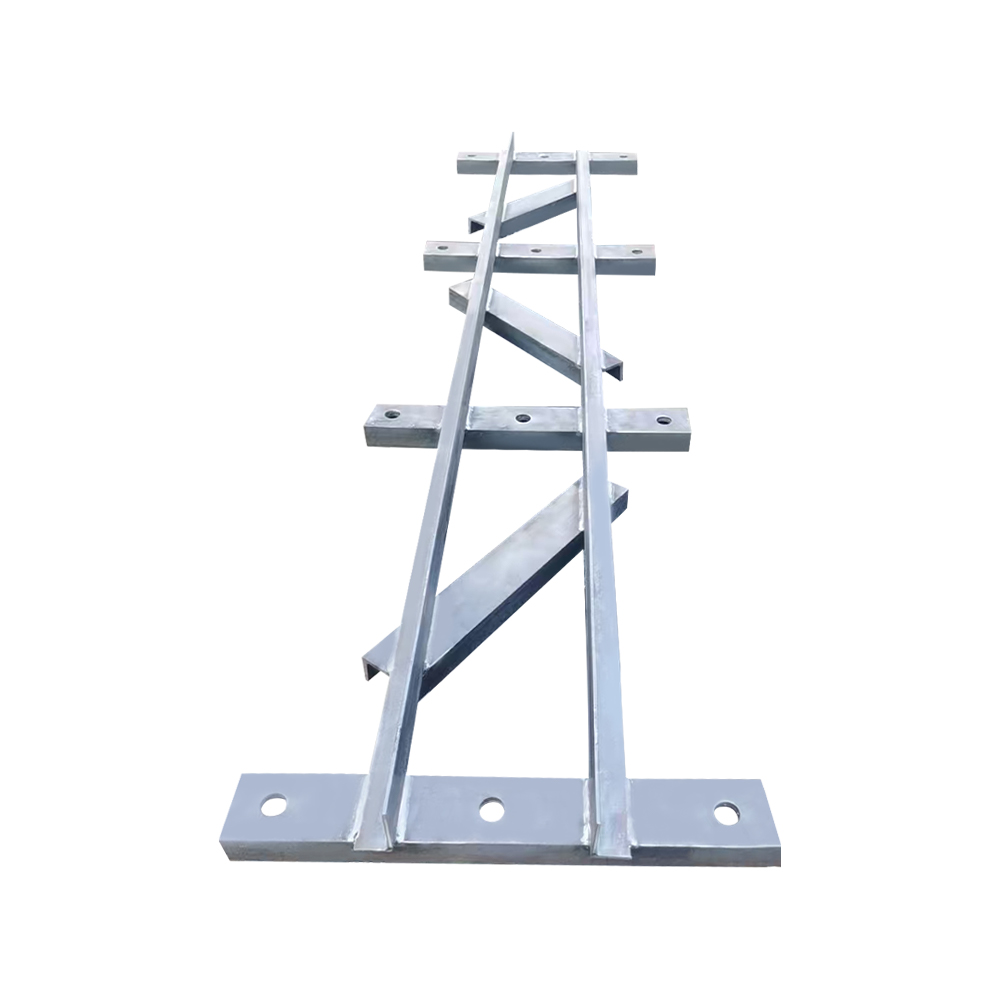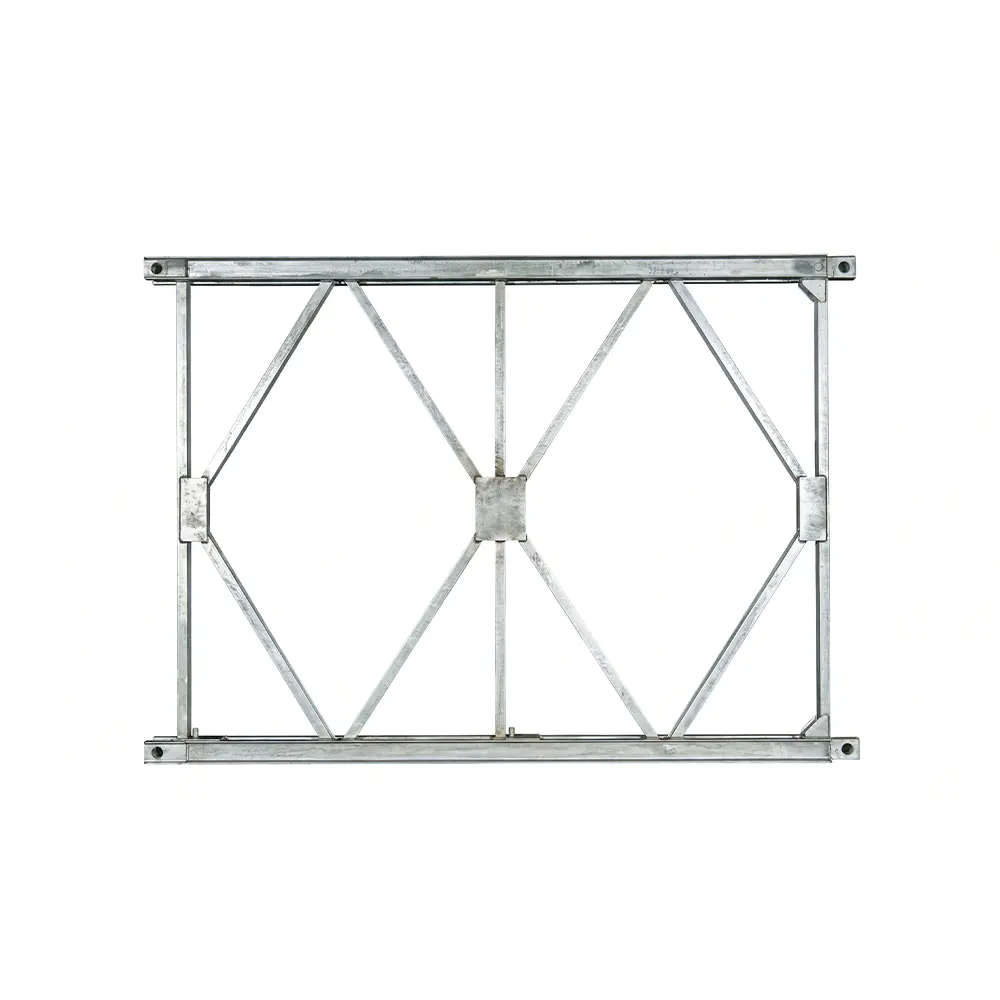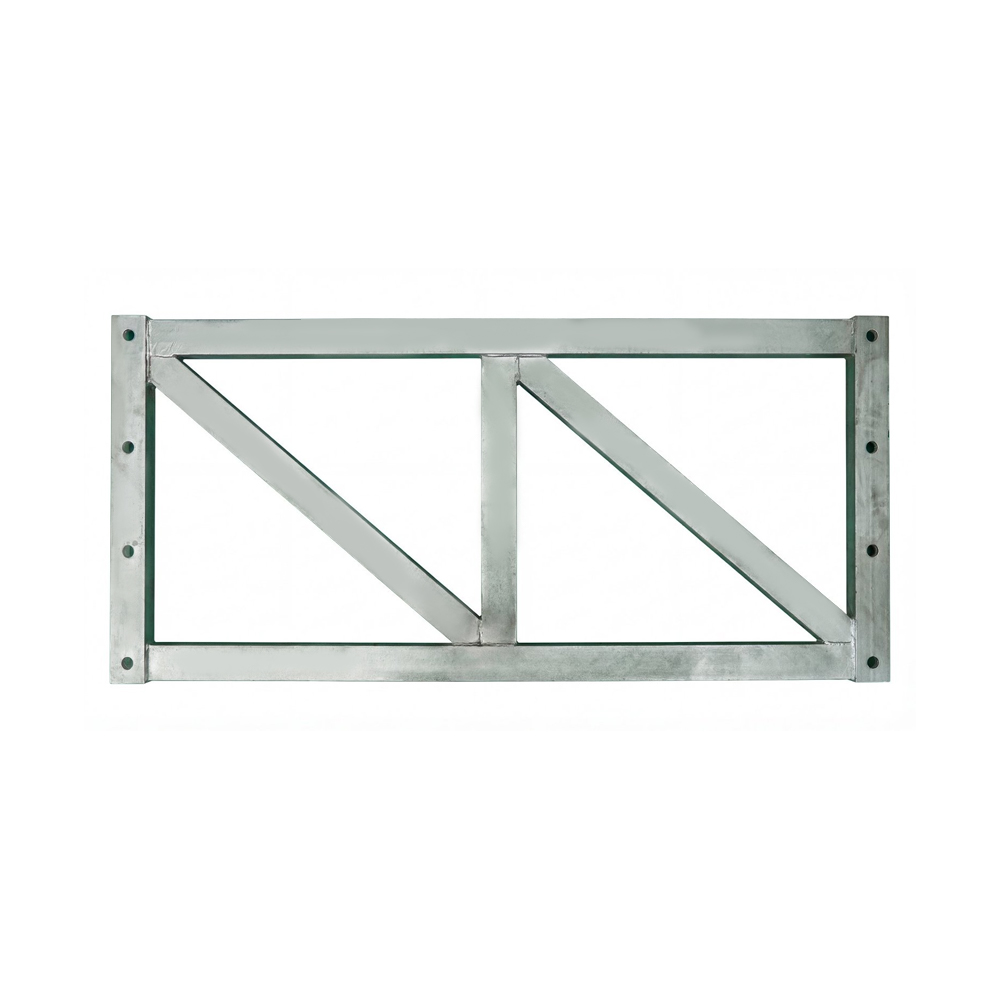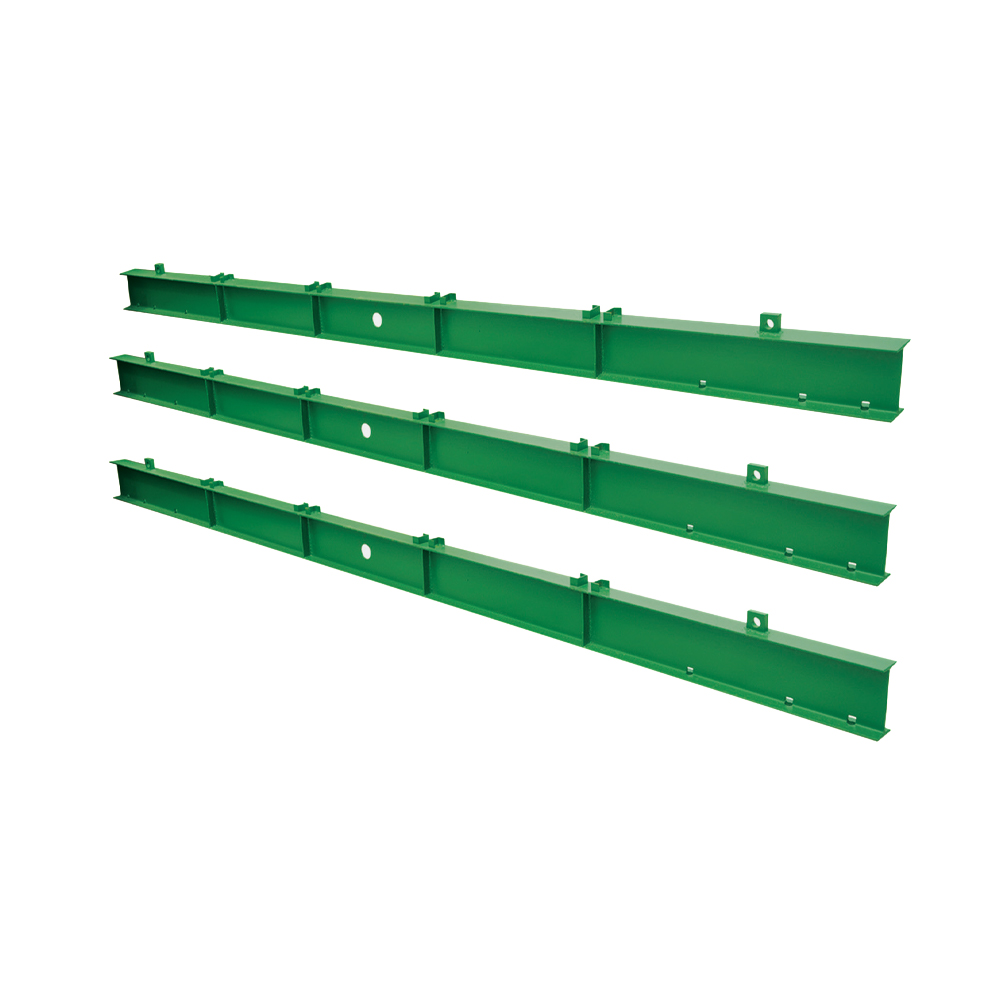
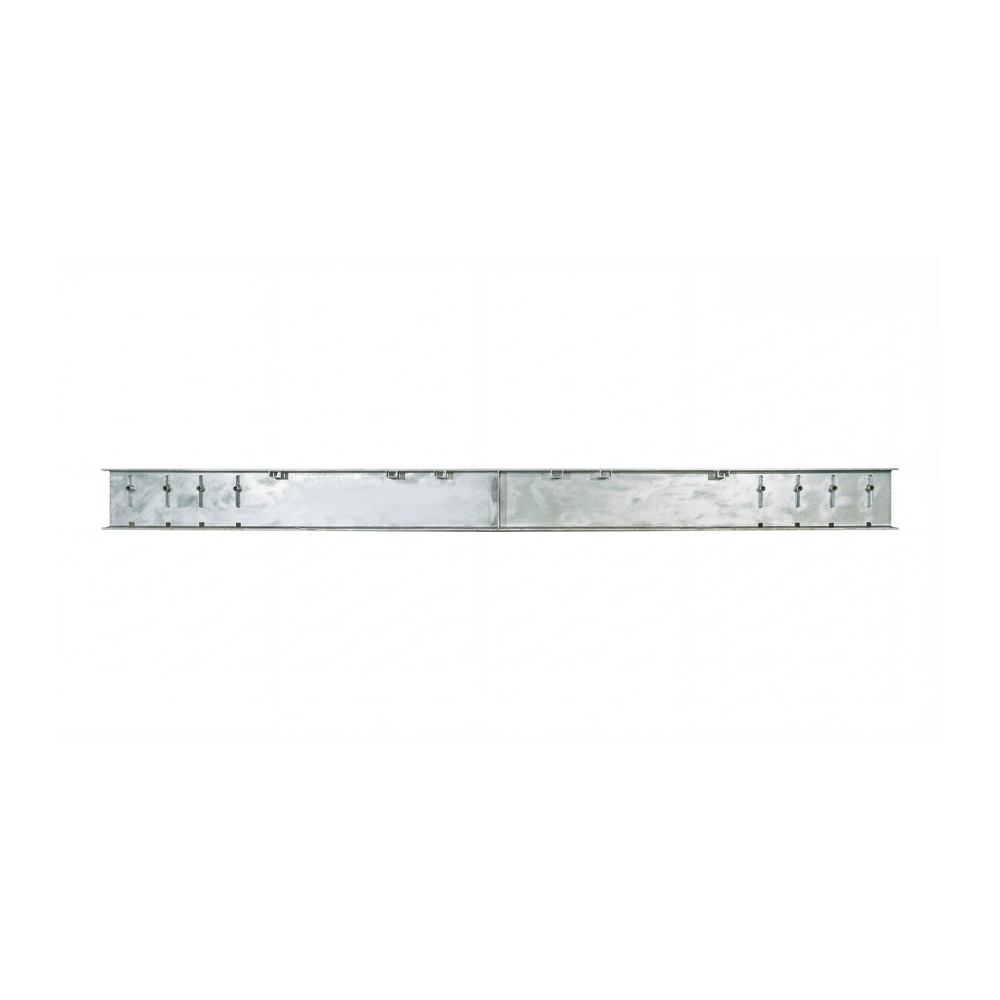
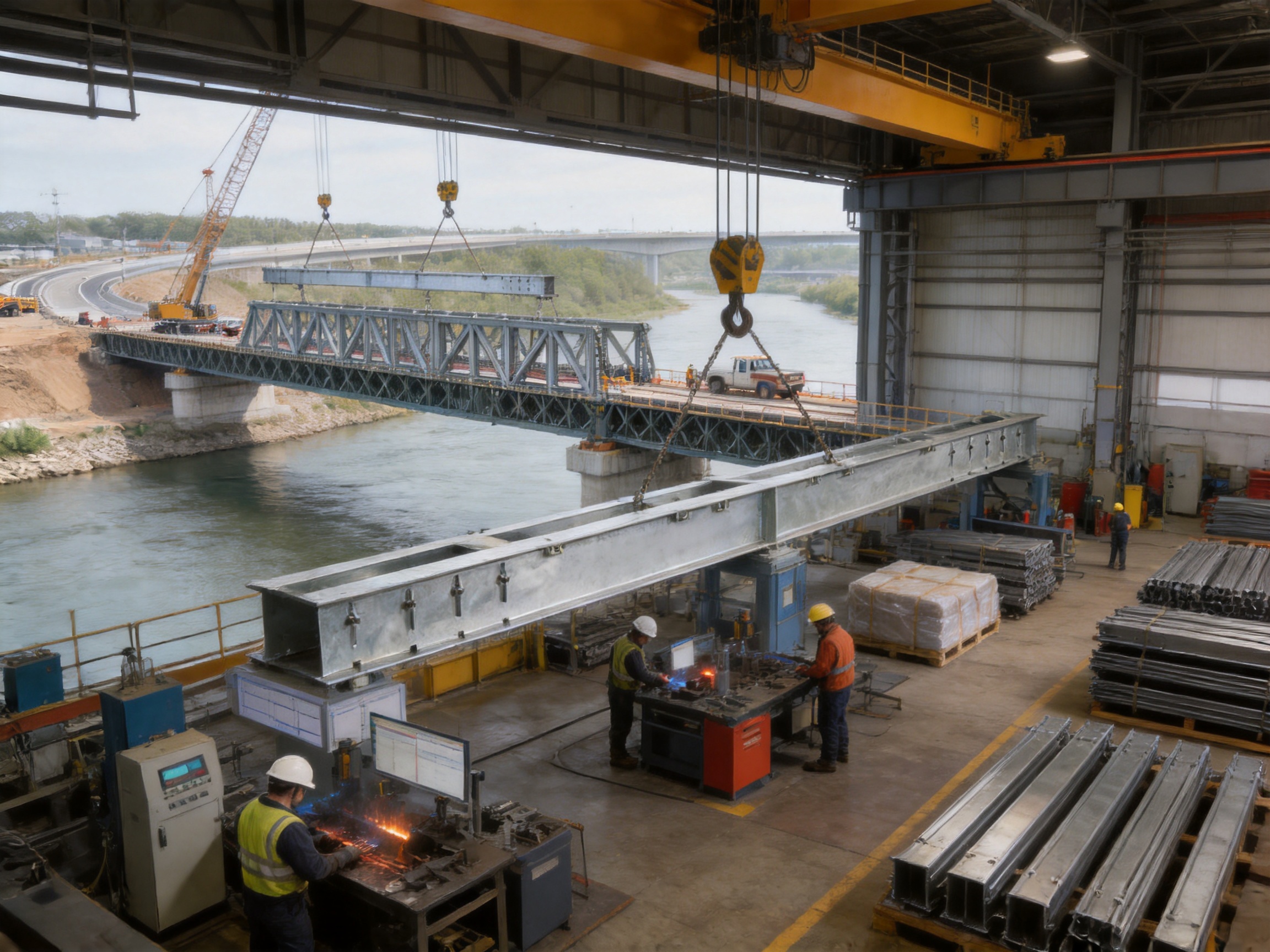
Modern bridge construction increasingly depends on structural components that combine high load-bearing capacity, reliable dimensional accuracy, rapid installation, and flexible compatibility with different project arrangements. The Type HD200 crossbeam for Bailey bridges is designed to meet these requirements as a critical transverse component within a modular steel bridge system. Manufactured from Q355B structural steel and offered in several dimensional configurations, this crossbeam provides dependable support for bridge decks, truss assemblies, and related temporary or semi-permanent bridge structures.
Unlike conventional site-fabricated beams that often require extensive cutting, welding, adjustment, and inspection during installation, the Type HD200 crossbeam is produced as a standardized prefabricated component. Its standardized design supports efficient transportation, organized assembly, component interchangeability, and reduced construction complexity. These advantages are particularly valuable in emergency bridge construction, temporary traffic diversion, municipal infrastructure, water conservancy works, railway projects, and heavy engineering sites where construction time and structural reliability are equally important.
The crossbeam is available in external dimensions of 5.8 meters, 6.2 meters, and 9.63 meters. Depending on the configuration, the listed section dimensions are 5800 × 200 × 400 millimeters, 6200 × 200 × 400 millimeters, and 9630 × 200 × 600 millimeters. The product also incorporates specified center-distance arrangements, including 250 + 230 + 250 + 4540 + 250 + 230 + 250 millimeters and 250 + 230 + 250 + 7900 + 250 + 230 + 250 millimeters. These dimensional options allow engineers and contractors to select a suitable arrangement according to span, deck width, truss layout, loading requirements, and project conditions.
As a specialized product from Zhenjiang Jinhao Road & Bridge Supporting Engineering Co., Ltd., the Type HD200 crossbeam reflects the company’s broader capabilities in the design, manufacture, erection, and leasing of Bailey bridges, launching gantries, hanging baskets, pier formwork, and other engineered steel structures. The company has developed from an industrial and construction materials enterprise into a comprehensive bridge-supporting engineering supplier serving contractors, governments, and engineering companies.
1. The Role of a Crossbeam in a Bailey Bridge System
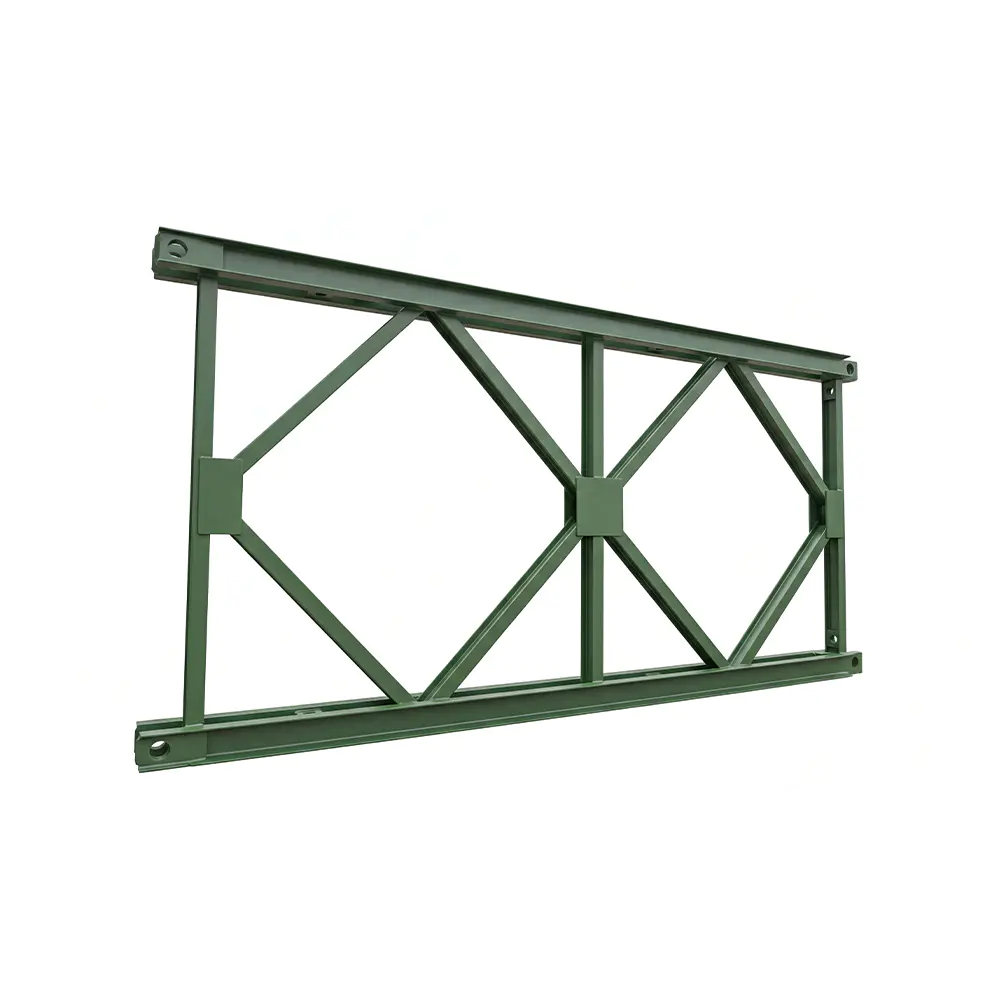
A Bailey bridge is a modular steel bridge assembled from prefabricated structural members. Its main components commonly include truss panels, crossbeams, stringers, deck systems, bracing members, end posts, connecting pins, and supporting accessories. Each element performs a specific structural function, and the overall bridge depends on the correct relationship between these components.
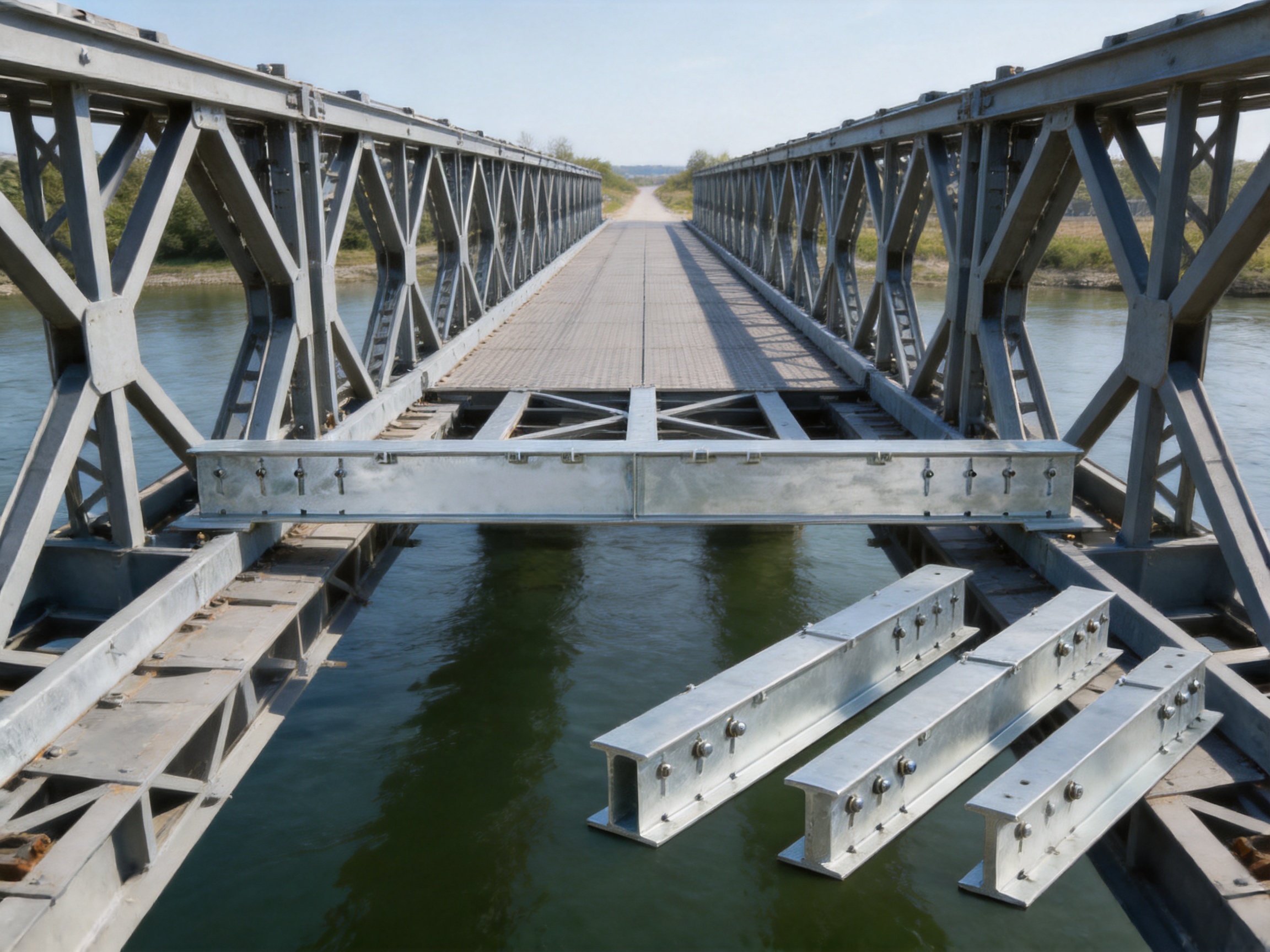
The crossbeam extends transversely across the bridge width and transfers loads from the bridge deck and longitudinal members toward the main trusses or supporting structural lines. In practical terms, it acts as an important load-distribution member. Vehicle loads, construction equipment, pedestrian traffic, maintenance loads, and other imposed forces are transferred through the deck system to the crossbeams. The crossbeams then distribute these forces to the trusses and supports.
A properly designed crossbeam must therefore satisfy several requirements. It must possess adequate strength under bending, shear, local loading, and connection forces. It must have sufficient stiffness to limit deflection and maintain deck alignment. It must provide accurate connection locations so that it can be assembled with compatible truss sections and deck members. It must also withstand handling, transportation, erection, environmental exposure, and repeated use.
The Type HD200 crossbeam is developed as part of the HD200 or Type 200 Bailey bridge system. Its dimensions and center-distance arrangements are intended to correspond with the geometry of the related modular bridge components. This compatibility is one of the product’s central advantages because bridge construction is not based on the performance of one isolated beam. It depends on the coordinated performance of a complete system in which each member fits and works with the others.
2. Main Product Specifications
| Item |
Specification |
| Product |
Type HD200 crossbeam for Bailey bridge |
| System category |
Type 200 Bailey truss section system |
| Material |
Q355B structural steel |
| External dimension 1 |
5800 × 200 × 400 mm |
| External dimension 2 |
6200 × 200 × 400 mm |
| External dimension 3 |
9630 × 200 × 600 mm |
| Center-distance arrangement 1 |
250 + 230 + 250 + 4540 + 250 + 230 + 250 mm |
| Center-distance arrangement 2 |
250 + 230 + 250 + 7900 + 250 + 230 + 250 mm |
| Typical role |
Transverse support and load-distribution member within an HD200 Bailey bridge system |
The listed configurations provide flexibility for different bridge layouts. The 5.8-meter and 6.2-meter options are suitable for applications requiring a conventional transverse support arrangement, while the 9.63-meter configuration provides a larger dimensional option for specific bridge widths, structural layouts, or specialized engineering requirements. Final selection should always be based on structural calculations, project drawings, applicable design codes, and the complete bridge system configuration.
Dimensional standardization is especially important in modular bridge construction. A crossbeam that is only slightly inaccurate in length, connection spacing, or interface geometry can create installation difficulties, uneven load transfer, alignment problems, or excessive field modification. The Type HD200 design addresses this issue through predefined dimensions and center-distance arrangements, helping contractors organize procurement, transportation, assembly, and inspection more effectively.
3. Q355B Steel and Structural Performance
The Type HD200 crossbeam is manufactured from Q355B steel. This grade is widely used in structural steel applications where a combination of strength, weldability, toughness, and reliable fabrication performance is required. Compared with lower-strength structural steels, Q355B can provide a higher yield strength level, allowing engineers to achieve a favorable balance between load-bearing performance and member size when the design is properly engineered.
For bridge components, material selection influences more than simple static strength. The steel must also perform during lifting, transport, assembly, repeated loading, and service in changing weather conditions. It must be compatible with fabrication processes such as cutting, drilling, welding, straightening, and surface treatment. Q355B is suitable for these types of engineered structural applications when it is procured, processed, welded, and inspected according to appropriate technical requirements.
The use of a consistent structural steel grade supports manufacturing repeatability. When material characteristics are controlled, production teams can apply established fabrication procedures, welding parameters, inspection plans, and dimensional controls. This consistency is valuable for modular bridge systems because many components may be assembled together across different projects or reused during the bridge’s service life.
The use of Q355B does not eliminate the need for project-specific engineering. Actual bridge capacity depends on span, lane arrangement, vehicle loading, support conditions, truss configuration, deck system, bracing, connection details, dynamic effects, wind loads, and other design factors. The material grade is one part of a complete structural solution. Nevertheless, using an appropriate high-strength structural steel provides a sound foundation for a crossbeam intended for medium- to heavy-duty engineering applications.
4. Dimensional Accuracy and Modular Compatibility
One of the most important advantages of the Type HD200 crossbeam is its compatibility with modular Bailey bridge construction. A modular bridge system is effective only when its components are manufactured to consistent dimensions and connection positions. The product’s specified lengths, depths, widths, and center distances help create an organized interface with the associated HD200 truss sections and deck-supporting members.
Modular compatibility provides several practical benefits. First, it reduces the amount of field modification required. Contractors do not need to redesign every transverse member for each project when the bridge can be assembled from standardized components. Second, it improves installation efficiency because workers can follow established assembly sequences. Third, it makes replacement and repair easier because a damaged component can be identified and replaced with a compatible member. Fourth, it simplifies inventory management for bridge contractors that operate across multiple locations.
The specified center distances are also significant. A center-distance arrangement defines the relationship between the outer support areas and the central spacing of the member. This relationship affects how the crossbeam interacts with the trusses, deck stringers, connectors, and other structural parts. Maintaining the designed geometry helps ensure that loads are transferred through the intended paths rather than through improvised or uneven contact points.
Compared with individually fabricated cross-members, standardized HD200 crossbeams can reduce uncertainty during installation. Site teams can use drawings, component schedules, lifting plans, and inspection checklists that correspond to a known product configuration. This helps improve communication between the designer, manufacturer, logistics provider, erection contractor, and project owner.
Compatibility also supports the broader concept of component interchangeability. Bailey bridges are often selected because they can be adapted to different spans, widths, and construction conditions. The ability to combine compatible components into different arrangements is a major advantage over rigid, single-purpose bridge structures. The Type HD200 crossbeam contributes to this flexibility by serving as a repeatable structural interface within the modular system.
5. Advantages Compared with Conventional Site-Fabricated Beams
5.1 Faster Construction
Traditional site-fabricated beams may require extensive preparation before they can be placed into a bridge assembly. Steel plates and sections may need to be measured, cut, drilled, fitted, welded, inspected, painted, and adjusted at the project site. These activities are affected by weather, site access, labor availability, power supply, and the quality of temporary working facilities.
A prefabricated Type HD200 crossbeam is manufactured before delivery and arrives as a prepared structural member. This allows the site team to focus on positioning, connection, alignment, and inspection instead of carrying out the full fabrication process in an uncertain field environment. The result can be a shorter installation period and a more predictable construction schedule.
5.2 Better Dimensional Control
Factory production normally provides better conditions for controlling dimensions than open construction sites. Components can be positioned on dedicated fabrication platforms, measured using calibrated tools, and checked against approved drawings before shipment. Repetitive production also allows workers to identify and correct process deviations more quickly.
Improved dimensional control helps reduce installation problems such as misaligned holes, uneven bearing, excessive gaps, forced connections, and irregular deck support. These issues can otherwise lead to field delays and may require unplanned cutting or welding. By receiving components with defined dimensions, contractors can organize the erection process more efficiently.
5.3 Reduced Field Labor
The Type HD200 crossbeam is intended to be installed as part of a prefabricated modular system. Although bridge erection still requires skilled workers, lifting equipment, supervision, and safety controls, the amount of on-site fabrication labor can be reduced. This is particularly important in remote locations, emergency projects, and sites where construction space is limited.
Lower field labor demand can also reduce exposure to hazards associated with prolonged hot work, cutting, drilling, and material handling. A well-managed installation still requires strict safety procedures, but moving more production activity into a controlled manufacturing environment can improve overall work organization.
5.4 Stronger Interchangeability
Site-fabricated beams are often unique to one bridge or one construction location. If they are damaged, replacement may require a new design and a new fabrication cycle. Standardized HD200 crossbeams, by contrast, are intended to work within a defined system. This improves the possibility of replacement, repair, reuse, and redeployment.
Interchangeability is especially valuable for contractors and infrastructure agencies that maintain bridge components in inventory. A standardized component can be cataloged according to its type, dimensions, and intended application. This supports faster mobilization when a temporary crossing, emergency detour, or construction access bridge is required.
5.5 More Predictable Quality
Factory production enables the manufacturer to establish repeatable procedures for material receiving, cutting, assembly, welding, inspection, dimensional verification, and surface protection. When these procedures are applied consistently, product quality becomes more predictable than when every member is fabricated under different site conditions.
Predictability is not the same as automatic compliance. Each project still requires appropriate documentation and inspection. However, a controlled production process gives the project team a stronger basis for quality management and acceptance.
6. Manufacturing Strengths and Production Approach
Zhenjiang Jinhao Road & Bridge Supporting Engineering Co., Ltd. has developed capabilities across the design, manufacturing, erection, and leasing of steel bridge and bridge-supporting products. This integrated experience is important because a crossbeam manufacturer that understands only fabrication may not fully appreciate the practical requirements of transport, assembly, erection, structural coordination, and site operation.
The company’s product range includes Bailey steel bridges, Type 321 Bailey truss sections, HD200 or Type 200 Bailey truss sections, triangular and diamond hanging baskets, bridge steel formwork, pier formwork, bridge launching gantry systems, and related engineered steel structures. This broad product knowledge allows the manufacturer to view the Type HD200 crossbeam as part of a complete bridge-supporting system rather than as an isolated steel item.
6.1 Engineering-Oriented Product Development
The development of modular bridge products requires more than producing steel members to approximate dimensions. The manufacturer must understand how members connect, how loads travel through the system, how erection sequences affect temporary stability, and how different components interact during service. Experience with bridge systems, launching equipment, formwork, and hanging baskets contributes to a more practical engineering perspective.
For the Type HD200 crossbeam, this engineering-oriented approach supports the definition of product dimensions, center-distance arrangements, material selection, and compatibility requirements. It also allows the supplier to communicate more effectively with contractors and designers when a project requires a specific bridge width, span arrangement, loading condition, or installation sequence.
6.2 Controlled Steel Processing
Manufacturing a structural crossbeam normally involves several stages, including material inspection, marking, cutting, component preparation, assembly, welding or connection fabrication, straightening, dimensional checking, surface treatment, and final inspection. Each stage can affect the final product.
Material inspection helps confirm that the received steel corresponds to the specified grade and purchasing requirements. Marking and cutting must follow approved drawings so that member lengths and connection locations remain accurate. Assembly fixtures or controlled working platforms can help maintain squareness and alignment. Welding procedures should be selected according to the material, thickness, joint design, and applicable technical requirements.
After fabrication, straightness, flatness, length, width, depth, hole positions, connection interfaces, and other critical dimensions should be checked. Surface treatment and coating, when specified for the project, should be applied after appropriate preparation. The goal is to deliver a component that is structurally sound, geometrically consistent, and ready for organized transport and erection.
6.3 Quality Management
Quality management for bridge steel components should address the entire production chain rather than relying only on a final visual inspection. A comprehensive approach may include incoming material records, traceability, drawing control, welding management, dimensional inspection, non-destructive testing where required, coating inspection, packing checks, and release documentation.
Because the Type HD200 crossbeam is a load-bearing component, quality control should pay particular attention to welded joints, connection areas, bearing surfaces, lifting points, and regions subject to concentrated forces. Inspection requirements should be determined by the approved design, contract specifications, applicable standards, and project risk level.
The company’s experience in manufacturing different bridge and formwork systems supports the development of practical inspection routines. Components must not only meet workshop requirements; they must also be suitable for lifting, transportation, stacking, assembly, and repeated use. This broader understanding helps connect manufacturing quality with real construction performance.
6.4 Customized Fabrication and Technical Support
Modular does not mean every project is identical. Bridge width, span, clearance, traffic loading, deck type, approach conditions, foundation arrangement, and erection method may vary considerably. A capable supplier should therefore be able to provide customized fabrication and technical coordination while retaining the efficiency of standardized production.
Jinhao provides design and system planning support in addition to manufacturing. This can help customers clarify the required component quantities, bridge arrangement, supporting members, erection sequence, transportation plan, and project-specific fabrication details. When customers require a non-standard arrangement, early technical communication can help determine whether the requirement can be addressed through an existing modular configuration or through an engineered modification.
Customization may involve dimensions, connection details, protective treatment, identification marks, packing, or coordination with other bridge components. Any modification should be confirmed through engineering review so that the structural function and system compatibility are preserved.
Type HD200 - Crossbeam For Bailey Bridge
7. Applications of the Type HD200 Crossbeam
7.1 Temporary and Emergency Bridges
Temporary and emergency bridges often need to be installed quickly while providing dependable access for vehicles, equipment, rescue teams, or local communities. A modular Bailey bridge can be transported in sections and assembled with comparatively limited specialized infrastructure. The Type HD200 crossbeam supports this approach by providing a standardized transverse member that can be incorporated into a planned bridge configuration.
Emergency bridge projects may follow floods, landslides, earthquakes, infrastructure failures, or severe weather events. In these situations, the construction team may face difficult terrain, restricted access, uncertain ground conditions, and a shortage of materials. Standardized components can simplify logistics and reduce the number of fabrication activities required at the site.
7.2 Construction Access and Detour Bridges
During highway, railway, bridge, dam, or municipal construction, a temporary crossing may be needed to maintain traffic or provide access for construction vehicles. A Type HD200 Bailey bridge can be assembled as a construction access bridge or traffic detour structure, subject to the appropriate design and load assessment.
The crossbeam helps support the deck and distribute vehicle loads to the main trusses. Its use in a modular system permits the bridge to be dismantled, relocated, extended, or reconfigured when project stages change. This adaptability can reduce the need to build a new temporary structure for every phase of a long construction program.
7.3 Municipal and Water Conservancy Projects
Municipal projects often involve crossings over drainage channels, rivers, excavations, rail corridors, or existing roads. Water conservancy projects may require temporary crossings for construction access, maintenance, flood-control works, or equipment transportation. In these settings, bridge components must be delivered efficiently and assembled without causing unnecessary disruption to surrounding operations.
The Type HD200 crossbeam’s prefabricated nature and range of dimensional options can support different project layouts. Engineers can evaluate the required span and deck width, select a suitable system configuration, and coordinate the crossbeam with the trusses, deck, bearings, and foundations.
7.4 Railway and Heavy Engineering Works
Railway and heavy engineering sites may require temporary bridges, guide beams, erection supports, gantry-related structures, or access platforms. The broader Bailey bridge component family can also be used in guide beams, tower columns, gantry hangers, bridge erection machines, and climbing formwork systems when properly designed for those functions.
However, the application of a Type HD200 crossbeam outside its standard bridge configuration should not be assumed without engineering verification. The loading, restraint conditions, connection method, fatigue considerations, and stability requirements may differ from those of a normal road bridge. The product’s structural versatility is an advantage, but every alternative application requires a suitable design review.
8. Construction and Installation Considerations
The performance of a crossbeam depends on both manufacturing quality and installation quality. Even a well-fabricated component can perform poorly if it is installed with incorrect orientation, insufficient connections, improper bearing, damaged interfaces, or inadequate temporary bracing.
8.1 Pre-Installation Planning
Before delivery, the project team should review the approved bridge design, component schedule, erection drawings, lifting plan, transportation route, storage arrangement, foundation conditions, and site safety procedures. The Type HD200 crossbeam should be checked against the intended bridge configuration to confirm that its length and center-distance arrangement correspond to the design.
Site personnel should also verify that the support points, truss spacing, deck members, pins, bolts, bracing parts, and other related components are available before assembly begins. A modular bridge erection process is most efficient when the component sequence is organized in advance rather than interrupted by missing or incompatible parts.
8.2 Handling and Storage
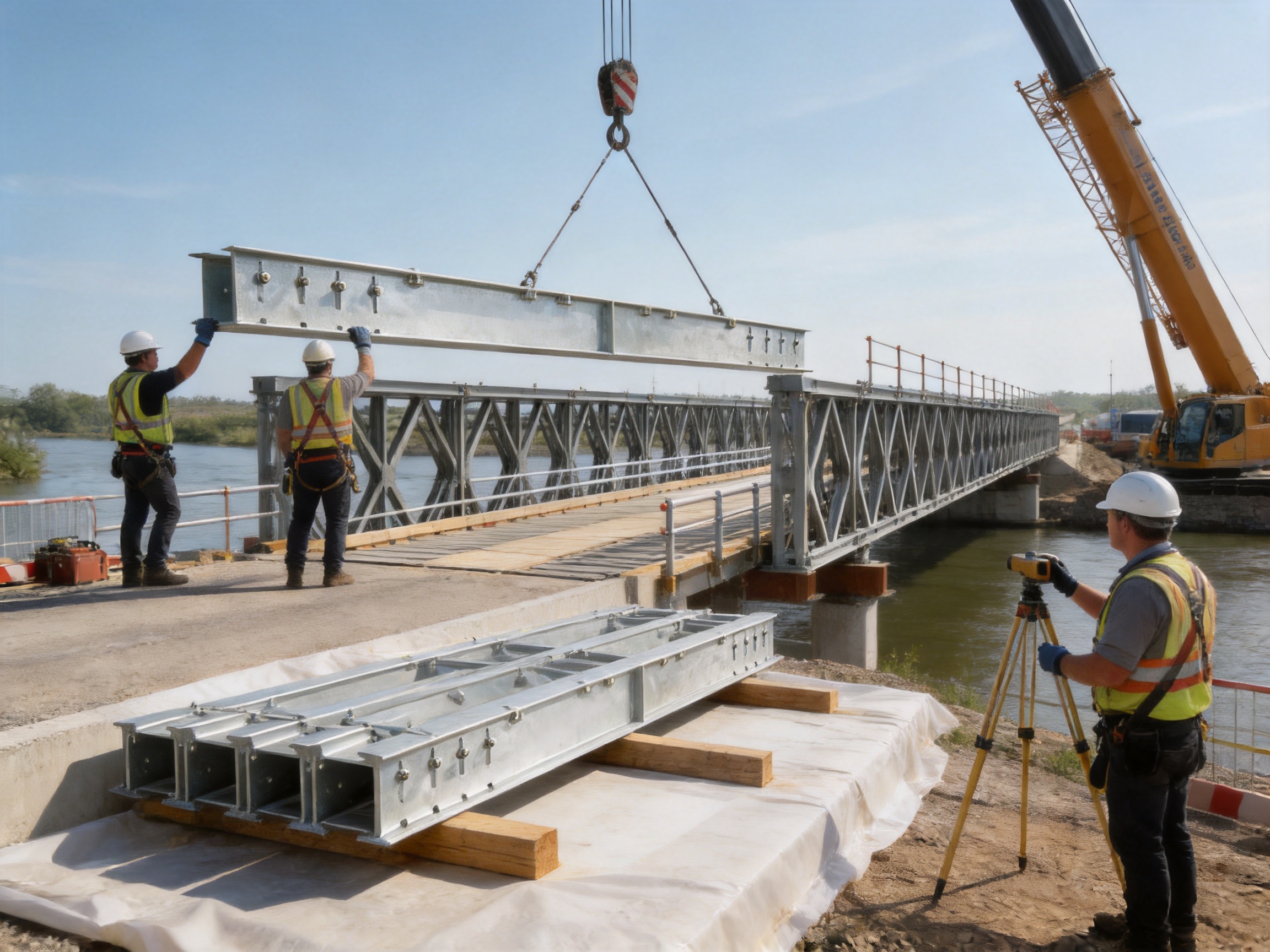
Crossbeams should be lifted using suitable equipment and approved lifting points or methods. Slings, shackles, spreader beams, and cranes must be selected according to the member’s weight, length, center of gravity, and site conditions. Workers should not stand beneath suspended loads, and the lifting path should be kept clear.
During storage, members should be placed on stable supports that prevent direct contact with standing water, mud, corrosive materials, or other contaminants. Components should be arranged to avoid excessive stacking pressure, distortion, and collision damage. Connection areas and coated surfaces should be protected from unnecessary impact.
8.3 Assembly Sequence
The exact assembly sequence depends on the bridge design and erection method. In general, the main trusses, crossbeams, bracing, deck-supporting members, and deck system must be assembled in a controlled sequence that maintains stability at every stage. Temporary supports or a launching nose may be required for certain site conditions.
Crossbeams should be positioned according to the approved spacing and aligned with the relevant truss connection points. Connections should be completed using the specified pins, bolts, clamps, or other approved components. Field workers should not enlarge holes, force members into position, or make unapproved modifications to resolve a dimensional problem. Any discrepancy should be reported for technical evaluation.
8.4 Inspection Before Loading
Before the bridge is opened to traffic or loaded with construction equipment, the completed structure should be inspected. The inspection may include verification of crossbeam location, connection completion, truss alignment, deck installation, bracing, bearing conditions, support geometry, approach transitions, and safety barriers.
Where required by the project, load testing, deflection monitoring, weld inspection, bolt inspection, or other verification procedures should be conducted. The acceptance process should follow the applicable design documents and regulatory requirements. A crossbeam is one part of a structural system, so its acceptance should be considered together with the complete bridge arrangement.
9. Safety, Durability, and Maintenance
Safety begins with correct engineering selection. The Type HD200 crossbeam should be used only within a bridge configuration that has been designed for the intended span, width, traffic class, environmental conditions, and construction stage. Temporary bridges may experience dynamic vehicle effects, braking forces, lateral loads, wind, uneven settlement, and repeated loading. These factors should be considered by qualified engineers.
During service, periodic inspections should examine visible deformation, corrosion, coating damage, loose or damaged connections, cracks, impact marks, bearing conditions, deck deterioration, and signs of abnormal movement. Inspection frequency should reflect the bridge’s importance, traffic level, environment, and expected service duration.
Durability depends on material quality, surface preparation, protective coating, drainage, exposure conditions, and maintenance. Areas where water, mud, salts, or debris accumulate require particular attention. If the coating is damaged, repairs should be carried out according to an appropriate surface-treatment and coating procedure.
Because Bailey bridge components are often reusable, maintenance should continue after dismantling. Members should be inspected, cleaned, repaired if necessary, and stored properly before deployment to another project. A clear component identification and inspection record can help contractors determine whether a crossbeam remains suitable for reuse.
10. Why Prefabricated Manufacturing Improves Project Efficiency
Prefabrication moves many construction activities from a variable site environment into a controlled manufacturing environment. This can improve labor planning, equipment utilization, quality inspection, and schedule reliability. For bridge contractors, it also allows the preparation of components before foundations or access routes are fully complete, provided that the design has been finalized.
Factory-made crossbeams can be produced in batches, inspected systematically, and packed for efficient transportation. When combined with standardized truss sections and accessories, this creates a coordinated supply package that reduces procurement complexity. The contractor can receive a group of components designed to work together rather than sourcing unrelated steel members from multiple suppliers.
Prefabrication may also reduce waste. Controlled cutting plans can improve material utilization, while repeatable manufacturing reduces the risk of producing incorrect members. Where components are designed for dismantling and reuse, the environmental and economic value of the bridge system may be increased over its full service life.
These advantages are especially relevant to projects with short construction windows. A road closure, railway possession, flood-control operation, or emergency response may allow only a limited time for installation. The combination of prefabricated crossbeams, standardized connections, and planned erection procedures can help the project team use that time more effectively.
11. Comparison with Alternative Crossbeam Solutions
Customers evaluating a Bailey bridge crossbeam may compare a standardized HD200 member with conventional rolled beams, custom-welded box sections, reinforced concrete beams, or other modular bridge products. Each alternative has a potential application, but the Type HD200 crossbeam offers a combination of system compatibility and construction efficiency that is difficult to achieve with a single uncoordinated member.
| Evaluation Factor |
Type HD200 Crossbeam |
Custom Site-Fabricated Beam |
Typical Concrete Cross Member |
| System compatibility |
Designed for an HD200 modular Bailey bridge arrangement |
Must be individually designed and coordinated |
Usually requires a separate permanent or semi-permanent design |
| Installation method |
Prefabricated assembly with standardized connections |
May require extensive site fabrication and adjustment |
Requires formwork, reinforcement, curing, and heavier construction logistics |
| Schedule flexibility |
Suitable for rapid temporary or emergency deployment |
Dependent on site labor, equipment, and fabrication time |
Generally slower when urgent access is required |
| Reuse potential |
High potential for dismantling and redeployment when inspected and approved |
Often difficult to reuse in another configuration |
Usually limited after installation |
| Dimensional standardization |
Defined lengths and center-distance arrangements |
Varies by project and fabrication team |
Determined by individual structural design |
| Adaptability |
Can be incorporated into different modular bridge layouts |
Adaptation may require redesign and refabrication |
Less convenient for rapidly changing temporary conditions |
This comparison does not mean that the Type HD200 system is appropriate for every bridge. Permanent bridges, very long spans, unusual clearance requirements, extreme environmental conditions, or specialized rail loading may require other structural solutions. The advantage of the HD200 crossbeam is its suitability for projects where modularity, speed, repeatability, and adaptability are key priorities.
12. Company Capabilities and Customer Support
Zhenjiang Jinhao Road & Bridge Supporting Engineering Co., Ltd. was established in 2017 and is located in Shangdang Town Industrial Park, Dantu District, Zhenjiang City, Jiangsu Province, China. Its location near major transportation routes supports the movement of steel components and complete bridge systems to domestic and international customers.
The company’s activities cover more than product sales. Its capabilities include design, manufacturing, erection, leasing, customized fabrication, bridge system planning, and technical support. This service model is valuable for customers who need assistance from the early planning stage through delivery and installation.
For an international contractor, procurement of a Type HD200 crossbeam may involve more than confirming a product dimension. The customer may need support with bridge arrangement, quantities, packing, shipping, erection sequence, component identification, spare parts, and technical communication. A supplier with experience in complete Bailey bridge systems can help coordinate these requirements and reduce the risk of incompatibility between separate purchases.
The company’s additional products, including Type 321 truss sections, HD200 truss sections, launching gantry systems, hanging baskets, bridge steel formwork, and pier formwork, demonstrate a focus on bridge construction support. This product scope enables the company to serve projects requiring several related types of temporary works or structural steel equipment.
Jinhao’s stated business principles include customer-first service, integrity, pragmatic operation, innovation-driven growth, win-win cooperation, advanced technology, and sustainable development. For customers, these principles are most useful when reflected in practical actions such as accurate quotations, controlled production, responsive engineering communication, transparent documentation, and reliable after-sales support.
13. Procurement Guidance for Contractors and Engineering Companies
When purchasing a Type HD200 crossbeam, the buyer should provide sufficient project information. Important details may include the required bridge span, clear width, design loading, traffic type, deck arrangement, truss configuration, support conditions, environmental exposure, intended service duration, erection method, delivery location, and required quantity.
The buyer should also confirm whether the requirement concerns only the crossbeams or a complete bridge package. A complete package may include truss panels, connecting pins, bolts, bracing members, stringers, deck plates, bearings, guardrails, ramps, and other accessories. Coordinating these parts through one technical source can reduce interface risks.
Drawings and technical documents should be reviewed before production. The customer should confirm the selected external dimension, center-distance arrangement, material grade, surface treatment, marking method, packing requirements, and inspection documents. If the crossbeam is intended for reuse, the buyer should discuss expected dismantling, transport, storage, and maintenance conditions.
Price should not be the only procurement criterion. A lower initial price may be offset by delayed delivery, poor dimensional accuracy, missing accessories, inadequate documentation, or difficult installation. The more appropriate evaluation considers the total project cost, including transport, site labor, erection equipment, inspection, maintenance, potential reuse, and schedule impact.
Questions to Ask a Supplier
Customers may ask the supplier to clarify the following points:
• Which HD200 bridge configurations are compatible with the proposed crossbeam?
• Which dimensional option is recommended for the project’s bridge width and loading arrangement?
• What material documentation is available for the Q355B steel?
• What dimensional inspection procedures are used during production?
• What welding and non-destructive testing requirements apply?
• How are components marked, packed, and protected during transportation?
• Are related truss sections, deck components, pins, bolts, and bracing available?
• Can the supplier support bridge layout planning and erection coordination?
• What inspection and maintenance guidance is recommended for repeated use?
• Can the supplier provide customized fabrication when project conditions differ from the standard arrangement?
These questions help establish whether the supplier can support the complete engineering need rather than simply provide a steel member.
14. Sustainability and Reuse Benefits
Temporary infrastructure is often criticized when it is treated as disposable. A modular Bailey bridge offers a more sustainable approach when its components are designed, maintained, dismantled, and reused responsibly. The Type HD200 crossbeam can contribute to this approach because it is a standardized steel component that can potentially be redeployed after inspection and approval.
Steel is also suitable for recycling at the end of its useful service life. However, the greatest value is usually achieved by extending the service life of the component through proper maintenance and reuse before recycling. This requires protection against corrosion, careful handling during dismantling, storage on suitable supports, and accurate records of damage and repairs.
Modular reuse can reduce the demand for new materials on every temporary bridge project. It may also reduce construction waste, shorten future project schedules, and provide infrastructure agencies with a strategic stock of components for emergency response. These benefits depend on responsible engineering and inspection, but they are important advantages over one-time site-built structures.
15. Limitations and Responsible Use
The Type HD200 crossbeam is a strong and versatile modular bridge component, but it must not be selected without considering the complete structural system. Its listed material and dimensions do not by themselves define the safe capacity of every possible bridge. Structural performance depends on the arrangement of trusses, span, support conditions, deck, bracing, connections, loading, and environmental actions.
Customers should obtain project-specific engineering confirmation before use. Bridge designs should comply with the applicable national, regional, or project standards. Installation should be supervised by competent personnel, and traffic restrictions should be established according to the approved design. Any modifications to the crossbeam, including drilling, cutting, welding, or changing connection details, should be reviewed and approved before implementation.
Special consideration may be required for corrosive environments, high wind, seismic regions, flood-prone sites, heavy construction equipment, repeated truck traffic, railway loading, or unusually long spans. In some cases, additional bracing, strengthening, protective treatment, monitoring, or support measures may be necessary.
Responsible use is not a weakness of the product; it is a normal requirement for all load-bearing bridge components. The advantage of the HD200 crossbeam is that it provides a known, standardized basis for engineering and construction. The final safety and performance of the bridge still depend on correct design, fabrication, erection, inspection, and operation.
16. Frequently Asked Questions
Q1: What is the primary function of the Type HD200 crossbeam?
The Type HD200 crossbeam is a transverse structural member used within an HD200 or Type 200 Bailey bridge system. It supports and distributes loads from the bridge deck and longitudinal members toward the main trusses and supports.
Q2: What material is used to manufacture the crossbeam?
The specified material is Q355B structural steel. This material provides a suitable combination of structural strength and fabrication performance for engineered steel bridge applications, subject to the applicable design and manufacturing requirements.
Q3: What dimensional options are available?
The listed external dimensions are 5800 × 200 × 400 millimeters, 6200 × 200 × 400 millimeters, and 9630 × 200 × 600 millimeters. The appropriate option depends on the bridge layout and project-specific engineering requirements.
Q4: What do the center-distance dimensions represent?
The center-distance dimensions describe the specified spacing arrangement across the crossbeam. The listed arrangements are 250 + 230 + 250 + 4540 + 250 + 230 + 250 millimeters and 250 + 230 + 250 + 7900 + 250 + 230 + 250 millimeters. These dimensions help coordinate the crossbeam with compatible truss and deck components.
Q5: Can the crossbeam be used in a Type 321 Bailey bridge?
The Type HD200 crossbeam is categorized for the Type 200 or HD200 Bailey truss section system. Type 321 and HD200 systems have different component geometries and should not be mixed without technical confirmation. Compatibility must be checked through approved drawings and engineering review.
Q6: Is the crossbeam suitable for emergency bridge construction?
Its prefabricated and modular characteristics make it suitable for consideration in temporary and emergency bridge projects. The final suitability depends on the required span, loading, bridge configuration, site conditions, and approval of the responsible engineer.
Q7: Can the crossbeam be reused?
Steel modular bridge components may be reused when they remain within acceptable structural and dimensional condition. Before reuse, the crossbeam should be inspected for deformation, cracks, corrosion, coating damage, connection damage, and other defects. Reuse should follow an appropriate engineering assessment.
Q8: Does the supplier provide complete Bailey bridge systems?
The company supplies a broader range of products, including Bailey steel bridges, Type 321 and HD200 truss sections, bridge launching gantries, hanging baskets, bridge steel formwork, pier formwork, and related engineered steel structures. Customers can discuss whether a complete bridge package or supporting equipment is required.
Q9: Can customized products be manufactured?
The company provides customized fabrication and design and system planning support. Customers should supply project drawings and technical requirements so that any proposed modification can be reviewed for structural safety, manufacturing feasibility, and compatibility with the bridge system.
Q10: What information should be included in an inquiry?
An inquiry should include the required quantity, dimensional option, bridge span, clear width, design loading, deck type, truss arrangement, delivery location, surface-treatment requirements, schedule, and whether accessories or technical support are needed.
Q11: Does the crossbeam alone determine the bridge capacity?
No. Bridge capacity depends on the complete structural arrangement, including trusses, crossbeams, deck, bracing, connections, supports, foundations, span, loading, and environmental conditions. A project-specific structural design is required.
Q12: What is the main advantage over a custom site-fabricated beam?
The main advantages are standardized dimensions, system compatibility, factory-controlled production, reduced field fabrication, faster assembly, improved interchangeability, and better potential for reuse. These benefits can improve schedule and construction predictability.
17. Conclusion
The Type HD200 crossbeam for Bailey bridges is a practical structural component for modular bridge construction where strength, dimensional accuracy, rapid assembly, and adaptability are important. Manufactured from Q355B steel and offered in multiple dimensional configurations, it provides a standardized transverse support solution for HD200 bridge systems.
Its value extends beyond the physical beam. The product supports a construction method based on prefabrication, interchangeability, organized logistics, and efficient erection. Compared with individually fabricated site beams, it can reduce field work, improve dimensional control, simplify replacement, and support reuse. These advantages are particularly relevant to temporary bridges, emergency crossings, construction access routes, municipal works, water conservancy projects, railway construction, and other demanding engineering applications.
The strength of the solution is also connected to the manufacturer’s broader capabilities. Zhenjiang Jinhao Road & Bridge Supporting Engineering Co., Ltd. combines steel structure manufacturing with bridge system planning, customized fabrication, erection, leasing, and technical support. Its experience with Bailey bridges, launching gantries, hanging baskets, pier formwork, and bridge steel formwork provides a system-oriented foundation for serving complex construction projects.
For the best result, the Type HD200 crossbeam should be selected as part of a complete engineered bridge arrangement. Appropriate design, material control, fabrication inspection, transportation, installation, maintenance, and operational management are essential. When these requirements are addressed, the crossbeam can provide reliable support for fast, flexible, and reusable modular steel bridge construction.
References
1. Product technical information for the Type HD200 crossbeam for Bailey bridges, including dimensions, center-distance arrangements, and Q355B material specification.
2. General principles of modular steel bridge design, prefabricated bridge erection, and temporary bridge engineering.
3. Structural steel fabrication practices covering material inspection, cutting, assembly, welding, dimensional control, and surface protection.
4. Guidance on the planning, lifting, transportation, erection, inspection, and maintenance of modular Bailey bridge components.
5. Technical information concerning Type 200 and Type 321 Bailey truss systems and their component compatibility.
6. General engineering principles for temporary bridges, emergency crossings, construction access bridges, and semi-permanent steel bridge structures.


 Français
 Español
 عربى