Modern modular bridge systems are valued for their speed of assembly, structural flexibility, and ability to provide dependable access in locations where conventional construction is difficult or time-consuming. Within these systems, every truss component has a specific role. The upper chord of a Bailey bridge is particularly important because it carries substantial axial compression and participates in resisting bending effects generated by traffic, wind, eccentric loading, construction activity, and changing support conditions. When bridge spans become longer, loads become heavier, or working conditions become more demanding, reinforcement of the upper chord can significantly improve the performance of the complete structure.
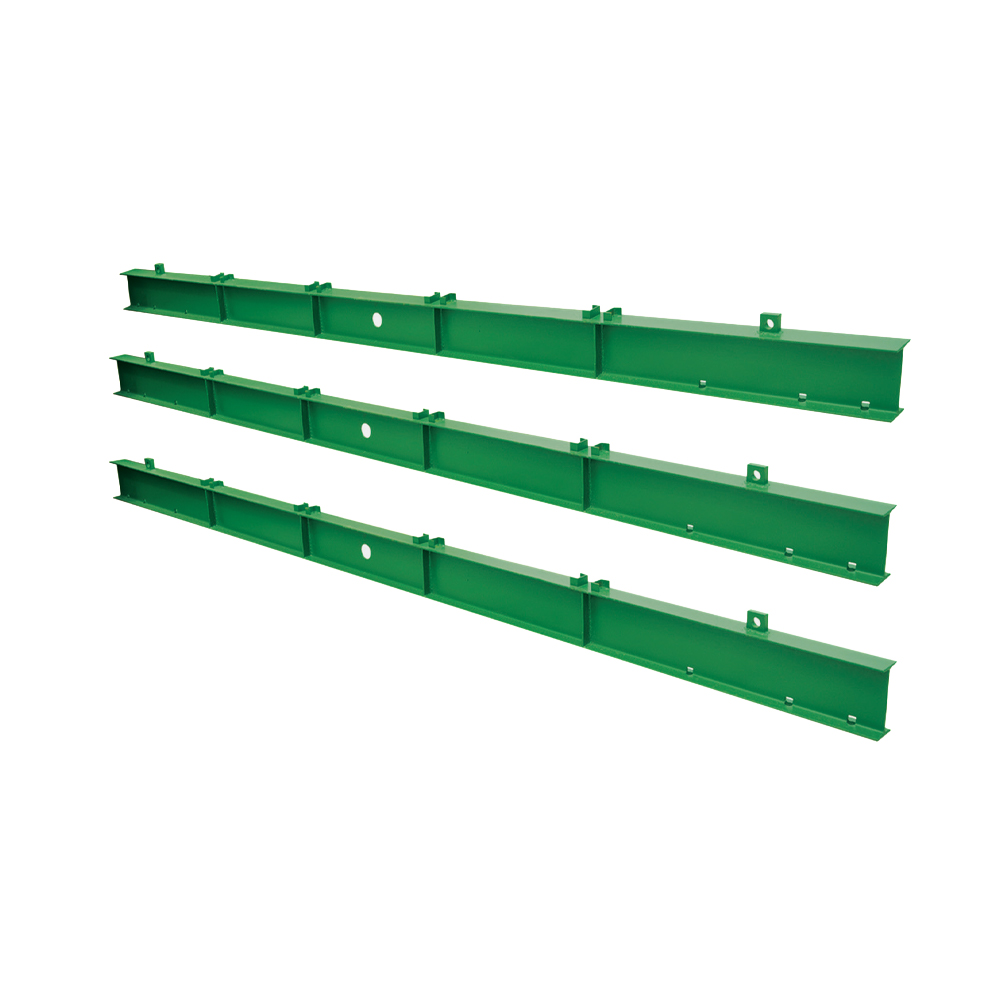
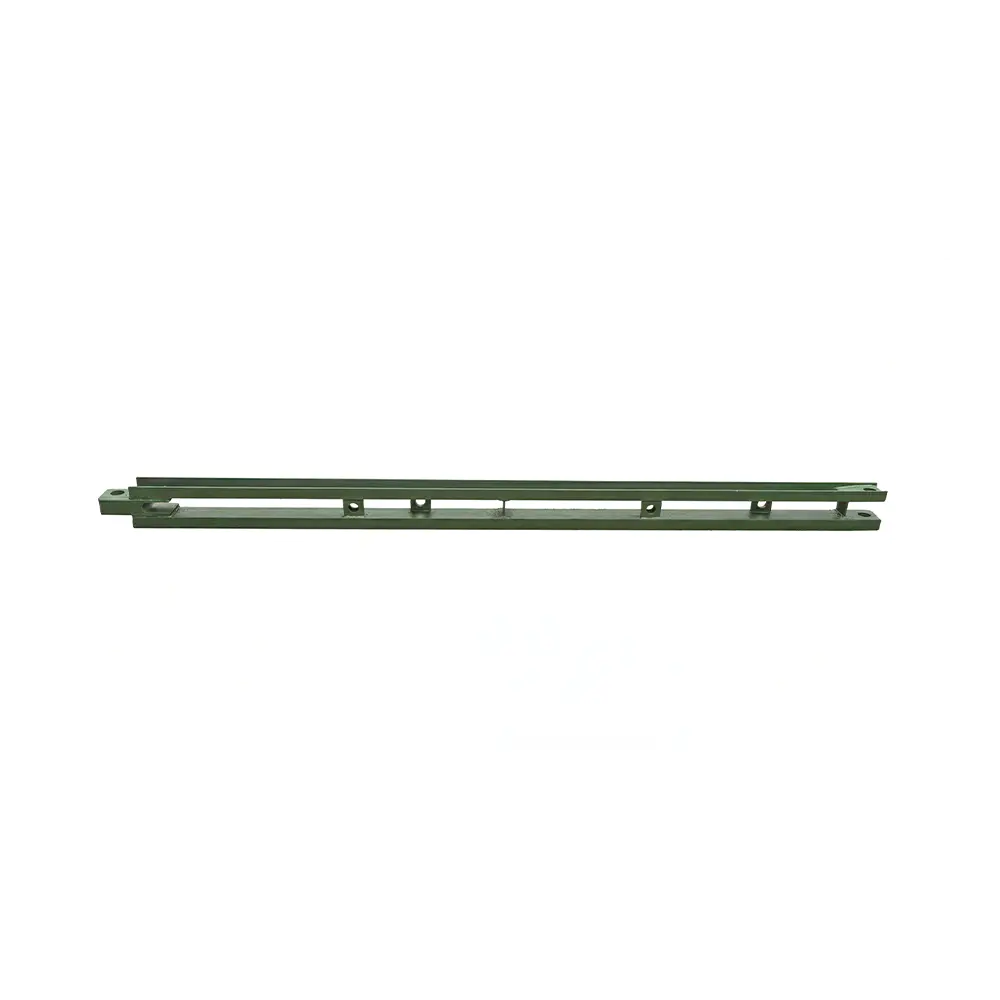
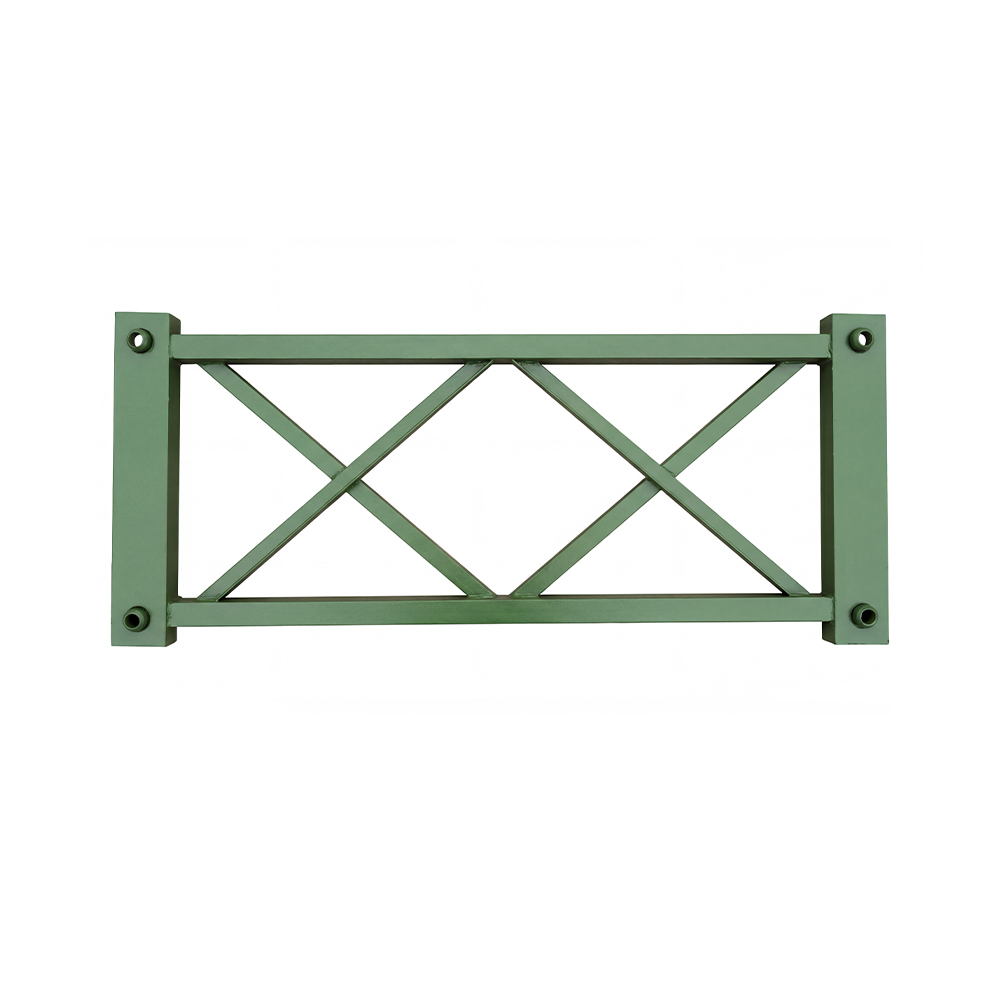
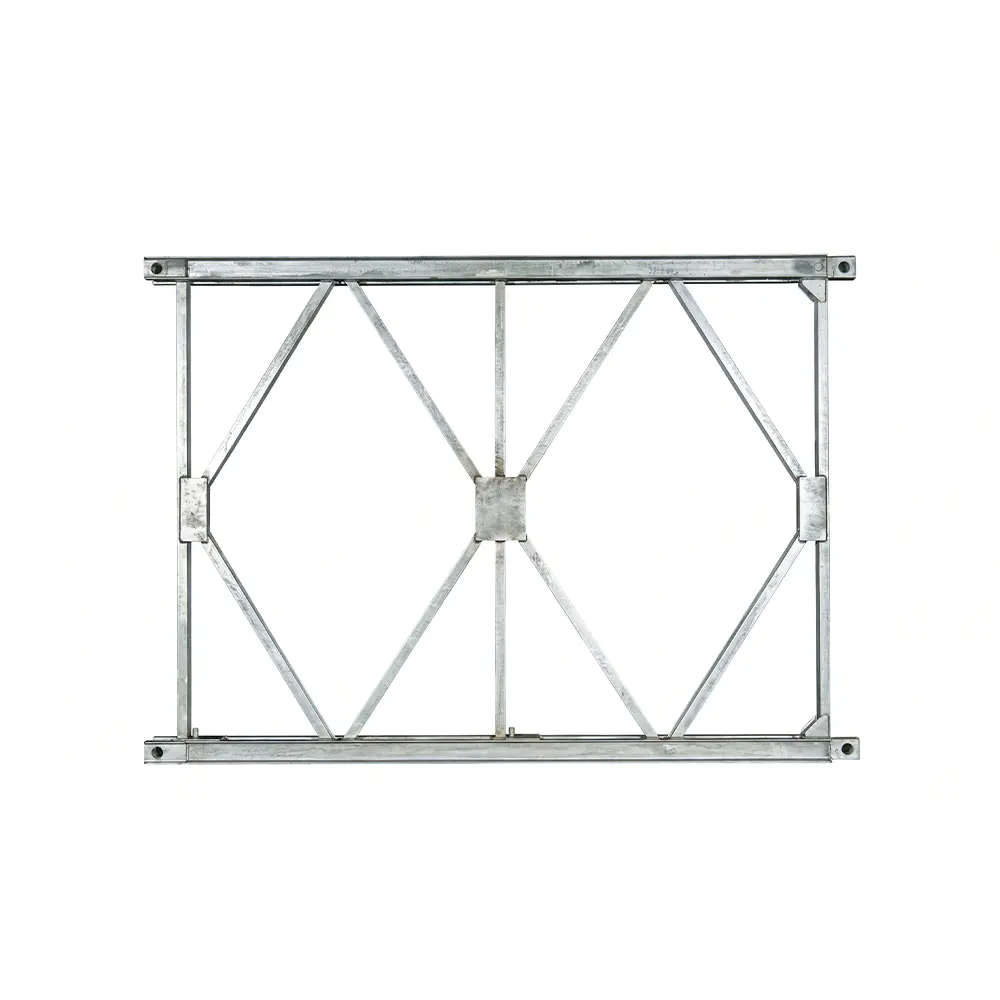
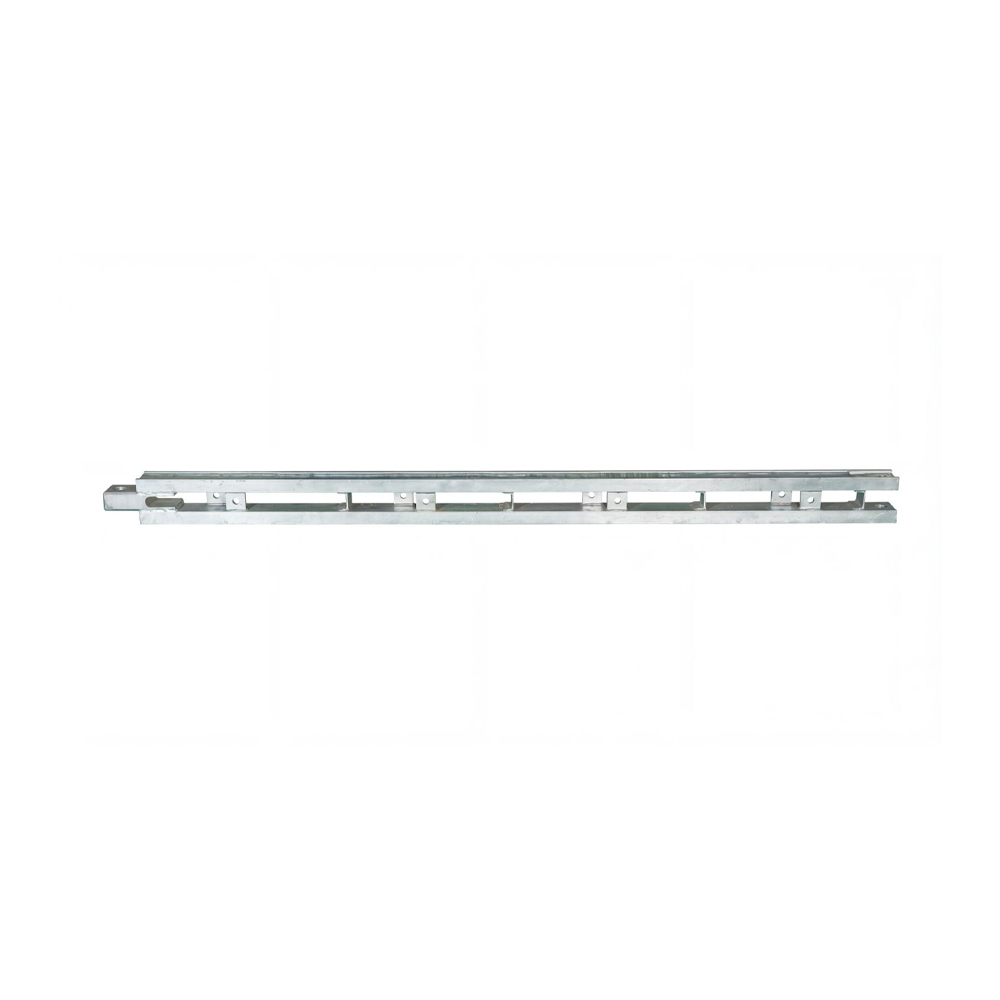
The YG-Upper Reinforcing Chord for Bailey Bridge is a specialized steel reinforcement component developed for the upper chord of prefabricated steel bridges and truss systems. Its primary purpose is to increase the bending load-bearing capacity of the upper chord, reduce the possibility of local buckling, and improve the distribution of compression and bending forces in the central region of a bridge span. By strengthening a critical area of the truss, the component helps engineers create a more stable, reliable, and adaptable modular bridge assembly.
This article examines the product’s function, structural advantages, manufacturing characteristics, installation considerations, and application value. It also explains why a purpose-designed upper reinforcing chord can offer practical advantages over improvised reinforcement methods or poorly matched components. The discussion is intended for bridge contractors, structural engineers, project planners, equipment rental companies, government departments, and international buyers seeking dependable modular steel bridge components.
1. The Role of the Upper Chord in a Bailey Bridge
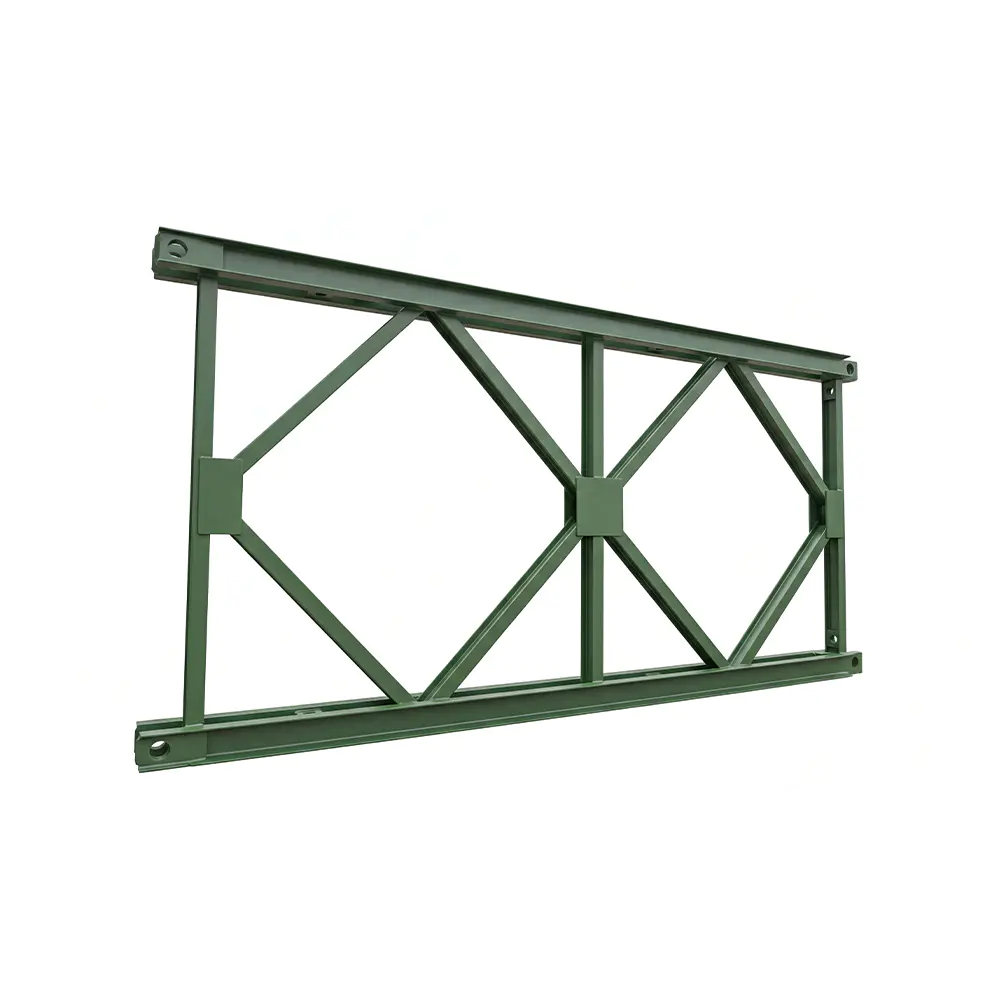
A Bailey bridge is assembled from standardized steel truss panels and associated connection components. The modular nature of the system enables bridge sections to be transported, combined, and erected with comparatively limited site preparation. Depending on the design, a Bailey bridge may serve as a temporary bridge, emergency crossing, semi-permanent road bridge, construction access bridge, military logistics route, or support structure for other bridge-building operations.
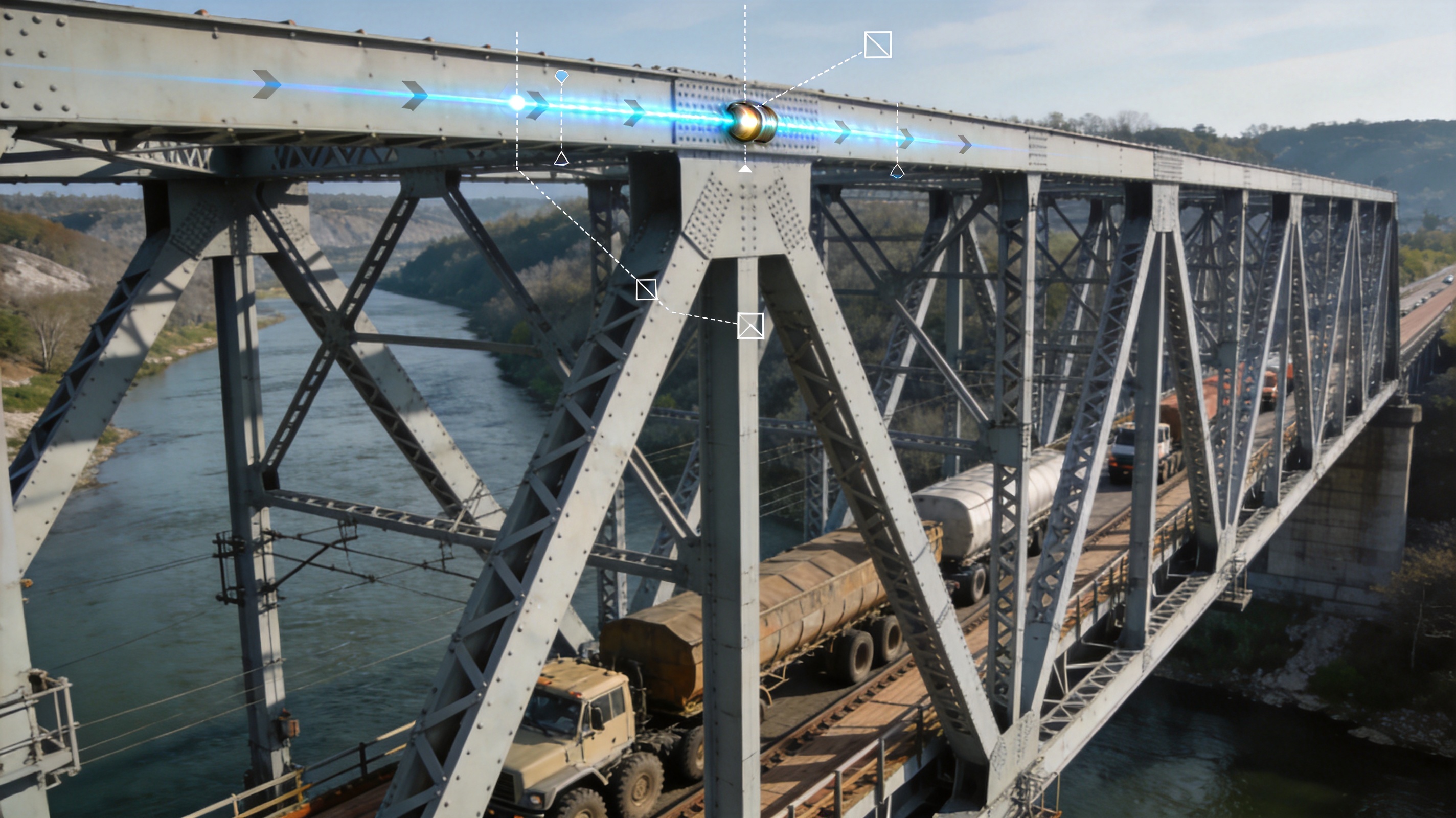
The main truss transfers loads from the deck and transverse members toward the bearings and foundations. In a conventional simply supported span, the upper portion of the truss is generally subjected to compression in the central span region, while the lower portion is primarily associated with tension. Actual force patterns depend on the bridge configuration, loading arrangement, support conditions, wind effects, construction stage, and any additional structural function assigned to the truss.
Compression members require careful attention because they may fail through overall buckling or local instability before the material reaches its theoretical compressive strength. A member can be strong in terms of material grade but still vulnerable if its unsupported length, slenderness, connection condition, or local plate geometry creates an unfavorable stability condition. This is why reinforcement of the upper chord can be beneficial in bridges that experience substantial bending moments, repeated heavy traffic, or demanding service conditions.
The upper reinforcing chord works as part of a coordinated truss system rather than as an isolated replacement for the primary Bailey panel. It is designed to supplement the load path, improve stiffness, and help control deformation in the upper chord area. When correctly selected and installed, it can increase structural reserve, improve the behavior of the assembled truss, and reduce the likelihood of localized distortion.
2. Product Overview
The YG-Upper Reinforcing Chord is an engineered steel component intended for use with Bailey bridge upper chord arrangements. It is manufactured from Q355B structural steel and has external dimensions of approximately 3115 × 1500 × 176 millimeters. These dimensions provide a substantial reinforcement assembly suitable for integration with compatible prefabricated bridge truss systems.
| Item |
Specification |
Engineering Significance |
| Product |
YG-Upper Reinforcing Chord for Bailey Bridge |
Reinforces the upper chord of a modular steel bridge truss |
| Product Category |
Pre-Cambered Bailey Truss |
Supports improved control of geometry and service deflection |
| External Dimensions |
3115 × 1500 × 176 mm |
Provides a defined interface for compatible bridge assemblies |
| Material |
Q355B structural steel |
Offers a strong and widely used structural steel base |
| Primary Function |
Upper chord reinforcement |
Improves bending resistance and suppresses local buckling risk |
| Typical Application |
Prefabricated, temporary, emergency, and semi-permanent bridge systems |
Supports flexible deployment across different project conditions |
The component is especially relevant to pre-cambered Bailey truss configurations. Pre-cambering is used to help compensate for expected dead-load and service-load deflection, allowing the completed bridge to achieve a more favorable profile during operation. The upper reinforcing chord contributes to the overall stiffness and stability strategy, but it must always be used according to an approved structural design and compatible erection method.
3. How the Reinforcing Chord Improves Structural Performance
3.1 Improved resistance to bending effects
The upper chord in the central span region may experience a combination of axial compression and bending. This combination is more demanding than pure compression because bending produces a non-uniform stress distribution across the member. One side of the section may experience higher compression while the opposite side experiences reduced compression or secondary tension, depending on the loading condition and structural arrangement.
The YG reinforcing chord increases the effective resistance of the upper chord region by adding steel to the load-bearing system. It can help distribute forces over a larger and more stable structural arrangement. This is particularly useful when a bridge is exposed to concentrated wheel loads, uneven traffic distribution, construction equipment, or repeated loading cycles.
3.2 Reduced local buckling risk
Local buckling occurs when a plate, flange, web, or slender portion of a steel member becomes unstable over a relatively short length. It can occur even when the average stress in the entire member appears to be within an acceptable range. In a bridge truss, localized instability can cause unwanted deformation, reduce stiffness, and accelerate the development of more serious structural problems.
By reinforcing the upper chord and improving its effective geometry, the component helps suppress local deformation. It supports a more consistent transfer of compressive force and reduces the likelihood that a vulnerable portion of the upper chord will deform independently of the surrounding truss. This benefit is especially important in modular bridges, where repeated assembly and disassembly, variable loading, and temporary support arrangements may influence member behavior.
3.3 Greater system stiffness
Strength and stiffness are related but different engineering properties. Strength concerns the ability to resist failure, while stiffness concerns the ability to limit deformation under load. A bridge with improved stiffness may provide a more stable driving surface, better alignment between components, and more predictable service behavior.
The reinforcing chord contributes to the stiffness of the upper chord zone. It may reduce excessive deflection and help maintain the intended bridge profile, particularly when used as part of a pre-cambered truss arrangement. The result is a better-coordinated structural system in which the main truss, deck system, bracing, and reinforcement work together.
3.4 Better distribution of load effects
Modular bridge systems are built from multiple interconnected components. If one section is significantly less stiff than adjacent sections, load effects may become concentrated in a limited region. This can increase stress concentration near panel connections, splice areas, or other discontinuities.
An upper reinforcing chord helps distribute axial pressure and bending moment through a larger portion of the upper chord region. More balanced force distribution can reduce the demand on individual components and improve the structural efficiency of the assembled bridge. This does not eliminate the need for engineering verification, but it provides a more capable component for designs where additional reinforcement is required.
4. Advantages Compared with Improvised or Generic Reinforcement
Bridge contractors sometimes consider using miscellaneous steel sections, site-fabricated plates, or generic structural members to reinforce a truss. Although such methods may appear economical at first, they can create significant engineering and operational difficulties. The dimensions, connection geometry, steel grade, weld details, and installation sequence may not match the original bridge system. These mismatches can reduce the value of the reinforcement and introduce new points of weakness.
4.1 Purpose-designed geometry
The YG reinforcing chord is developed specifically for the upper chord area of a compatible Bailey bridge system. Its defined external dimensions support more predictable integration than an unverified substitute. Purpose-designed geometry helps maintain clearance, connection alignment, and coordination with adjacent truss components.
A generic steel section may have adequate nominal strength but still fail to provide the required fit or load path. It may interfere with bracing, deck supports, panel connections, or lifting equipment. A dedicated reinforcing component reduces these compatibility risks when the product is selected for the correct bridge configuration.
4.2 Consistent material specification
The use of Q355B structural steel provides a clearly identified material basis for design and quality control. Defined material selection is important because engineers need to understand the expected yield strength, weldability, fabrication behavior, and inspection requirements of the component.
Unidentified or inconsistently sourced steel can make design verification difficult. Differences in chemical composition, thickness tolerance, mechanical properties, or welding response may affect reliability. A controlled material specification supports more consistent production and documentation.
4.3 Better repeatability for project planning
Modular bridge projects often require multiple similar components. Standardized reinforcing chords make it easier to calculate quantities, organize transportation, prepare erection plans, and train installation crews. Repeatability also helps contractors maintain consistent construction quality across several bridge spans or different project locations.
Compared with one-off reinforcement fabricated at the construction site, factory-produced components can reduce uncertainty in dimensions and workmanship. They can also shorten the amount of cutting, drilling, fitting, and welding required during field assembly.
4.4 Lower dependence on field modification
Field modifications are sometimes unavoidable, but excessive modification can increase project duration and introduce quality risks. Cutting or welding structural members at the site may be affected by weather, access limitations, power availability, worker positioning, and inspection constraints.
A prefabricated upper reinforcing chord arrives with its main geometry established. This allows site teams to focus on inspection, lifting, positioning, bolting, and final alignment rather than performing extensive fabrication in an uncontrolled environment.
4.5 More reliable engineering communication
A defined product with a known name, dimension, material, and intended application improves communication between the manufacturer, designer, contractor, and owner. Technical discussions can refer to a specific component instead of a general instruction such as “add more steel to the top chord.” Clear communication reduces the possibility of interpretation errors during procurement and construction.
5. Q355B Steel and Its Importance in Bridge Components
Material selection is a fundamental part of bridge component performance. Q355B is a commonly used structural steel grade for engineered steel products. Its designation provides a basis for identifying the material’s strength class and quality category. For bridge reinforcement, the value of a specified structural steel lies not only in its strength but also in its suitability for fabrication, welding, inspection, coating, transportation, and long-term service.
Q355B steel is suitable for many structural applications where a balance of strength, toughness, formability, and weldability is required. The actual performance of a finished reinforcing chord depends on more than the steel grade alone. Plate thickness, joint configuration, weld quality, dimensional accuracy, heat input, surface condition, protective coating, and installation quality all influence the final result.
For this reason, responsible manufacturing should include material receiving controls and traceability procedures. Material certificates, batch records, visual inspections, dimensional checks, and appropriate mechanical or chemical verification can help ensure that the steel used in production matches the specified requirements.
When the component is intended for a project with strict quality requirements, the purchaser should confirm the required documentation before production. Depending on the project, this may include mill certificates, welding procedure documentation, inspection records, dimensional reports, coating information, and packing lists.
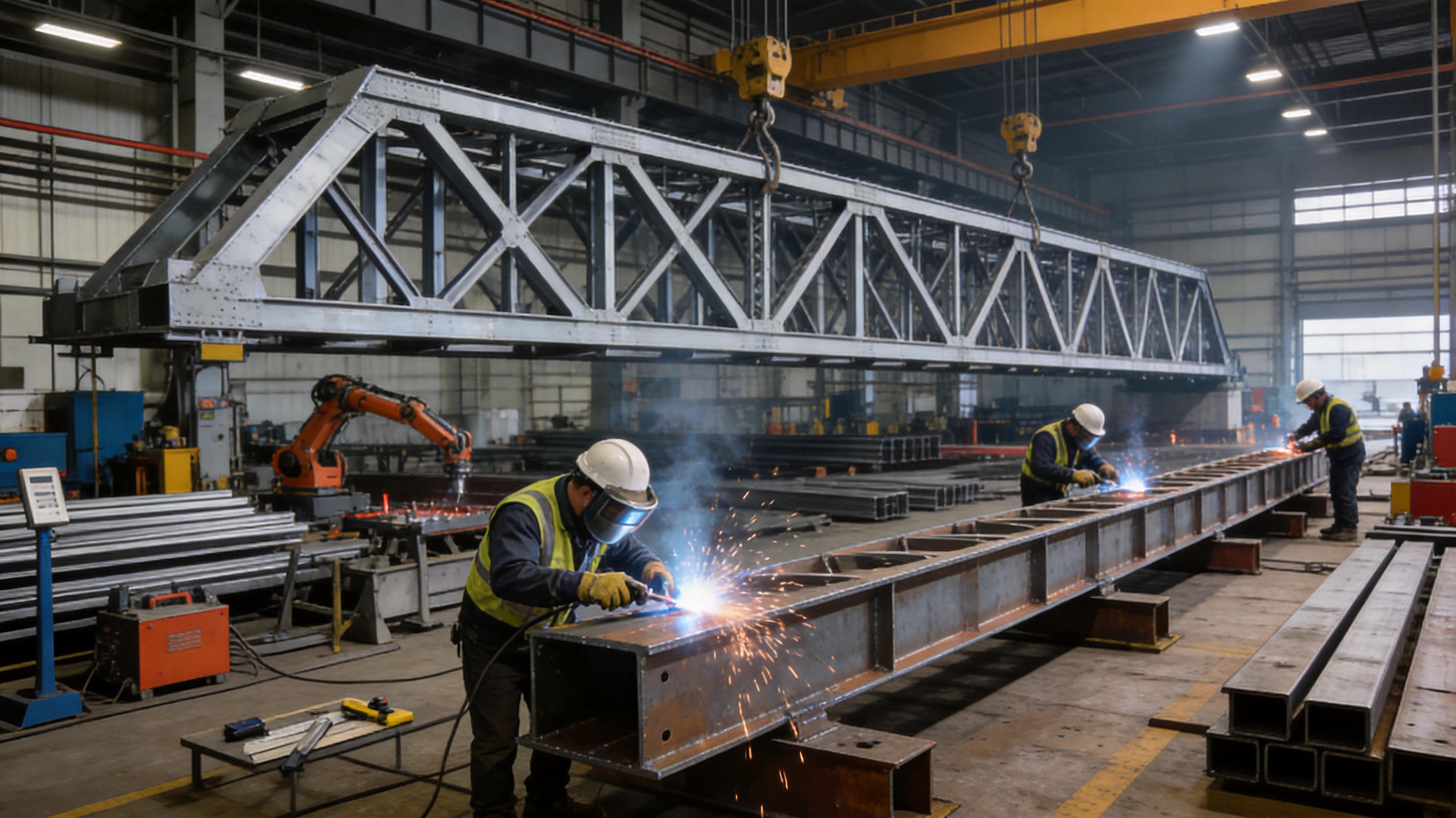
6. Advanced Manufacturing Process
The performance of an upper reinforcing chord is closely linked to the discipline of its manufacturing process. A component may have a strong design concept, but poor cutting, inaccurate assembly, incomplete welds, or inadequate corrosion protection can compromise its service life. A professional bridge component manufacturer therefore needs an integrated process that begins with engineering review and continues through fabrication, inspection, finishing, and delivery.
6.1 Engineering review and production planning
Manufacturing begins with confirmation of the product configuration, applicable bridge system, dimensions, material requirements, connection details, and expected service conditions. The production team reviews drawings and technical instructions to identify critical tolerances, weld locations, lifting points, assembly interfaces, and areas requiring special inspection.
For customized orders, the manufacturer can coordinate with the buyer or engineering consultant to verify bridge span, panel type, reinforcement arrangement, loading requirements, transport limitations, and installation sequence. This planning stage helps prevent the production of components that are dimensionally correct in isolation but unsuitable for the complete bridge system.
6.2 Material preparation
Q355B steel plates and sections are inspected before processing. Surface condition, thickness, identification marks, and material documentation are checked against the approved requirements. Proper storage helps protect the steel from contamination, excessive moisture, and unnecessary corrosion before fabrication.
Materials are then marked according to approved production drawings. Accurate marking is important because the component may contain multiple plates, stiffeners, connection pieces, and interfaces that must be assembled in a precise sequence.
6.3 Precision cutting
Computer-controlled cutting equipment can be used to produce repeatable profiles and accurate component dimensions. Depending on material thickness and production requirements, cutting may involve flame cutting, plasma cutting, or other suitable methods. The selected method should provide clean edges and minimize distortion.
After cutting, edges are inspected and treated as required. Burrs, slag, sharp projections, and irregularities are removed. Proper edge preparation supports better fit-up and more reliable welding. It also reduces the chance that uncorrected cutting defects will become stress concentration points.
6.4 Forming and assembly
Some reinforcing chord components require controlled forming, positioning, or assembly of multiple steel pieces. Jigs and fixtures help maintain the intended geometry while parts are tack-welded and prepared for final welding. Using dedicated fixtures is especially valuable for repeated production because it improves consistency between units.
Assembly accuracy influences the fit of the reinforcing chord with the primary Bailey truss. Small errors can accumulate across several connection points, so production teams should check overall length, width, depth, squareness, hole position, and interface alignment before final welding.
6.5 Welding control
Welding is one of the most important stages in the production of a steel reinforcement component. Welding procedures should be selected according to the steel grade, plate thickness, joint type, structural demand, and applicable project standards. Welders should be appropriately qualified, and welding consumables should be stored and used according to technical requirements.
Control of preheating, interpass temperature, heat input, welding sequence, and cooling conditions can help reduce distortion and minimize the risk of cracking. Welds should be visually inspected, and additional nondestructive testing may be applied where required by the design or purchaser.
A controlled welding sequence is particularly important for a long or relatively large steel assembly. If welding is performed without adequate sequence planning, residual stress and distortion may affect the final dimensions. Fixtures, temporary restraints, balanced welding, and intermediate dimensional checks help maintain the required geometry.
6.6 Dimensional inspection
After fabrication, the component is checked against the production drawings. Inspection may include overall dimensions, plate thickness, hole location, weld appearance, straightness, flatness, squareness, connection alignment, and the condition of bearing or contact surfaces.
Dimensional inspection is not simply a cosmetic procedure. An upper reinforcing chord must align with the surrounding bridge components so that forces can transfer as intended. Poor fit may lead to forced assembly, uneven bolt loading, unintended gaps, or local stress concentrations.
6.7 Surface treatment and corrosion protection
Steel bridge components may be exposed to rain, humidity, road spray, dust, salt, industrial pollutants, and repeated wet-dry cycles. Surface preparation and protective coating are therefore important for maintaining durability.
The surface may be cleaned and prepared before primer and finish coating are applied. The appropriate coating system depends on the project environment, expected service duration, transportation requirements, and maintenance plan. For temporary applications, a practical protective system may be sufficient; for semi-permanent or harsh environments, the coating specification may require greater corrosion resistance and more extensive inspection.
Coating thickness, surface cleanliness, drying time, and environmental conditions should be controlled. Damaged areas created during handling or transport should be repaired before installation or promptly treated at the site.
6.8 Final inspection, marking, and packing
Before dispatch, each component should receive a final inspection and identification marking. Marking helps the site team identify the correct component, orientation, installation position, and related documentation. It also assists with inventory control when many bridge members are delivered together.
Packing should protect connection areas, coating surfaces, corners, and lifting points. Components should be arranged to prevent excessive rubbing or impact during transportation. Proper packing also helps contractors unload and store the product efficiently at the project site.
7. Manufacturing Strengths of an Experienced Bridge Supplier
Zhenjiang Jinhao Road & Bridge Supporting Engineering Co., Ltd. has developed its business around the design, manufacture, erection, and leasing of Bailey bridges, bridge launching gantry systems, hanging baskets, pier formwork, and other steel formwork products. This broad product range is relevant to the production of upper reinforcing chords because it reflects experience with complete bridge systems rather than isolated steel fabrication alone.
A supplier familiar with Bailey bridge panels, launching equipment, formwork, and bridge erection methods can better understand how a reinforcing chord will be transported, lifted, positioned, connected, and maintained. This system-level perspective supports more practical product development and technical communication.
The company operates from an industrial location in Zhenjiang, Jiangsu Province, with access to major transportation routes and regional manufacturing resources. Its development from a construction and industrial materials enterprise into a comprehensive bridge engineering company provides experience in coordinating materials, fabrication, engineering services, and project support.
7.1 Integrated product knowledge
The company’s product portfolio includes Bailey steel bridges, Type 321 Bailey truss sections, HD200 and Type 200 Bailey truss sections, triangular and diamond hanging baskets, bridge steel formwork, and related engineered steel structures. This product knowledge enables the company to evaluate reinforcement components in relation to the truss system, deck arrangement, erection equipment, and construction method.
7.2 Custom fabrication capability
Bridge projects often differ in span, traffic class, terrain, transport limitations, construction sequence, and required service life. A capable manufacturer should be able to discuss customized fabrication rather than offering only a fixed catalog product. Customization may involve dimensions, connection arrangements, coating systems, markings, packing, or supporting documentation.
Customization must remain controlled by engineering review. The goal is not to modify a structural component casually, but to adapt the manufacturing and delivery process to an approved project requirement.
7.3 Support for international projects
International bridge projects may require additional attention to packaging, export transportation, technical drawings, inspection documentation, communication across time zones, and local erection practices. A supplier experienced in serving contractors and engineering companies in different markets can help reduce procurement and coordination difficulties.
Clear communication is particularly important when bridge terminology differs between countries. The purchaser should receive unambiguous information about the product name, material, dimensions, compatible truss type, number of units, installation requirements, and limitations of use.
7.4 Combination of manufacturing and service
Jinhao provides customized fabrication, design and system planning, technical support, and quality management. This combination can be valuable to buyers who require more than a shipment of steel parts. Depending on the project, technical assistance may include preliminary configuration discussion, component selection, erection planning, and coordination with the bridge owner or contractor.
A service-oriented manufacturer can also help identify whether reinforcement is actually needed, what quantity may be appropriate, and which additional components should be considered. These decisions must ultimately be confirmed by the responsible structural engineer, but early manufacturer input can make procurement more efficient.
8. Applications of the Upper Reinforcing Chord
8.1 Temporary traffic bridges
Temporary bridges are used to maintain access while a permanent bridge is repaired, replaced, or constructed. They may also be required after floods, landslides, earthquakes, or other events that damage transportation infrastructure. In such cases, rapid installation is important, but structural reliability cannot be sacrificed.
An upper reinforcing chord can be considered where the temporary bridge must support substantial traffic, where the span creates significant bending effects, or where project conditions require additional upper chord stability. The component may help extend the practical application of a modular truss system when used within an approved design.
8.2 Emergency and disaster-relief crossings
Emergency crossings often need to be deployed under difficult conditions. Access roads may be incomplete, equipment may be limited, and construction teams may have to work under time pressure. Standardized reinforcement components can simplify logistics because their dimensions and functions are known before mobilization.
In disaster-relief projects, the upper reinforcing chord may support a bridge arrangement intended for emergency vehicles, supply trucks, engineering equipment, or controlled civilian traffic. Load requirements, foundation conditions, wind exposure, debris impact, and water levels should be carefully assessed before installation.
8.3 Semi-permanent access bridges
Construction sites, mining areas, industrial facilities, water conservancy projects, and remote communities may require access for months or years. A semi-permanent modular bridge can provide a practical solution when a conventional bridge is not immediately available or when future site conditions may change.
For longer service periods, reinforcement and corrosion protection become increasingly important. The upper reinforcing chord can contribute to structural durability by improving stability and reducing local deformation, while the coating system and maintenance plan help protect the component from environmental deterioration.
8.4 Construction and site logistics
Large infrastructure projects often need temporary crossings for cranes, concrete trucks, excavators, delivery vehicles, and workers. Construction traffic may be heavier and more concentrated than ordinary road traffic. Upper chord reinforcement can be considered when the temporary access bridge is subjected to repeated heavy loading or unusual vehicle arrangements.
8.5 Support for bridge erection systems
Bailey truss components may also be used as launching noses, guide beams, gantry supports, tower columns, or other temporary structures. These applications may produce force patterns different from those of a normal road bridge. The reinforcing chord can be relevant when the upper chord region experiences compression and bending during launching, lifting, support transfer, or temporary bracing operations.
Because erection systems can be highly sensitive to temporary conditions, each application requires specific structural analysis. A component suitable for a completed bridge span should not automatically be assumed suitable for every launching or lifting arrangement.
9. Installation and Quality-Control Considerations
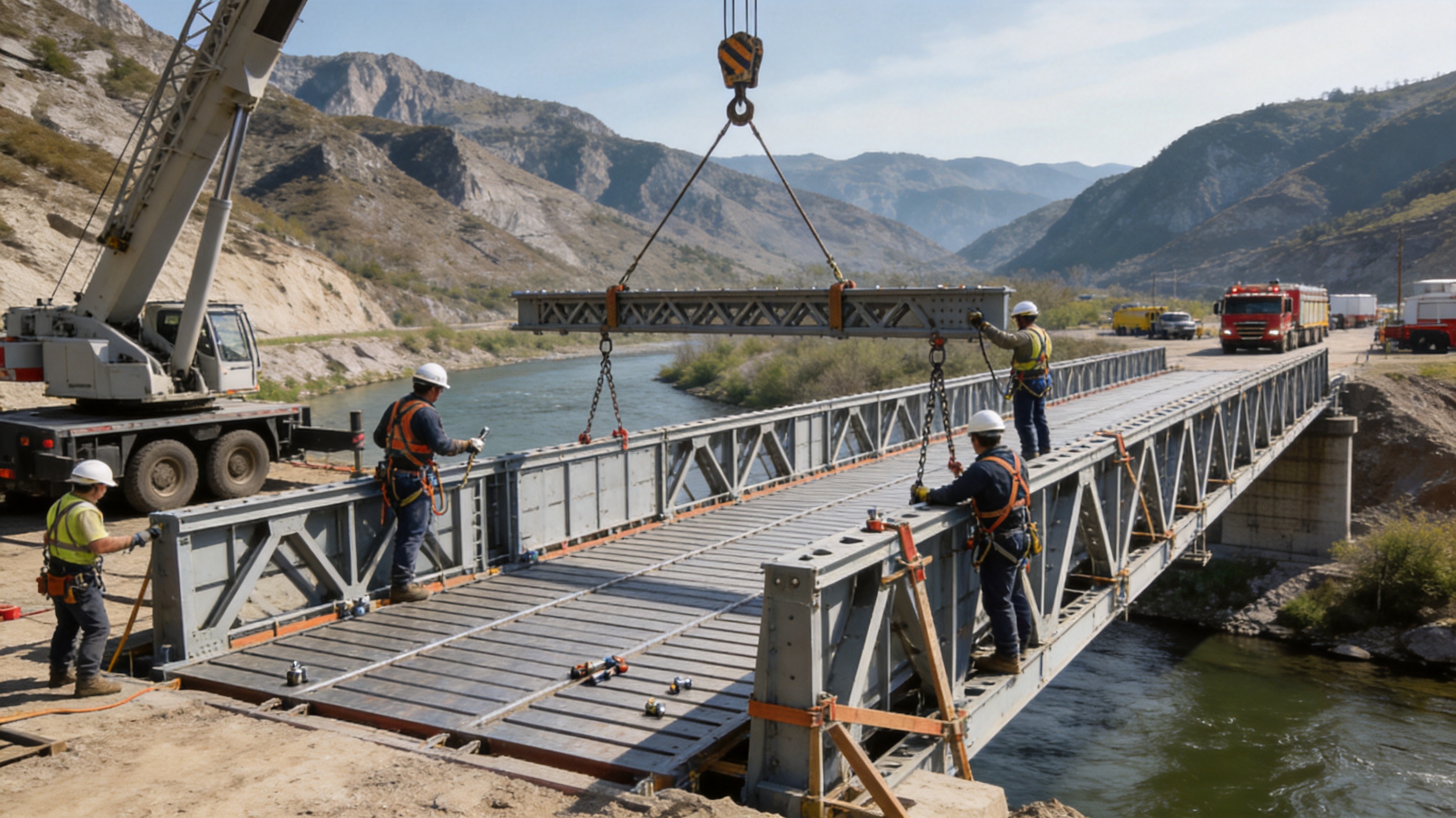
The reinforcing chord should be installed only by a competent team working from approved drawings, method statements, and lifting plans. The installation sequence must account for the bridge’s support condition, pre-camber, temporary bracing, access, wind, lifting capacity, and connection procedure.
9.1 Verification before assembly
Before installation, the contractor should verify the product identification, quantity, dimensions, coating condition, connection points, and compatibility with the bridge truss. The primary Bailey panels should also be inspected for damage, excessive deformation, corrosion, missing bolts, or unauthorized modifications.
Any discrepancy should be recorded and resolved before forced assembly begins. Using impact tools or uncontrolled heating to make an incorrectly fitting component fit can damage the steel and compromise the intended load path.
9.2 Lifting and handling
The reinforcing chord should be lifted from designated or engineered lifting points. Slings, shackles, spreader beams, and cranes must have adequate rated capacity. Loads should be balanced to avoid twisting or impact against other bridge members.
During handling, coating damage, sharp edges, and temporary instability should be controlled. Workers should not stand beneath suspended components, and the lifting plan should consider wind and restricted site access.
9.3 Connection control
Connections should be assembled using the specified bolts, washers, nuts, pins, or other approved hardware. Bolt holes should align naturally, and the required tightening method should be followed. The presence of a bolt does not necessarily mean that the connection has achieved the required clamping force.
Connection inspection should include correct hardware, bolt orientation where relevant, thread engagement, tightening sequence, visible damage, and any specified torque or tension verification. The responsible engineer should determine the acceptance criteria for the project.
9.4 Alignment and pre-camber
The bridge profile should be checked during and after installation. Pre-camber is a deliberate geometric feature and should not be confused with accidental distortion. Survey checks can help verify span alignment, support elevation, truss spacing, deck level, and final bridge profile.
If the bridge does not achieve the expected geometry, the cause should be investigated before the structure is opened to traffic. Possible causes include incorrect support elevation, missing bracing, uneven tightening, damaged members, incorrect component orientation, or an unsuitable erection sequence.
9.5 Inspection after loading
After the bridge is first loaded, the contractor or owner should inspect the structure for unusual movement, connection slip, local deformation, coating damage, or other signs of abnormal behavior. For a temporary or semi-permanent bridge, periodic inspection should continue throughout service.
10. Selection Guidance for Buyers and Engineers
When purchasing an upper reinforcing chord, buyers should provide sufficient project information to confirm compatibility. Important information may include the Bailey bridge type, span length, number of traffic lanes, design vehicle, intended service period, environmental exposure, pre-camber arrangement, support condition, and desired quantity.
Buyers should also clarify whether the product is required as a standard component or as part of a customized assembly. If the bridge is being used for a special purpose, such as a launching gantry support, temporary tower, or heavy construction access, the manufacturer should receive the relevant load and erection information.
| Selection Question |
Why It Matters |
| Which Bailey truss type will be used? |
Confirms connection geometry and system compatibility. |
| What is the bridge span? |
Influences bending effects, deflection, and reinforcement requirements. |
| What traffic or construction load is expected? |
Determines demand on the upper chord and complete bridge system. |
| Is the bridge temporary, emergency, or semi-permanent? |
Guides coating, inspection, maintenance, and documentation needs. |
| What are the site and environmental conditions? |
Influences corrosion protection, lifting, access, and erection planning. |
| Is pre-camber included in the design? |
Helps coordinate the reinforcing chord with the intended bridge profile. |
| What documents are required? |
Supports quality assurance, approval, and project records. |
The product should not be selected solely by comparing price or nominal dimensions. A lower-cost substitute may require extensive field modification, create installation delays, or lack the documentation needed for project approval. The overall procurement value includes dimensional consistency, material reliability, technical support, delivery quality, and expected service performance.
11. Why Factory Production Can Improve Project Economics
Factory production can reduce the total cost of a bridge project even when the initial purchase price is higher than that of unverified site-fabricated reinforcement. Standardized production reduces labor-intensive fitting, improves material utilization, and supports more predictable delivery. It also reduces the number of variables that must be controlled during bridge erection.
Time savings can be particularly important for temporary and emergency bridges. Every additional day of site fabrication may increase crane rental, labor, traffic management, supervision, accommodation, and equipment costs. A ready-to-install reinforcing chord helps contractors move more quickly from delivery inspection to structural assembly.
Factory manufacturing also supports repeat orders. Contractors managing multiple bridge projects can use a consistent component source and establish standardized inspection and installation procedures. Consistency simplifies training and inventory planning.
Another economic benefit is reduced rework. Components manufactured with controlled fixtures and inspection procedures are less likely to require unplanned cutting, welding, hole enlargement, or replacement at the site. Avoiding rework protects both the schedule and the structural quality of the project.
12. Sustainability and Reusability
Modular steel bridges are inherently suited to reuse. Bailey panels, reinforcing components, deck members, and connection hardware can often be dismantled, inspected, transported, and redeployed for new projects. This characteristic supports resource efficiency and reduces the need to construct a completely new bridge for every temporary crossing.
The upper reinforcing chord contributes to this reusable system by providing a durable, standardized reinforcement option. When properly maintained, inspected, and stored, it can support multiple bridge deployments. Before reuse, the component should be checked for permanent deformation, cracks, excessive corrosion, damaged holes, coating deterioration, and other defects.
Responsible manufacturing can further support sustainability through efficient steel cutting, controlled material use, repairable coating systems, and packaging designed to prevent damage. Long service life and repeated use reduce the environmental burden associated with replacement and disposal.
13. Technical Support and Project Cooperation
Successful bridge projects depend on cooperation among the manufacturer, structural designer, contractor, owner, and inspection team. A product supplier should provide clear technical information and respond promptly to questions about dimensions, materials, compatibility, loading arrangements, transport, and installation.
Jinhao’s experience in Bailey bridge systems, launching gantries, hanging baskets, pier formwork, and steel formwork allows it to support a broad range of bridge-related requirements. Its services include customized fabrication, system planning, technical support, and quality management. This broad capability is useful when the upper reinforcing chord must be coordinated with other temporary works or bridge construction equipment.
For large orders or specialized applications, cooperation may include drawing review, production scheduling, inspection coordination, loading plans, packing arrangements, and after-sales technical communication. These services can be especially valuable for overseas buyers who require additional documentation or who are working with local erection teams unfamiliar with the product.
14. Limitations and Responsible Use
The upper reinforcing chord is an important structural component, but it is not a universal solution for every bridge deficiency. It cannot compensate for inadequate foundations, seriously damaged primary panels, incorrect truss configuration, missing bracing, poor connections, excessive corrosion, or a bridge design that does not satisfy the required loading criteria.
Its use must be based on an appropriate structural assessment. Engineers should evaluate the complete bridge system, including main trusses, deck beams, lateral bracing, sway bracing, bearings, foundations, connections, wind effects, fatigue considerations, construction stages, and vehicle loading. The reinforcing chord should be treated as one part of a coordinated design rather than an independent guarantee of capacity.
Similarly, the product dimensions provided for a standard configuration should not be assumed to fit every Bailey bridge type. Compatibility must be confirmed before ordering. Where a project requires modified dimensions or special connection details, those modifications should be reviewed and approved through the proper engineering process.
15. Frequently Asked Questions
What is the main function of the YG-Upper Reinforcing Chord?
Its main function is to reinforce the upper chord of a Bailey bridge or compatible prefabricated steel truss. It helps improve bending resistance, distribute axial compression and bending moment, increase stiffness, and reduce the risk of local buckling in the upper chord region.
What material is used for the product?
The product is manufactured from Q355B structural steel. Material documentation and project-specific quality requirements should be confirmed with the supplier before production or delivery.
What are the stated external dimensions?
The stated external dimensions are approximately 3115 × 1500 × 176 millimeters. Compatibility with the intended Bailey bridge system should be verified before purchase.
Can the reinforcing chord be used with any Bailey bridge?
No. It should be used with a compatible bridge configuration and according to an approved structural design. Bailey bridge types, connection details, panel arrangements, and load requirements can vary. The purchaser should provide complete project information for compatibility review.
Is the component suitable for temporary bridges?
Yes. It is intended for applications involving prefabricated steel bridges, including temporary, emergency, construction access, and semi-permanent bridge systems. The appropriate configuration depends on span, loading, support conditions, and the project’s structural calculations.
Does the reinforcing chord replace the primary Bailey truss?
No. It is a reinforcement component that works with the primary truss. It does not replace the main panels, bracing, deck system, bearings, or foundations required for a complete bridge.
Why is local buckling control important?
Local buckling can cause a portion of a compression member to deform before the full material strength is reached. This deformation can reduce stiffness, alter the load path, and contribute to broader structural instability. Reinforcing the upper chord helps improve the stability of this critical region.
Can the product be customized?
Customized fabrication may be available depending on the project requirements. Potentially adjustable factors may include dimensions, connection details, coating systems, markings, packing, and documentation. Any structural modification should be reviewed and approved by the responsible engineer.
What should be checked before installation?
Before installation, the contractor should check product identification, quantity, dimensions, coating condition, connection points, compatibility, lifting points, and the condition of the primary bridge members. The erection procedure, lifting plan, bracing arrangement, and connection requirements should also be confirmed.
Can the component be reused?
Modular steel bridge components are commonly designed for repeated deployment, subject to inspection and maintenance. Before reuse, the reinforcing chord should be checked for deformation, cracking, corrosion, damaged holes, coating failure, and other defects. Any repair or acceptance decision should follow the project’s engineering and inspection requirements.
What information should an international buyer provide?
An international buyer should provide the bridge type, span, intended loading, number of units, service duration, environmental conditions, delivery destination, required documentation, and preferred coating or marking requirements. Drawings and photographs of the existing truss can also assist compatibility review.
Why purchase from a manufacturer with broader bridge-system experience?
A manufacturer with experience in Bailey bridges, launching gantries, hanging baskets, and steel formwork can better understand how an upper reinforcing chord interacts with the complete bridge and erection process. This supports more practical technical advice, coordinated fabrication, and improved project communication.
16. Conclusion
The YG-Upper Reinforcing Chord for Bailey Bridge is a specialized component developed to strengthen one of the most important regions of a modular steel truss. By reinforcing the upper chord, it helps improve bending resistance, control local buckling, distribute compression and bending effects, and enhance the stiffness of the bridge system. Its Q355B steel construction and defined external dimensions provide a clear basis for engineering review, manufacturing control, procurement, and installation planning.
Compared with improvised site reinforcement or generic steel sections, a purpose-designed chord offers better dimensional consistency, more reliable compatibility, reduced field modification, and clearer technical communication. Its value is particularly apparent in temporary bridges, emergency crossings, semi-permanent access structures, construction logistics routes, and specialized bridge erection systems.
The quality of the finished component depends on the complete manufacturing chain. Material control, precision cutting, fixture-based assembly, qualified welding, dimensional inspection, corrosion protection, final marking, and secure packing all contribute to dependable performance. A manufacturer with experience in complete Bailey bridge systems can add further value through system planning, customized fabrication, technical support, erection guidance, and quality management.
As with every structural bridge component, the upper reinforcing chord must be selected and installed as part of an approved engineering solution. When properly integrated with the main truss, deck, bracing, supports, and foundations, it can help contractors and bridge owners achieve a stronger, more stable, and more adaptable modular bridge system.
References
1. Manufacturer-provided product information for the YG-Upper Reinforcing Chord for Bailey Bridge.
2. Manufacturer-provided dimensional and material specification: external dimensions of 3115 × 1500 × 176 millimeters and Q355B structural steel.
3. Manufacturer-provided company information regarding Bailey bridges, modular steel structures, bridge launching gantries, hanging baskets, pier formwork, and bridge steel formwork.
4. General principles of structural steel design, compression-member stability, local buckling, and steel truss behavior.
5. General fabrication and inspection practices for welded structural steel components.
6. General engineering guidance for temporary bridges, modular bridge erection, pre-cambered trusses, and reusable steel bridge systems.


 Français
 Español
 عربى