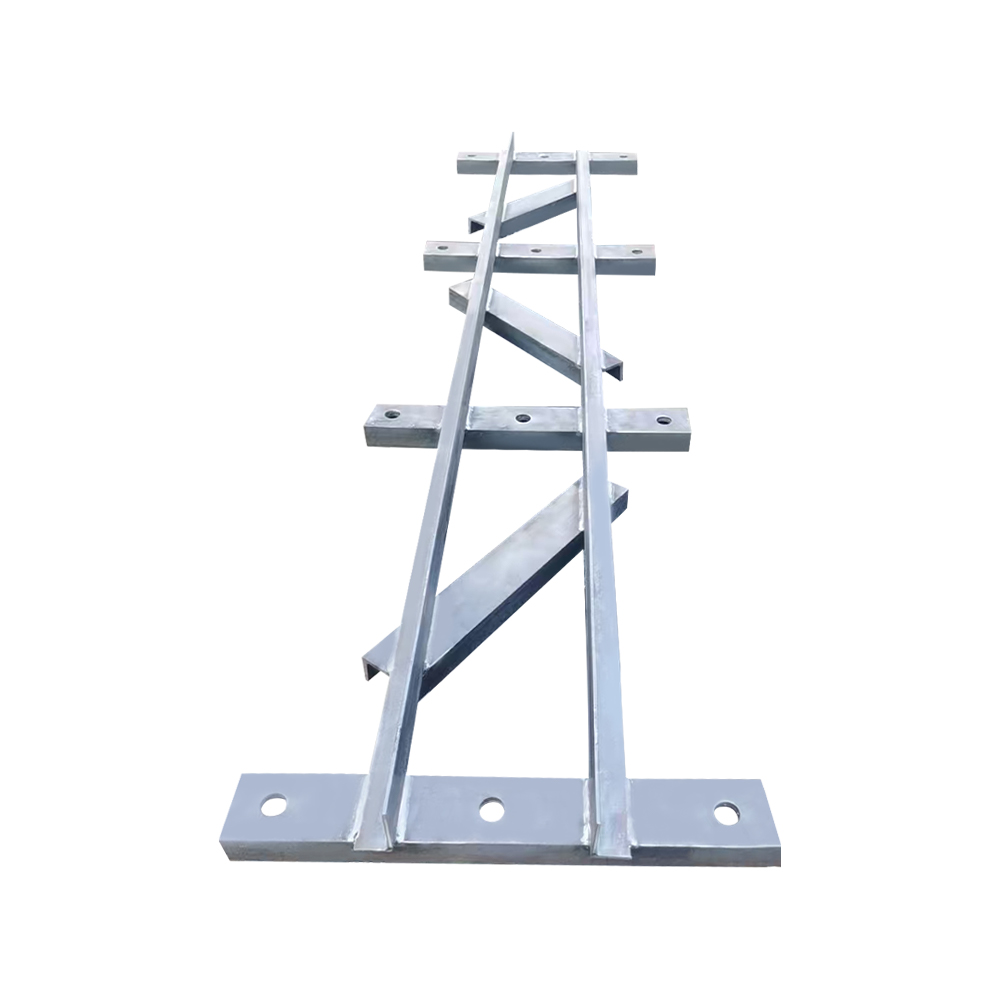
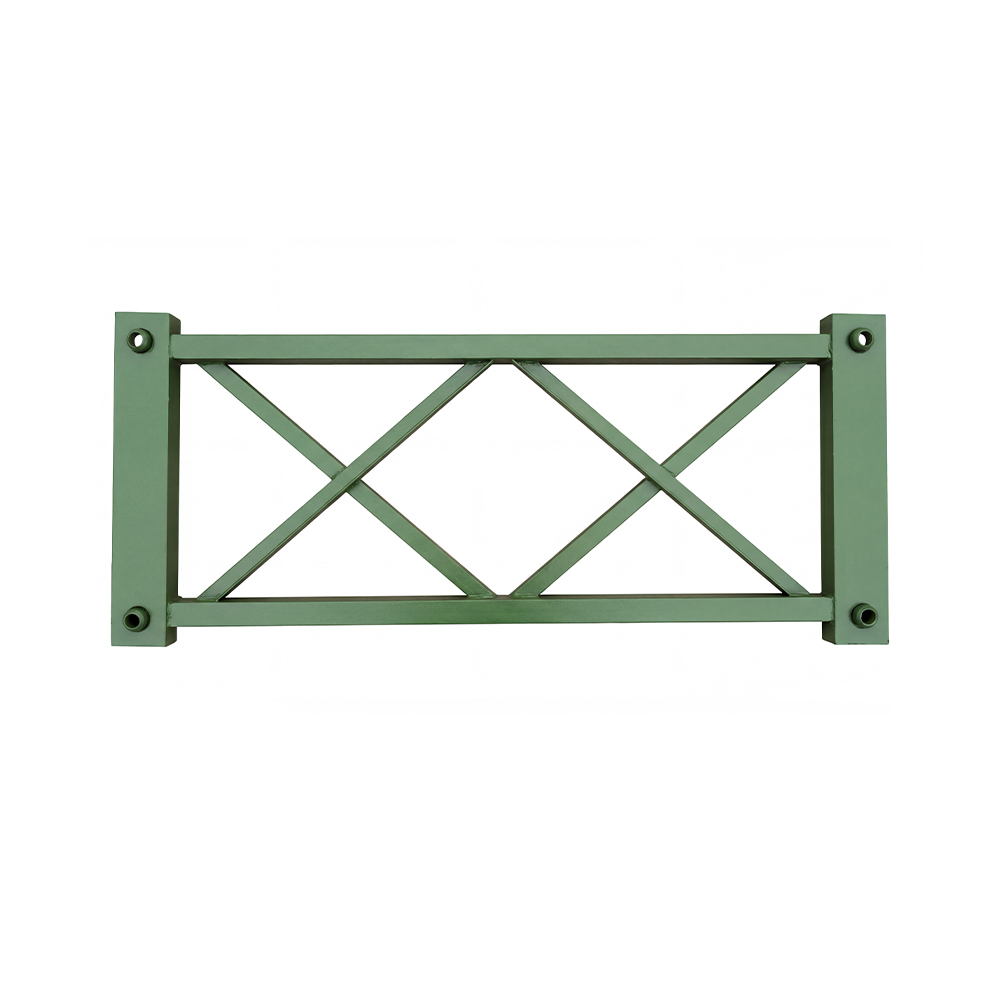
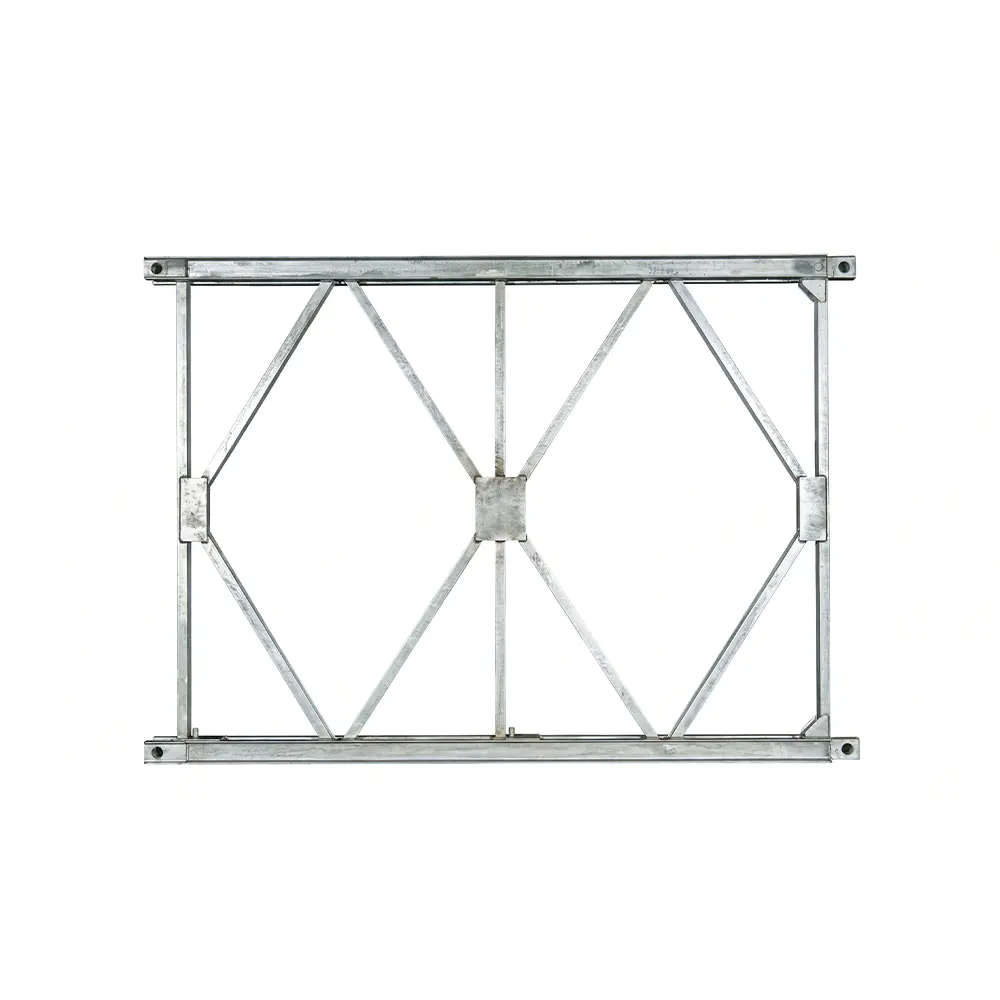
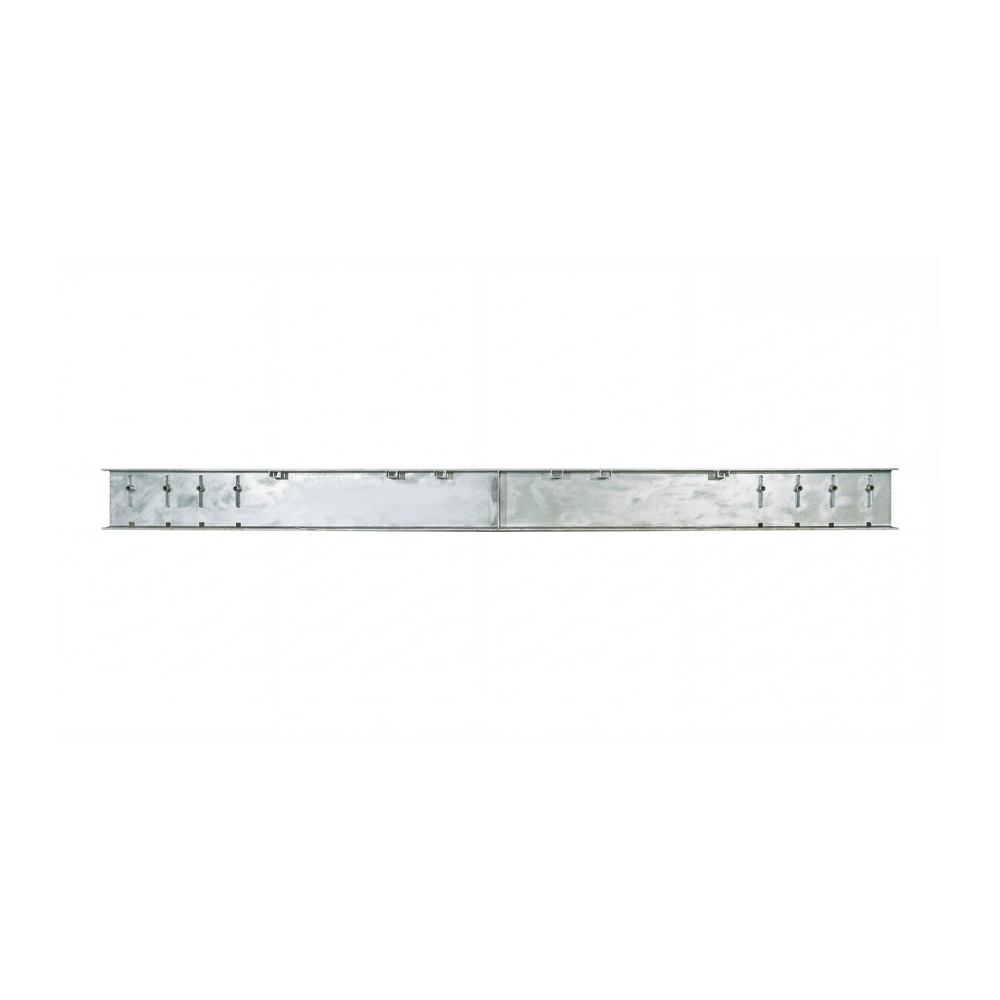
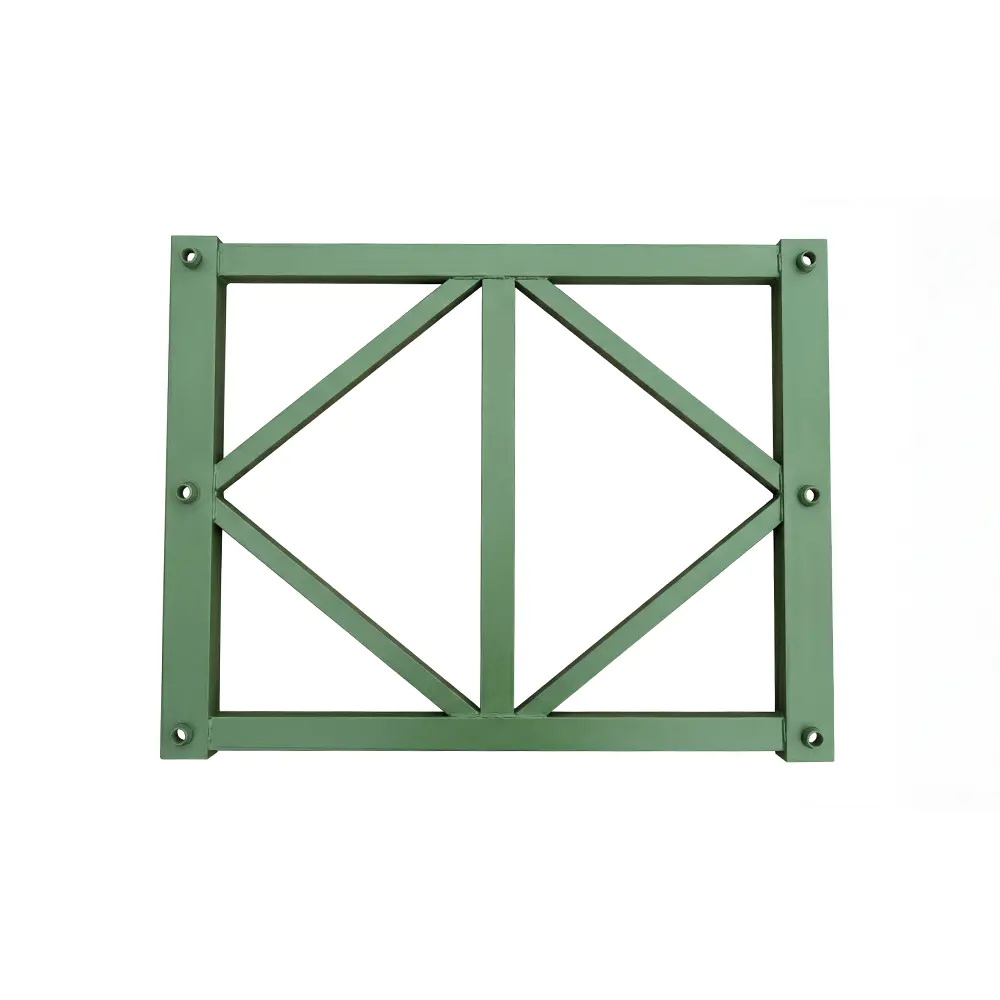
Modern bridge construction, emergency access, and temporary infrastructure projects increasingly require structural components that combine high load-bearing capacity, rapid assembly, dimensional consistency, and reliable field performance. The Type HD200 Vertical Support Frame is designed to meet these requirements as an essential component of the HD200 prefabricated steel bridge and heavy-duty truss system.
Although it is a relatively compact structural element, the vertical support frame performs a critical role in the overall load path. It transfers vertical forces, limits structural deformation, supports the truss arrangement, and contributes to resistance against overturning. When installed with horizontal support frames, strengthening chords, truss sections, and associated connection hardware, it helps create a stable three-dimensional structural system capable of handling demanding bridge and construction loads.
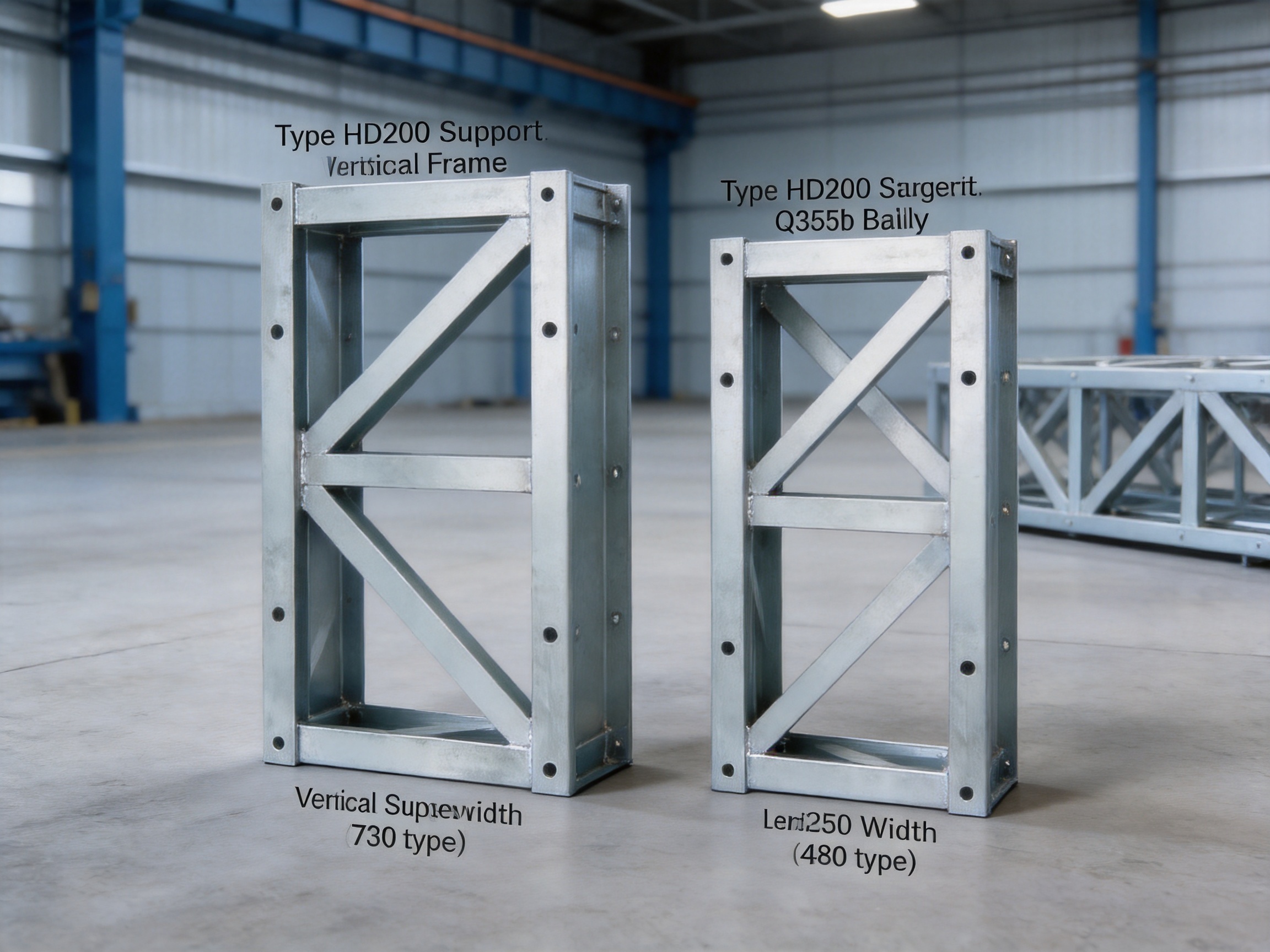
The Type HD200 Vertical Support Frame is available in two principal specifications: the 730 type and the 480 type. These models correspond to different HD200 truss spacing arrangements and enable engineers to adapt the support configuration to project requirements. Manufactured from Q355B structural steel, the frame provides a practical combination of strength, weldability, durability, and suitability for repeated use.
Its application range includes temporary bridges, emergency rescue bridges, semi-permanent access structures, bridge erection systems, heavy-duty formwork support, construction platforms, and other engineered steel structures. It is particularly useful where a project must address long spans, high service loads, difficult site conditions, or an unfavorable height-to-width ratio.
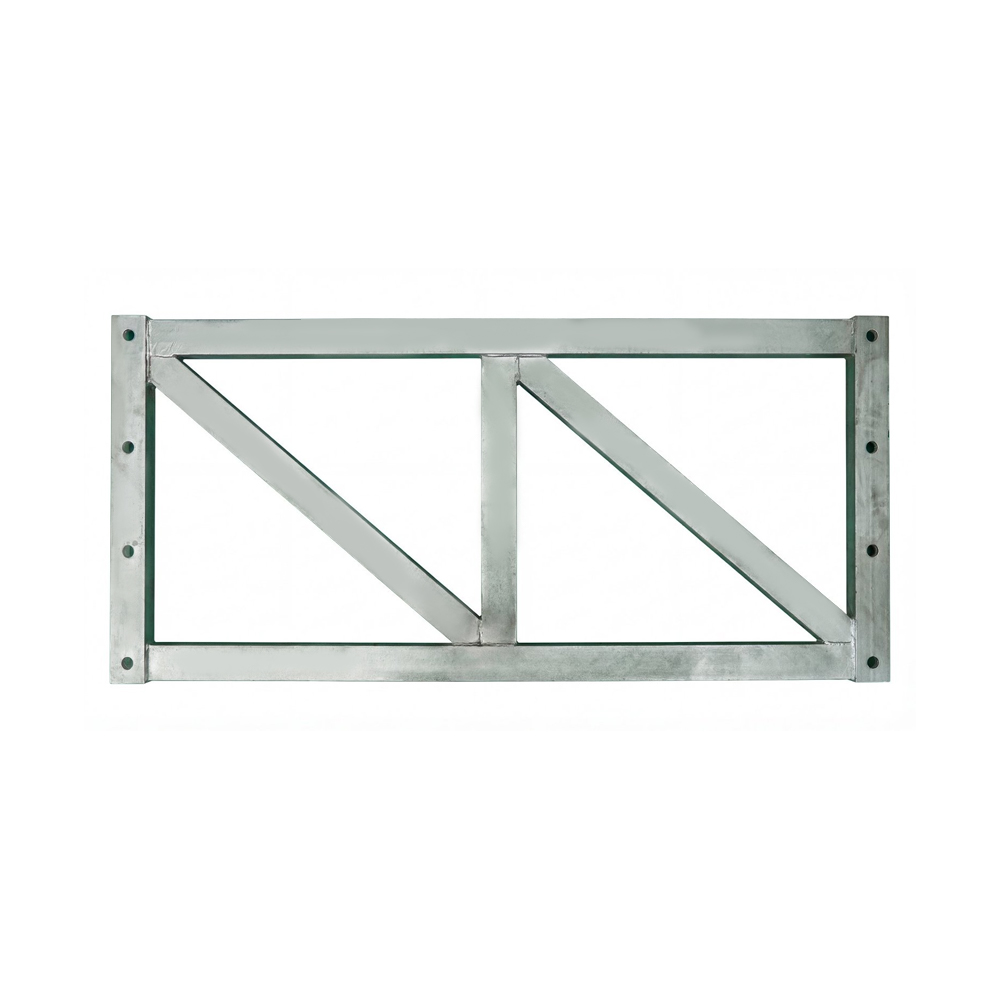
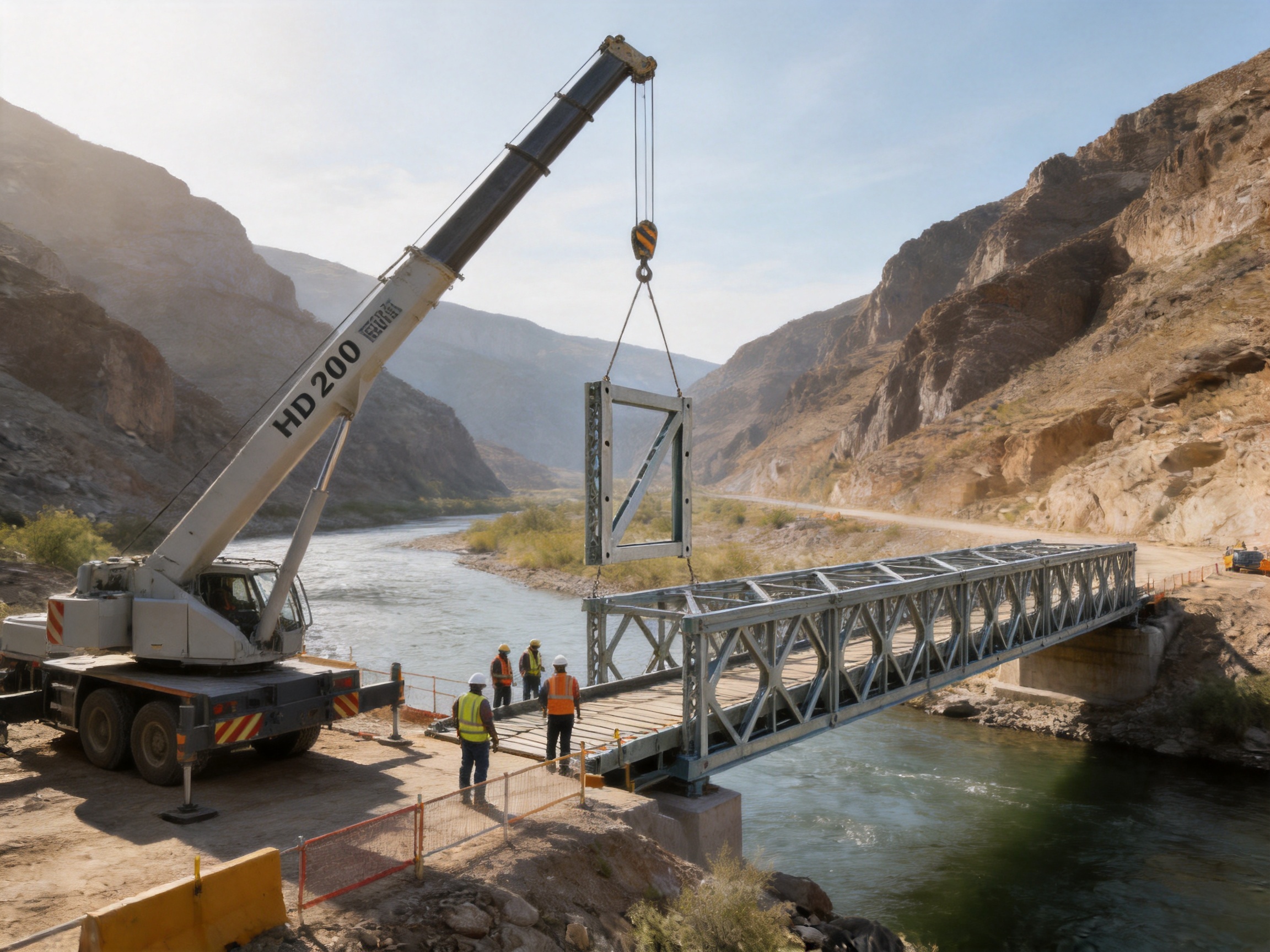
Type HD200 - Vertical Support Frame For Bailey Bridge
1. Structural Function of the Vertical Support Frame
A Bailey bridge is assembled from standardized prefabricated components that work together as a structural system. The truss panels carry bending and shear forces along the span, while transoms, decks, bracing members, support frames, and connection components maintain the geometry and distribute loads. Within this system, the vertical support frame serves as one of the principal components responsible for controlling vertical behavior.
The frame is positioned to support the truss arrangement and maintain the intended relationship between the upper and lower structural members. Under traffic, construction, wind, equipment, or temporary loading, vertical forces are transferred through the bridge trusses and supporting members. The vertical support frame helps guide these forces into the appropriate structural paths and ultimately toward the supports and foundation.
Without sufficient vertical support, a modular bridge may experience excessive deflection, local instability, distortion of the truss geometry, or increased risk of overturning. The frame therefore does more than provide a physical connection. It contributes to the overall stiffness and stability of the assembled structure.
The Type HD200 frame is also intended to work as part of a closed force-bearing system. Horizontal support frames help maintain lateral stability, while strengthening chords increase the resistance of the truss assembly to bending and deformation. Together, these components provide a more balanced structural arrangement than relying on isolated vertical members alone.
Load transfer and deformation control
Vertical loads may come from vehicles, pedestrians, construction equipment, formwork, stored materials, lifting operations, or other temporary conditions. The support frame helps distribute these loads across the HD200 system and reduces the concentration of forces at individual connection points.
It also helps control vertical deformation. All steel structures deflect to some degree when loaded, but excessive deflection can affect ride quality, construction accuracy, drainage, formwork alignment, and the serviceability of connected components. By contributing to the stiffness and geometric stability of the structure, the vertical support frame helps maintain a more predictable structural response.
Resistance to overturning and lateral movement
Bridge stability is influenced not only by vertical loading but also by horizontal forces. Wind, braking, acceleration, uneven loading, construction operations, and temporary lifting conditions can create lateral effects. The vertical support frame forms part of the restraint system that helps prevent the truss assembly from moving out of its intended position.
When combined with the correct horizontal frames, bracing, strengthening chords, bearings, anchorage, and foundation arrangements, it supports a stable three-dimensional configuration. The final resistance of the structure depends on the complete design and installation, but the support frame is an important link in that system.
2. Product Specifications
The Type HD200 Vertical Support Frame is supplied in two main models. The model selection is related to the spacing of the HD200 truss system and should be confirmed against the project drawings, loading requirements, and installation arrangement.
| Item | Specification |
|---|
| Product | Type HD200 Vertical Support Frame for Bailey Bridge |
| Model 730 external dimensions | 1774 × 820 × 50 mm |
| Model 480 external dimensions | 1774 × 570 × 50 mm |
| Center distance dimensions | 1694 × (250 + 230 + 250) mm |
| Material | Q355B structural steel |
| Primary function | Vertical load transfer, truss support, deformation control, and structural stability |
| System compatibility | HD200 or Type 200 Bailey truss systems and associated support components |
| Typical applications | Temporary bridges, emergency bridges, heavy-duty trusses, formwork support, and engineered steel structures |
The dimensional difference between the 730 type and the 480 type allows the product to match different truss spacing requirements. Selecting the appropriate model is important because incorrect spacing can affect connection alignment, load distribution, bracing geometry, and the overall assembly sequence.
The stated dimensions should be treated as product reference dimensions. Project-specific design may require confirmation of connection details, tolerances, coatings, accessories, loading combinations, and support conditions before manufacture or installation.
3. Q355B Structural Steel and Material Performance
The vertical support frame is manufactured from Q355B steel. This grade is widely used in structural applications where a combination of strength, toughness, fabrication suitability, and practical availability is required. The designation indicates a high-strength structural steel suitable for load-bearing components when properly designed, processed, welded, and protected.
Compared with ordinary lower-strength structural steel, Q355B can provide a higher yield strength level, allowing engineers to achieve strong structural performance without unnecessarily increasing the size or weight of every component. This can be particularly valuable in modular bridge systems, where component weight affects transportation, lifting, manual handling, erection speed, and site logistics.
Material selection also affects repeatability. A standardized steel grade allows the manufacturer and engineering team to establish consistent fabrication procedures, inspection requirements, welding practices, and quality records. For projects involving many repeated components, this consistency helps reduce variation between individual frames.
Fabrication suitability
Q355B is suitable for common structural steel fabrication processes when appropriate procedures are followed. These processes may include plate preparation, cutting, drilling, forming, welding, dimensional correction, surface preparation, and protective coating. The precise procedure should be selected according to plate thickness, joint design, environmental conditions, and applicable standards.
For a bridge support frame, the quality of the steel alone is not enough. The completed component must also maintain correct geometry, sound welds, accurate hole positions, and reliable connection surfaces. The manufacturing process must therefore control both material performance and fabrication accuracy.
4. Manufacturing Process and Quality Control
Advanced manufacturing for bridge components is not limited to the use of modern machinery. It includes the disciplined management of design information, material traceability, production planning, dimensional control, welding quality, surface treatment, inspection, packaging, and technical documentation. These activities work together to produce components that can be assembled efficiently and perform consistently in the field.
Engineering review and production planning
Production begins with a review of the product drawings, model requirements, dimensions, connection details, and project-specific requirements. The manufacturer checks whether the requested component corresponds to the 730 or 480 configuration and confirms how the frame will integrate with the HD200 truss and associated support members.
Production planning identifies the required raw materials, cutting schedules, welding sequences, inspection points, surface treatment requirements, and packing arrangements. Careful planning helps prevent material substitution, dimensional inconsistency, missing components, or delays during assembly.
Material control and traceability
Structural steel should be received with suitable material documentation and checked for grade, dimensions, surface condition, and quantity. Maintaining traceability from incoming material to finished frame supports quality management and gives project teams greater confidence in the origin of the component.
For repeat orders, organized material control is especially important. The manufacturer may need to produce frames for multiple bridge systems, span arrangements, or customers at the same time. Clear identification and controlled storage help keep different production batches separated and reduce the risk of mixing components.
Precision cutting and preparation
Steel plates and sections are cut according to approved drawings and production data. Accurate cutting supports consistent external dimensions and helps maintain the correct relationship between the frame members. Poorly controlled cutting can create excessive fit-up gaps, uneven edges, distortion, or additional rework during welding.
After cutting, edges and connection areas may be prepared through deburring, cleaning, drilling, or other operations required by the design. The objective is to create clean and accurately positioned surfaces for assembly and joining.
Jig assembly and dimensional control
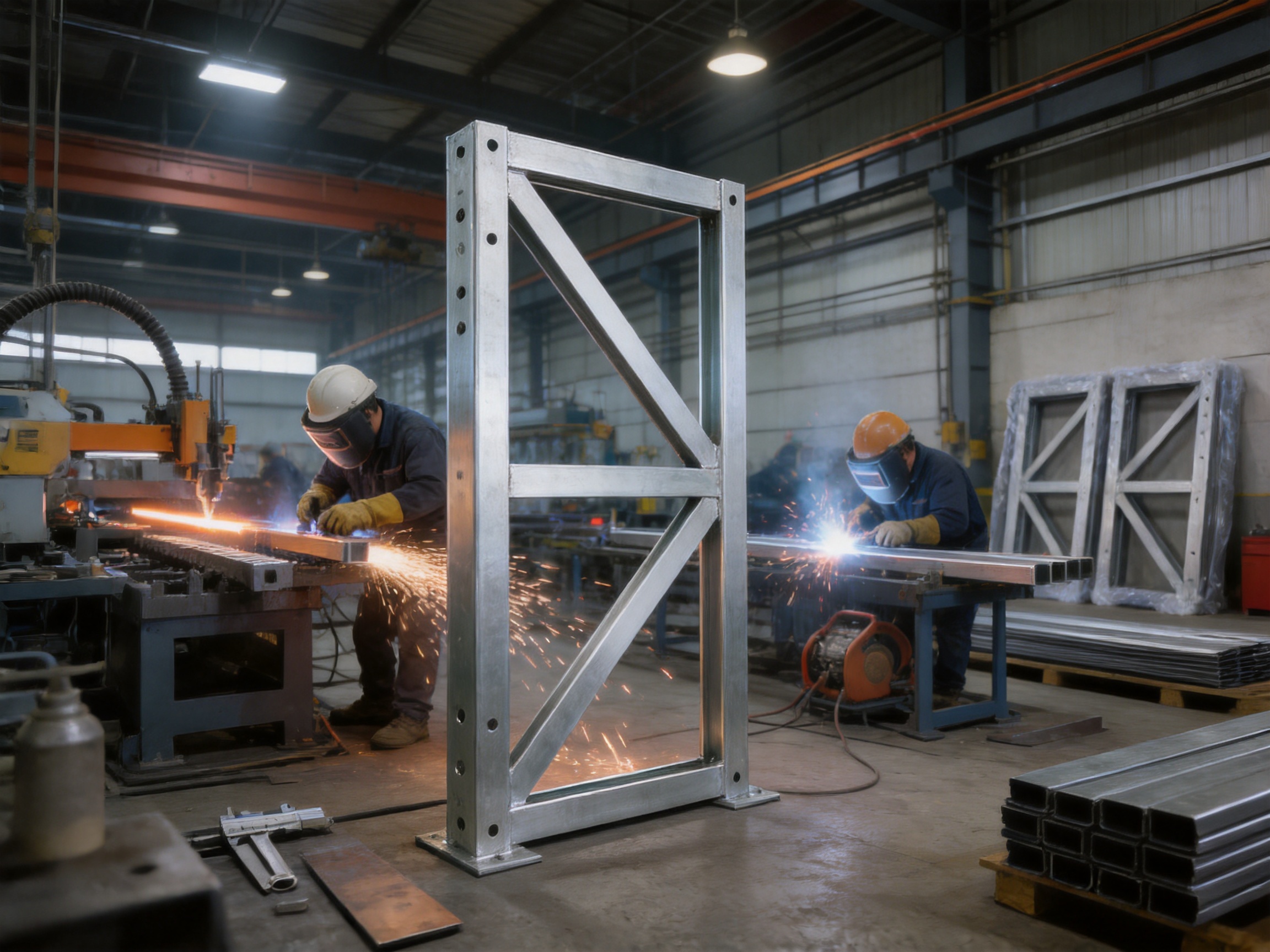
Because the vertical support frame is a standardized component, jigs and fixtures can be used to support repeatable assembly. Proper fixturing helps hold members in their intended position during tack welding and final welding. It also reduces the likelihood of cumulative dimensional errors.
Key dimensions, including overall height, width, member spacing, center distances, connection locations, and squareness, should be checked during production. Intermediate inspection is more effective than waiting until the entire component is complete, because deviations can be corrected before they become difficult or expensive to repair.
Controlled welding procedures
Welding is a central part of the manufacturing process. The quality of welded joints affects the strength, stiffness, fatigue behavior, durability, and appearance of the finished frame. A controlled process may include qualified welding procedures, appropriate consumables, trained welders, pre-welding cleaning, suitable welding sequences, and inspection of completed joints.
Welding sequences should be planned to reduce distortion. If heat is introduced unevenly, the frame may warp or develop dimensional deviations. Balanced welding, temporary restraint, controlled heat input, and suitable cooling practices can help preserve the required geometry.
Inspection may include visual examination and, where required by the project or applicable standards, nondestructive testing methods. The inspection level should be determined by the design category, service conditions, customer requirements, and relevant structural steel codes.
Surface preparation and protection
Steel bridge components are often exposed to moisture, dust, temperature changes, road spray, construction chemicals, and outdoor storage. Surface preparation and protective coating are therefore important for long-term durability.
Before coating, the surface should be cleaned and prepared to remove contaminants, loose scale, rust, oil, and other substances that could reduce coating adhesion. The selected coating system should be compatible with the intended environment and may include primer, intermediate coating, and finishing layers.
For temporary or frequently reused bridge components, an effective protective system can reduce maintenance requirements and help preserve the component during transportation, storage, installation, dismantling, and redeployment. Coating requirements should be agreed before production because color, dry film thickness, repair procedures, and packaging conditions may vary by project.
Final inspection and documentation
Before shipment, the finished frame should be checked for dimensions, weld appearance, connection condition, surface treatment, identification marks, and visible damage. A complete quality process may also include inspection records, material certificates, production records, dimensional reports, coating information, and packing lists.
This documentation is valuable for contractors and engineering companies because it supports receiving inspection, assembly planning, maintenance, and future reuse. It also allows the product to be integrated into a broader quality management system for a bridge project.
5. Advantages Compared with Less Specialized Support Components
The Type HD200 Vertical Support Frame offers several advantages over improvised supports, non-standard fabricated members, or components that are not specifically coordinated with the HD200 system.
Standardized system compatibility
The most important advantage is compatibility with a modular truss system. Standardized dimensions and connection relationships allow the frame to be used with corresponding HD200 components. This reduces the need for extensive field modification and makes the design, procurement, and erection process more predictable.
Improvised supports may appear economical at the beginning of a project, but they can introduce uncertainty in connection alignment, load transfer, fabrication quality, and installation sequence. A dedicated support frame is designed to function as part of a known structural arrangement rather than as an isolated substitute.
Efficient load-bearing configuration
The frame is designed to transfer vertical forces through a defined structural path. Its role within the HD200 system allows the bridge or support arrangement to carry heavy loads while maintaining a relatively organized and compact configuration.
This can be advantageous where space is limited or where the project must balance load capacity against transportation and erection constraints. The frame supports a system-based design approach in which each component contributes to a coordinated load-bearing structure.
Improved dimensional repeatability
Factory production provides better repeatability than uncontrolled site fabrication. Consistent dimensions make it easier to prepare foundations, align truss sections, position support points, install horizontal frames, and connect strengthening chords.
Repeatability also benefits projects involving multiple spans or several support locations. When components are manufactured to a consistent standard, the construction team can use a more uniform assembly method and reduce the amount of adjustment required in the field.
Reduced installation uncertainty
Prefabricated components can shorten the time needed for on-site fabrication. This is particularly important for emergency bridges, temporary traffic diversions, railway works, flood response, remote construction sites, and projects where access restrictions increase the cost of prolonged site activity.
A frame that arrives ready for assembly can reduce hot work, cutting, drilling, and corrective fabrication at the jobsite. Fewer site modifications also help improve safety and protect the intended structural geometry.
Suitability for repeated use
Bailey bridge components are often designed for relocation, dismantling, storage, and reuse. A durable steel support frame can therefore serve multiple projects during its service life, provided that it is inspected, maintained, and used within the applicable design limits.
Repeated use can improve the economic value of the component compared with single-purpose temporary supports. It also supports sustainable construction by reducing the need to manufacture entirely new structural members for every project.
Adaptability to different engineering situations
The 730 and 480 models provide flexibility within the HD200 system. Engineers can select the configuration that matches the relevant truss spacing and structural arrangement. The component can be used in bridge engineering, heavy-duty temporary works, large formwork support systems, and emergency response applications.
This adaptability is especially useful for contractors and rental companies that manage projects with changing span lengths, loading requirements, access conditions, and construction sequences.
6. Applications in Bridge Engineering
The Type HD200 Vertical Support Frame is suitable for a broad range of bridge-related applications. The final arrangement must always be designed and checked by qualified professionals, but the component provides a practical foundation for several types of temporary and semi-permanent structure.
Temporary highway bridges
Temporary highway bridges are used when an existing bridge is being repaired, when a road has been damaged, or when a construction site requires temporary traffic access. The support frame helps maintain the vertical stability of the truss system and supports the transfer of vehicle loads toward the foundation.
Because modular bridge systems can be assembled from standardized sections, they can often be adapted to different road widths, span lengths, and construction conditions. The support frame contributes to the repeatable and organized nature of that assembly process.
Emergency and rescue bridges
After floods, earthquakes, landslides, industrial incidents, or other emergencies, restoring access may be urgent. A prefabricated steel bridge system can be transported and assembled more quickly than a conventional permanent structure, especially when the site requires a temporary crossing.
The Type HD200 support frame is useful in these situations because it is a standardized component that can be combined with other modular bridge elements. Its factory-fabricated form reduces the dependence on extensive field manufacturing at a time when equipment, power, labor, and transportation may be limited.
Semi-permanent access structures
Some projects need a bridge for a period longer than a short emergency response but do not immediately require a permanent concrete or composite structure. Mining access roads, industrial developments, remote facilities, water conservancy projects, and large construction sites may use semi-permanent modular bridges.
In these applications, durability, maintainability, and the ability to inspect or replace components are important. The steel support frame can form part of a maintainable system in which individual components are accessible and standardized.
Bridge erection and launching operations
Modular steel components may also be incorporated into bridge erection arrangements, guide beams, launching systems, tower columns, gantry hangers, or other temporary works. In these applications, the vertical support frame can help provide stable support during staged construction or controlled movement of bridge elements.
Launching and erection operations involve changing load paths and temporary load cases. The frame should therefore be used only in an engineered arrangement that accounts for construction stages, lifting points, temporary restraints, wind conditions, and equipment reactions.
Formwork and heavy-duty construction support
The frame is also suitable for large formwork support systems and heavy truss-based temporary works. Concrete formwork, bridge deck construction, precast handling, and other construction activities may require a strong and stable support structure before the permanent structural system is complete.
Its standardized form can simplify the planning of towers, frames, and support lines. The component may help address situations in which conventional scaffolding is not sufficient for the required load or span, although the complete temporary works system must be verified for the specific application.
7. Use in Large-Span and High-Load Projects
The product is intended for engineering scenarios involving spans from approximately 9.144 to 60.96 meters and high-load conditions such as HS25 class and above, subject to project design and verification. These reference ranges indicate the type of demanding work for which the HD200 system is commonly considered.
Longer spans increase bending effects, deflection sensitivity, erection complexity, and the importance of lateral stability. Higher loads increase the forces transmitted through truss panels, frames, connections, bearings, and foundations. The vertical support frame contributes to the system response by supporting the truss geometry and helping transfer vertical forces through the planned structural path.
When a structure has a large height-to-width ratio, it may be more susceptible to instability or lateral movement. The support frame, horizontal support frame, and strengthening chord arrangement helps create a more balanced three-dimensional system. This is particularly relevant for tall temporary support structures, deep truss arrangements, and heavy construction support applications.
Foundation and bearing considerations
A strong superstructure cannot compensate for an inadequate foundation. The vertical support frame transfers loads toward bearings, supports, and foundation elements, so the ground and substructure must be able to resist the resulting forces.
Before installation, the project team should evaluate bearing capacity, settlement, sliding resistance, overturning resistance, drainage, scour, and local ground conditions. Temporary bridges near rivers or flood channels require special attention to water flow, erosion, debris impact, and seasonal changes.
Where foundation capacity is limited, the structural arrangement may need to distribute loads more effectively or use additional support points. The product can help form part of a complete force-bearing loop, but it must not be considered a replacement for geotechnical assessment or structural engineering.
8. Installation and Assembly Considerations
Successful installation begins with a clear erection plan. The plan should identify the bridge alignment, support locations, assembly sequence, lifting equipment, temporary bracing, access routes, exclusion zones, inspection points, and final connection requirements.
Receiving and pre-installation inspection
Upon delivery, each frame should be checked against the packing list and project requirements. Inspectors should look for deformation, coating damage, bent connection areas, missing identification marks, weld damage, and contamination that may have occurred during transport.
Components should be stored on suitable supports rather than directly on wet or uneven ground. Drainage should be maintained around the storage area, and frames should be protected from unnecessary impact or contamination. Correct storage reduces the risk of damage before assembly begins.
Alignment and connection
The frame must be aligned with the corresponding HD200 truss sections and support members. Connection holes, pins, bolts, bearing surfaces, and bracing attachments should be checked before final tightening or securing.
Field workers should avoid forcing misaligned components into position with uncontrolled impact. If alignment problems occur, the cause should be investigated. The issue may result from an incorrect model, foundation displacement, damaged component, accumulated tolerance, or an assembly error.
Temporary stability during erection
A bridge may be vulnerable during intermediate construction stages, even if the completed arrangement is stable. Temporary bracing and restraint should be installed according to the erection method. Wind conditions, lifting operations, partial truss configurations, and unbalanced loads should be included in the construction planning.
The vertical support frame should not be treated as a standalone lifting point unless the design specifically permits that use. Lifting forces can differ significantly from normal service loads and may cause local stresses or distortion if applied incorrectly.
Inspection after assembly
After installation, the project team should inspect the completed support arrangement, including frame alignment, connections, bracing, bearing contact, foundation condition, and visible deformation. Any temporary components required to remain in place should be clearly identified and maintained for the duration of the project.
For traffic bridges, additional checks may include deck level, approach alignment, clearance, guardrails, drainage, signs, load restrictions, and surface condition. For formwork systems, checks may include support spacing, formwork elevation, construction load limits, and access control.
9. Company Manufacturing and Engineering Strengths
Zhenjiang Jinhao Road & Bridge Supporting Engineering Co., Ltd. is based in Shangdang Town Industrial Park, Dantu District, Zhenjiang City, Jiangsu Province, China. Established in 2017, the company has developed from a business focused on construction and industrial materials into an integrated enterprise serving the design, manufacture, erection, and leasing sectors of bridge and steel support engineering.
The company’s product range includes Bailey steel bridges, Type 321 Bailey truss sections, HD200 or Type 200 Bailey truss sections, bridge launching gantry systems, triangular and diamond hanging baskets, bridge steel formwork, pier formwork, and related engineered steel structures.
Integrated product knowledge
One advantage of working with a manufacturer that produces multiple related bridge and formwork products is the ability to understand how components interact within a complete temporary works system. The Type HD200 Vertical Support Frame is not produced as an isolated steel article; it is part of a broader family of modular bridge and construction support products.
This system knowledge can support more effective communication regarding span arrangements, truss spacing, support requirements, strengthening members, erection sequence, and component compatibility. Contractors can obtain a more coordinated response when they require several types of structural equipment for the same project.
Design and system planning capability
Jinhao provides customized fabrication, design and system planning, technical support, and quality management services. These capabilities are valuable when a standard component must be integrated into a project with special dimensions, site restrictions, transportation limitations, or unusual construction stages.
System planning may include reviewing the required span, load class, bridge width, support arrangement, truss configuration, deck arrangement, erection method, and reuse requirements. The objective is to ensure that product selection and structural planning are coordinated from the beginning.
Manufacturing and fabrication resources
The company’s experience with modular bridges, steel formwork, launching systems, and related structural products supports a production environment familiar with fabricated steel components. Such experience is important because bridge components require more than general metalworking. They must maintain accurate dimensions, reliable connections, suitable surface protection, and consistent interchangeability.
By combining production planning with inspection and project communication, the manufacturer can support repeat orders and customized requirements while preserving the advantages of standardized components.
Service for international projects
Jinhao supplies steel bridge solutions for contractors, governments, and engineering companies in different markets. International project support may involve product selection, technical clarification, fabrication coordination, packing, export preparation, and communication with local construction teams.
For overseas buyers, clear documentation and consistent identification are particularly important. Components may be transported over long distances and assembled by teams working under local codes and procedures. Organized technical information helps reduce misunderstandings and supports receiving and erection inspections.
Combination of manufacturing and leasing
The company’s involvement in both manufacturing and leasing allows it to serve projects with different commercial requirements. Some customers may need to purchase components for long-term ownership, while others may require temporary access to a bridge system for a defined construction period.
Leasing can be useful for emergency works, temporary traffic arrangements, construction access, and projects where the equipment will be dismantled after completion. Purchase may be more suitable for contractors, governments, or rental companies that expect repeated future use.
10. Logistics, Handling, and Reuse
The modular nature of the Type HD200 support frame supports efficient transport and organized site handling. Before shipment, components should be grouped according to model, bridge section, support location, and erection sequence whenever possible.
Frames should be secured to prevent movement, impact, or abrasion during transportation. Packing methods should consider lifting points, forklift access, weather protection, stacking limitations, and the need for safe unloading at the destination.
At the site, a component identification system can help the crew distinguish the 730 type from the 480 type and prevent installation in the wrong location. Clear marks, packing lists, drawings, and assembly instructions can reduce delays and avoid unnecessary handling.
After dismantling, every frame should be inspected before being placed into storage or sent to another project. The inspection should check for permanent deformation, cracked welds, elongated holes, corrosion, impact damage, coating failure, and missing accessories. Components that no longer meet the applicable requirements should be repaired, tested, downgraded for suitable use, or removed from service.
11. Maintenance and Long-Term Performance
Maintenance requirements depend on the environment, loading frequency, coating system, storage conditions, and number of reuse cycles. A basic maintenance program should include regular visual inspections and corrective action when damage is found.
Routine inspection points
Inspectors should examine welded joints, connection holes, edges, bearing areas, bracing attachments, and regions that may receive impact from vehicles or construction equipment. They should also check for corrosion beneath dirt, standing water, damaged coating, and unauthorized modifications.
Any visible bend, crack, unusual deformation, or connection problem should be documented and evaluated by qualified personnel. Components should not be returned to service solely because the damage appears minor.
Coating maintenance
Small areas of coating damage should be cleaned and repaired according to the approved coating system. If corrosion has progressed beneath the coating, the affected area may require more extensive preparation and inspection.
Good drainage and proper storage are important preventative measures. Frames should not be left in standing water or placed where soil, chemicals, or debris remain trapped against the steel surface.
Protection against unauthorized alteration
Cutting, drilling, welding, or other modifications can change the structural performance of a standardized frame. Any alteration should be approved by the responsible engineer and completed using an appropriate procedure. Uncontrolled modifications may reduce capacity, interfere with interchangeability, or create stress concentrations.
12. Selecting the Correct Model and Supplier
When purchasing a Type HD200 Vertical Support Frame, the buyer should confirm the required model, dimensions, material, quantity, coating system, connection details, delivery schedule, and documentation package.
The 730 type and 480 type should not be treated as interchangeable simply because they perform a similar general function. Their external dimensions correspond to different spacing arrangements, so the model must match the truss system and approved design.
Buyers should also evaluate the manufacturer’s ability to provide more than a single fabricated component. Important supplier capabilities include engineering communication, dimensional control, material management, welding quality, surface protection, packaging, technical support, and after-sales assistance.
A supplier with experience in Bailey bridges, launching gantries, hanging baskets, pier formwork, and bridge steel formwork may offer a broader understanding of temporary works coordination. This can be a significant advantage when the support frame must be integrated into a complex construction operation.
For large projects, customers may request sample drawings, quality records, inspection plans, production schedules, and references to comparable work. These documents help establish whether the supplier can meet the technical and logistical requirements of the project.
13. Why the Type HD200 Support Frame Is a Practical Engineering Choice
The Type HD200 Vertical Support Frame addresses several recurring challenges in temporary bridge and heavy-duty support construction. It provides a standardized vertical component for a high-capacity truss system, supports controlled force transfer, and contributes to a stable three-dimensional arrangement when correctly combined with horizontal frames and strengthening chords.
Its use of Q355B structural steel supports a high-strength, reusable, and fabrication-friendly product. The availability of two configurations provides flexibility for different HD200 truss spacings. Factory production improves dimensional repeatability and reduces the need for extensive field modification.
Compared with improvised supports, the frame offers greater system compatibility and more predictable assembly. Compared with one-time site-built structures, it may provide better reuse potential and more efficient logistics. Compared with non-specialized steel components, it benefits from being designed and manufactured for a defined modular bridge environment.
The product is also supported by a company with experience across bridge manufacturing, steel formwork, launching equipment, system planning, erection, and leasing. This broader capability helps customers address the entire temporary works requirement rather than purchasing disconnected components from unrelated sources.
14. Frequently Asked Questions
What is the main purpose of the Type HD200 Vertical Support Frame?
Its main purpose is to support the HD200 truss system, transfer vertical loads, control deformation, and contribute to resistance against structural overturning and lateral instability.
What are the available models?
The product is available in the 730 type and 480 type. The two models correspond to different HD200 truss spacing arrangements and have different external widths.
What are the external dimensions of the 730 type?
The stated external dimensions of the model 730 frame are 1774 × 820 × 50 millimeters.
What are the external dimensions of the 480 type?
The stated external dimensions of the model 480 frame are 1774 × 570 × 50 millimeters.
What material is used?
The frame is manufactured from Q355B structural steel, subject to the applicable production, inspection, and project documentation requirements.
Can the frame be used independently?
It is intended to function as part of an HD200 or Type 200 modular truss and support system. It should not be used as an independent structural solution without an engineering assessment of the complete arrangement.
What components work with the vertical support frame?
The frame works with HD200 truss sections, horizontal support frames, strengthening chords, connection hardware, bearings, bracing, decks, and foundation or support elements as required by the design.
Is the product suitable for emergency bridges?
Yes. Its prefabricated and standardized nature makes it suitable for emergency, rescue, temporary, and semi-permanent bridge projects when the complete bridge system is properly designed and installed.
Can it be used in formwork support systems?
Yes. The product is suitable for large formwork support systems and other heavy-duty temporary works, provided that the design accounts for construction loads, geometry, stability, foundation conditions, and erection stages.
What span range is associated with the HD200 system?
The supplied product information identifies applications involving spans of approximately 9.144 to 60.96 meters. The actual usable span depends on loading, bridge width, truss arrangement, support conditions, and engineering verification.
What load class is associated with the product?
The product information identifies high-load applications such as HS25 class and above. The final load capacity must be determined through a project-specific structural design and applicable standards.
How should the correct model be selected?
The model should be selected according to the HD200 truss spacing, approved drawings, connection arrangement, loading requirements, and project-specific engineering information. The 730 and 480 types should not be exchanged without confirmation.
Does the manufacturer provide customized services?
The manufacturer provides customized fabrication, design and system planning, technical support, quality management, erection, and leasing services for bridge and related steel support products.
Can the frame be reused?
Yes. Modular steel bridge components are commonly reused after dismantling, inspection, maintenance, and approval for the next application. Reuse must remain within the applicable design and condition limits.
What should be checked after delivery?
The receiving team should check the model, quantity, dimensions, identification marks, connection areas, welds, coating condition, visible deformation, and accompanying documentation before installation.
Can the frame be modified on site?
Unauthorized cutting, drilling, or welding is not recommended. Any modification should be reviewed and approved by the responsible engineer and completed under a controlled fabrication procedure.
15. Conclusion
The Type HD200 Vertical Support Frame is a specialized structural component developed for demanding Bailey bridge, heavy-duty truss, formwork, and temporary works applications. By supporting vertical load transfer, limiting deformation, and contributing to overall stability, it forms an important part of the HD200 modular bridge system.
Its Q355B steel construction, two available spacing-related configurations, standardized dimensions, and compatibility with horizontal support frames and strengthening chords make it a practical choice for large-span and high-load engineering projects. Factory fabrication provides advantages in dimensional repeatability, installation efficiency, quality control, transport, and future reuse.
The product is further supported by Jinhao’s broader capabilities in bridge design, manufacturing, erection, leasing, steel formwork, launching gantries, hanging baskets, and engineered structural systems. For contractors, governments, construction companies, and engineering firms seeking a coordinated modular bridge solution, this combination of product specialization and integrated service can reduce project uncertainty and improve construction efficiency.
As with all load-bearing bridge components, final selection and use must be based on professional structural design, applicable standards, verified loading conditions, suitable foundations, controlled erection, and regular inspection. Used within a properly engineered system, the Type HD200 Vertical Support Frame provides a reliable and adaptable foundation for temporary, emergency, semi-permanent, and heavy-duty bridge infrastructure.
References
1. Product specification information for the Type HD200 Vertical Support Frame for Bailey Bridge, including dimensions, material, model configurations, and intended applications.
2. Modular Bailey Bridge System Engineering Principles, covering truss assembly, load transfer, temporary bridge stability, and component coordination.
3. Structural Steel Fabrication and Welding Quality Control Practices, including material traceability, dimensional inspection, welding procedures, and surface preparation.
4. Temporary Works Design Principles for Bridges and Construction Support Systems, including erection-stage stability, foundation assessment, and reuse considerations.
5. General Structural Steel Design and Inspection Standards applicable to high-strength steel components and prefabricated bridge structures.


 Français
 Español
 عربى