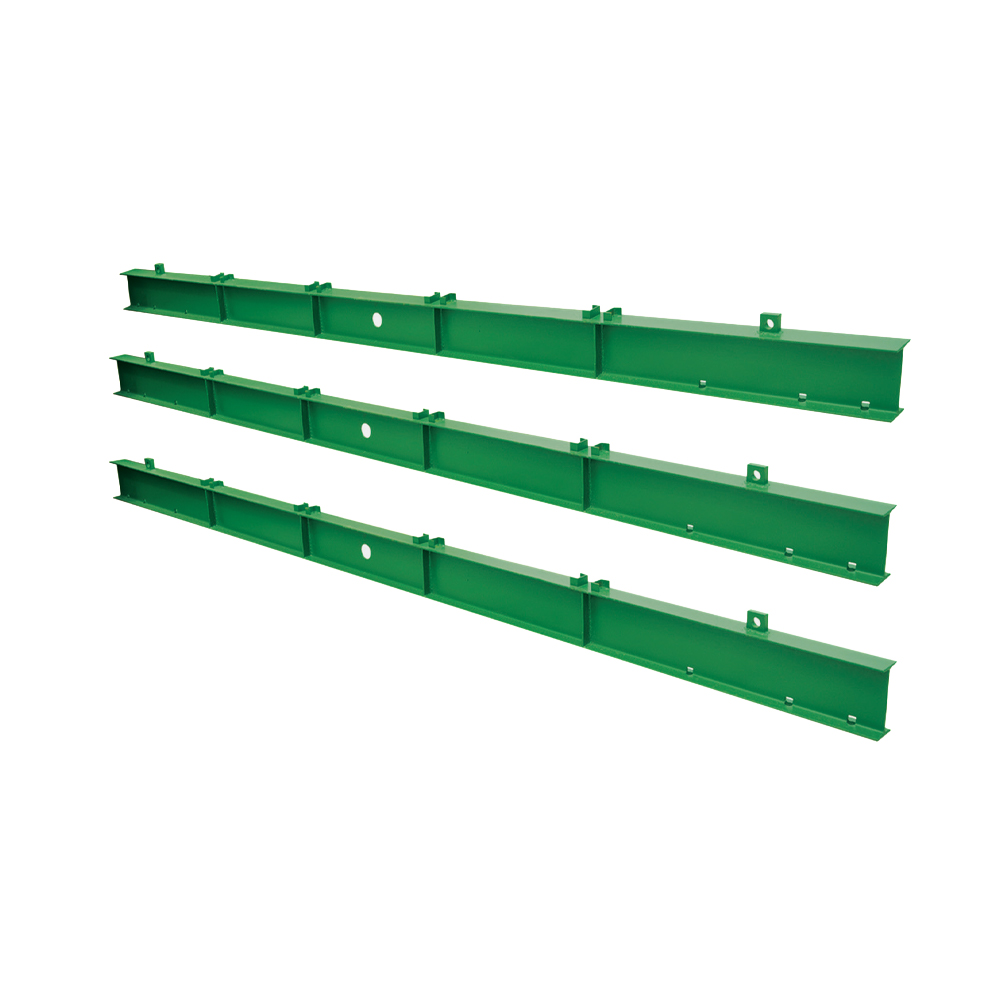
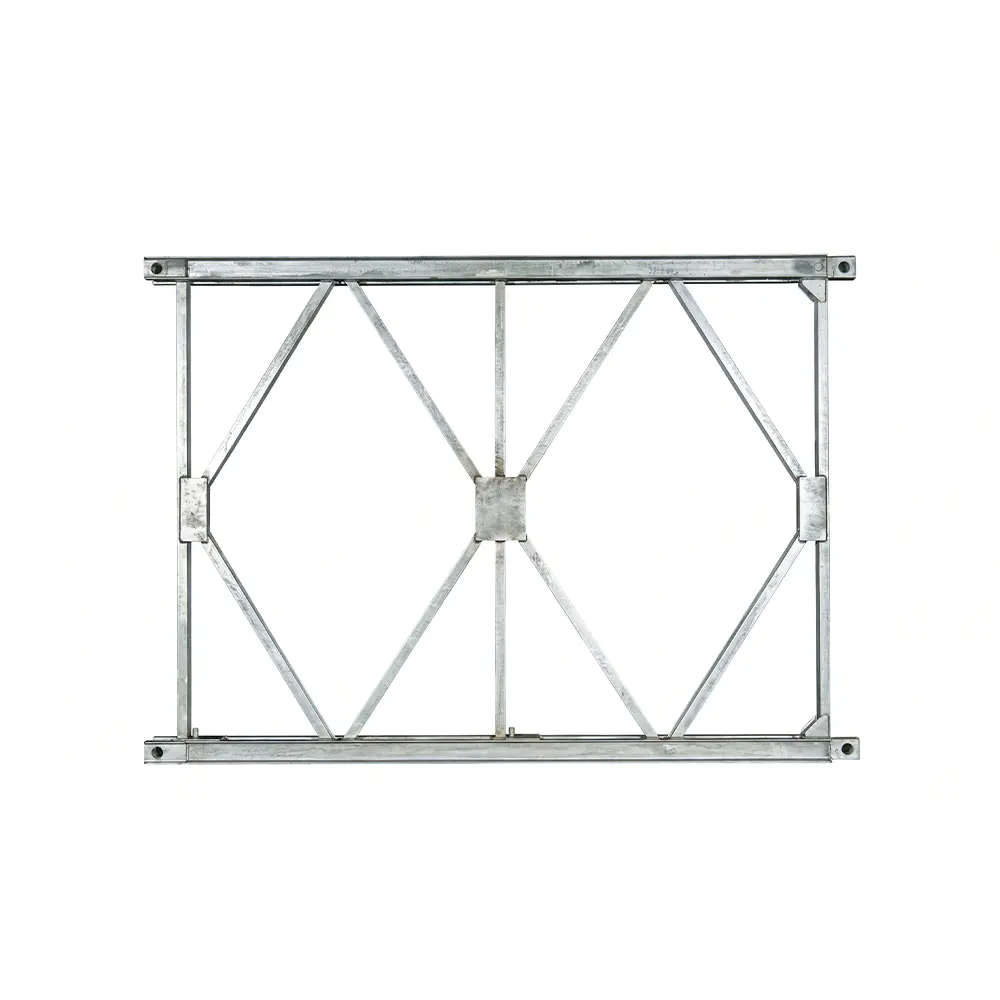
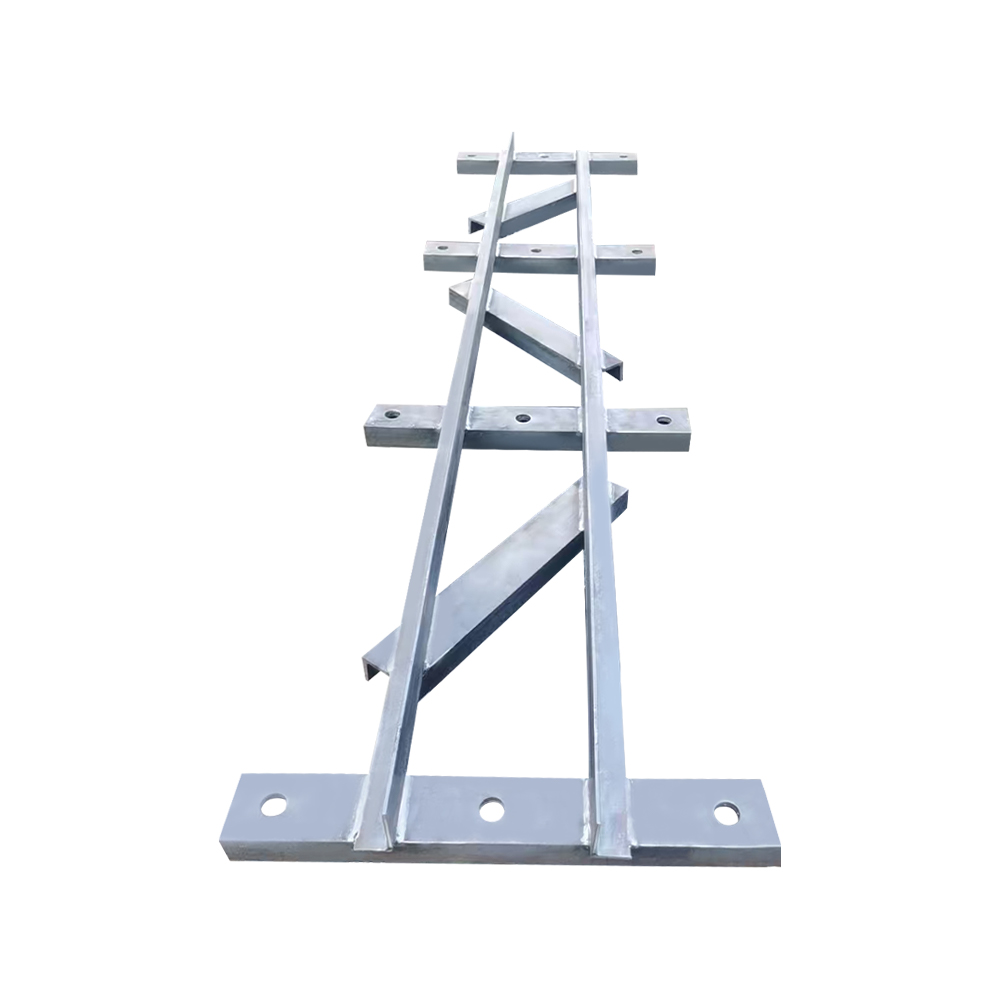
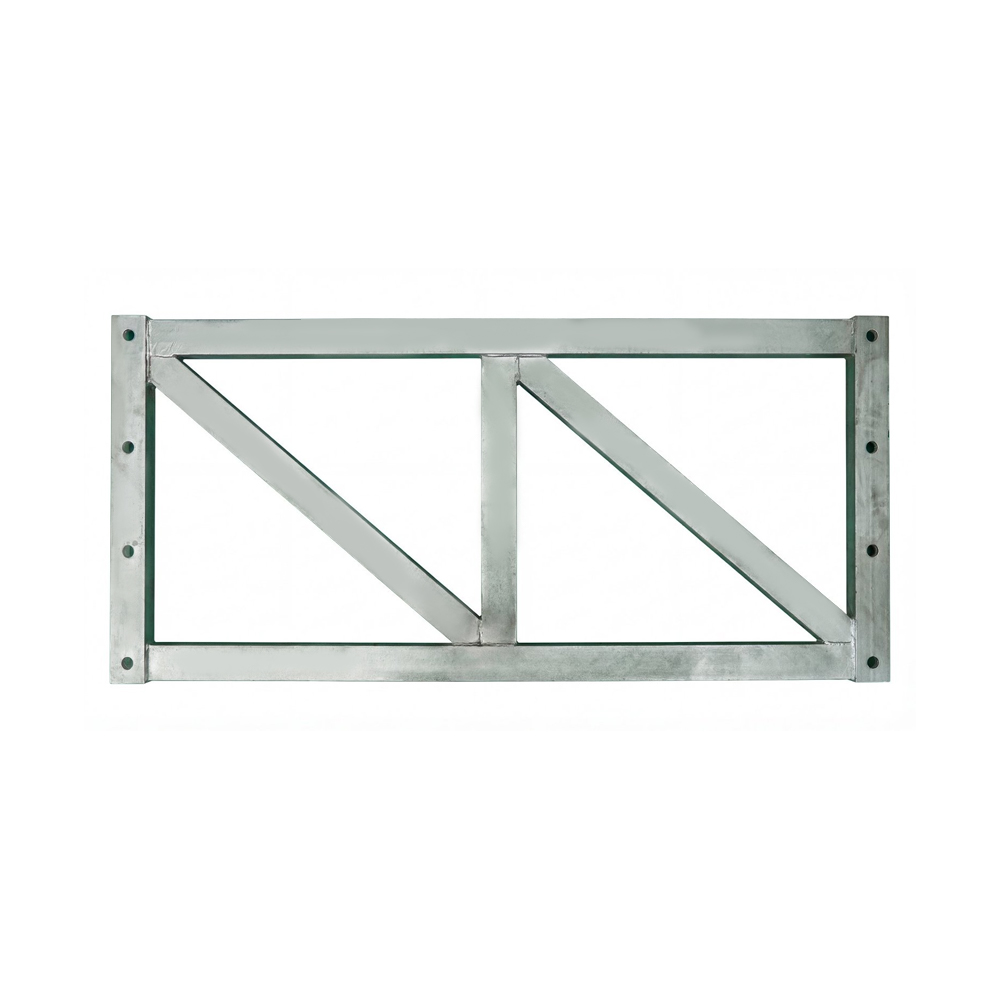
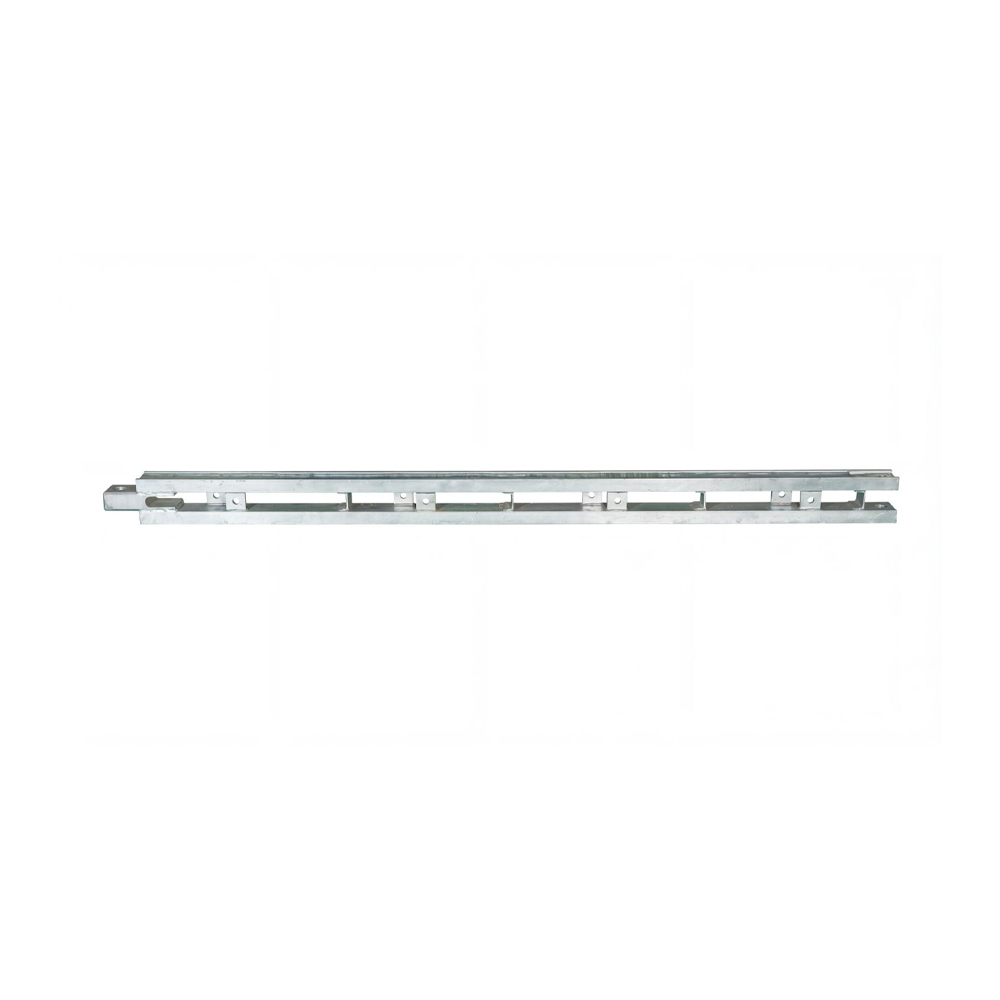
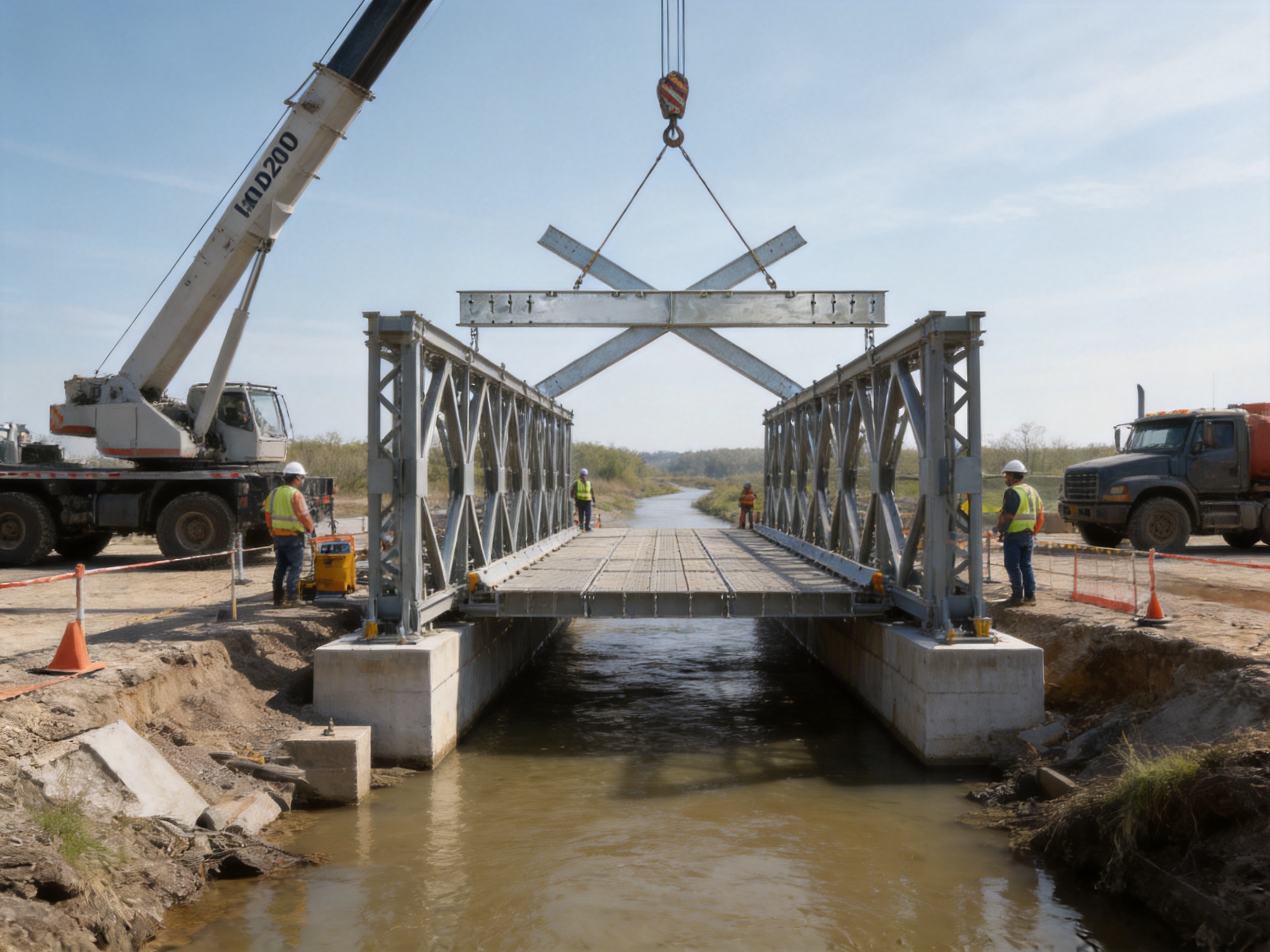
The HD200 crossbeam is a critical load-transferring component for modern modular Bailey bridge systems. Designed for medium- to heavy-duty engineering applications, it connects and supports the main truss sections while helping distribute deck, traffic, construction, and environmental loads across the bridge structure. Although a crossbeam may appear to be a simple steel member, its dimensional accuracy, material quality, connection compatibility, stiffness, and manufacturing consistency directly influence the safety, serviceability, and erection efficiency of the complete bridge.
The Type HD200 crossbeam supplied by Zhenjiang Jinhao Road & Bridge Supporting Engineering Co., Ltd. is developed for demanding temporary, emergency, semi-permanent, and construction access bridge applications. Manufactured from Q355B structural steel, it combines a standardized modular configuration with enhanced strength and rigidity. Available in several dimensional arrangements, the product can support different bridge widths, load requirements, and project layouts without sacrificing the interchangeability that makes prefabricated steel bridge systems efficient.
For contractors, government departments, infrastructure developers, and bridge specialists, the value of an HD200 crossbeam extends beyond the individual component. Its performance contributes to faster assembly, more predictable structural behavior, simplified logistics, reduced site modification, and easier integration with other Type 200 Bailey truss components. When produced under controlled manufacturing conditions and supported by engineering experience, the crossbeam becomes part of a complete bridge solution rather than merely a fabricated steel item.
This article examines the design characteristics, applications, manufacturing strengths, technical advantages, quality considerations, installation principles, and procurement value of the HD200 crossbeam for Bailey bridges.
1. The Role of a Crossbeam in a Modular Bailey Bridge
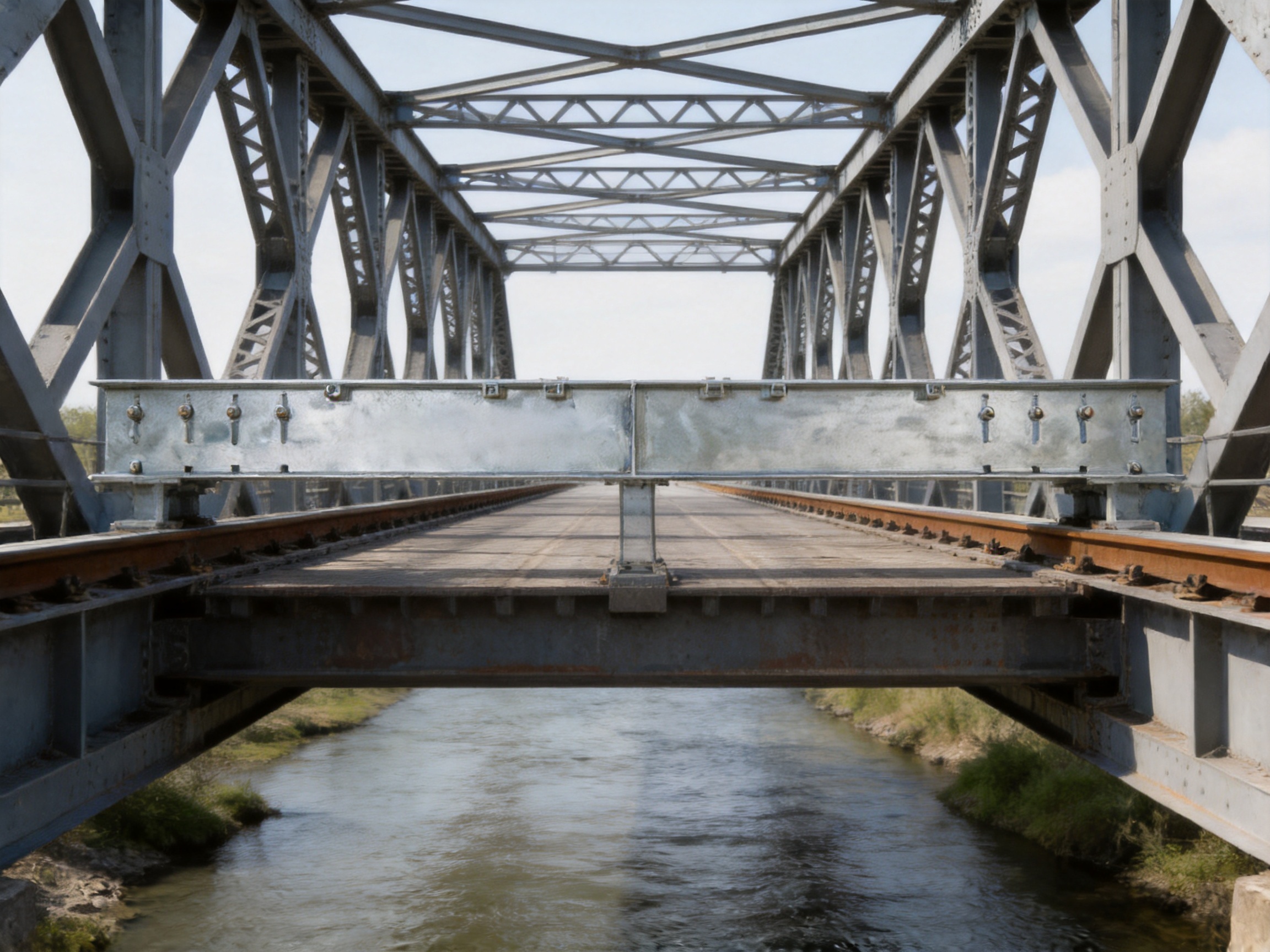
A Bailey bridge is assembled from prefabricated steel components that work together as a modular structural system. The principal truss sections carry longitudinal forces, while transoms, crossbeams, bracing members, deck components, connections, and support accessories complete the load path. The crossbeam is installed transversely across the bridge and is responsible for supporting the deck or roadway structure while transferring vertical and lateral forces toward the main trusses.
In practical engineering terms, the crossbeam performs several functions at the same time. It supports the roadway surface, helps maintain the designed spacing between the main trusses, distributes wheel loads, contributes to transverse stability, and provides a reliable connection point for deck-related components. Its geometry must therefore be compatible with the truss panel arrangement and the intended bridge width.
The crossbeam also has an important role during erection. Bailey bridges are commonly assembled in locations where construction time, access, and site disruption must be carefully controlled. Components may be delivered to remote areas, moved by crane or other lifting equipment, and connected progressively at the work front. A crossbeam that is dimensionally consistent and correctly fabricated can reduce adjustment work and help crews maintain the planned erection sequence.
In emergency bridge construction, this benefit becomes especially important. A temporary crossing may be required after flooding, landslides, earthquakes, infrastructure damage, or military and civil defense operations. The bridge must be installed quickly while still providing dependable structural performance. Standardized HD200 crossbeams can help accelerate this process because they are designed to work within a modular system rather than requiring extensive site fabrication.
For semi-permanent installations, the crossbeam must also withstand repeated traffic, weather exposure, vibration, and changing load conditions over an extended period. Its strength, stiffness, protective treatment, and connection quality therefore influence the long-term performance of the entire bridge.
2. Product Overview and Main Specifications
The HD200 crossbeam is designed for Type 200 Bailey truss section systems. It is manufactured from Q355B steel, a commonly used structural grade offering a balance of strength, weldability, toughness, and fabrication suitability. The product is available in multiple external dimensions to accommodate different bridge configurations and engineering requirements.
| Technical Item |
Specification |
| Product |
Type HD200 Crossbeam for Bailey Bridge |
| Compatible System |
Type 200 Bailey truss section |
| Material |
Q355B structural steel |
| External Dimension 1 |
5,800 × 200 × 400 mm |
| External Dimension 2 |
6,200 × 200 × 400 mm |
| External Dimension 3 |
9,630 × 200 × 600 mm |
| Center Distance Arrangement 1 |
250 + 230 + 250 + 4,540 + 250 + 230 + 250 mm |
| Center Distance Arrangement 2 |
250 + 230 + 250 + 7,900 + 250 + 230 + 250 mm |
The different available lengths and depths allow the crossbeam to be selected according to the bridge arrangement, truss spacing, deck width, and project load requirements. The 5.8-meter and 6.2-meter configurations are suitable for common modular bridge layouts, while the 9.63-meter configuration provides a larger structural arrangement for applications requiring increased transverse coverage or a wider deck system.
The listed center distance dimensions show how the crossbeam is organized around connection and support zones. The repeated 250 mm and 230 mm dimensions indicate standardized side and connection areas, while the central 4,540 mm or 7,900 mm dimension corresponds to the principal clear arrangement. Such dimensional consistency is essential for interchangeability between components manufactured for the same modular bridge system.
Final selection should always be based on an engineering design that considers span, bridge width, traffic category, vehicle loading, wind, seismic conditions where applicable, foundation movement, deck construction, fatigue exposure, and local standards. The product dimensions provide the component framework, while the complete bridge design determines the required quantity, arrangement, reinforcement, and support conditions.
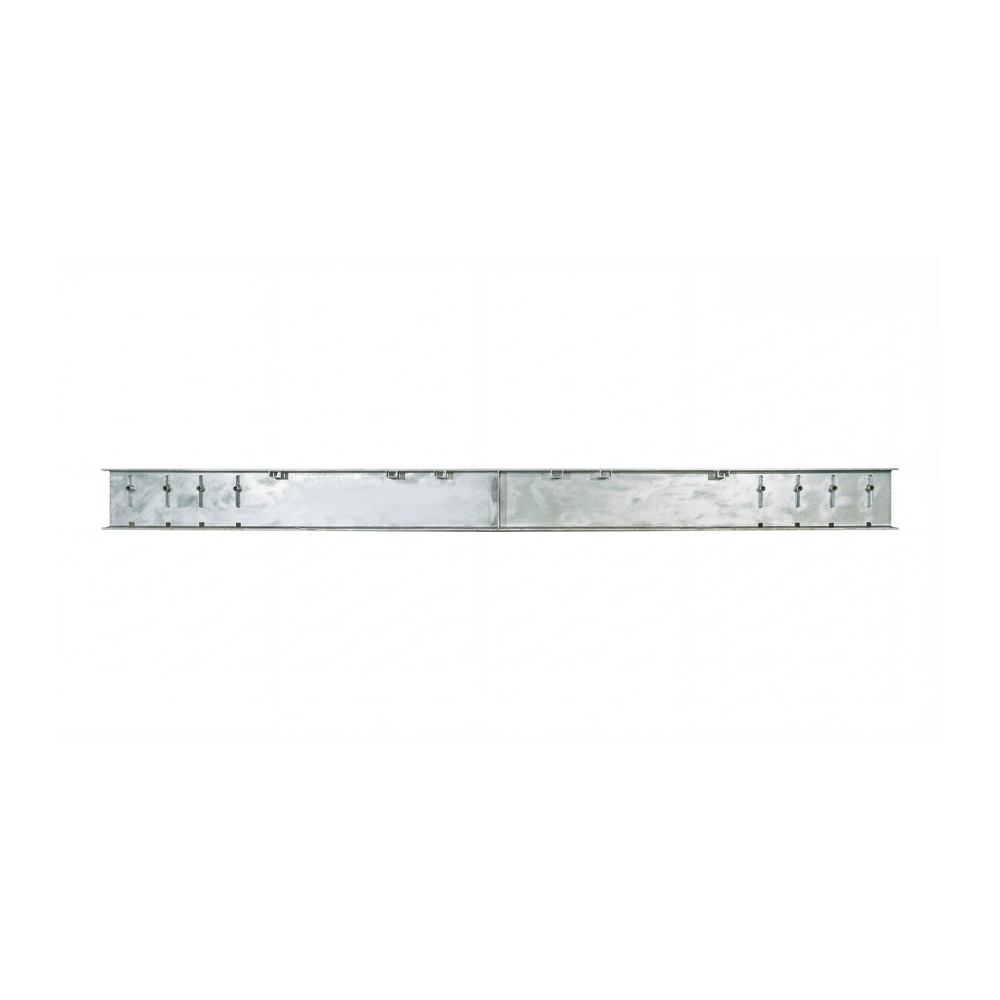
Type HD200 - Crossbeam For Bailey Bridge
3. Why Q355B Steel Is Suitable for the HD200 Crossbeam
Material selection is one of the most important factors in the performance of a bridge crossbeam. Q355B is selected for the HD200 product because it offers a practical combination of structural strength and fabrication performance. The grade is widely used in structural steelwork where components must withstand significant static and dynamic loads while remaining suitable for cutting, forming, welding, and assembly.
The higher yield strength of Q355B compared with ordinary lower-strength structural steel can help engineers achieve the required load-bearing performance without unnecessarily increasing the size or weight of every component. This can be beneficial for modular bridge systems, where transport, lifting, manual handling, and site assembly are all affected by component mass.
Q355B also offers suitable weldability when appropriate welding procedures, joint preparation, heat control, and inspection practices are applied. This is important because a crossbeam is not simply a rolled steel profile. It typically includes welded plates, stiffening elements, connection details, bearing areas, and interface components. The quality of these welded assemblies affects the transfer of loads and the durability of the complete member.
The “B” quality designation is associated with controlled impact toughness requirements under applicable material standards. This is valuable for bridge components that may be exposed to low temperatures, impact effects, vibration, or changing service conditions. Material performance should nevertheless be confirmed through the relevant mill certificates, project specifications, and applicable standards for each order.
Using a consistent structural steel grade throughout a modular product family also simplifies procurement and quality control. Engineers and contractors can establish repeatable design assumptions, while manufacturers can standardize cutting, welding, inspection, surface preparation, and documentation procedures.
Material advantages in practical projects
Q355B contributes to the HD200 crossbeam’s suitability in several ways. It supports strong load-bearing behavior, allows efficient fabrication, provides a reliable base for welded structural assemblies, and is compatible with protective coating systems used for outdoor steelwork. It also helps the manufacturer maintain consistent production methods across different batches and dimensional versions.
Material quality alone does not guarantee a safe product. Correct design, accurate fabrication, proper welding, adequate inspection, appropriate corrosion protection, and controlled installation are equally important. The advantage of Q355B is that it provides a strong and dependable foundation for these engineering and manufacturing processes.
4. Structural Advantages of the HD200 Crossbeam
4.1 Enhanced strength and rigidity
The HD200 crossbeam is intended for applications where the bridge must carry more demanding loads than lightweight access structures. Its geometry and Q355B material provide a strong structural basis for resisting vertical bending, local effects near connections, and transverse deformation. Increased rigidity is especially valuable when the bridge is exposed to repeated vehicle movements, construction machinery, uneven loading, or lateral forces.
A stiff crossbeam helps reduce excessive deflection under service loads. Lower deflection can improve the riding quality of the bridge, reduce movement between the deck and truss system, and limit secondary stresses in connections and deck components. Rigidity also helps preserve the intended bridge geometry during erection and operation.
4.2 Efficient load distribution
Vehicle wheel loads are applied locally through the deck, but the bridge must distribute these forces across the available structural system. The crossbeam acts as a key transverse load-distribution member. Its dimensions and connection locations allow forces to be transmitted from the deck toward the main truss sections and supporting structure.
Effective load distribution reduces the risk that individual deck areas, connection points, or truss members will experience disproportionate stress. It also allows the modular bridge to operate as an integrated system rather than a collection of isolated components.
4.3 Dimensional compatibility
A major strength of the HD200 crossbeam is its compatibility with Type 200 Bailey truss sections. Modular construction depends on repeatable dimensions. If connection spacing, beam depth, bearing zones, or end details vary significantly, crews may need to carry out time-consuming modifications on site. Such modifications can introduce uncertainty and may compromise the original design assumptions.
Standardized HD200 dimensions support easier interchangeability. Contractors can combine compatible components from an organized inventory, replace damaged or worn parts more efficiently, and plan bridge configurations with greater confidence.
4.4 Adaptability to different bridge widths
The availability of several lengths means that the product can be adapted to different deck arrangements and transverse structural requirements. This is particularly helpful for contractors working on multiple projects with different traffic, access, and site conditions. Instead of relying on a single crossbeam size, the contractor can select a configuration that better matches the intended bridge layout.
4.5 Suitability for repeated assembly and disassembly
Bailey bridges are frequently used as temporary or relocatable structures. Components may be erected, dismantled, transported, stored, and reused. A crossbeam designed as part of a standardized system can better withstand this operating pattern than a one-off fabricated member that depends on project-specific modifications.
Repeated use still requires inspection. Members should be checked for corrosion, deformation, cracked welds, damaged connection holes, local buckling, impact damage, and excessive wear before reinstallation. The modular design makes replacement practical, but it does not eliminate the need for responsible maintenance.
5. Manufacturing Process and Quality Control
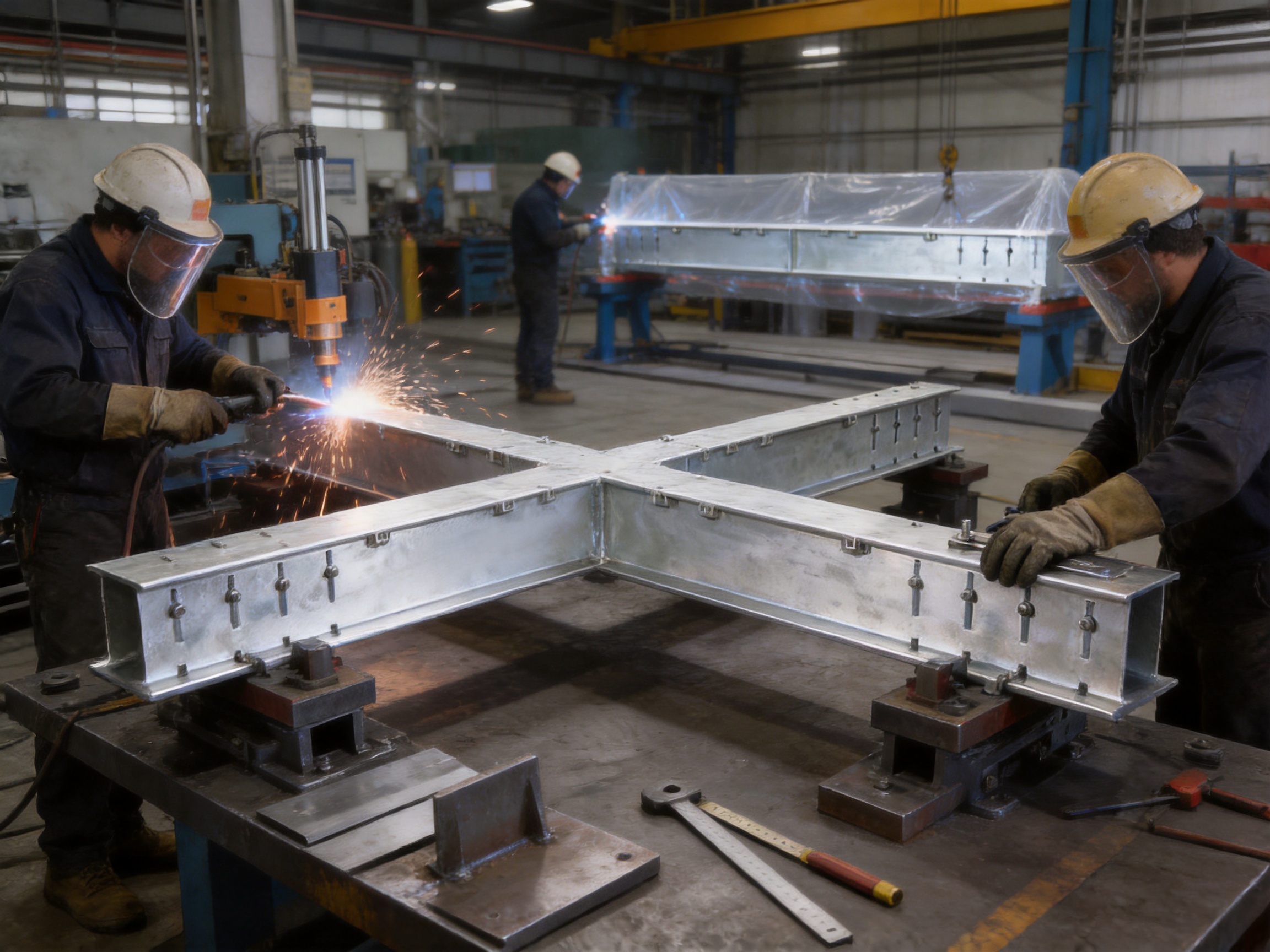
The performance of a bridge crossbeam is determined not only by its design but also by how it is manufactured. Advanced manufacturing in this context means a controlled and repeatable process in which raw material, dimensions, welding, fit-up, surface condition, and final inspection are managed as part of one production system.
5.1 Engineering review and production planning
Production begins with a review of the approved dimensions, connection details, material requirements, quantity, and intended application. Drawings and manufacturing information should be checked before cutting begins. This stage helps identify conflicts between the crossbeam and the compatible truss, deck, bracing, or connection components.
Production planning also considers material availability, cutting lists, welding sequences, fixture requirements, inspection points, and delivery arrangements. By planning the manufacturing sequence in advance, the supplier can reduce unnecessary handling and improve batch consistency.
5.2 Material verification
Q355B steel plates and sections should be verified against the purchase requirements before fabrication. Important information may include grade, thickness, heat number, dimensional tolerance, chemical composition, mechanical properties, and mill documentation. Traceability allows the manufacturer to connect the finished product with the original material records.
Material verification is especially important for bridge components because the structural design depends on predictable properties. Substituting an unapproved material or mixing grades without engineering review can create uncertainty in strength, weldability, and durability.
5.3 Precision cutting and preparation
Steel plates and profiles must be cut accurately to the approved dimensions. Modern cutting equipment can produce repeatable edges and reduce variation between parts. The cut surfaces should be checked for excessive roughness, heat-affected defects, slag, or distortion, and prepared as necessary before assembly.
Accurate cutting is essential for crossbeams because small dimensional errors can accumulate at connection points. Correct end lengths, plate widths, stiffener locations, and hole positions help ensure that the completed component fits the Type 200 modular system without forced alignment.
5.4 Assembly and fixture control
During assembly, plates, stiffeners, connection elements, and other parts are positioned according to the approved drawings. Fixtures and jigs can help maintain alignment and repeatability. Proper fit-up reduces the need for excessive welding correction and helps preserve the designed cross-section.
Controlled assembly is particularly important for long crossbeams. If a member is not supported correctly during fabrication, its components may shift or develop unwanted distortion. A planned support arrangement and carefully sequenced tack welding can reduce these risks.
5.5 Welding procedures
Welding creates the structural continuity between plates and components, so welding quality is a central part of crossbeam reliability. The process should be carried out using suitable welding procedures, compatible consumables, appropriate joint preparation, and qualified personnel. Welding parameters may include current, voltage, travel speed, heat input, preheating requirements, and interpass temperature control.
Welding sequence matters because uneven heat input can cause shrinkage and distortion. A balanced sequence, supported by suitable fixtures, helps maintain straightness and connection alignment. Welded areas should be cleaned and visually examined, with additional inspection methods applied where required by the project specification.
5.6 Dimensional inspection
After fabrication, the crossbeam should be measured to confirm overall length, width, depth, straightness, connection spacing, bearing dimensions, and other critical features. Inspection equipment may include calibrated tapes, levels, gauges, templates, and more advanced measurement tools where required.
Dimensional inspection is not simply a final administrative step. It verifies that the crossbeam will connect correctly with other modular components and that the actual product matches the design assumptions. Consistent inspection records also help identify production trends and improve future manufacturing batches.
5.7 Surface preparation and corrosion protection
Steel bridge components are commonly exposed to rain, humidity, mud, road salts, industrial pollutants, and changes in temperature. Surface preparation and protective coating are therefore important for service life. Before painting or coating, the steel surface should be cleaned of oil, rust, scale, welding residue, and other contaminants according to the specified preparation system.
The coating system should be selected according to the expected exposure environment, service period, maintenance plan, and customer requirements. Proper attention should be given to coating thickness, edge coverage, drying conditions, handling, and storage. Areas damaged during transport or installation should be repaired using compatible materials and procedures.
5.8 Final inspection and dispatch control
Before shipment, each crossbeam should be checked for visible defects, missing components, coating damage, dimensional conformity, identification marks, and packaging security. The supplier can also organize inspection documentation, material records, production records, and packing lists according to the project’s needs.
Good dispatch control reduces the risk of receiving mismatched components at the construction site. Clear identification is especially valuable when a project includes multiple crossbeam lengths, different bridge sections, or a large quantity of similar-looking steel members.
6. Advantages Compared with Less Specialized Alternatives
The HD200 crossbeam offers several advantages when compared with generic fabricated beams, underspecified products, or modular components produced without a dedicated bridge manufacturing process.
6.1 Designed as part of a complete system
A generic steel beam may have sufficient nominal strength, but it may not match the connection geometry, truss spacing, deck arrangement, or erection sequence of a Type 200 Bailey bridge. The HD200 crossbeam is developed for a defined modular system. This system-based approach improves compatibility and reduces the engineering uncertainty associated with adapting unrelated steel members.
6.2 Better interchangeability
Standardized components can be replaced, rearranged, and reused more efficiently. For contractors managing a fleet of temporary bridges, interchangeability has a direct commercial value. Inventory can be organized around a known product family, replacement parts can be sourced more easily, and project planning becomes less dependent on one-off fabrication.
6.3 More efficient erection
Bridge construction time includes unloading, sorting, positioning, alignment, connection, inspection, and correction. Consistent crossbeam dimensions can reduce delays during these activities. When the component fits the intended truss and deck arrangement, crews spend less time drilling, cutting, shimming, or modifying parts in the field.
6.4 Suitable strength-to-weight balance
Using a suitable structural grade and optimized geometry can provide the required strength without unnecessarily increasing component weight. This supports more practical transport and lifting operations. The actual balance depends on the design configuration, but the HD200 concept is intended to provide a robust structural member suitable for demanding modular bridge work.
6.5 Better support for project customization
Standardization does not mean that every project must use exactly the same arrangement. The available 5.8-meter, 6.2-meter, and 9.63-meter configurations provide options within the Type 200 family. In addition, the manufacturer’s experience in bridge systems, steel formwork, launching gantries, hanging baskets, and related structures can support customized engineering and production where the project requires it.
6.6 Lower risk of site improvisation
Uncontrolled site modification can introduce safety risks, weaken protective coatings, create poor welds, or produce inaccurate connections. A properly fabricated crossbeam minimizes the need for such work. This helps maintain the relationship between the manufactured component and the structural design.
7. Applications of the HD200 Crossbeam
7.1 Temporary highway bridges
The HD200 crossbeam is suitable for temporary traffic bridges used during highway construction, road widening, utility installation, and replacement of damaged permanent structures. It can support a modular deck arrangement while allowing the main construction project to continue around or beneath the temporary crossing.
7.2 Emergency and disaster-relief crossings
After floods, landslides, storms, earthquakes, or other disasters, roads and bridges may become unusable. Modular Bailey systems can be transported to affected locations and erected faster than many conventional bridge solutions. The crossbeam plays an important role in creating the transverse support needed for a functional emergency crossing.
7.3 Construction access bridges
Large civil engineering projects often require temporary access for trucks, cranes, excavators, concrete vehicles, and material deliveries. An HD200 bridge can be configured to provide access over rivers, drainage channels, excavations, rail corridors, or existing roads. The crossbeam helps support the deck and distribute construction traffic loads.
7.4 Semi-permanent crossings
In remote regions or locations where a permanent bridge will take time to design and build, a modular steel bridge may serve as a semi-permanent solution. Such applications require careful attention to foundations, drainage, corrosion protection, inspection, traffic control, and fatigue effects. The HD200 crossbeam is suitable for consideration within a properly engineered semi-permanent bridge system.
7.5 Municipal and water conservancy projects
Municipal works and water conservancy projects frequently require crossings over canals, channels, reservoirs, and temporary construction zones. A prefabricated steel bridge can provide a practical solution where rapid installation and future removal are important. The modular crossbeam arrangement supports flexible project planning.
7.6 Railway and infrastructure construction
Railway projects may use temporary bridges, guide structures, construction access routes, or erection-related support systems. The exact application must be reviewed by qualified engineers because railway environments involve specialized loading, clearance, vibration, and safety requirements. Within an approved design, the HD200 crossbeam can contribute to a reliable modular support arrangement.
7.7 Alternative structural uses
Bailey bridge components can sometimes be configured as guide beams, gantry supports, tower columns, bridge erection equipment, arches, climbing formwork supports, or other temporary steel structures. Whether an HD200 crossbeam is appropriate for such uses depends on the load path, connection method, stability condition, and engineering verification. It should not be repurposed solely on the basis of appearance or nominal dimensions.
8. Installation and Erection Considerations
Installation should be performed according to approved drawings, method statements, risk assessments, and local safety regulations. The following principles provide general guidance but do not replace project-specific engineering instructions.
8.1 Confirm the foundation and support condition
Before erection begins, the abutments, temporary supports, piers, or bearing areas must be checked for position, elevation, capacity, and stability. A correctly fabricated crossbeam cannot compensate for inadequate foundations or incorrectly positioned supports.
8.2 Organize components before assembly
Components should be inspected, identified, and arranged in the planned erection order. Crossbeams of different lengths should be separated and clearly marked. Connection hardware, deck items, bracing, and lifting accessories should be checked before work starts.
8.3 Protect connection areas
Connection holes, bearing surfaces, and interface details should be kept clean and free from excessive coating buildup, mud, debris, or deformation. Bolts and connection hardware must be installed according to the specified type, grade, tightening method, and sequence.
8.4 Control lifting and positioning
Long steel members can swing, twist, or become unstable during lifting. Appropriate lifting points, slings, spreader arrangements, exclusion zones, and communication procedures should be used. The crossbeam must be positioned without impact against truss panels or previously installed components.
8.5 Check alignment and geometry
After installation, the bridge should be checked for longitudinal alignment, transverse spacing, elevation, crossfall, connection seating, and deck support conditions. Any discrepancy should be investigated before the bridge is opened to traffic or construction equipment.
8.6 Inspect after loading
Following initial loading, the bridge should be inspected for unusual deflection, movement, vibration, connection slippage, coating damage, or local deformation. A documented inspection provides a useful baseline for future maintenance and condition monitoring.
9. Maintenance and Service-Life Management
Maintenance requirements depend on the environment, traffic intensity, bridge duration, coating system, and frequency of relocation. Temporary does not mean maintenance-free. A bridge that is expected to remain in service for months or years requires an inspection plan proportionate to its exposure and loading.
Routine visual inspections should look for corrosion, coating breakdown, standing water, blocked drainage, loose or missing bolts, damaged connection components, weld cracks, impact marks, distortion, and unusual wear. Particular attention should be paid to areas where mud, water, or deicing salts can accumulate.
After severe weather, abnormal vehicle loading, flooding, collision, or foundation movement, an additional inspection should be carried out. If deformation or cracking is suspected, the affected component should be removed from service until it has been assessed by a competent engineer.
Stored crossbeams should be placed on suitable supports above the ground and protected from prolonged contact with standing water. Components should not be stacked in a way that causes local bending or obstructs inspection. Protective coatings should be maintained, and damaged areas should be repaired before reuse.
One advantage of a modular system is that individual components can be replaced without necessarily dismantling the entire bridge. This can reduce downtime and make lifecycle management more economical. However, replacement components must be verified for compatibility and must meet the design and material requirements of the existing structure.
10. Why Choose an Experienced Bridge Steel Manufacturer
The quality of a crossbeam is influenced by the manufacturer’s ability to control the entire supply chain from design coordination to delivery. An experienced bridge steel manufacturer understands that a bridge component must fit within an erection method, a load path, a maintenance plan, and a broader project schedule.
Zhenjiang Jinhao Road & Bridge Supporting Engineering Co., Ltd. was established in 2017 and has developed from a supplier of construction and industrial materials into a comprehensive enterprise involved in the design, manufacturing, erection, and leasing of modular bridge and related steel products. Its product range includes Bailey steel bridges, Type 321 Bailey truss sections, HD200 or Type 200 Bailey components, bridge launching gantries, hanging baskets, pier formwork, bridge steel formwork, and other engineered steel structures.
This broader product experience is valuable because many projects require more than one isolated component. A contractor may need a bridge system, erection equipment, temporary supports, formwork, or technical planning at the same time. A supplier familiar with several categories of bridge steelwork can better understand how components interact and can provide more coordinated project support.
10.1 Integrated design and fabrication capability
Design coordination helps translate a project requirement into a practical component arrangement. The manufacturer can review bridge width, span, loading, deck type, support conditions, transport limitations, and erection sequence before production. This reduces the risk of ordering a component that is technically strong but unsuitable for the intended system.
10.2 Manufacturing experience with modular structures
Bailey components require repeatable dimensions and consistent connection details. Experience with modular bridge production helps the manufacturer establish suitable fixtures, inspection routines, welding sequences, and packing methods. These capabilities are particularly important for large orders or projects involving multiple bridge configurations.
10.3 Erection and leasing knowledge
Experience in bridge erection and leasing gives the supplier practical knowledge of how components perform outside the factory. This can improve recommendations related to handling, inspection, reuse, storage, and site organization. It also helps align manufacturing decisions with the realities of construction work.
10.4 Customized fabrication
Although the HD200 crossbeam is a standardized product, some projects may require customized lengths, connection details, surface treatments, identification systems, or packaging arrangements. Customization should be developed through engineering review rather than informal modification. The manufacturer’s fabrication capability allows project-specific solutions to be considered while preserving structural control.
10.5 Technical support and quality management
Reliable supply includes more than delivering steel. Contractors may require drawings, data sheets, packing lists, inspection information, installation guidance, and technical communication during procurement and erection. A company that combines manufacturing with technical support can help customers manage the project from initial inquiry through completion.
11. Procurement Guidance for Contractors and Project Owners
When purchasing HD200 crossbeams, the buyer should provide as much project information as possible. This normally includes the bridge span, clear width, intended traffic, design load, deck arrangement, support conditions, number of truss lines, expected service period, environmental exposure, erection method, and required delivery schedule.
The buyer should also confirm whether the requirement is for new components, reusable components, or leased equipment. For reused products, condition records and inspection documentation are particularly important. Surface condition, connection-hole wear, previous repairs, deformation, and remaining coating life should be evaluated.
It is useful to request technical documentation identifying the material grade, dimensions, tolerances, coating requirements, inspection scope, and packing method. The purchaser should ensure that the specified crossbeam length matches the actual bridge width and truss spacing rather than relying only on a product name.
Logistics should be considered at the beginning of the project. The 5.8-meter, 6.2-meter, and 9.63-meter configurations have different transport and lifting implications. Loading plans should protect connection areas and coated surfaces. On arrival, the receiving team should compare the shipment with the packing list and report any damage or shortage immediately.
For international projects, the supplier and buyer should clarify production lead time, inspection arrangements, export packaging, shipping terms, documentation language, and responsibilities for unloading and site assembly. Clear communication reduces delays and prevents misunderstandings about the scope of supply.
12. Engineering and Safety Limitations
The HD200 crossbeam is a structural component and must be used within an engineered bridge arrangement. Product dimensions and material information alone are not sufficient to establish the allowable span, traffic capacity, or safe working load of a complete bridge.
Bridge design should consider dead load, live load, impact, braking, centrifugal effects where relevant, wind, temperature, seismic actions, pedestrian loading, construction loads, fatigue, differential settlement, and accidental actions. The connection system, main trusses, deck, bearings, foundations, approach roads, and lateral bracing must be checked as part of the same structural system.
Installation should be supervised by competent personnel, and lifting operations should be controlled through a documented method statement. Workers should use suitable personal protective equipment and follow site-specific procedures for work at height, suspended loads, traffic management, and temporary works.
Before opening a temporary or semi-permanent bridge to traffic, the responsible engineer or authority should confirm that the completed structure matches the approved design and that all required inspections have been completed. Load restrictions, speed limits, lane arrangements, and monitoring requirements should be communicated clearly to users.
13. Frequently Asked Questions
Q1: What is an HD200 crossbeam used for?
An HD200 crossbeam is a transverse structural member used in a Type 200 Bailey bridge system. It supports the deck, distributes loads toward the main trusses, helps maintain truss spacing, and contributes to the transverse stability of the bridge.
Q2: What material is used for the product?
The specified material is Q355B structural steel. This grade provides a suitable combination of strength, toughness, weldability, and fabrication performance for modular bridge components. Material records should be confirmed for each project order.
Q3: What dimensions are available?
The listed external dimensions are 5,800 × 200 × 400 mm, 6,200 × 200 × 400 mm, and 9,630 × 200 × 600 mm. The appropriate size depends on the bridge layout, truss spacing, deck width, load requirements, and engineering design.
Q4: Can the HD200 crossbeam be used with a Type 321 Bailey bridge?
The product is specified for Type 200 Bailey truss sections. It should not be assumed to be directly interchangeable with Type 321 components. Compatibility must be confirmed through drawings, connection dimensions, load requirements, and engineering review before combining components from different systems.
Q5: Is the crossbeam suitable for emergency bridges?
Yes, it can be used as part of an engineered emergency bridge system. Its standardized configuration supports rapid assembly and replacement, but the complete bridge must still be checked for the required span, traffic load, foundation condition, stability, and local safety requirements.
Q6: Can it be used for a semi-permanent bridge?
It may be suitable for semi-permanent applications when incorporated into a properly designed and maintained bridge. The project should address corrosion protection, repeated traffic, fatigue, drainage, inspection, foundation movement, and the expected service period.
Q7: Can the manufacturer provide customized products?
Customized fabrication may be available depending on the project requirements. Possible considerations include dimensions, connection details, coating systems, identification marks, packing arrangements, and related bridge steel structures. Any modification should be reviewed and approved through appropriate engineering procedures.
Q8: What makes a standardized crossbeam better than a general steel beam?
A standardized crossbeam is designed for a specific modular bridge system. It provides known connection geometry, better interchangeability, easier erection, more predictable replacement, and reduced reliance on field modification. A general steel beam may not fit the truss, deck, or erection system even if its nominal strength appears adequate.
Q9: How should the product be maintained?
Maintenance should include inspections for corrosion, coating damage, deformation, cracked welds, loose bolts, connection-hole wear, and impact damage. The frequency should reflect the environment, traffic, service period, and project requirements. Components should be repaired or replaced when their condition may affect structural performance.
Q10: What information should be provided when requesting a quotation?
Useful information includes the required quantity, bridge span, clear width, traffic type, design loading, preferred crossbeam dimensions, compatible truss system, deck arrangement, surface-treatment requirements, delivery location, schedule, and whether the components are for purchase, rental, or reuse.
Q11: Can the crossbeam be used as an independent structural member?
It should not be used independently without engineering verification. Its design is intended to function within a Type 200 Bailey bridge system. Any alternative application must be checked for strength, stability, connection performance, support conditions, and serviceability.
Q12: Why is manufacturing accuracy important?
Accurate manufacturing ensures that the crossbeam aligns with the truss, deck, and connection components. It reduces site adjustments, supports faster erection, improves interchangeability, and helps maintain the assumptions used in the structural design.
14. Conclusion
The HD200 crossbeam is a central component in a modular Bailey bridge system, providing transverse support, deck load distribution, truss spacing control, and structural rigidity. Its Q355B material, standardized Type 200 compatibility, multiple dimensional options, and suitability for repeated assembly make it appropriate for temporary, emergency, construction access, and semi-permanent bridge applications.
Compared with generic or poorly coordinated steel members, the HD200 crossbeam offers important practical advantages. It is developed as part of a complete modular system, supports better interchangeability, reduces site modification, simplifies logistics, and contributes to more efficient erection. These benefits are especially valuable when construction speed, reliable performance, and future reuse are important project objectives.
The manufacturing process is equally significant. Material verification, precision cutting, controlled assembly, qualified welding, dimensional inspection, corrosion protection, final quality checks, and careful dispatch all contribute to the performance of the finished product. A manufacturer with experience in Bailey bridges, launching gantries, hanging baskets, bridge formwork, erection, and leasing can provide broader technical value than a supplier focused only on isolated steel fabrication.
For the best results, the HD200 crossbeam should be selected as part of an engineered bridge solution. When correct design, professional manufacturing, safe erection, suitable maintenance, and responsible project management are combined, it can provide dependable support for demanding infrastructure work in a wide range of environments.
References
1. Structural steel design principles for modular and temporary bridge systems.
2. General practices for the design, fabrication, inspection, erection, and maintenance of prefabricated steel bridges.
3. Technical guidance on Q355B structural steel properties, welding suitability, and material verification.
4. Engineering principles for temporary works, construction access bridges, and emergency bridge structures.
5. Quality-control practices for welded steel bridge components and fabricated structural assemblies.
6. General safety procedures for lifting, transporting, assembling, inspecting, and maintaining modular steel bridge components.
7. Product dimensional and material information supplied for the Type HD200 crossbeam for Bailey bridges.


 Français
 Español
 عربى