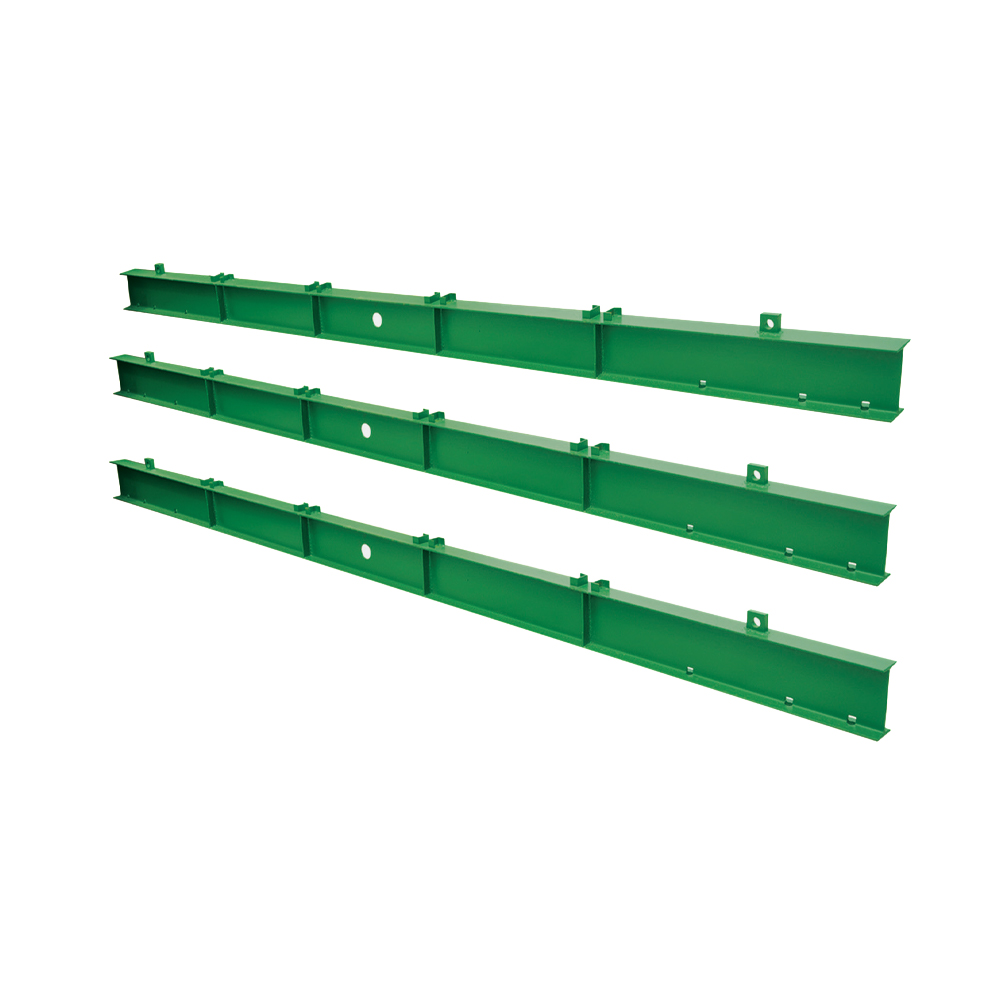
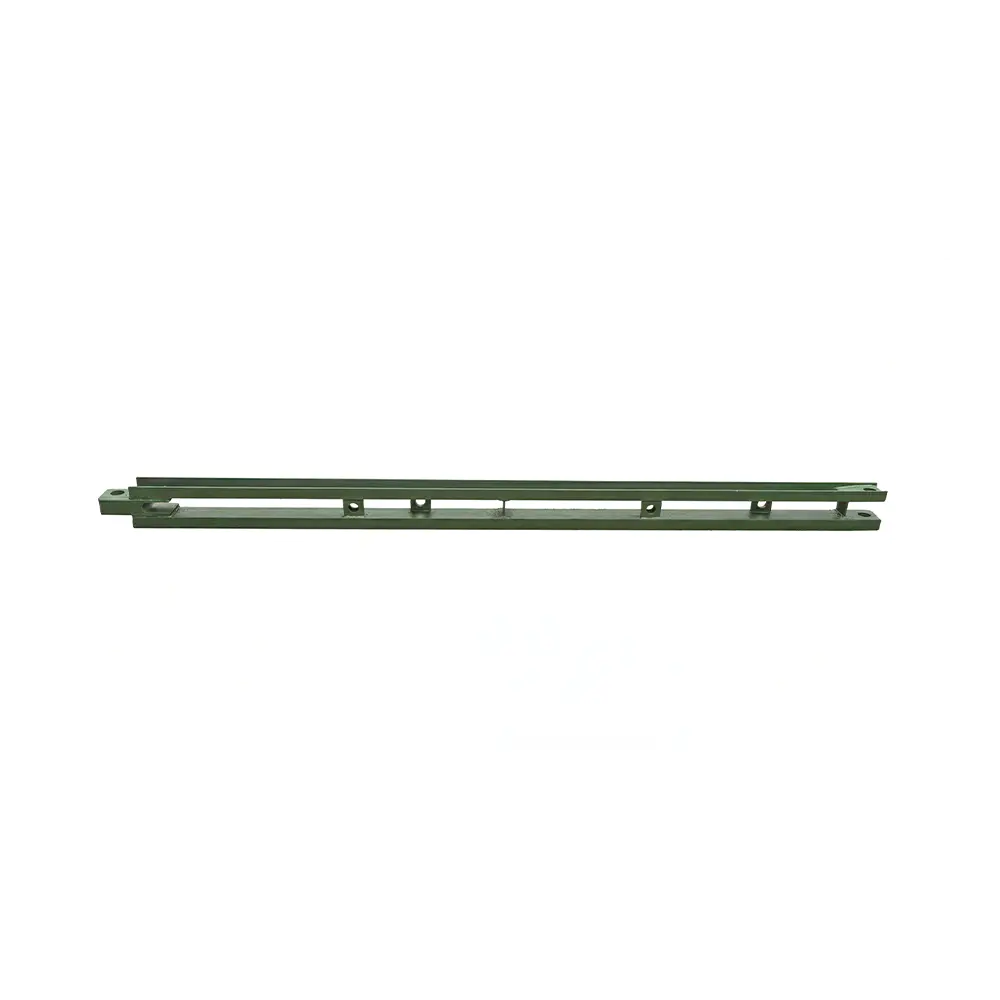
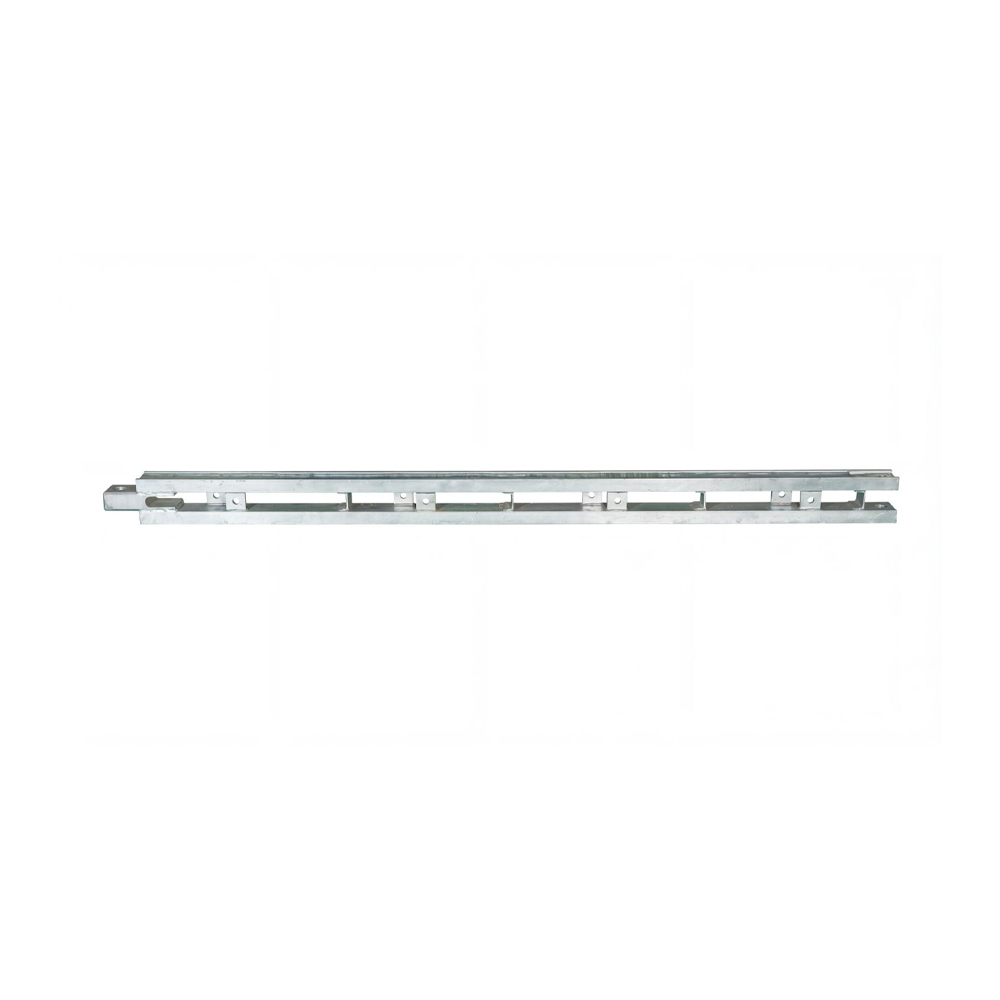
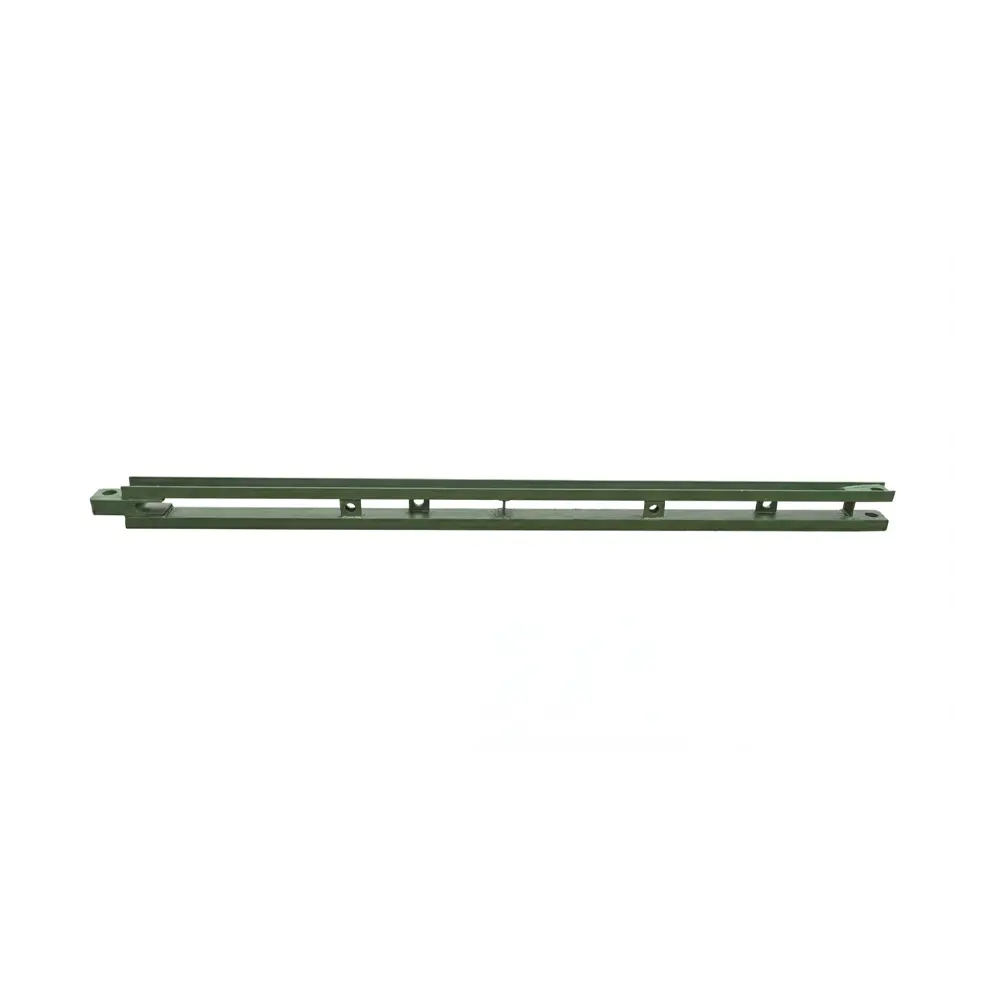
In modern bridge construction, elevated civil works, and modular construction platforms, the reliability of a load-transfer node often determines the efficiency, safety, and adaptability of the entire system. The ZK-Column Head Connector is designed as a heavy-duty core component for a bump jacking formwork system and related modular construction platforms. It functions as the central foundation at the column head, enabling multiple rows of combined Bailey bridge panels to be connected, supported, and organized around a single structural node.
Unlike ordinary connection frames or temporary support adapters, this column head connector is engineered for demanding site conditions where high bearing capacity, stable geometry, repeatable assembly, and strong compatibility with modular steel bridge components are essential. Its structure uses 100 mm thick steel plates for the upper and lower bases, 150 mm by 150 mm rectangular tubes for the vertical posts, and a fully welded steel assembly. Each unit weighs approximately 2.5 tons, reflecting its robust construction and suitability for high-load platform applications.
For contractors, bridge builders, municipal engineering teams, and infrastructure project managers, the connector offers a practical solution to one of the most important challenges in temporary and semi-permanent works: how to create a strong, accurate, and reusable central support point that can integrate with standardized Bailey bridge panels and engineered steel formwork systems. Its ability to accommodate up to four rows of combined Bailey bridge panels on each side makes it especially valuable in projects where large working platforms, heavy construction loads, or complex staged erection methods are required.
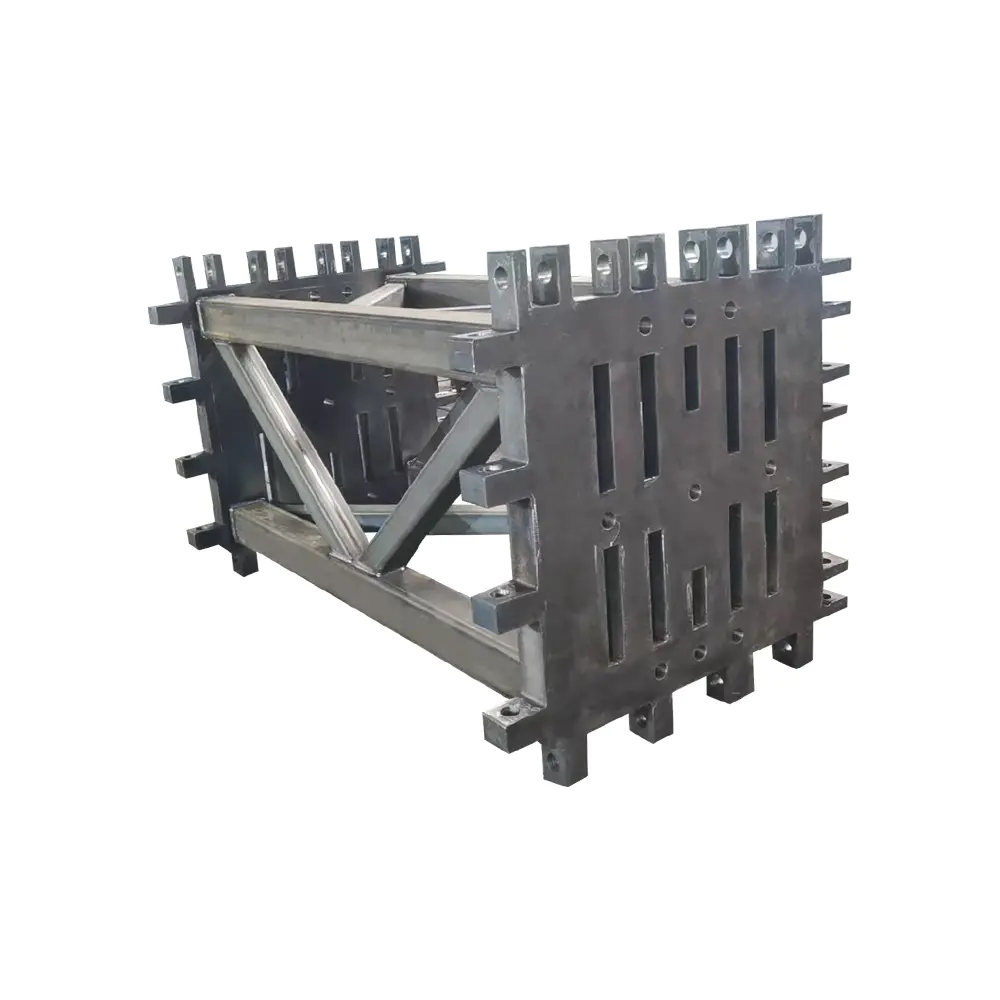
ZK-Column Head Connector
Product Overview
The ZK-Column Head Connector is a structural steel connector used at the top of a column or pier to form the core support of a construction platform. In a bump jacking formwork system, the connector helps transfer loads from the platform, Bailey panels, formwork, equipment, and workers down into the supporting column structure. It is not merely an accessory; it is a key engineered node that links the vertical support system with the horizontal modular platform system.
The product is manufactured from Q355B steel, a widely used structural steel grade known for good strength, weldability, and suitability for heavy engineering structures. The external dimensions are 1340 mm by 1340 mm by 2234 mm, giving the unit a compact but strong three-dimensional geometry. The center distance dimensions are 305 mm by 3 by 2134 mm, supporting precise modular coordination with related bridge and platform components.
At the heart of the design is the concept of centralized structural coordination. Centered on the column head, the connector allows each side to accommodate up to four rows of combined Bailey bridge panels simultaneously. This capability provides engineers with a high level of layout flexibility. Depending on the project, it can be used to build wider platforms, distribute loads more effectively, or create temporary work zones around piers, columns, or other elevated structures.
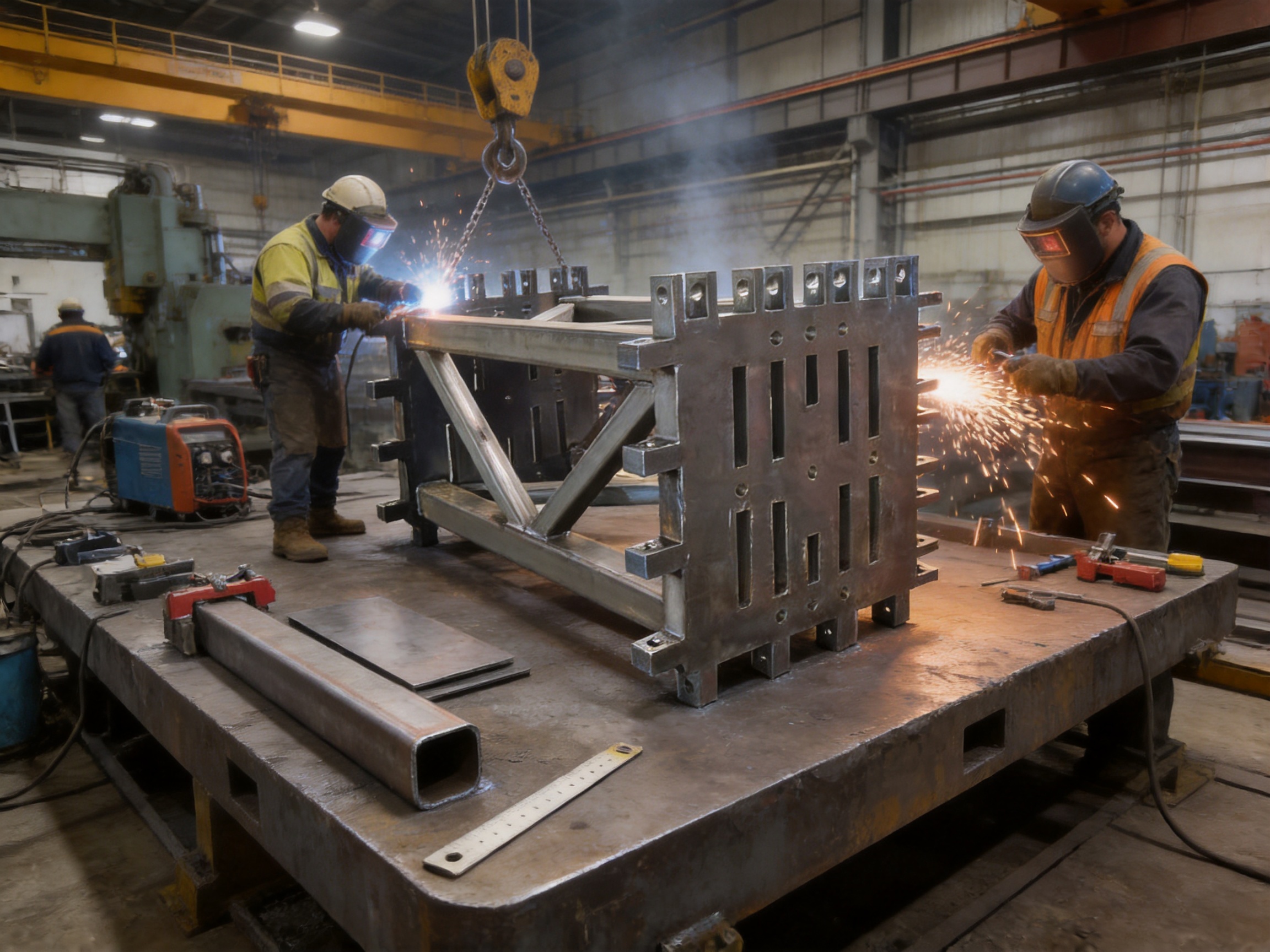
The unit is assembled by welding. This welded construction creates a rigid integrated frame that resists deformation under demanding working conditions. The use of thick steel plates at the upper and lower bases improves local bearing capacity, while the rectangular tube posts provide vertical stiffness and help maintain the spatial accuracy of the connector. The result is a strong and dependable connection module for heavy-duty site applications.
Key Technical Specifications
Item |
Specification |
Product Name |
ZK-Column Head Connector |
Product Category |
Bump Jacking Formwork System |
External Dimensions |
1340 mm × 1340 mm × 2234 mm |
Center Distance Dimensions |
305 mm × 3 × 2134 mm |
Main Material |
Q355B structural steel |
Upper and Lower Base Plates |
100 mm thick steel plates |
Vertical Posts |
150 mm × 150 mm rectangular tubes |
Manufacturing Method |
Welded steel assembly |
Unit Weight |
Approximately 2.5 tons |
Panel Accommodation |
Up to four rows of combined Bailey bridge panels on each side |
Structural Role in a Bump Jacking Formwork System
A bump jacking formwork system depends on controlled load transfer. During construction, formwork platforms may need to support concrete loads, reinforcement cages, temporary equipment, workers, hydraulic jacking forces, and dynamic site activities. If the load-transfer point is weak, inaccurate, or unstable, the whole system can suffer from alignment errors, excess deformation, or reduced safety margins.
The ZK-Column Head Connector addresses this challenge by acting as the core bearing and distribution node. The upper and lower steel plate bases create broad and strong contact surfaces. These plates help distribute concentrated forces and reduce the risk of local structural weakness. The rectangular tube posts connect the bases into a rigid vertical frame, allowing loads to pass through the connector in a controlled manner.
In practical terms, this means that the connector helps create a stable interface between the column head and the modular Bailey panel platform. Bailey panels are valued worldwide because of their standardization, interchangeability, and high load capacity. However, to use them effectively in complex construction platforms, the supporting node must be strong and dimensionally accurate. The connector provides that essential interface.
Because the connector can support multiple rows of Bailey panels from each side, it is suitable for larger working platforms and more complex support arrangements. Engineers can configure the surrounding panel system according to span, width, load, and access requirements. This flexibility helps reduce the need for highly customized temporary steel structures, improving construction efficiency and allowing equipment to be reused in future projects.
Advantages Over Conventional Connection Solutions
Many temporary construction platforms rely on improvised brackets, welded-on-site frames, or lower-capacity support heads. These solutions can be suitable for simple jobs, but they often become inefficient or risky when the platform is large, the loads are heavy, or the schedule is tight. The ZK-Column Head Connector offers several advantages over such conventional approaches.
Higher Structural Robustness
The connector uses 100 mm thick upper and lower steel plates, which is a significant advantage compared with lighter connection plates often found in ordinary temporary works. Thick plates improve the connector’s ability to resist local compression, bending, and bearing stress. This is especially important when multiple Bailey panel rows converge around one column head and transfer substantial forces into the node.
The 150 mm by 150 mm rectangular tube posts further strengthen the connector’s vertical load path. Rectangular tubes offer good stiffness in both principal directions and are well suited for welded frame structures. Their use contributes to the connector’s ability to maintain geometric stability during assembly, loading, and repeated use.
Better Compatibility with Modular Bailey Systems
Standardized modular systems succeed only when connection nodes are accurate and compatible. A common limitation of lower-grade connectors is that they may not align well with Bailey bridge panel geometry, causing difficult installation, time-consuming adjustment, or unsafe forced fitting. The ZK-Column Head Connector is designed around modular panel accommodation, allowing up to four rows of combined Bailey bridge panels on each side.
This ability gives the product a major practical advantage. It can be used as a central organizing node for platform construction rather than as a simple support seat. The connector supports the development of multi-directional platform layouts, making it useful for bridge pier construction, elevated support systems, launching-related temporary works, and large-scale steel formwork operations.
Reduced On-Site Fabrication
Improvised site welding and cutting can increase project risk. Field fabrication is affected by weather, limited equipment, restricted working space, and variable labor conditions. By using a factory-made welded connector, contractors can reduce the amount of on-site modification needed. This improves installation consistency and can help shorten construction schedules.
A prefabricated connector also improves repeatability. When the same component is used across multiple column heads or project phases, engineers and site teams can standardize assembly procedures. This reduces training time, lowers the chance of installation errors, and makes future maintenance or inspection easier.
Greater Reusability
Temporary works equipment is most economical when it can be reused. Lightweight or improvised supports may suffer deformation or damage after one project, especially under heavy loading. The strong welded structure and heavy material configuration of the ZK-Column Head Connector make it suitable for repeated use when properly inspected, maintained, and handled.
For contractors who operate across several bridge, municipal, railway, water conservancy, or transportation projects, reusable modular equipment reduces long-term costs. It also supports more sustainable construction by reducing unnecessary steel waste and minimizing the need for repeated fabrication of one-off components.
Improved Platform Planning Flexibility
The ability to connect multiple rows of Bailey panels around a central column head gives designers greater freedom. Instead of designing a unique steel support system for every pier or platform arrangement, project teams can rely on a standardized connector and adapt the surrounding panel configuration. This approach combines structural strength with layout flexibility.
Compared with competing products that may support only limited connection directions or fewer panel rows, this connector helps form more versatile construction platforms. It is especially beneficial in projects where the working area must extend around a pier, where equipment access is required from several sides, or where staged construction demands repeated changes to platform geometry.
Material Strength and Q355B Steel Benefits
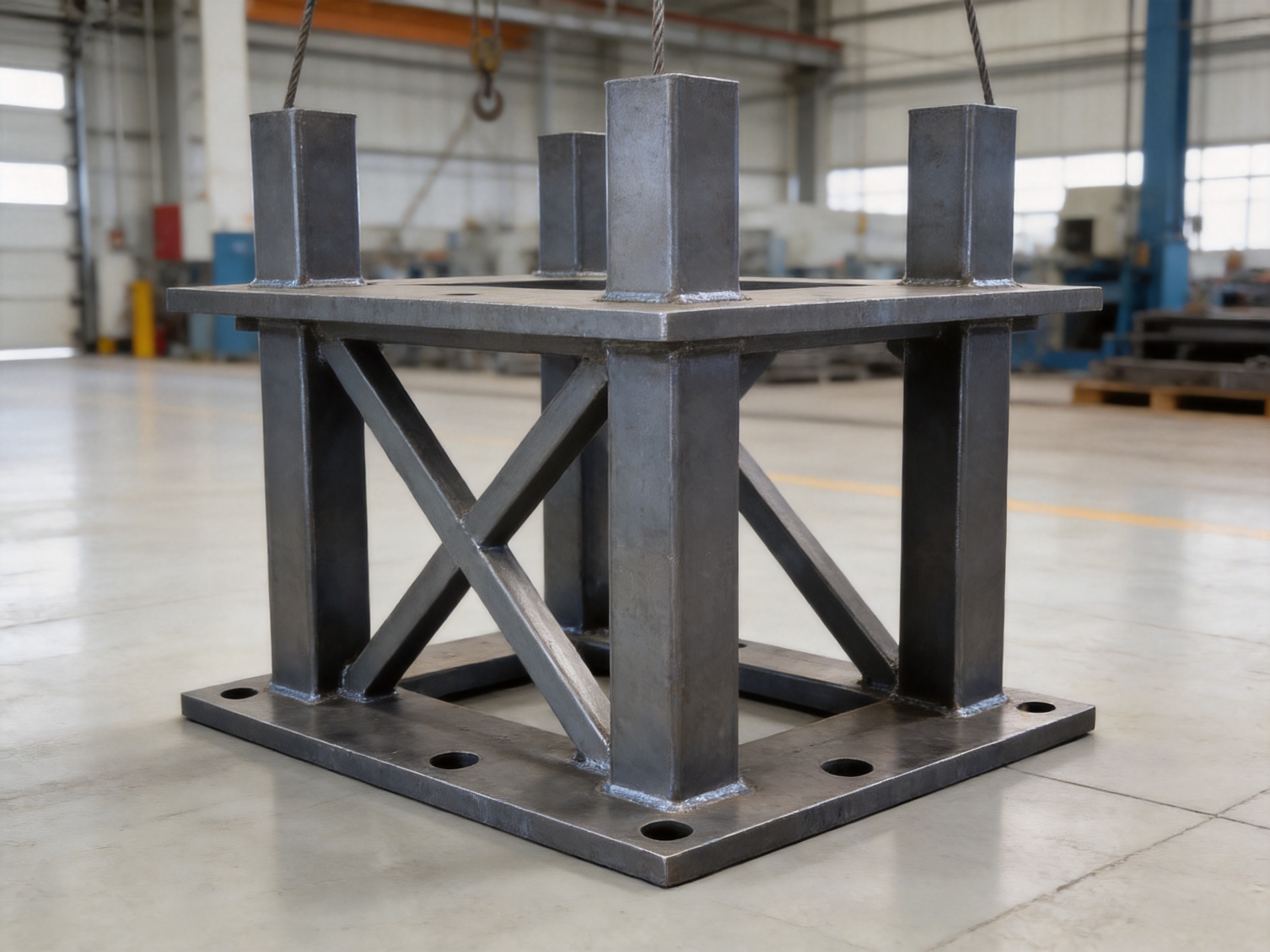
The product is made from Q355B steel, a structural steel grade widely used in engineering fabrication. Q355B offers a favorable balance of strength, ductility, weldability, and cost efficiency. For a heavy-duty component like a column head connector, these qualities are important because the product must carry significant loads while also being suitable for precision fabrication and welded assembly.
In modular bridge and formwork systems, material selection affects not only strength but also durability and maintenance. A connector may be lifted, transported, installed, removed, stored, and reused many times. It may face vibration, impact during handling, changing weather, and heavy load cycles. Q355B provides a dependable material foundation for these conditions when combined with proper design, fabrication, surface treatment, and inspection.
The 100 mm thick steel plates used in the base sections help the connector resist local deformation. Thick plates are not only stronger in bearing; they also provide more stable welding zones and better resistance to accidental damage during handling. The vertical rectangular tubes contribute to the overall stiffness of the frame, reducing the chance of unwanted movement between the upper and lower bases.
Competitors sometimes reduce weight by using thinner plates or smaller sections. While this may lower initial cost, it can also reduce stiffness, bearing reliability, and service life under demanding platform loads. The ZK-Column Head Connector takes a more robust engineering approach. Its approximate 2.5-ton unit weight demonstrates that the design prioritizes strength, stability, and long-term usability rather than minimal material consumption.
Manufacturing Process and Quality-Oriented Fabrication
The manufacturing quality of a connector is just as important as its design. A heavy steel component must be produced with accurate dimensions, controlled welding, proper handling, and systematic inspection. Zhenjiang Jinhao Road & Bridge Supporting Engineering Co., Ltd. has developed its capabilities around the design, manufacturing, erection, and leasing of Bailey bridges, bridge launching gantry systems, hanging baskets, pier formwork, and steel formwork products. This background provides valuable experience for producing critical steel construction components such as the ZK-Column Head Connector.
Design and Process Planning
Before production begins, the connector’s dimensions, material requirements, welding layout, and assembly sequence must be planned. Process planning helps ensure that the final component meets dimensional requirements and is suitable for integration with Bailey panel systems. Because the connector serves as a central node, even small dimensional errors can affect installation efficiency. Careful planning reduces the risk of mismatch during site assembly.
The company’s experience in modular steel bridges and engineered steel structures supports this stage. Bailey bridges and related support systems depend on standardization and interchangeability. The same manufacturing discipline is applied to the column head connector, where repeatability and accuracy are essential.
Material Preparation
The major steel elements include the 100 mm thick base plates and 150 mm by 150 mm rectangular tubes. Material preparation may include plate cutting, tube cutting, edge preparation, cleaning, and dimensional checking. For thick steel plates, accurate cutting and proper preparation are especially important because poor edges can create welding difficulties or assembly misalignment.
By using controlled factory preparation instead of field cutting, the manufacturer can maintain better consistency. Factory tools, fixtures, and trained fabrication teams help ensure that each unit follows the same production standard. This is a clear advantage over on-site improvisation or small workshop fabrication with limited process control.
Assembly and Fixturing
During assembly, the upper and lower plates and vertical tubes must be positioned correctly before welding. Fixturing is important because welding heat can cause distortion if components are not held in the right position. For a connector that must work with standardized modular panels, dimensional control is a performance requirement, not just a cosmetic concern.
A well-planned assembly process helps ensure that the connector remains square, aligned, and stable. This improves ease of installation on site and helps the surrounding Bailey panels fit as intended. Competitors that rely on less controlled assembly may produce components requiring additional adjustment during installation, increasing labor time and project uncertainty.
Welding Control
The connector is assembled by welding, creating an integrated steel structure. Welding quality influences strength, fatigue resistance, and long-term reliability. For thick plates and heavy tubes, welding must be carried out with proper procedures, suitable welding parameters, and experienced operators. Weld sequence control is also important to minimize distortion.
In heavy construction components, the best results come from a combination of skilled welders, suitable equipment, and quality supervision. The company’s long-term involvement in Bailey bridges, launching gantries, hanging baskets, pier formwork, and steel formwork gives it a practical understanding of welded structural performance in real construction environments.
Dimensional Inspection
After welding, dimensional inspection helps confirm that the connector meets the required external dimensions and center distance geometry. This step is important because the product must interface with modular panels and other support members. Accurate dimensions reduce on-site assembly problems and improve system reliability.
Inspection may include checking overall height, base plate dimensions, spacing, alignment, squareness, and connection-related geometry. For contractors, receiving components that fit correctly reduces crane time, labor costs, and installation delays. It also helps prevent unsafe site modifications.
Surface Protection and Handling
Heavy steel components are exposed to moisture, handling impacts, storage conditions, and jobsite wear. Surface preparation and protective coating help improve durability. Proper lifting and handling procedures are also important because each unit weighs approximately 2.5 tons. The connector should be handled with suitable lifting equipment and positioned according to project lifting plans.
Good manufacturing does not end when welding is complete. Packaging, storage, transportation, and site support all affect the final user experience. A manufacturer with experience in large steel bridge products understands the importance of logistics and practical site coordination.
Company Strengths Supporting the Product
Zhenjiang Jinhao Road & Bridge Supporting Engineering Co., Ltd. is located in Zhenjiang City, Jiangsu Province, China. The company has developed from a business focused on construction materials, industrial materials, and metal processing materials into a comprehensive enterprise engaged in the design, manufacturing, erection, and leasing of Bailey bridges, launching gantry systems, hanging baskets, pier formwork, and steel formwork products.
This broad capability is directly relevant to the ZK-Column Head Connector. The connector is not an isolated part; it belongs to a family of engineered temporary and semi-permanent construction systems. A manufacturer that understands Bailey bridges, Type 321 Bailey truss sections, HD200 and Type 200 Bailey truss sections, hanging baskets, steel formwork, and related engineered steel structures is better positioned to produce a connector that works effectively in real projects.
The company’s products are used in national defense readiness, transportation engineering, municipal engineering, water conservancy projects, railway engineering, and other infrastructure fields. These applications demand simple structures, convenient erection, high standardization, strong interchangeability, flexible forms, and large load-bearing capacity. The ZK-Column Head Connector reflects these same values.
Another strength is the ability to provide customized fabrication, design and system planning, technical support, and quality management. For construction platform applications, the connector may need to be integrated with a broader system that includes Bailey panels, support beams, formwork, jacking equipment, and access arrangements. A supplier with design and planning capabilities can better assist contractors in selecting suitable configurations and reducing project risk.
The company’s approach is based on customer-first service, integrity, pragmatic operation, innovation-driven growth, win-win cooperation, advanced technology, and sustainable development. In practical terms, these values support consistent manufacturing, responsive communication, and long-term cooperation with contractors, governments, and engineering companies worldwide.
Applications in Bridge and Infrastructure Construction
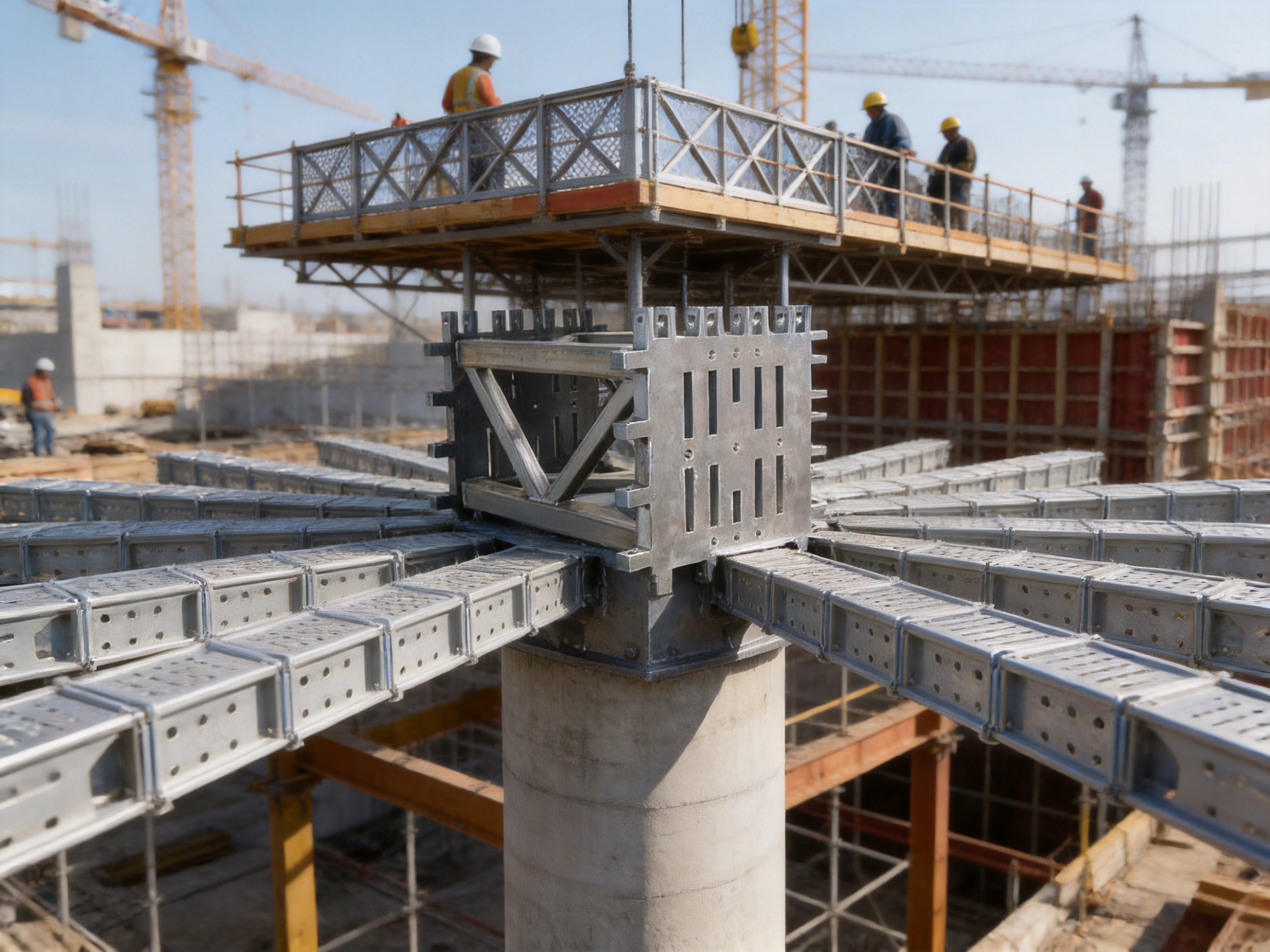
The ZK-Column Head Connector is particularly suitable for bridge and elevated infrastructure projects where temporary platforms must be built around piers, columns, or support points. Its ability to connect multiple Bailey panel rows makes it useful in many construction scenarios.
Bridge Pier Construction Platforms
During bridge pier construction, workers often need stable platforms at elevated positions for reinforcement installation, formwork assembly, concrete operations, inspection, and finishing. The connector can serve as the central support at the column head, allowing modular panels to extend outward and create a working platform. The strong base plates and welded frame help maintain stability under construction loads.
Temporary Support Systems
Temporary supports are often required during bridge repair, widening, replacement, or staged construction. The connector can be integrated into modular support layouts using Bailey bridge panels. Because Bailey systems are standardized and reusable, the connector helps create efficient temporary structures that can be dismantled and redeployed.
Large Steel Formwork Operations
Bridge steel formwork and pier formwork systems require strong support points and accurate alignment. The connector can help support formwork platforms where load-bearing capacity and geometric stability are critical. Its robust construction is suitable for heavy formwork environments where lightweight brackets may not provide adequate performance.
Emergency and Rapid Construction Works
In emergency bridge works or temporary access construction, time is often limited. Modular steel systems are preferred because they can be transported, assembled, and adjusted quickly. A prefabricated column head connector reduces the need for field fabrication and helps site teams establish a reliable central support node more efficiently.
Launching and Erection-Related Support
The company’s experience with bridge launching gantry systems and Bailey bridge applications suggests that the connector may be valuable in temporary support arrangements associated with erection and launching operations. In such cases, the connector’s strength, modular compatibility, and stable welded structure are major practical advantages.
How the Connector Improves Project Efficiency
Construction efficiency is not achieved only by faster labor. It comes from reducing uncertainty, simplifying assembly, improving compatibility, and avoiding rework. The ZK-Column Head Connector contributes to efficiency in several ways.
First, it reduces on-site decision-making. Because the connector is a defined prefabricated component, engineers can design platform layouts around known dimensions and capabilities. Site teams can follow planned assembly sequences instead of fabricating supports from scratch.
Second, it improves installation speed. Standardized connection points and compatibility with Bailey panel rows reduce the time needed to align and adjust platform components. This is especially valuable when cranes, lifting equipment, and labor crews are scheduled tightly.
Third, it supports repeatable construction. If a project includes multiple similar piers or columns, the same connector design can be used repeatedly. Workers become familiar with the assembly process, and the project gains efficiency over time.
Fourth, it reduces waste. Reusable heavy-duty components can be dismantled and used on future projects. This reduces the need for single-use steel fabrication and supports a more economical construction equipment strategy.
Finally, it improves coordination between design and site execution. A strong, dimensionally stable connector helps ensure that the platform geometry planned by engineers is achievable in the field. This reduces conflicts between drawings, components, and actual construction conditions.
Comparison with Typical Competitor Products
Comparison Factor |
ZK-Column Head Connector |
Typical Light or Improvised Connector |
Base Plate Strength |
Uses 100 mm thick upper and lower steel plates for strong bearing performance |
Often uses thinner plates with lower local bearing capacity |
Vertical Support Members |
Uses 150 mm × 150 mm rectangular tubes for strong vertical stiffness |
May use smaller sections or inconsistent materials |
Modular Compatibility |
Designed to accommodate up to four rows of combined Bailey panels on each side |
May support fewer panels or require site adjustment |
Manufacturing Method |
Factory-welded assembly with controlled production process |
May rely on field welding or non-standard fabrication |
Reusability |
Robust 2.5-ton unit suitable for repeated project use when properly maintained |
May deform, wear, or become unsuitable after limited use |
Project Efficiency |
Supports planned, repeatable, and standardized platform assembly |
May increase installation time and rework |
System Integration |
Backed by experience in Bailey bridges, launching gantries, hanging baskets, and steel formwork |
May be supplied as an isolated component without system support |
This comparison shows why the connector is more than a steel frame. Its advantages come from the combined effect of material thickness, structural geometry, modular compatibility, factory production, and manufacturer experience. In heavy infrastructure construction, these factors can have a direct impact on safety, schedule, and total project cost.
Design Philosophy: Strength, Standardization, and Adaptability
The design of the ZK-Column Head Connector follows three practical principles: strength, standardization, and adaptability. Strength is reflected in the heavy steel plates, rectangular tube posts, welded assembly, and 2.5-ton unit weight. Standardization is reflected in its compatibility with Bailey panel rows and its defined dimensions. Adaptability is reflected in the ability to support different platform layouts around a column head.
These principles match the broader development of modular steel bridge and formwork systems. Modern construction projects need equipment that is strong enough for demanding work, standardized enough for fast assembly, and adaptable enough for different site conditions. A component that meets only one of these requirements is not enough. For example, a strong but non-standard connector may be difficult to install. A standard but weak connector may limit platform capacity. An adaptable but poorly fabricated connector may create safety concerns. The ZK-Column Head Connector aims to balance all three needs.
The design also supports the use of Bailey bridge panels beyond conventional bridge spans. Bailey panels can function as temporary bridges, emergency bridges, semi-permanent bridges, guide beams, arches, tower columns, gantry hangers, bridge erection machines, and climbing formwork systems. A strong column head connector expands these possibilities by creating a reliable node for platform and support applications.
Safety Considerations and Best Practices
Safety in temporary works depends on proper design, correct installation, qualified inspection, and disciplined operation. The ZK-Column Head Connector provides a robust structural foundation, but it must be used as part of an engineered system. Project teams should ensure that load calculations, platform layouts, support conditions, lifting procedures, and inspection plans are prepared by qualified personnel.
Before installation, the connector should be inspected for visible damage, deformation, weld condition, corrosion, and dimensional suitability. Lifting points and rigging methods should be confirmed according to the project lifting plan. Because the unit weighs approximately 2.5 tons, suitable cranes, slings, and lifting procedures are required.
During installation, alignment with the column head and surrounding Bailey panel system should be checked carefully. Forced assembly should be avoided. If components do not align, the cause should be identified rather than corrected by unsafe cutting or uncontrolled welding. The benefit of a factory-made connector is strongest when the site team follows the planned assembly procedure.
During use, loads should remain within the approved design limits. Construction materials, equipment, and personnel should be distributed according to the platform design. After heavy use or before reuse, the connector should be inspected and maintained. Proper storage can extend service life and help preserve dimensional accuracy.
Why Heavy-Duty Construction Matters
Some buyers may initially compare connectors based only on price or weight. However, heavy-duty temporary works components should be evaluated according to total value. A lower-cost connector that causes installation delays, requires reinforcement, deforms under load, or cannot be reused may become more expensive over the full project cycle.
The ZK-Column Head Connector is built with a strong material configuration. Its 100 mm thick base plates and 150 mm by 150 mm rectangular tube posts indicate a design intended for demanding service. The 2.5-ton weight may require proper lifting equipment, but it also reflects the connector’s robust steel content and structural intent.
In construction, reliability often saves more money than lightweight design. A dependable connector can reduce rework, improve safety confidence, allow faster assembly, and support reuse. For large infrastructure contractors, these benefits can be more important than a small reduction in initial procurement cost.
Integration with Bailey Bridge and Steel Formwork Expertise
The product’s value is enhanced by the manufacturer’s broad expertise in Bailey bridges and steel formwork. Bailey steel temporary bridges are widely used because they have a simple structure, convenient erection method, high standardization, strong interchangeability, flexible structural forms, large load-bearing capacity, and broad applicability. These same features are important in construction platform systems.
By integrating the connector with Bailey panel knowledge, the manufacturer can support practical system planning. This may include selecting panel rows, considering platform width, coordinating support levels, and planning erection sequences. A supplier that understands only the connector may not be able to assist with these broader engineering questions. A supplier experienced in modular bridge systems can provide more useful technical support.
The company’s product range includes Type 321 Bailey truss sections, HD200 and Type 200 Bailey truss sections, triangular and diamond hanging baskets, bridge steel formwork, and related engineered steel structures. This range demonstrates manufacturing experience across multiple structural steel product types. The column head connector benefits from the same fabrication culture and engineering understanding.
Procurement Considerations
When selecting a column head connector for a construction platform, buyers should consider several factors. The first is load requirement. The connector must be evaluated as part of the overall platform system, including the number of Bailey panel rows, platform span, construction loads, and support conditions.
The second factor is compatibility. A connector that does not match the project’s modular components can create costly delays. Buyers should confirm dimensions, center distances, and connection arrangements before procurement.
The third factor is manufacturing quality. Thick plates and heavy tubes require experienced fabrication. Buyers should prefer manufacturers with proven steel structure production capabilities, quality management, and practical infrastructure project experience.
The fourth factor is technical support. Construction platforms are engineered systems. A supplier that can provide design discussion, system planning, and fabrication customization can help reduce project risk.
The fifth factor is lifecycle value. Heavy-duty reusable components may provide better long-term value than cheaper alternatives. Contractors that frequently build temporary bridges, elevated platforms, or formwork systems can benefit from equipment that can be used across multiple projects.
Maintenance and Reuse Recommendations
To maximize service life, the connector should be maintained properly. After each project, the unit should be cleaned and inspected. Weld areas, base plates, vertical posts, and connection interfaces should be checked for cracks, deformation, corrosion, or abnormal wear. Any damage should be evaluated by qualified technical personnel before reuse.
Surface protection should be maintained according to environmental exposure. If the coating is damaged during lifting or installation, repair coating may be needed to reduce corrosion risk. Storage should be arranged on stable ground with suitable supports to avoid unnecessary deformation or contact with standing water.
During transportation, the connector should be secured to prevent movement and impact damage. Because of its weight, lifting and loading operations should be performed with appropriate equipment. Correct handling protects both the component and site personnel.
Reusable steel components should also have documentation. Records of project use, inspection results, repair work, and storage conditions can help contractors manage equipment safely. This is especially important for components used in critical load-transfer positions.
Q&A Section
Q1: What is the main function of the ZK-Column Head Connector?
The main function is to serve as the core structural node at the column head of a construction platform. It transfers loads from Bailey bridge panels, formwork systems, workers, equipment, and temporary platform structures into the supporting column or pier system.
Q2: What makes this connector different from ordinary temporary support frames?
It is built with 100 mm thick upper and lower steel plates, 150 mm by 150 mm rectangular tube posts, Q355B steel, and a factory-welded structure. It can also accommodate up to four rows of combined Bailey bridge panels on each side, giving it stronger modular capability than many ordinary temporary supports.
Q3: Why is the ability to accommodate multiple Bailey panel rows important?
Multiple panel rows allow the platform to be wider, stronger, or more adaptable to project needs. This helps engineers design larger working platforms around columns or piers without relying heavily on non-standard site fabrication.
Q4: What material is used for the connector?
The connector is made from Q355B structural steel. This material is widely used in engineering steel structures because it offers good strength, weldability, and practical performance for heavy-duty fabrication.
Q5: How heavy is one unit?
Each unit weighs approximately 2.5 tons. This weight reflects the heavy-duty construction of the connector and should be considered when planning lifting, transportation, and installation.
Q6: Can the connector be reused?
Yes, the connector is suitable for repeated use when properly inspected, maintained, transported, and stored. Its robust welded steel construction supports long-term lifecycle value for contractors working on multiple infrastructure projects.
Q7: What types of projects can use this connector?
It can be used in bridge pier construction platforms, bump jacking formwork systems, temporary support systems, steel formwork operations, emergency works, and modular Bailey panel platform applications.
Q8: Why is factory fabrication better than on-site fabrication for this component?
Factory fabrication offers better control of cutting, assembly, welding, dimensional accuracy, and inspection. It reduces site labor, minimizes improvised modifications, and helps ensure compatibility with standardized modular components.
Q9: What should buyers confirm before ordering?
Buyers should confirm load requirements, platform layout, Bailey panel arrangement, connection geometry, support conditions, lifting requirements, and any project-specific customization needs.
Q10: How does the manufacturer’s bridge experience benefit this product?
The manufacturer’s experience with Bailey bridges, launching gantries, hanging baskets, pier formwork, and steel formwork helps ensure that the connector is designed and fabricated with practical construction system integration in mind.
Conclusion
The ZK-Column Head Connector is a heavy-duty structural component designed for modern modular construction platforms and bump jacking formwork systems. Its value lies in its ability to act as a strong, accurate, and reusable central support node around a column head. With 100 mm thick upper and lower base plates, 150 mm by 150 mm rectangular tube posts, Q355B steel material, welded assembly, and an approximate weight of 2.5 tons per unit, it is clearly designed for demanding construction conditions.
Compared with ordinary or improvised support frames, the connector offers stronger bearing performance, better modular compatibility, reduced on-site fabrication, improved platform planning flexibility, and greater reuse potential. Its ability to accommodate up to four rows of combined Bailey bridge panels on each side makes it especially valuable for large working platforms and complex infrastructure projects.
The product is further supported by the manufacturing and engineering strengths of Zhenjiang Jinhao Road & Bridge Supporting Engineering Co., Ltd., a company experienced in Bailey bridges, bridge launching gantry systems, hanging baskets, pier formwork, and steel formwork products. This background helps ensure that the connector is not only a strong steel component but also a practical part of a larger modular construction system.
For contractors, governments, and engineering companies seeking reliable steel platform solutions, the ZK-Column Head Connector offers a practical balance of strength, standardization, adaptability, and long-term value. In bridge and infrastructure construction, where temporary works must be safe, efficient, and repeatable, a robust connector at the column head can make a significant difference in project performance.
References
1. Steel Construction Manual, American Institute of Steel Construction.
2. Design of Steel Structures, Eurocode 3 reference materials.
3. Temporary Works: Principles of Design and Construction, civil engineering practice references.
4. Bailey Bridge Construction and Modular Panel System Guidelines, engineering training references.
5. Welding Procedure and Quality Control for Structural Steel Fabrication, industrial fabrication references.
6. Bridge Formwork and Falsework Design Practice, infrastructure construction references.


 Français
 Español
 عربى