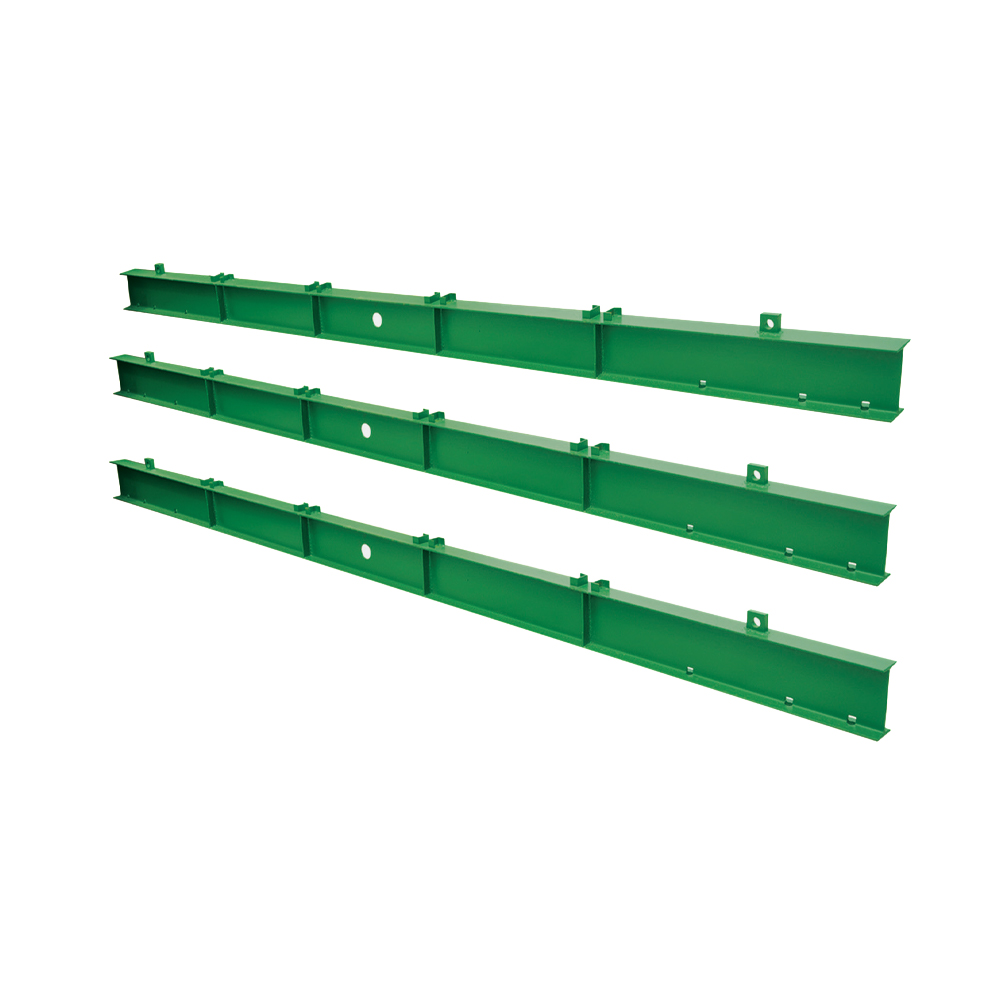
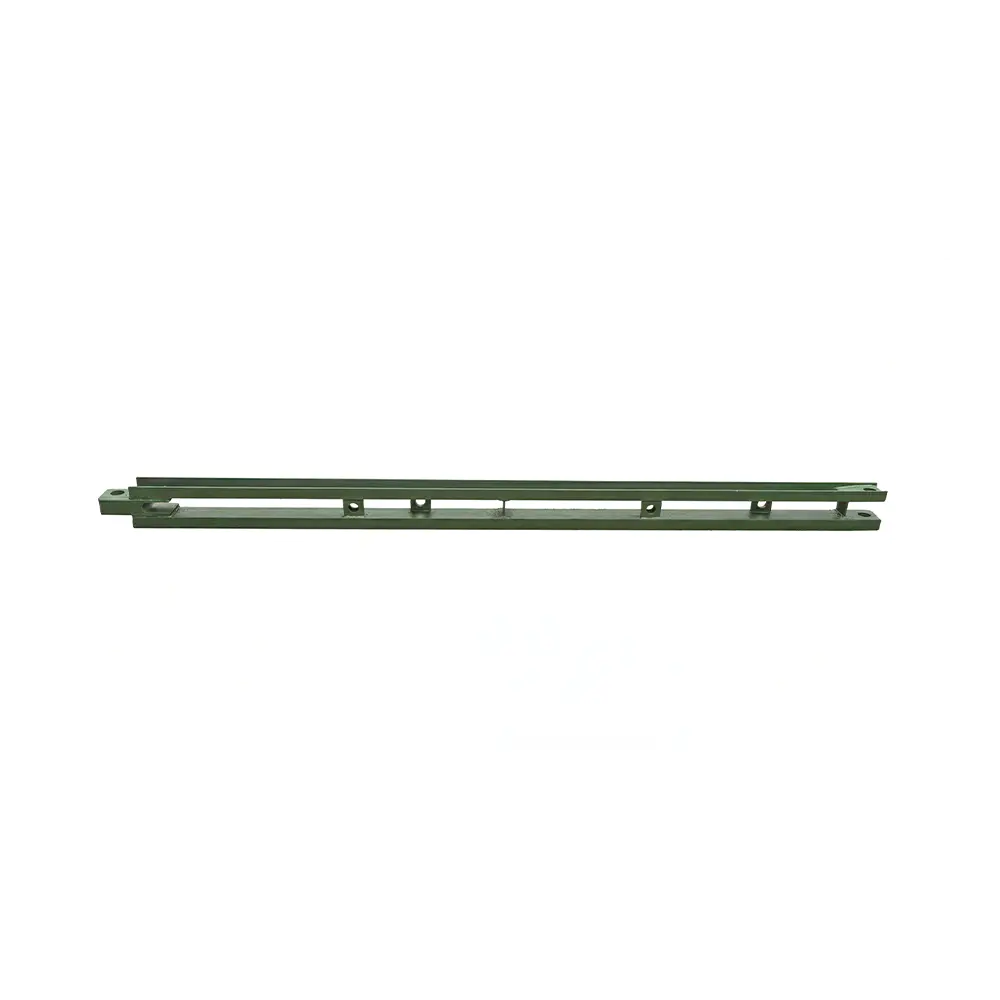
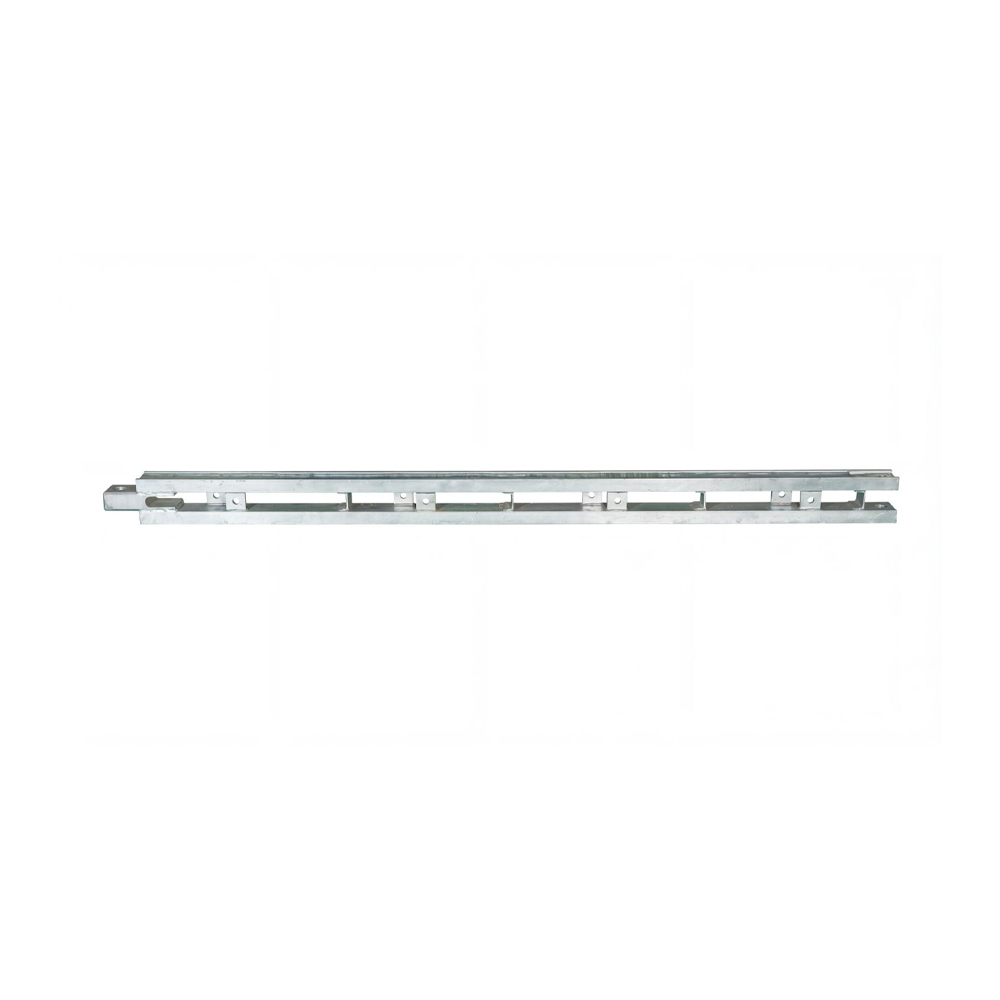
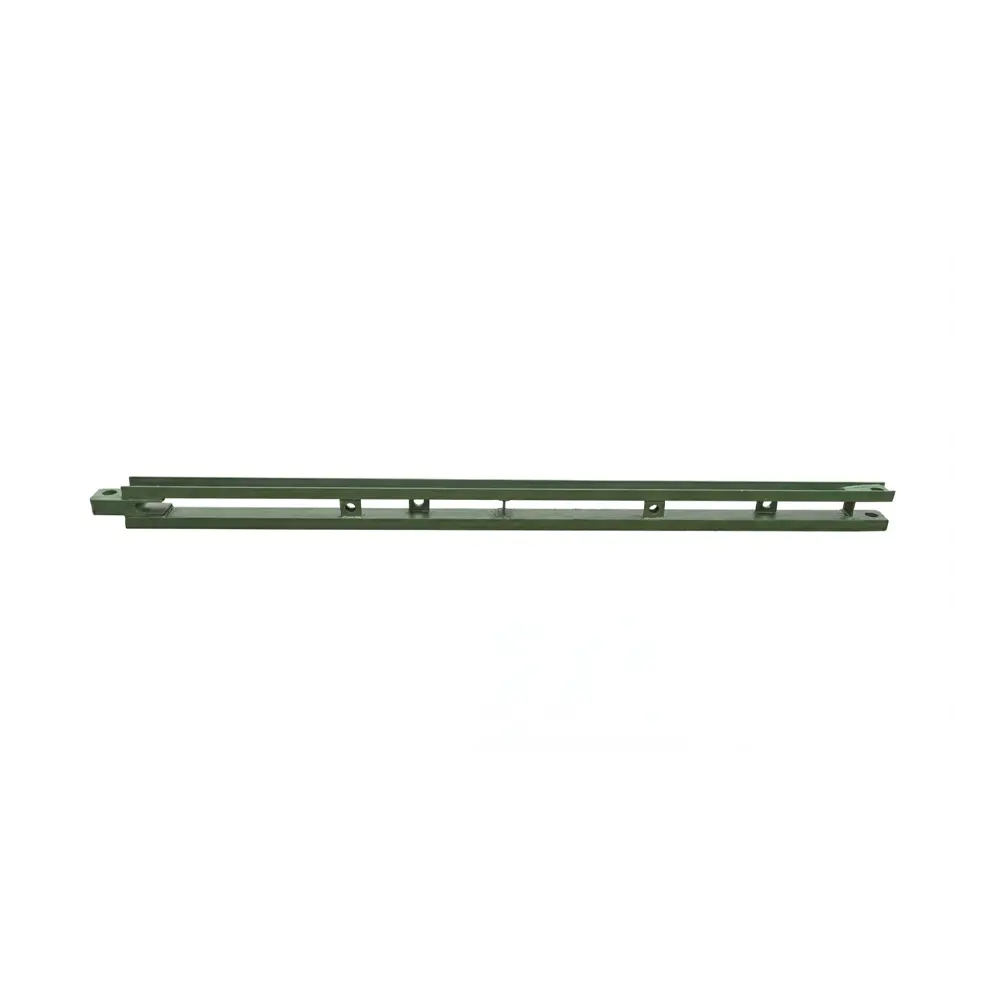
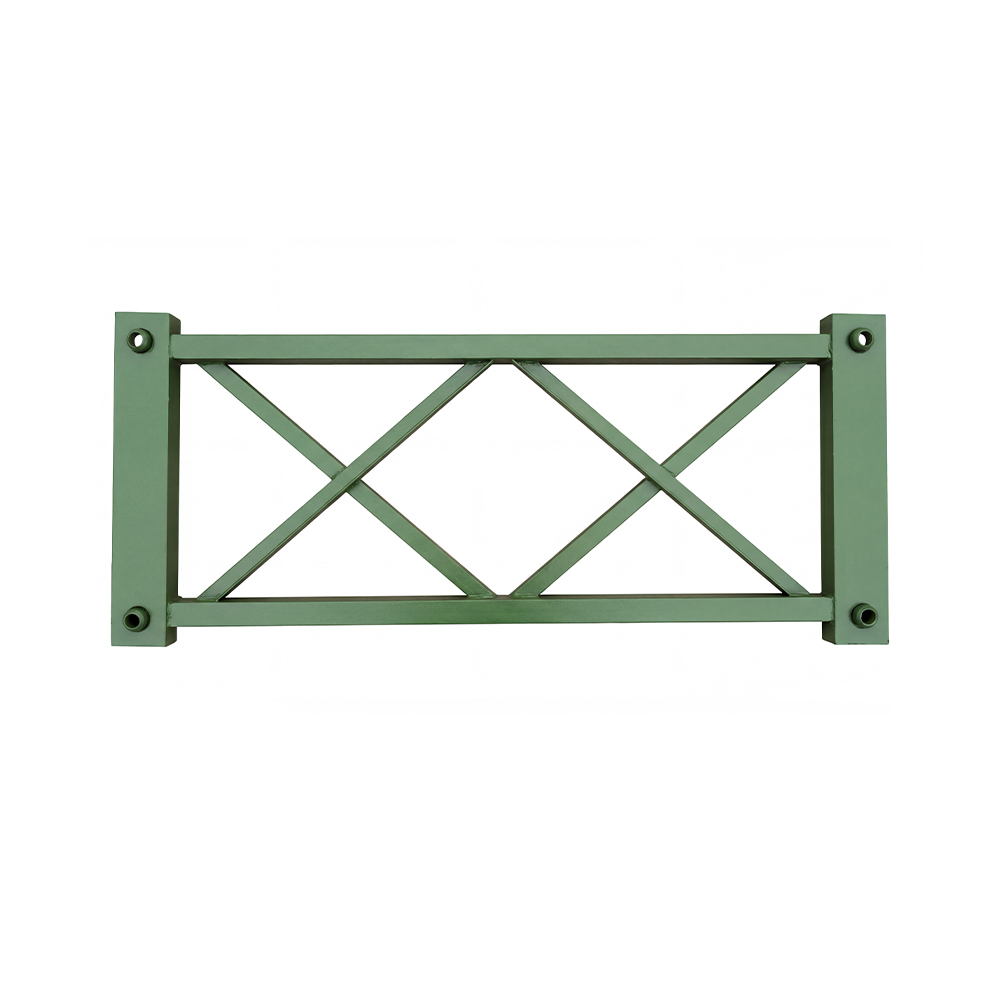
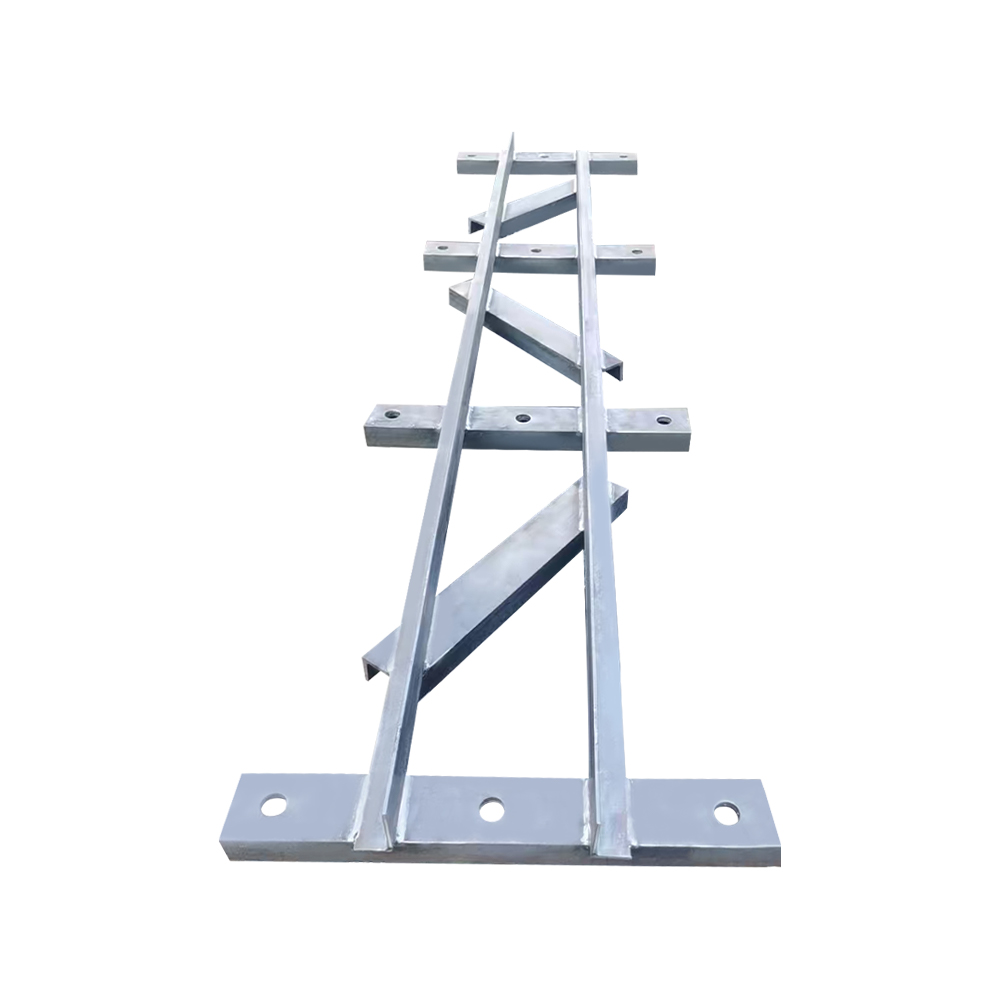
Caisson construction is one of the most demanding activities in civil and marine engineering. Whether a project involves a deep-water port, a cross-sea bridge, an offshore foundation, a breakwater, or a large prefabricated underwater structure, the formwork system must perform under conditions that are substantially more severe than those found in ordinary land-based concrete work. It must maintain dimensional accuracy, resist hydrostatic pressure, prevent the escape of cement slurry, tolerate repeated contact with seawater, and support efficient reinforcement and concreting operations.
Caisson formwork is specifically developed to meet these requirements. It creates the controlled geometry required for caisson walls, compartments, base slabs, diaphragms, and other structural components while helping contractors manage the practical challenges of marine construction. A well-engineered system combines high-strength panels, reliable connections, sealed joints, corrosion-resistant materials, lifting provisions, and a layout adapted to the project’s construction sequence.
The performance of caisson formwork directly affects the quality, speed, and safety of caisson construction. Poorly designed formwork may deform under pressure, leak cement paste, create dimensional deviations, increase finishing work, or suffer premature corrosion. In contrast, a properly manufactured system can be reused across multiple casting cycles, reduce labor requirements, improve concrete quality, and provide a predictable platform for underwater and nearshore operations.
Zhenjiang Jinhao Road & Bridge Supporting Engineering Co., Ltd. provides engineered steel formwork solutions for caisson construction and related bridge and marine projects. The company combines design, fabrication, technical support, and project-oriented planning to supply formwork systems suited to demanding construction environments. Its experience in bridge steel structures, launching gantries, hanging baskets, pier formwork, and other engineered steel products supports a practical understanding of load transfer, erection conditions, transportation, and site assembly.
This article examines the construction requirements, technical characteristics, manufacturing advantages, project applications, and selection considerations associated with high-performance caisson formwork.
Understanding Caisson Formwork
A caisson is a large structural unit commonly used in marine, hydraulic, port, and bridge construction. Depending on the project, it may be prefabricated on land, cast in a dry dock, assembled near the shoreline, or constructed in stages before being floated, transported, sunk, or installed in its final position. Caissons can form quay walls, breakwaters, bridge foundations, underwater chambers, harbor structures, and other major infrastructure components.
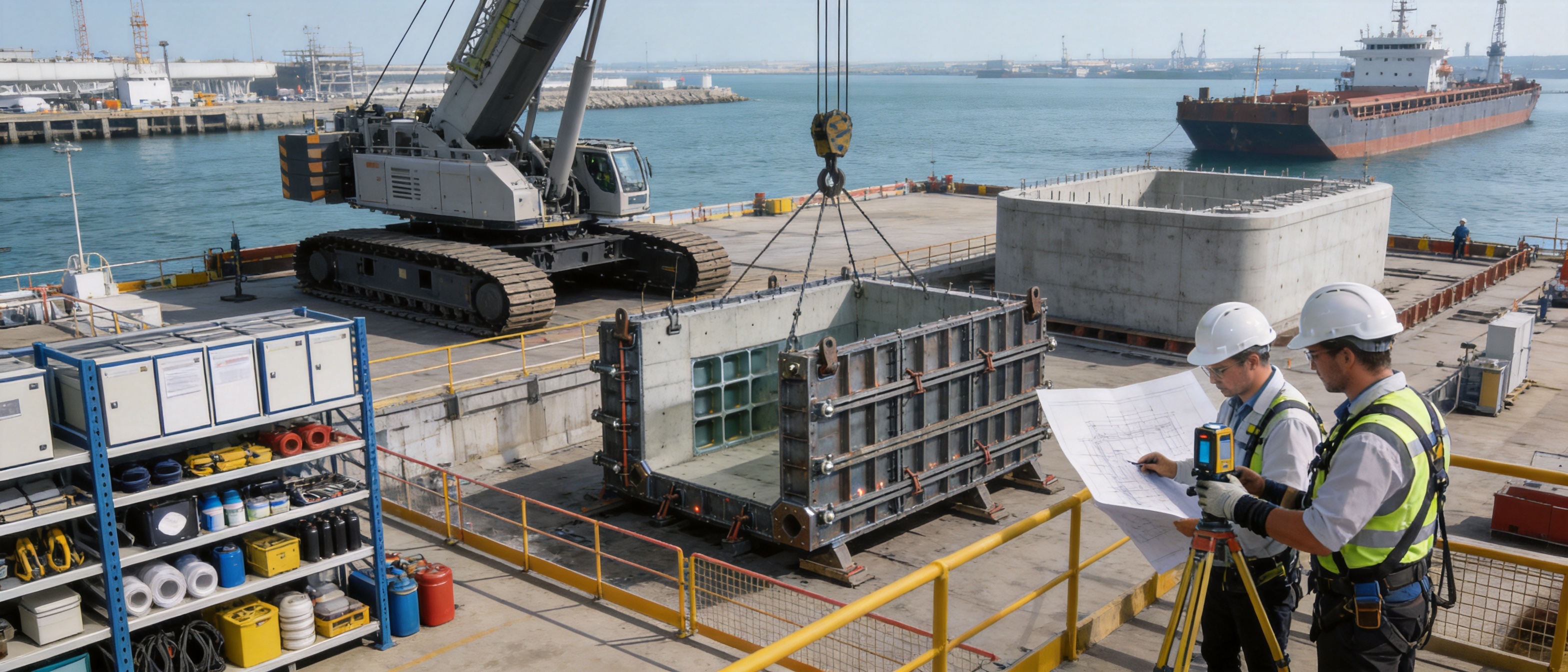
Caisson formwork is the temporary or reusable steel system used to shape the concrete during fabrication or casting. It may include external wall panels, internal compartment forms, end shutters, bulkhead forms, corner units, base supports, access platforms, bracing frames, tie systems, working decks, and lifting devices. The exact configuration depends on the caisson’s geometry, casting method, reinforcement arrangement, concrete placement sequence, and intended reuse rate.
Unlike standard building formwork, caisson formwork must often function as part of a large industrial production process. A caisson may contain multiple cells or chambers, thick walls, heavily reinforced sections, openings, embedded components, and complex transitions. The formwork therefore needs to provide more than a simple concrete-facing surface. It must create a complete and coordinated construction system that supports repeated assembly, adjustment, inspection, concreting, stripping, cleaning, and relocation.
Marine construction also places special demands on material selection. Salt spray, seawater immersion, high humidity, tidal fluctuations, wet-dry cycles, and abrasive particles can accelerate corrosion. The formwork must therefore be designed with protective coatings, appropriate steel grades, drainage considerations, sealed interfaces, and maintenance access. Components that are exposed to marine conditions should be protected against rust during fabrication, storage, transportation, and operation.
Core Technical Requirements
Resistance to Hydrostatic and Concrete Pressure
Fresh concrete behaves as a fluid during placement and generates lateral pressure against the formwork. In a caisson, the pressure can be considerable because of thick walls, tall pours, slow placement rates, high-slump concrete, vibration, and restricted access. If the formwork is used below or near water, external hydrostatic forces may also influence the design.
Caisson formwork must transfer these forces safely through the panels, stiffeners, walers, ties, braces, supports, and foundation or working platform. The design process should consider the maximum expected concrete pressure, the height and sequence of each pour, the effect of vibration, construction tolerances, wind loads during lifting, and temporary loads created during assembly or stripping.
High-strength steel panels and appropriately spaced stiffeners help control deflection. Excessive deflection can alter the caisson dimensions, reduce cover to reinforcement, interfere with embedded items, and create difficulties during installation. A rigid system also produces a more consistent concrete surface, reducing the need for repair and improving the appearance of exposed elements.
Water-Tightness and Sealed Construction
Water penetration is a major concern in marine formwork. Seawater entering through joints may contaminate reinforcement, affect fresh concrete, wash out cement paste, or create voids and honeycombing. Even where the formwork is used for prefabrication in a controlled area, rainfall, tidal water, groundwater, and cleaning water can affect the casting zone.
A sealed formwork design uses close-fitting panels, carefully fabricated joints, suitable gasket or sealing arrangements where required, and stable connection hardware. The objective is to limit leakage of cement slurry and prevent uncontrolled water movement around the formwork. Panel edges should be straight and accurately machined or assembled so that repeated installation does not create progressively larger gaps.
Good sealing is also related to maintenance. Surfaces must be cleaned after each pour, and concrete residue should not be allowed to accumulate on joint faces. A reusable system with accessible components makes it easier for crews to inspect seals, replace damaged materials, and restore the original fit before the next casting cycle.
Corrosion Resistance in Marine Environments
Ordinary carbon steel can corrode rapidly when exposed to seawater, salt spray, and persistent humidity. Corrosion may reduce the effective thickness of structural members, damage connections, make stripping difficult, and increase maintenance costs. For this reason, caisson formwork should be fabricated with a protective strategy suited to the project environment.
Such a strategy may include surface preparation, protective primers, industrial coating systems, sealed hollow sections, corrosion-resistant fasteners in critical locations, drainage openings, and careful control of coating damage during transportation and erection. Areas subject to repeated abrasion, such as panel edges, lifting points, and connection zones, deserve particular attention because they are likely to require touch-up after handling.
The choice of protection should consider whether the formwork will be used in a dry dock, at a coastal yard, in a tidal zone, or directly in a submerged operation. It should also consider the expected service life, number of reuse cycles, cleaning method, storage conditions, and exposure to chemicals or cementitious materials.
Dimensional Accuracy
Caisson dimensions must often satisfy strict requirements because the unit may need to fit against adjacent caissons, align with a foundation, connect to a bridge substructure, or maintain specified internal chamber volumes. Small deviations can accumulate across a long wall or a series of interconnected cells.
Accurate fabrication begins with a controlled design model and detailed shop drawings. Panel dimensions, hole positions, stiffener locations, corner radii, access openings, lifting points, and connection interfaces should be checked before cutting and welding. During production, jigs, templates, measuring tools, and inspection procedures help maintain consistency between individual components.
Dimensional control is especially important for reusable modular formwork. If the first assembly is accurate but later panels vary significantly, the contractor may lose the efficiency gained from standardization. Consistent components allow the same formwork arrangement to be repeated with fewer adjustments and less dependence on site modification.
Structural Design of Caisson Formwork
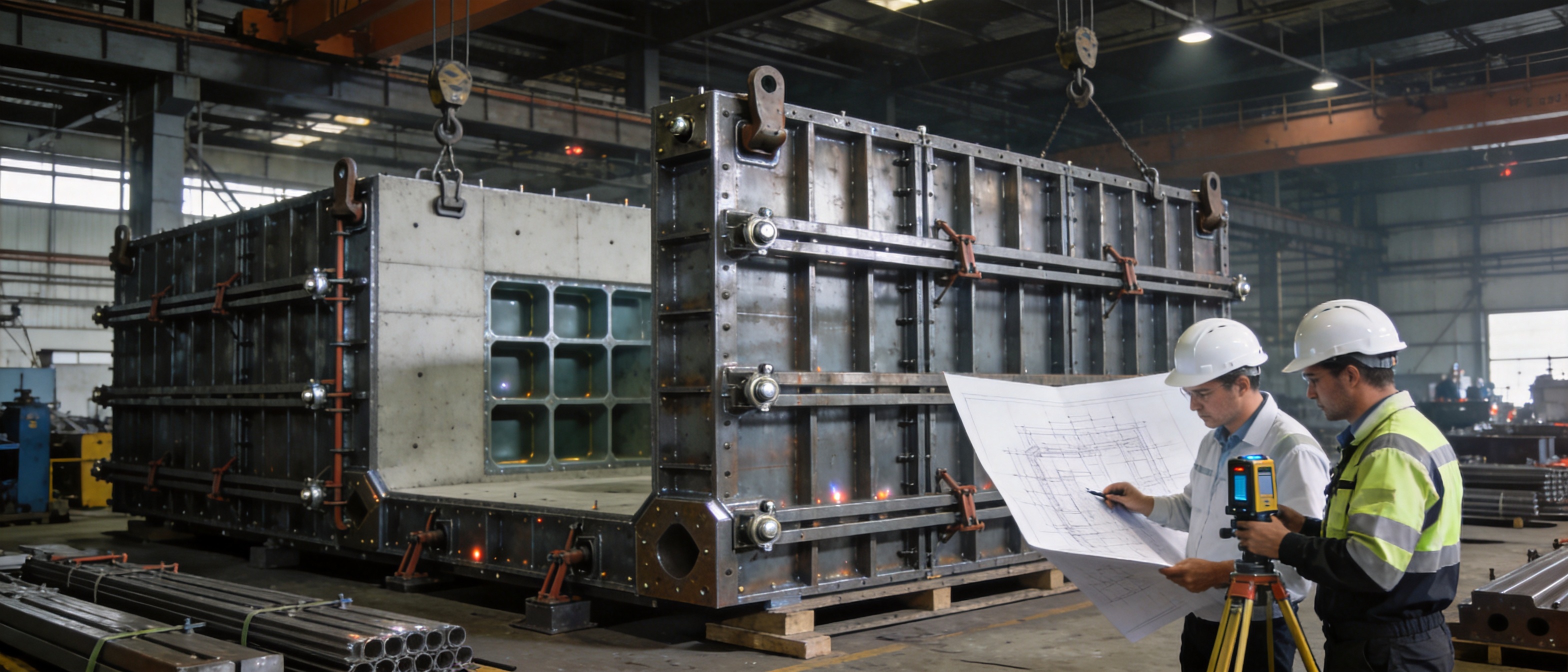
The structural design of caisson formwork should begin with the construction method rather than with panel dimensions alone. Engineers need to understand the caisson geometry, reinforcement sequence, concrete mix, pour height, placement speed, vibration method, stripping procedure, lifting arrangement, and expected number of reuse cycles.
A typical system may contain several coordinated layers of support. The concrete-facing skin transfers pressure to vertical and horizontal stiffeners. These stiffeners transfer loads to walers or strongbacks. Ties, braces, frames, and base supports then transmit the forces to the casting platform or supporting structure. Every connection must be considered as part of the load path.
Panel Configuration
Panel size should balance structural capacity, handling requirements, transportation limits, and the caisson’s geometry. Large panels reduce the number of joints and may improve productivity, but they require greater lifting capacity and more storage space. Smaller modular panels are easier to handle and may offer more flexibility, but they create additional joints and connection points.
For large caissons, a combination of standard panels and specialized units is often effective. Standard panels can be reused across straight wall sections, while corner panels, end shutters, curved units, and opening frames are produced for locations that require special geometry. This approach reduces fabrication cost without compromising the accuracy of critical areas.
Stiffeners and Walers
Stiffeners control local panel deflection and distribute pressure over a wider area. Their spacing is determined by the panel thickness, material properties, expected pressure, allowable deformation, and connection details. Walers or strongbacks provide additional stiffness across the panel assembly and help align adjacent units.
The arrangement should avoid unnecessary interference with reinforcement. A formwork system that is structurally strong but blocks rebar placement or concrete access may create delays on site. Therefore, the structural layout, reinforcement drawings, embedded items, and construction sequence should be reviewed together.
Bracing and Temporary Stability
Formwork can be vulnerable before concrete is placed, particularly during lifting, positioning, and connection. Temporary bracing keeps panels stable against wind, accidental impact, and movement caused by workers or equipment. The bracing system should be easy to install but sufficiently robust for the expected conditions.
Where caisson forms are used near water, temporary stability also involves buoyancy, tidal movement, wave action, and uneven support. The design should identify whether the formwork is supported on a dry platform, a floating structure, a temporary frame, or a partially completed concrete base. Stability conditions may change at every stage, so erection and removal procedures should be clearly defined.
Connections and Adjustment Devices
Reliable connections are essential for both safety and productivity. Bolted connections are commonly selected because they support assembly, disassembly, inspection, and replacement. Connection hardware should be sized for the expected shear, tension, bending, and repeated use. Where rapid adjustment is required, slotted holes, adjustable braces, screw jacks, wedge clamps, or alignment devices may be incorporated.
Adjustment systems are valuable when the caisson includes multiple sections or when the formwork must compensate for minor foundation irregularities. However, adjustment should not replace accurate fabrication. The best results come from combining precise manufactured components with controlled adjustment capability.
Advantages Compared with Conventional or Improvised Formwork
Higher Strength and Better Pressure Control
Improvised timber or lightly reinforced panel systems may be suitable for small, low-pressure pours, but they are generally less effective for large caisson structures. They can experience swelling, warping, leakage, and rapid deterioration when exposed to water. Engineered steel caisson formwork offers greater rigidity and predictable load-bearing performance.
High-strength panels maintain their shape during concrete placement and vibration. This helps protect the designed caisson dimensions and reduces the risk of bulging, joint displacement, and surface defects. A stable system also improves worker confidence because crews can perform concreting operations without constantly correcting panel movement.
Improved Water and Slurry Control
Steel formwork manufactured with accurately fitted joints can provide better sealing than temporary systems assembled from irregular materials. Controlled joints reduce cement paste loss, limit water intrusion, and help produce a denser concrete surface. This is particularly important for marine structures because defects may be difficult or expensive to repair after installation.
Longer Reuse Life
A caisson formwork system is often used for many identical or similar units. Steel panels can be cleaned, inspected, repaired, recoated, and reused for successive casting cycles. When the system is designed for repeated handling, the cost of the formwork can be distributed across a larger production volume.
Reusability also provides greater consistency. The same panel geometry, connection arrangement, and working method can be applied to multiple caissons. This reduces the variation that may occur when each unit is formed using newly assembled temporary materials.
Faster Assembly and Stripping
Modular steel formwork can be delivered with preplanned connection points and labeled components. This makes it possible to organize the erection sequence before the material arrives on site. Once the crew becomes familiar with the system, assembly and stripping can be completed more quickly than with individually fabricated temporary forms.
Faster cycles are valuable in marine construction, where access windows may be influenced by tides, weather, vessel schedules, and transportation arrangements. Reducing the time required for formwork operations helps contractors make better use of available working periods.
Better Integration with Lifting and Handling Equipment
Large caisson formwork components must often be moved by cranes, gantries, forklifts, or specialized handling equipment. Purpose-designed lifting points and balanced panel layouts reduce the risk of uncontrolled movement. Clear lifting instructions and known component weights also help site teams plan equipment capacity and lifting zones.
Compared with improvised lifting arrangements, engineered lifting provisions provide a more controlled method for moving heavy panels. They also reduce the likelihood of damaging the formwork during repeated relocation.
Lower Long-Term Maintenance Burden
Although high-quality steel formwork may require a greater initial investment than temporary low-cost alternatives, its total cost can be lower over the full project lifecycle. Longer reuse, reduced repair work, fewer replacements, faster construction cycles, and improved concrete quality all contribute to economic performance.
In marine environments, maintenance cost is particularly important. Replacing corroded panels or repairing distorted frames can interrupt production and create additional transportation and labor expenses. A properly protected system helps maintain performance over repeated use.
Material Selection and Surface Protection
The main steel components should be selected according to structural demand, environmental exposure, fabrication requirements, and project specifications. The steel must provide sufficient yield strength, weldability, toughness, and dimensional stability. The choice of material should also be compatible with the intended coating or corrosion-protection system.
The concrete-facing surface should be smooth and sufficiently durable for repeated contact with concrete. A well-prepared face reduces cleaning time and helps produce a more uniform finish. Release agents should be selected carefully so that they support stripping without contaminating the concrete surface or creating adhesion problems.
Surface preparation is an important part of manufacturing quality. Dirt, mill scale, oil, moisture, and welding residue can reduce coating adhesion. Depending on the specified system, the steel may require mechanical cleaning, abrasive preparation, priming, intermediate coating, and top coating. Coating thickness and curing conditions should be monitored in accordance with the project’s quality requirements.
Edges, weld zones, corners, bolt holes, and lifting lugs deserve special attention because they are common locations for coating discontinuities. After assembly and transportation, any damaged areas should be cleaned and repaired before the formwork is placed in a marine environment.
Advanced Manufacturing Processes
The quality of caisson formwork depends not only on the selected material but also on how the system is designed and manufactured. Zhenjiang Jinhao Road & Bridge Supporting Engineering Co., Ltd. applies an engineering-oriented production approach that connects project requirements with fabrication, inspection, and delivery planning.
Project Review and Technical Planning
Manufacturing begins with a review of the caisson drawings, dimensions, construction sequence, load conditions, handling method, and site limitations. Engineers identify standard components that can be reused and special components that need individual development. They also review interfaces with reinforcement, embedded steel, temporary supports, lifting equipment, and concrete placement systems.
This early review helps prevent common problems such as blocked access, inaccessible bolts, insufficient clearance for reinforcement, unbalanced lifting points, or panel joints located at undesirable positions. It also allows the formwork to be coordinated with the client’s available cranes, transport vehicles, storage areas, and labor resources.
Detailed Drawings and Digital Coordination
Detailed fabrication drawings define panel dimensions, plate thicknesses, stiffener arrangements, connection details, lifting points, welding requirements, coating specifications, and identification marks. Digital modeling and drawing coordination can be used to check geometry and reveal conflicts before steel is cut.
For complex caissons with multiple cells, a coordinated model is especially useful. It can assist with the arrangement of internal forms, access platforms, corners, openings, inspection routes, and stripping clearances. Proper drawing control also ensures that revisions are communicated consistently to the fabrication and site teams.
Precision Cutting and Component Preparation
Steel plates and sections should be cut according to controlled dimensions. Precision cutting improves fit-up, reduces excessive gaps, and limits the amount of site modification. Components can be marked or labeled to support efficient assembly and minimize installation errors.
Before welding, plates and sections are prepared by removing contamination and organizing them on a stable work surface. Templates and fixtures can be used for repeated components, helping maintain consistency across a production batch. This is particularly beneficial when many identical caisson forms are required.
Controlled Welding and Frame Assembly
Welding is a critical process because heat input can cause distortion if it is not properly managed. Fabricators can reduce distortion through suitable welding sequences, temporary restraints, balanced weld layouts, controlled fit-up, and inspection of critical joints. The objective is to produce a frame that remains within dimensional tolerance after welding and cooling.
Panel skins, stiffeners, walers, brackets, and lifting points should be assembled in a logical sequence. Areas that will be difficult to reach after closure should be inspected before they become inaccessible. Welds should be checked for visible defects, and additional non-destructive testing may be specified for critical structural connections.
Trial Assembly and Dimensional Inspection
Trial assembly provides an opportunity to verify that panels fit together as intended before shipment. It can identify mismatched bolt holes, incorrect component labeling, interference between braces, insufficient stripping clearance, or deviations in caisson geometry.
Inspection may include checking overall dimensions, diagonals, flatness, squareness, hole positions, weld quality, lifting-point locations, and coating condition. The inspection records can be used to support quality documentation and provide the installation team with a clear reference for site assembly.
Coating, Protection, and Packing
After fabrication and inspection, steel surfaces are prepared and coated according to the environmental requirements. Components are then packed to protect panel faces, connection hardware, lifting points, and painted surfaces during transportation. Packing should support safe loading and unloading while preventing excessive contact damage.
Component identification is essential for a modular system. Markings should correspond to the assembly drawings and packing lists. Proper labeling reduces the time required to locate parts and makes it easier to manage multiple formwork sets at a busy project site.
Company Manufacturing and Engineering Strengths
Zhenjiang Jinhao Road & Bridge Supporting Engineering Co., Ltd. is located in Shangdang Town Industrial Park, Dantu District, Zhenjiang City, Jiangsu Province, China. Established in 2017, the company has developed from a supplier of construction, industrial, and metal-processing materials into a comprehensive engineering enterprise focused on bridge and steel structure solutions.
The company’s capabilities include design, fabrication, erection support, leasing, and technical service for Bailey bridges, bridge launching gantries, hanging baskets, pier formwork, bridge steel formwork, and related engineered products. This product range is relevant to caisson formwork because many of the same engineering principles apply: structural load transfer, modular assembly, heavy component handling, dimensional control, corrosion protection, and safe erection in challenging environments.
Experience with Heavy Steel Structures
Bailey steel bridges and launching gantry systems require reliable steel components, accurate connections, and careful attention to load paths. Experience in these areas supports the production of formwork frames that must withstand repeated handling and substantial temporary loads. The company’s background in bridge support products also provides practical insight into the requirements of contractors working under schedule pressure.
Bridge steel formwork and pier formwork require accurate geometry and stable working systems. These capabilities can be adapted to caisson wall panels, internal cell forms, end shutters, and specialized marine units. The result is a formwork approach based on engineered steel rather than generic off-the-shelf components alone.
Customized Design and OEM/ODM Support
Caisson dimensions vary widely between projects. A system that is suitable for one port structure may not be appropriate for a cross-sea bridge foundation or offshore unit. Customization may involve panel dimensions, wall thickness, cell arrangement, corner geometry, access platforms, support frames, lifting points, and connection methods.
The company supports customized fabrication and OEM/ODM cooperation, enabling clients to provide project drawings, performance requirements, or a preferred construction method for further development. This is useful for contractors that need a supplier capable of translating engineering information into fabrication-ready components.
Integrated Design-to-Production Coordination
When design, fabrication, and technical support are coordinated by one engineering supplier, communication can be more direct. Design changes can be reviewed against manufacturing methods, material availability, welding access, transport limitations, and site assembly requirements. This reduces the risk of receiving a formwork system that appears correct on paper but is difficult to fabricate or erect.
Integrated coordination also helps clarify responsibilities. The supplier and contractor can define which loads are included in the formwork design, what support conditions are required, how the system will be inspected, and which components are intended for reuse.
Quality-Oriented Production
Quality management for caisson formwork should cover raw materials, cutting, welding, dimensions, coating, packing, and final documentation. A quality-oriented production process provides greater confidence that the delivered system will match the approved drawings and perform consistently in service.
For international projects, clear documentation is especially valuable. Assembly drawings, component lists, lifting information, inspection records, coating details, and maintenance guidance help contractors organize work across different languages, labor practices, and site conditions.
Technical Support for Erection and Use
Even a well-manufactured system can underperform if it is incorrectly assembled or overloaded. Technical support helps the contractor understand component orientation, connection sequence, bracing requirements, adjustment procedures, stripping methods, and storage practices.
Support may be provided during design review, pre-shipment coordination, installation planning, or site erection. The appropriate level depends on project complexity and the contractor’s experience. For repeat users, clear manuals and component identification may be sufficient. For a highly specialized project, more direct engineering coordination may be beneficial.
Applications in Marine and Bridge Construction
Caisson Prefabrication
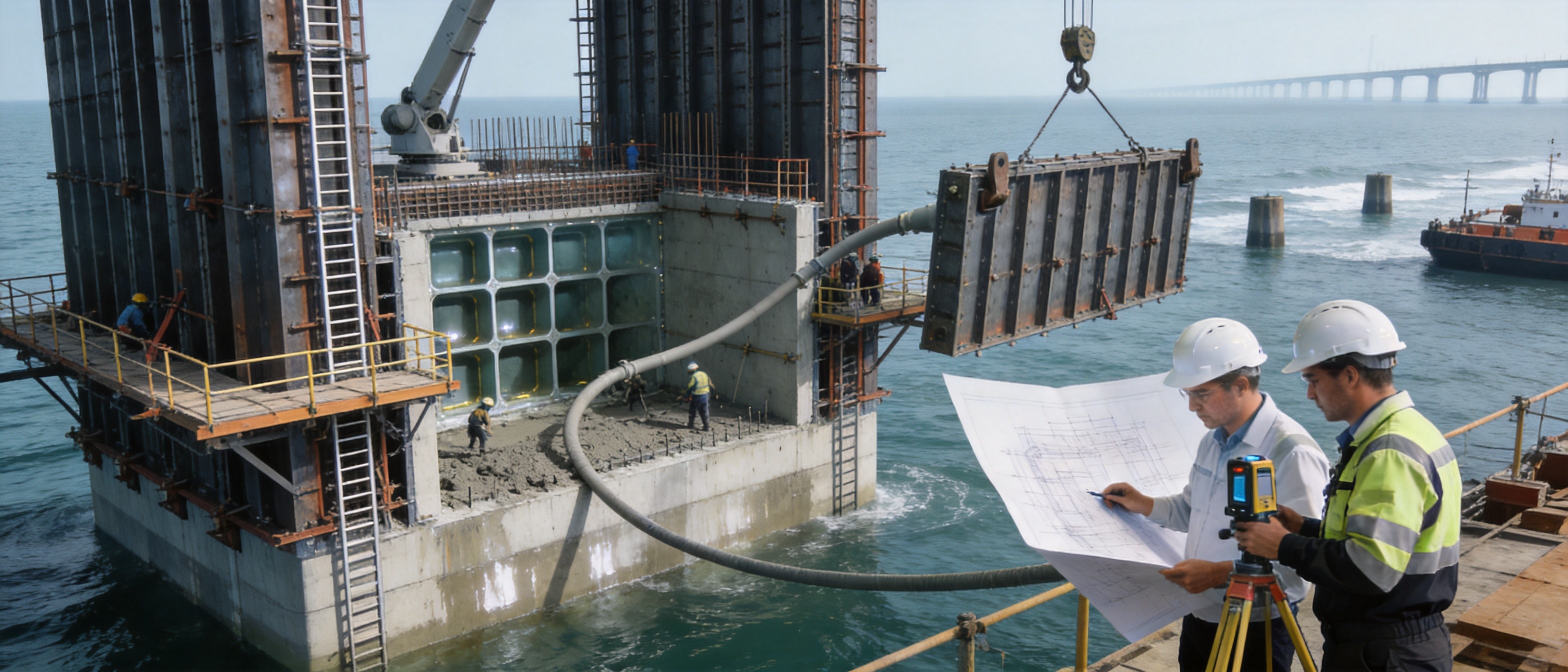
Caisson formwork is widely used in casting large units in a controlled yard or dry dock. Prefabrication can improve quality because reinforcement, formwork, concrete placement, and curing are carried out in an organized environment. After curing, the caisson may be transported or floated to the installation location.
In this application, the formwork must support repeated cycles and permit efficient stripping without damaging corners or surfaces. The system should also accommodate lifting and transportation clearances, since the completed caisson may be handled by cranes, skidding systems, barges, or flotation procedures.
Port and Harbor Structures
Ports commonly use large concrete units for quay walls, breakwaters, berthing structures, and other marine facilities. Caisson formwork helps create consistent units that can be aligned in series or integrated with foundation and backfill systems.
Port projects may involve aggressive exposure to seawater, vessel impact, tidal changes, and abrasive materials. Durable formwork contributes to a more reliable construction process and can be reused across a large number of units.
Cross-Sea Bridges
Cross-sea bridges require foundations and substructures that can withstand waves, currents, saltwater, wind, and difficult access. Caisson formwork may be used for prefabricated foundation units, large pier components, or temporary casting operations near the shoreline.
Because cross-sea bridge projects often have strict erection windows, modular formwork can support a more predictable production schedule. The system can be planned for crane handling, barge transport, or staged assembly, depending on the project method.
Offshore Engineering
Offshore structures require materials and construction systems capable of functioning in exposed environments. Caisson formwork may be used for marine foundations, protective structures, submerged chambers, and heavy concrete units. The design must account for transportation, lifting, temporary stability, and environmental exposure at each stage.
Hydraulic and Water Conservancy Projects
Water conservancy projects, river crossings, flood-control works, and navigation structures may also require caisson-type concrete units. These projects can involve strong currents, changing water levels, sediment, and difficult ground conditions. A sealed, robust formwork system helps contractors maintain control over concrete geometry and construction quality.
Typical Formwork Components
The following table presents common components that may be included in a caisson formwork system. The actual arrangement should be determined by the caisson design and construction method.
| Component | Primary Function | Important Considerations |
|---|
| External wall panels | Shape the outside faces of the caisson | Panel stiffness, surface quality, sealing, corrosion protection |
| Internal cell forms | Form chambers, compartments, or voids | Stripping clearance, access, reinforcement coordination |
| End shutters | Close the ends of a casting section | Alignment, pressure resistance, removable connections |
| Corner units | Form internal and external corners | Dimensional accuracy, concrete release, joint tightness |
| Walers and strongbacks | Distribute pressure and increase rigidity | Load path, connection capacity, interference with rebar |
| Ties and clamps | Hold opposing or adjacent panels in position | Strength, adjustability, corrosion protection, inspection |
| Bracing frames | Provide temporary stability during erection | Wind resistance, support conditions, safe removal |
| Lifting lugs | Allow cranes or handling equipment to move components | Rated capacity, balanced lifting, weld quality |
| Working platforms | Provide access for reinforcement and concreting | Guardrails, load capacity, access ladders, drainage |
| Sealing elements | Limit water and cement slurry leakage | Material compatibility, replacement, joint cleanliness |
| Adjustment devices | Support alignment and correction of minor deviations | Range, locking method, ease of operation |
Construction Workflow
Step One: Review the Caisson Geometry
The contractor and supplier should confirm the overall length, width, height, wall thickness, cell arrangement, corners, openings, slopes, construction joints, and embedded items. The review should also identify which surfaces require a specific finish and which components will be cast in separate stages.
Step Two: Establish the Casting Platform
The casting platform must be sufficiently level, stable, and capable of carrying the formwork and fresh concrete loads. Drainage and water management are important, especially in coastal or tidal locations. The platform should provide adequate room for assembly, reinforcement placement, concrete delivery, inspection, and stripping.
Step Three: Assemble and Align the Formwork
Components should be positioned according to the approved drawings and assembly sequence. Bolts, clamps, braces, and adjustment devices should be installed progressively. Alignment should be checked in plan, elevation, and verticality. Panel joints should be cleaned before sealing elements are installed.
Step Four: Install Reinforcement and Embedded Items
Reinforcement placement should be coordinated with the formwork. Workers need enough space to tie bars, install spacers, place inserts, and inspect cover. If internal forms are installed too early, they may restrict access. If they are installed too late, the reinforcement sequence may become inefficient. The best sequence depends on the caisson layout and should be determined before work begins.
Step Five: Perform Pre-Pour Inspection
Before concrete placement, the team should inspect dimensions, line, level, plumb, joint sealing, tie installation, bracing, access platforms, reinforcement cover, embedded items, and cleanliness. Any loose debris, standing water, oil, or concrete residue should be removed.
Step Six: Place and Compact Concrete
Concrete should be placed at a controlled rate that is compatible with the formwork design and concrete mix. Excessively rapid placement can increase lateral pressure and create unstable conditions. Vibration should be performed carefully to achieve consolidation without damaging formwork joints or displacing reinforcement.
Step Seven: Cure and Strip
After the concrete has achieved the required condition for stripping, panels should be released according to the planned sequence. Sudden or uneven removal can damage concrete edges and place unnecessary stress on the formwork. Release agents, tapered corners, and adjustment devices can make stripping easier when correctly selected and used.
Step Eight: Clean, Inspect, and Prepare for Reuse
Concrete residue should be removed promptly without damaging the panel surface or coating. Components should be checked for deformation, loose welds, damaged bolts, coating loss, and seal deterioration. Repairs and touch-up coating should be completed before the next cycle. Proper storage prevents unnecessary contact with standing water and reduces corrosion.
Safety Considerations
Caisson formwork is heavy structural equipment, and safe operation requires planning. The project team should establish lifting plans, exclusion zones, communication procedures, access routes, and inspection responsibilities. Only suitable cranes and lifting accessories should be used, and lifting points should not be modified without engineering review.
Workers using platforms or operating above water require fall protection appropriate to the site conditions. Guardrails, toe boards, ladders, walkways, and working surfaces should be maintained in good condition. Where there is a risk of falling into water, the project should implement suitable rescue equipment and emergency procedures.
Temporary bracing must remain in place until the formwork is adequately supported by its final connections or by the hardened concrete. Removing braces too early can result in movement or collapse. Weather conditions should also be monitored because strong winds, heavy rain, waves, and poor visibility can affect lifting and assembly.
During concreting, personnel should remain clear of potential pinch points and areas where panels could shift. Pressure should not be increased beyond the design assumptions. If unusual movement, leakage, cracking, or noise is observed, the pour should be paused and the condition assessed by competent personnel.
Quality Control and Inspection
Quality control should begin before fabrication and continue through delivery and site use. Raw material records help verify the steel used for major components. Welding inspections help identify defects that could affect structural performance. Dimensional checks confirm that the finished panels match the approved design.
Factory acceptance procedures may include visual inspection, dimensional measurement, trial assembly, coating checks, lifting-point verification, and review of documentation. For large or complex systems, a representative assembly can be inspected before the full production run proceeds.
At the project site, the contractor should inspect every formwork cycle. The inspection should confirm that panels are clean, joints are properly sealed, ties and braces are secure, and no component has been damaged during previous use. Repeated inspection is not merely an administrative task; it helps prevent small defects from becoming serious problems during a high-pressure concrete pour.
How to Select a Caisson Formwork Supplier
Evaluate Engineering Capability
The supplier should be able to understand the construction method, not just provide steel panels. Ask whether the supplier can review structural loads, casting stages, reinforcement access, lifting arrangements, stripping requirements, and environmental exposure.
Review Manufacturing Capacity
Production capability should include controlled cutting, welding, assembly, inspection, coating, packing, and delivery. A supplier with experience in heavy bridge steel structures is often better prepared to manage large components and complicated connection details.
Confirm Customization Options
Standard modules can reduce cost, but most caisson projects require some customization. The supplier should be able to produce special corners, end forms, cell forms, curved or sloped panels, openings, platforms, and lifting arrangements when required.
Check Documentation and Technical Support
Clear drawings, component lists, assembly instructions, inspection records, and maintenance recommendations improve project coordination. Technical support should be available when the contractor needs clarification during fabrication, shipment, erection, or reuse.
Consider Total Project Cost
The purchase price is only one part of the economic evaluation. Contractors should consider the number of reuse cycles, erection time, labor requirements, repair frequency, coating durability, transportation, storage, and potential concrete repair costs. A stronger and more reusable system may provide a better overall value than a lower-cost system with limited service life.
Comparison of Formwork Approaches
| Evaluation Factor | Improvised Timber or Light Panels | Standard Steel Panels | Engineered Caisson Formwork |
|---|
| Resistance to high pressure | Limited and highly dependent on site bracing | Generally good for defined conditions | Designed for project-specific pressure and support conditions |
| Water and slurry control | Variable; joints may leak | Good when properly assembled | Improved through accurate joints and sealing details |
| Marine corrosion performance | Material may deteriorate quickly | Depends on coating and maintenance | Protection strategy is selected for marine exposure |
| Dimensional consistency | May change with moisture and repeated use | Generally consistent | Controlled through design, fabrication, and inspection |
| Reuse potential | Low to moderate | Moderate to high | High when designed for repeated cycles |
| Handling and lifting | Often requires improvised arrangements | May include standard lifting provisions | Planned lifting points and component weights |
| Adaptability | Easy to modify but difficult to control accurately | Suitable for common geometries | Customized to caisson geometry and construction sequence |
| Long-term project value | May be economical only for small projects | Suitable for general applications | Strong value for large, repeated, or technically demanding marine work |
Sustainability and Lifecycle Efficiency
Reusable steel caisson formwork supports more sustainable construction by reducing the need for disposable materials. A durable system can be used for multiple units or projects, spreading the environmental impact of manufacturing over a longer service period. At the end of its useful life, steel components can generally be repaired, modified, or recycled.
Lifecycle efficiency also comes from reducing concrete defects. Better dimensional control and improved sealing can lower the need for remedial work, surface repair, patching, and material waste. Faster formwork cycles may reduce equipment idle time and improve the productivity of labor and concrete delivery operations.
Maintenance should be included in the sustainability plan. Cleaning, coating touch-up, proper storage, and timely replacement of worn seals extend the life of the system. A formwork set that remains in service for many cycles provides greater value than one that is discarded after a small number of uses.
Future Development of Marine Formwork Systems
Marine construction is moving toward more standardized, modular, and digitally coordinated production methods. Future caisson formwork systems are likely to include more interchangeable panels, improved adjustment devices, enhanced lifting systems, and more detailed digital records. These developments can help contractors track component use, inspection history, maintenance status, and reuse planning.
Greater integration between structural design software and fabrication systems may also improve precision. Digital models can support automated quantity calculation, clash detection, component labeling, and assembly simulation. These tools are particularly useful for large caissons with many repeated internal cells and complicated access requirements.
Environmental performance will remain important. Longer-lasting coatings, improved repair methods, lower-waste fabrication, and optimized steel usage can reduce the lifecycle impact of formwork. However, these developments must continue to meet the fundamental requirements of strength, water resistance, corrosion protection, and safe construction.
Frequently Asked Questions
What is caisson formwork used for?
Caisson formwork is used to shape large concrete caisson structures and related marine components. Typical applications include caisson prefabrication, port construction, cross-sea bridge foundations, offshore engineering, breakwaters, hydraulic structures, and underwater concreting operations.
Why is steel preferred for caisson formwork?
Steel provides high strength, stiffness, dimensional stability, and good reuse potential. When it is properly protected, steel also performs well in humid and marine environments. These characteristics make it more suitable than many temporary materials for large, heavily loaded, and repeated caisson casting operations.
Can caisson formwork be customized?
Yes. Caisson formwork can be customized according to the structure’s length, width, height, wall thickness, cell arrangement, openings, corners, slopes, casting stages, lifting method, and site conditions. Standard modular components may be combined with specially fabricated units.
How does the formwork resist water penetration?
Water resistance is supported by accurately fitted panels, sealed joints, suitable gaskets or sealing elements, rigid connections, and proper installation. The effectiveness of the system also depends on keeping joint surfaces clean and inspecting seals between casting cycles.
How is corrosion controlled?
Corrosion control may include suitable steel selection, surface preparation, protective primers and coatings, sealed details, protected fasteners, drainage provisions, and timely repair of damaged coating. The protection system should reflect the expected exposure to salt spray, seawater, tides, and wet-dry cycles.
Can one formwork set be reused for multiple caissons?
Yes. Reuse is one of the main advantages of engineered steel formwork. A system designed for repeated cycles can be cleaned, inspected, repaired, and repositioned for multiple units. The number of reuse cycles depends on the design, handling method, maintenance, and site conditions.
Does caisson formwork require special lifting equipment?
Large panels and frames usually require cranes or other suitable heavy-handling equipment. The formwork should include properly designed lifting points and provide component weights so that the contractor can select equipment with sufficient capacity and reach.
What information should be provided when requesting a quotation?
Useful information includes caisson drawings, dimensions, concrete grade, reinforcement layout, casting sequence, number of units, expected reuse cycles, site location, marine exposure, available lifting equipment, required delivery schedule, and any special requirements for platforms, access, coating, or documentation.
Can the supplier support erection at the project site?
Technical support can be arranged according to the project requirements. Support may include assembly drawings, installation instructions, pre-shipment coordination, component identification, erection guidance, and assistance with resolving technical questions during use.
What makes engineered caisson formwork better than improvised formwork?
Engineered formwork offers more predictable strength, improved sealing, better dimensional accuracy, planned lifting provisions, longer reuse potential, and a clearer inspection and maintenance process. These benefits are especially important when construction takes place in marine environments or involves large, repeated concrete units.
Conclusion
Caisson formwork is a specialized steel construction system designed to address the combined challenges of high concrete pressure, hydrostatic forces, water penetration, saltwater corrosion, complex geometry, and repeated heavy handling. Its performance has a direct influence on the quality and efficiency of caisson fabrication and underwater construction.
The most effective systems combine strong panels, rigid frames, reliable connections, controlled sealing, corrosion protection, accurate fabrication, and practical lifting and stripping arrangements. Compared with improvised formwork, engineered steel systems provide greater consistency, better reuse value, and improved control over demanding marine construction operations.
Zhenjiang Jinhao Road & Bridge Supporting Engineering Co., Ltd. brings together design, manufacturing, erection support, and project planning capabilities developed through its work with Bailey bridges, bridge launching gantries, hanging baskets, pier formwork, bridge steel formwork, and related steel structures. This combined experience supports customized caisson formwork solutions for ports, cross-sea bridges, offshore projects, hydraulic works, and other marine engineering applications.
For contractors and engineering companies, the right formwork supplier should be evaluated not only by panel price but also by technical competence, manufacturing control, corrosion strategy, reuse potential, documentation, delivery reliability, and after-sales support. With these factors properly coordinated, caisson formwork can become a dependable production asset that improves concrete quality, shortens construction cycles, and supports safer and more efficient marine infrastructure development.
References
American Concrete Institute. Guide to Formwork for Concrete Structures.
European Committee for Standardization. Temporary Works Equipment and Formwork Engineering Principles.
International Organization for Standardization. General Principles for Steel Construction Quality and Corrosion Protection.
International Federation for Structural Concrete. Recommendations for Concrete Construction, Durability, and Marine Exposure.
Port and Marine Engineering Practice. Technical Principles for Caisson Construction and Prefabricated Marine Concrete Units.
Bridge and Offshore Construction Engineering Manuals. Guidance on Temporary Works, Heavy Lifting, Formwork Stability, and Marine Concrete Operations.


 Français
 Español
 عربى