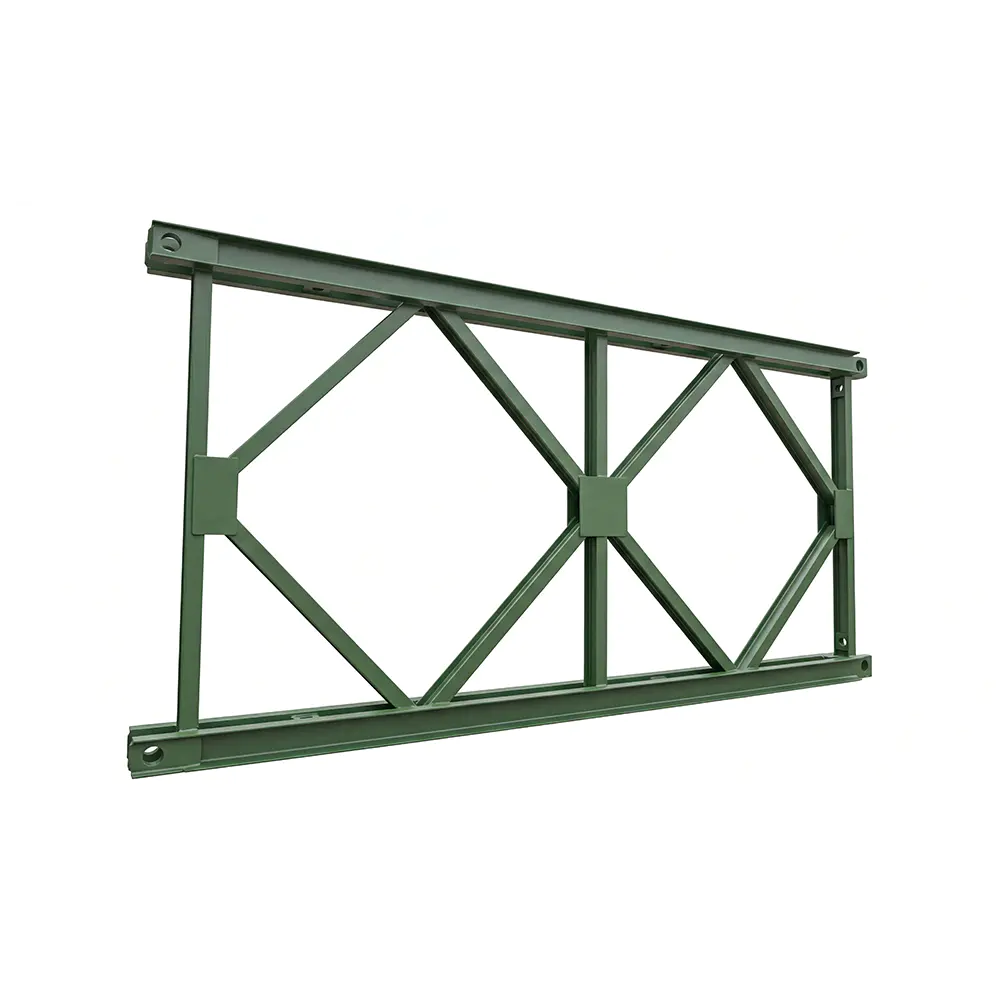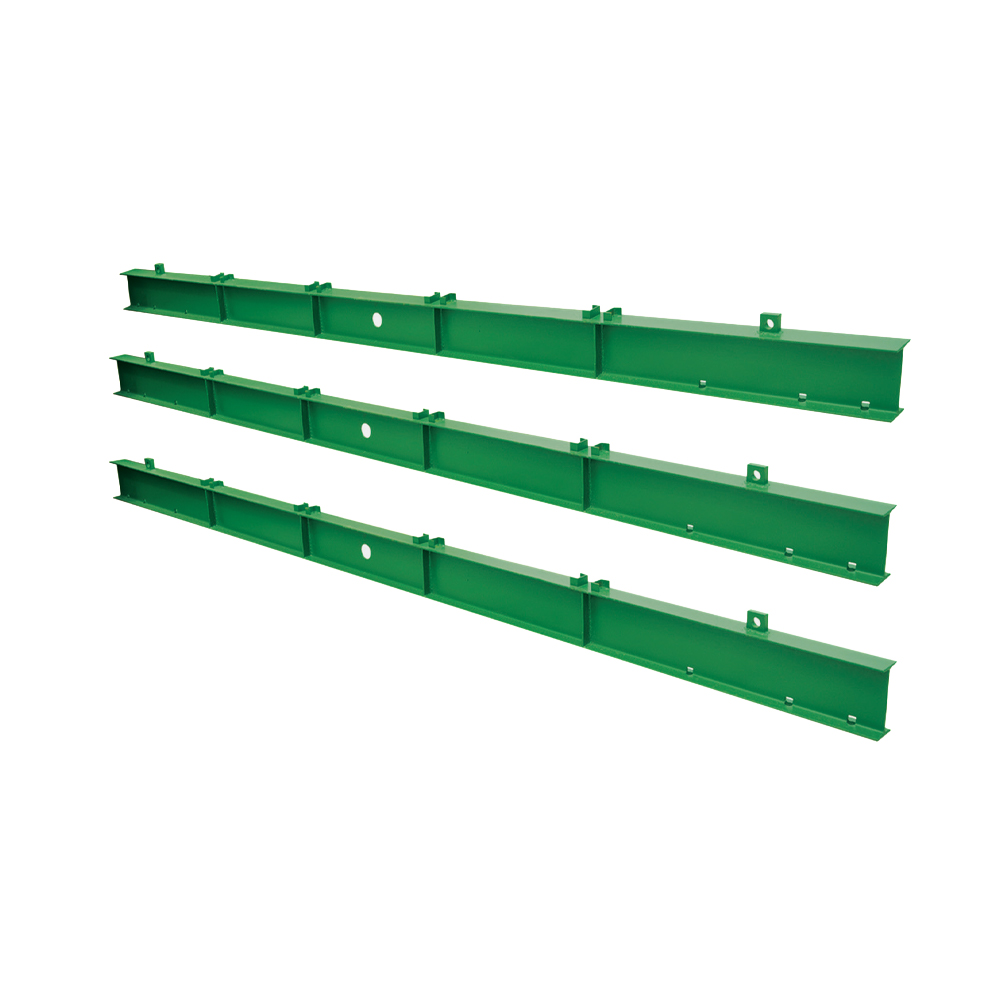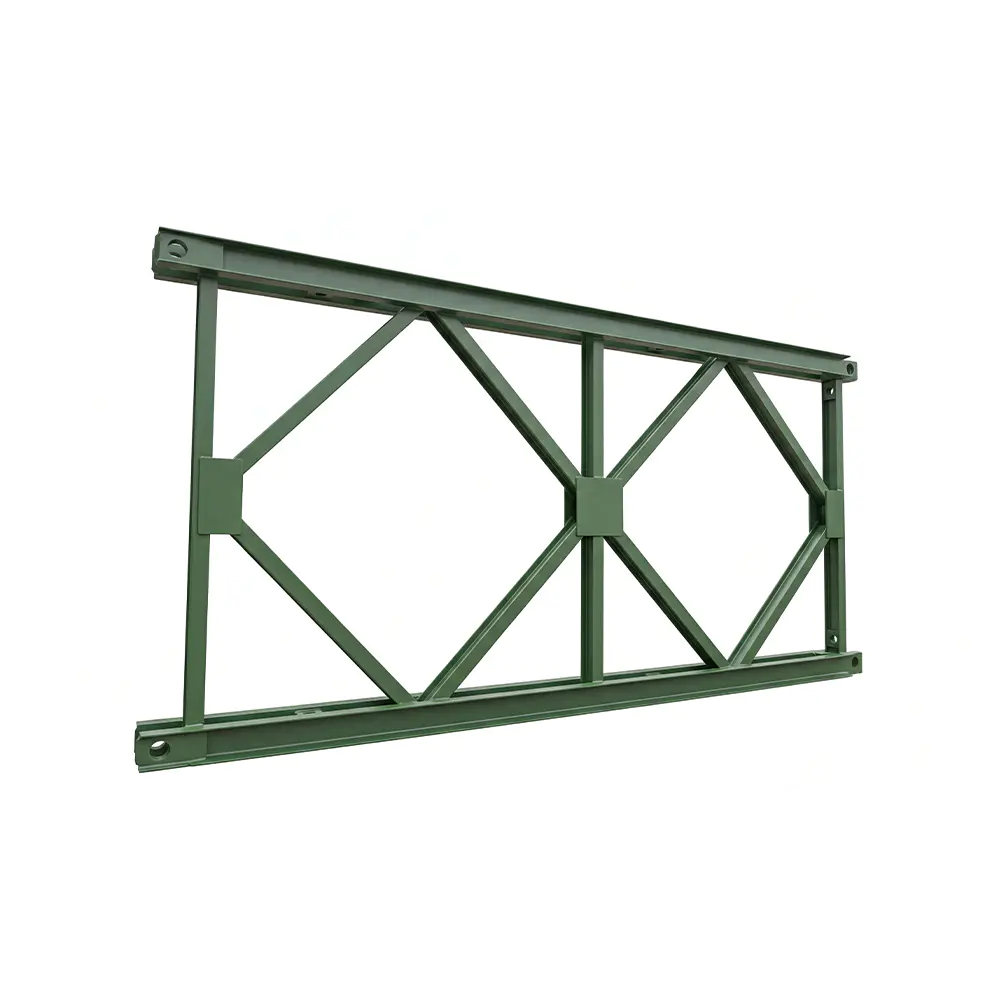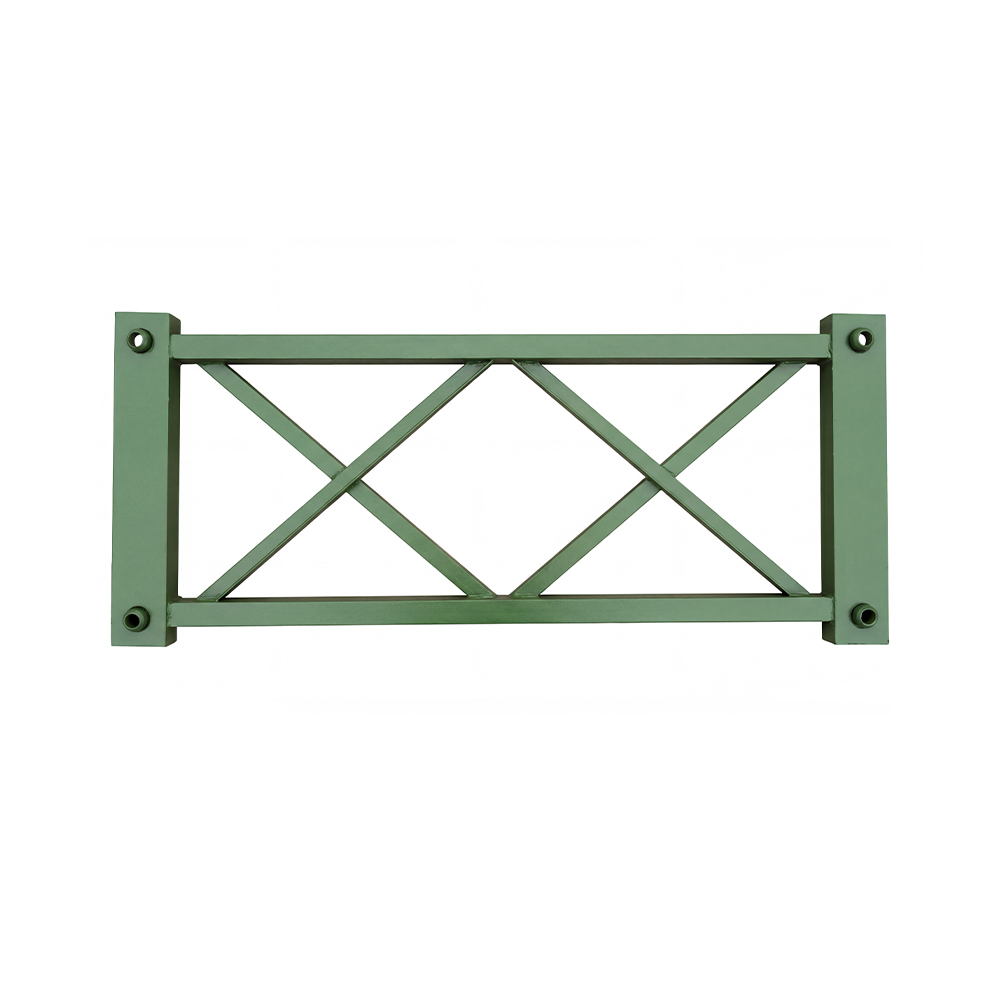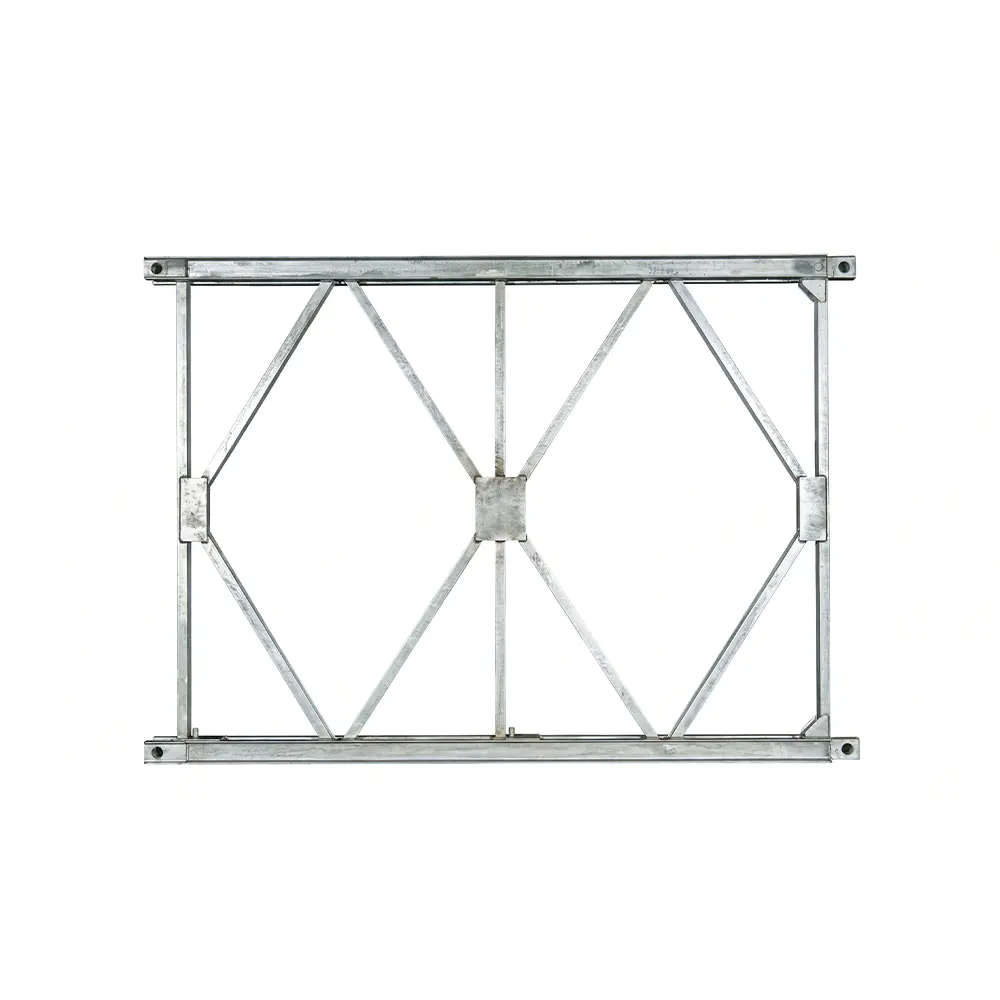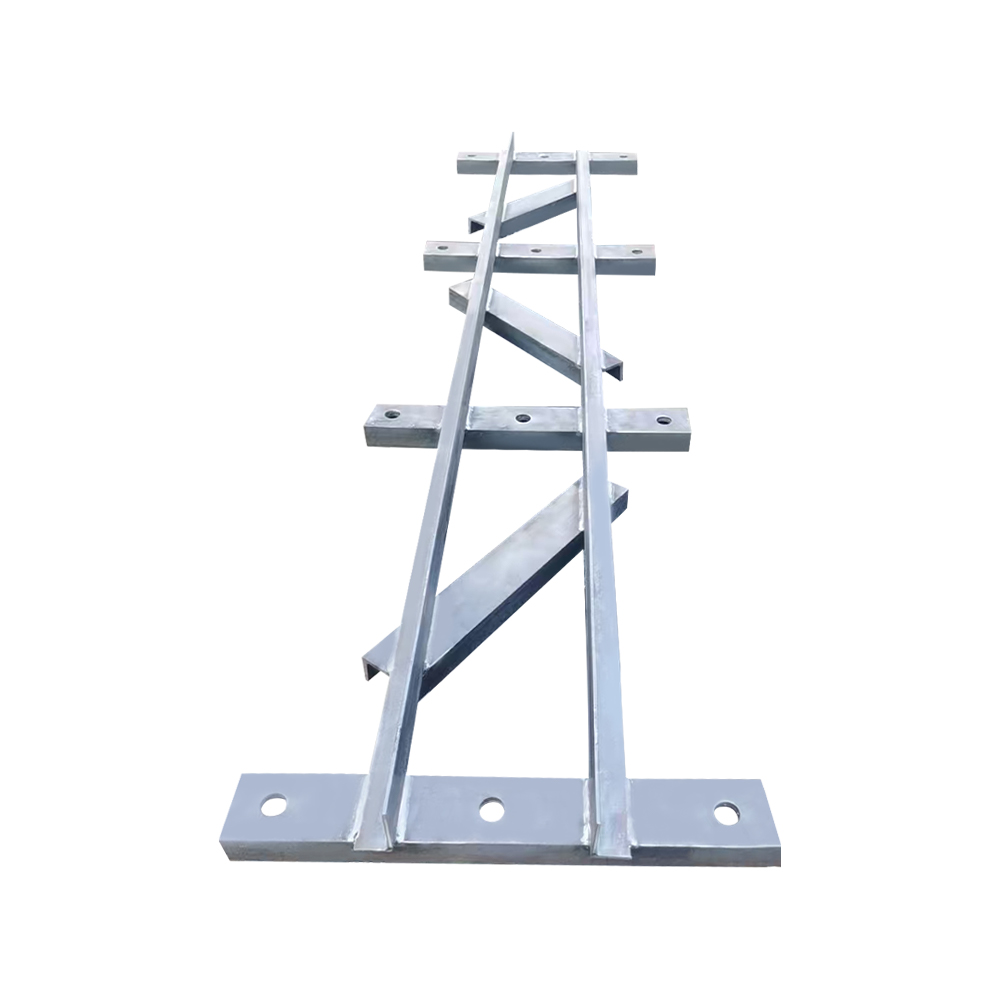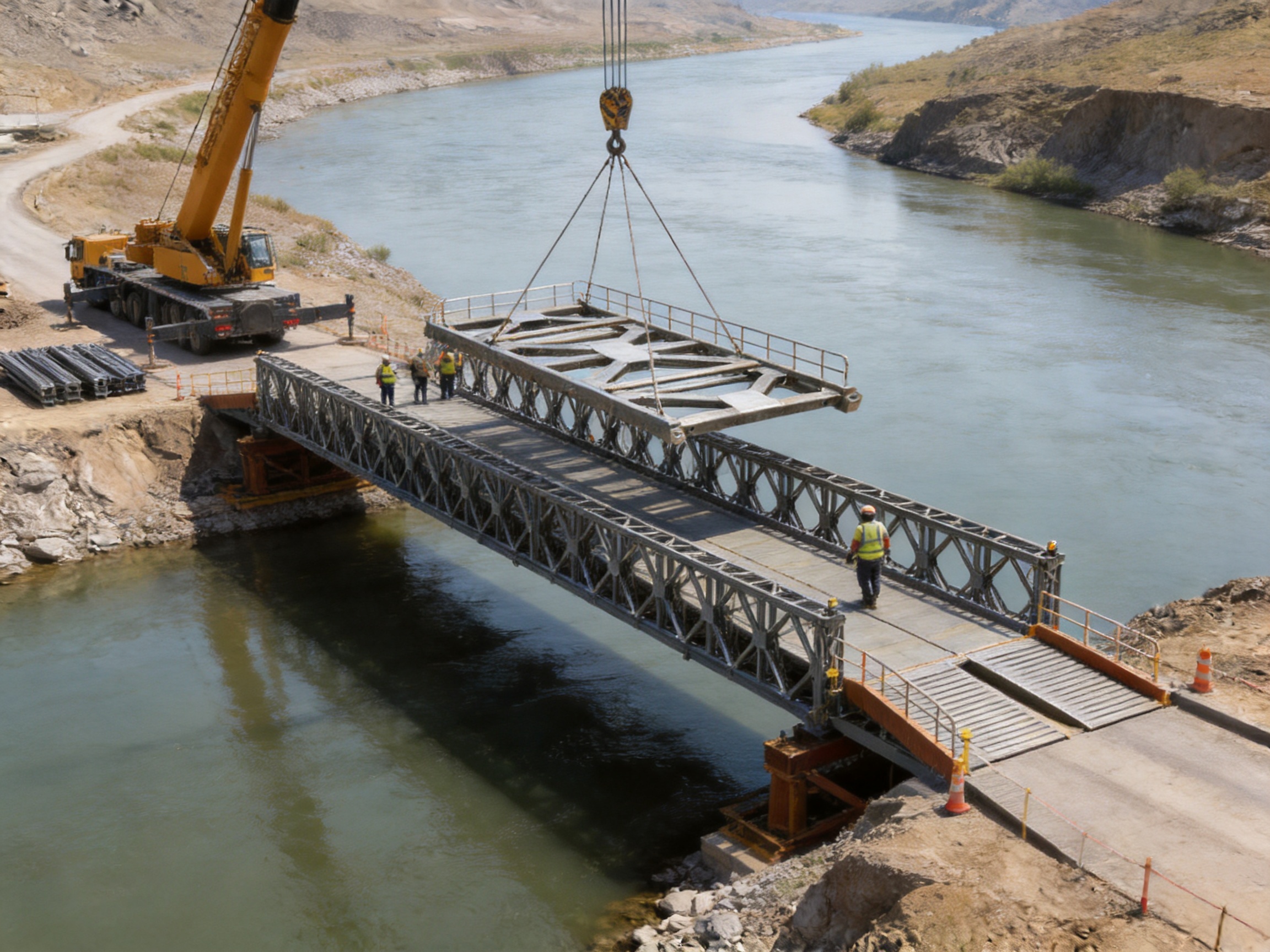
Reinforced Bailey bridge panels are essential structural components in modular bridge systems used for temporary, emergency, semi-permanent, and construction-related applications. They provide the primary load-carrying framework of a Bailey bridge and allow contractors to assemble bridge spans quickly from standardized steel members. The ZK-Bailey Bridge Panel is designed as an enhanced modular truss panel for projects that require greater bending resistance, higher shear capacity, reliable interchangeability, and efficient field installation.
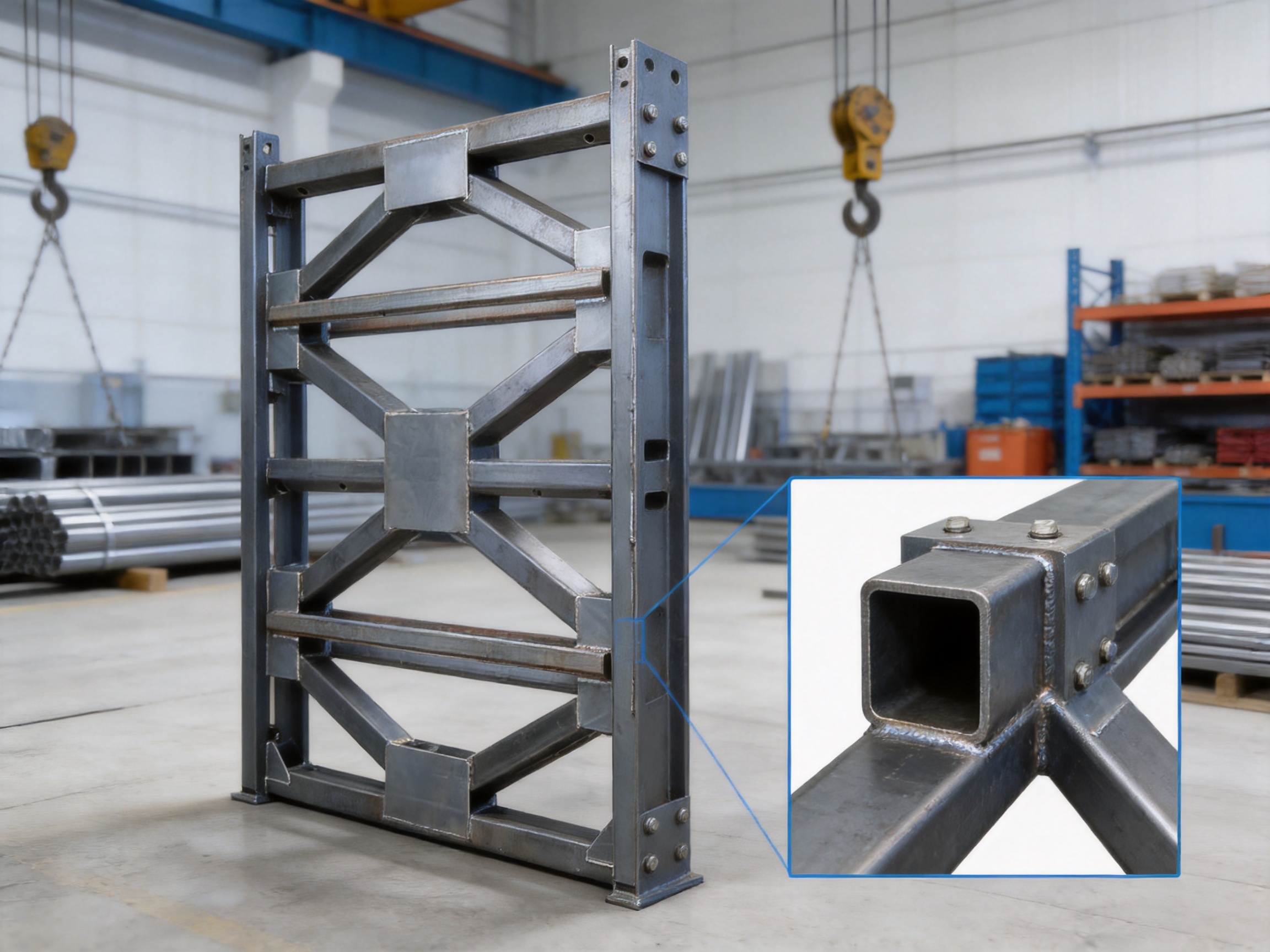
Unlike ordinary panels that rely primarily on conventional channel sections, the reinforced design uses rectangular tubes for the vertical and diagonal members. The channel steel is further strengthened with externally attached steel plates. This configuration improves the load-transfer path through the panel, increases structural rigidity, and supports higher performance under demanding bridge loading conditions.
With an overall bending moment of 1,593.2 kilonewton meters and a shear force of 384.6 kilonewtons, the reinforced panel provides a significant performance improvement compared with the corresponding conventional configuration. The stated bending performance is approximately 1.54 times higher, while the shear performance is approximately 1.73 times higher. These improvements give designers and contractors greater flexibility when selecting panel arrangements for different spans, traffic requirements, site conditions, and construction methods.
The panel is manufactured from Q355B structural steel and has outer dimensions of 3,163 by 2,234 by 176 millimeters. Its center-distance dimensions are 3,048 by 2,134 millimeters, allowing it to work with standardized modular bridge layouts and compatible Bailey bridge accessories. The result is a practical combination of structural strength, modularity, transportability, and rapid erection.
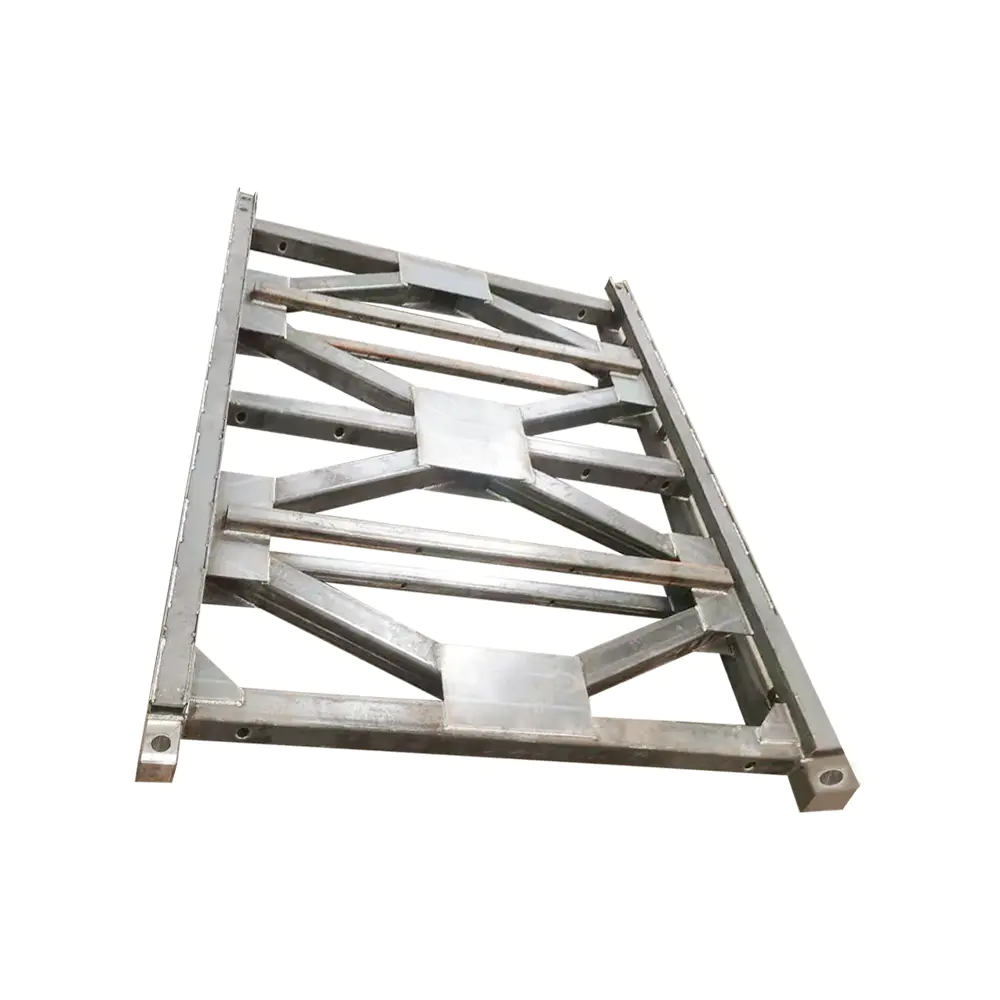
ZK-Bailey Bridge Panel
1. The Role of a Bailey Bridge Panel in Modular Bridge Construction
A Bailey bridge is assembled from prefabricated steel components rather than constructed entirely on site. Its main advantages are the ability to transport components in manageable units, assemble them with commonly available lifting and connection equipment, and adapt the completed structure to different span and loading requirements. Within this system, the bridge panel functions as a principal truss section.
Several panels may be connected longitudinally to form the required bridge length and laterally to create the desired bridge width and structural arrangement. Depending on the design, panels can be installed in single, double, triple, or other reinforced configurations. Additional components, such as transoms, deck units, sway braces, end posts, bracing frames, ramps, and walkways, complete the bridge system.
The panel must therefore satisfy more than a single strength requirement. It must also have accurate dimensions, reliable connection points, stable geometry, good weld quality, resistance to repeated handling, and compatibility with other standardized bridge parts. A panel that performs well in a laboratory but lacks dimensional consistency can create major difficulties during field assembly. For this reason, manufacturing precision is as important as the nominal material strength.
The ZK-Bailey Bridge Panel is developed around these practical requirements. Its dimensions are based on a standardized modular format, while its reinforced members provide improved performance in the areas most critical to bridge truss behavior: bending and shear. This makes the panel suitable for modular bridge systems that must be erected efficiently without compromising structural reliability.
2. Reinforced Structural Configuration
Rectangular Tube Vertical Members
The vertical members of the panel use rectangular tubes instead of relying only on conventional open sections. Rectangular tubes offer a closed structural shape with favorable resistance to bending about multiple axes. They also provide a stable profile for transferring forces between the upper and lower chords and for resisting local deformation.
In a bridge truss, vertical members transfer forces between the chords and diagonal members. They may experience compression, tension, bending, or combinations of these actions depending on their position in the span and the applied load pattern. The use of rectangular tubes can improve geometric stability and reduce the vulnerability of the member to certain forms of local distortion.
A closed or partially closed tubular profile can also provide a more consistent external surface for handling, coating, and inspection. The rectangular shape is practical for fabrication because it can be cut, positioned, and welded using repeatable production procedures. When produced with appropriate dimensional controls, the tubes help maintain the overall panel geometry required for accurate site assembly.
Rectangular Tube Diagonal Members
Diagonal members are fundamental to the truss action of a Bailey panel. They direct load effects between the upper and lower chords and help convert bending actions in the completed bridge into axial forces within the truss members. Because diagonal members can alternate between tension and compression under different loading conditions, their cross-sectional stability is important.
The rectangular tube diagonal members used in the reinforced panel provide a robust configuration for these force reversals. They are designed to work as part of an integrated truss rather than as isolated components. Their geometry, connection locations, and relationship with the vertical members are controlled during fabrication to support consistent load transfer throughout the panel.
For bridge contractors, this configuration offers practical benefits. A stable diagonal profile is easier to align during assembly, less likely to suffer damage from ordinary handling, and better suited to repeated use in projects where components are dismantled and redeployed. These features are particularly valuable for temporary bridges, emergency access structures, construction crossings, and leased bridge systems.
Externally Attached Reinforcing Plates
The channel steel is reinforced with externally attached steel plates. This detail increases the effective structural capacity of the channel section and strengthens areas that may be exposed to high stress concentrations. The plates also contribute to improved rigidity and help the panel maintain its intended geometry under load.
External reinforcement is an efficient way to upgrade the performance of a modular steel component without abandoning the dimensions and connection logic of an established bridge system. It allows the manufacturer to improve capacity while preserving the advantages of standardized fabrication and field interchangeability. This is important for users who already operate Bailey bridge accessories and want enhanced panel performance without changing the entire bridge construction method.
The reinforcing plates must be correctly sized, positioned, fitted, and welded. Poorly aligned plates can create eccentricity, uneven force transfer, or local stress concentrations. A professional manufacturing process therefore includes material preparation, accurate positioning, controlled welding, dimensional inspection, and surface treatment after fabrication.
3. Verified Performance Advantages
The most notable technical advantage of the reinforced panel is its improved resistance to bending and shear. The overall structural bending moment is stated as 1,593.2 kilonewton meters. This represents a 1.54-fold improvement in performance compared with the referenced conventional panel arrangement.
Bending resistance is central to bridge design because a loaded span naturally develops bending effects. Vehicle traffic, construction equipment, uneven loading, impact effects, and changing support conditions can all influence the bending demand placed on a modular bridge. A panel with higher bending performance gives the bridge designer more capacity for selecting a suitable panel combination and managing span requirements.
The stated shear force is 384.6 kilonewtons, representing a 1.73-fold improvement in performance. Shear effects are especially important near supports, at panel connections, around transom locations, and in areas where concentrated loads are introduced into the structure. Improved shear capacity can help the system manage support reactions and local load transfer more effectively.
These figures should be used together with a complete structural design. They are not a substitute for project-specific calculations, foundation checks, connection verification, fatigue assessment, or compliance with applicable bridge codes. However, they provide a clear indication that the reinforced configuration is intended for more demanding applications than a basic, unreinforced panel.
Item |
Specification or Performance |
Practical Significance |
Material |
Q355B structural steel |
High-strength structural material suitable for engineered steel bridge components |
Outer dimensions |
3,163 × 2,234 × 176 mm |
Defines the external panel envelope for transport, stacking, and assembly |
Center-distance dimensions |
3,048 × 2,134 mm |
Supports modular bridge layout and compatibility with standardized arrangements |
Structural bending moment |
1,593.2 kN·m |
Improved resistance to span bending effects |
Structural shear force |
384.6 kN |
Improved resistance to shear and concentrated force transfer |
Vertical members |
Rectangular tubes |
Improved geometric stability and multi-axis resistance |
Diagonal members |
Rectangular tubes |
Supports stable truss action and reliable force transfer |
Channel reinforcement |
Externally attached steel plates |
Increases stiffness and strengthens the channel assembly |
4. Advantages Over Conventional and Competing Panels
Higher Structural Efficiency
The combination of rectangular tube members and externally attached reinforcement plates creates a more capable structural assembly than a basic panel made from conventional unreinforced channel sections. The improved bending and shear performance can help reduce the need for excessive reinforcement elsewhere in the bridge system, subject to engineering verification.
Higher panel capacity may allow a project to use a more efficient arrangement of panels for a given span and loading condition. This can influence material consumption, installation time, and transport planning. The exact benefit depends on the design, but a stronger primary panel gives engineers more options when developing a bridge configuration.
Improved Resistance to Deformation
Modular steel components are frequently handled, stacked, transported, lifted, and connected several times during their service life. A rigid and well-reinforced panel is better positioned to retain its shape during these operations. Dimensional stability is important because even moderate distortion may complicate connection alignment or affect the fit of transoms and bracing components.
The reinforced design helps preserve the panel’s structural geometry under service loads and handling conditions. This is especially useful for rental fleets, emergency stockpiles, and contractors who move the same components between different sites.
Compatibility with Standardized Bridge Systems
A major advantage of the panel is that enhanced performance does not require the abandonment of modular bridge principles. The center-distance dimensions follow a standardized format, allowing the panel to be incorporated into planned Bailey bridge arrangements and related engineered structures.
Compatibility can reduce the need for entirely new equipment inventories. Contractors may be able to use existing erection methods, lifting procedures, deck arrangements, and accessory components, provided that the complete system has been checked for compatibility and capacity. This lowers the disruption associated with upgrading from a conventional panel to a reinforced option.
Fast Field Assembly
Bailey bridge systems are valued for rapid erection. Panels arrive at the site as prefabricated units, and the bridge can be assembled using a sequence of bolting, bracing, lifting, launching, and decking operations. Compared with a fully site-fabricated steel bridge, this method reduces the amount of cutting, welding, and fitting required in the field.
The reinforced panel supports this advantage by arriving as a finished, factory-controlled structural unit. The site team can focus on foundation preparation, component organization, connections, launching, decking, and safety inspection rather than performing complex member fabrication on the bridge site.
Wide Application Range
Reinforced Bailey panels can support many types of infrastructure work. They may be used in temporary traffic diversions, emergency restoration after floods or earthquakes, access routes for construction equipment, municipal crossings, water conservancy projects, railway-related works, and national defense readiness applications.
Depending on the bridge design, modular panels can also serve in guide beams, tower columns, gantry support structures, bridge erection machines, climbing formwork systems, and other temporary or semi-permanent steel structures. Their value lies in their adaptability: the same basic panel concept can be configured for different structural roles when appropriate engineering and connection details are provided.
5. Material Selection: Q355B Structural Steel
The panel is manufactured from Q355B steel, a structural steel grade commonly selected for engineered steel components where strength, weldability, and fabrication reliability are required. The grade designation indicates a specified yield-strength category, while the final suitability of the material depends on thickness, certification, chemical composition, mechanical test results, and the requirements of the project specification.
Material selection affects the entire service life of a bridge panel. The steel must withstand static loads, repeated traffic effects, handling operations, environmental exposure, and connection forces. It must also be compatible with the welding process selected by the manufacturer.
For responsible procurement, buyers should request material certificates and quality documentation appropriate to the project. These may include mill certificates, mechanical property reports, dimensional inspection records, welding quality records, coating information, and final inspection documents. A professional manufacturer should be able to organize these records according to the customer’s technical requirements.
Q355B is not, by itself, a complete design solution. The panel’s capacity depends on the full geometry, member arrangement, welds, bolts, connection plates, support conditions, load combinations, corrosion allowance, and construction sequence. The strength of the material must therefore be considered as one part of an integrated structural system.
6. Advanced Manufacturing Process
Engineering and Production Planning
Manufacturing begins with technical review and production planning. The company evaluates the panel drawings, dimensions, material requirements, connection details, reinforcement layout, welding sequence, and inspection criteria before fabrication begins. This stage helps identify potential interference between members and confirms that the production process can maintain the specified geometry.
For customized projects, technical planning may also include review of the intended bridge span, traffic class, deck system, environmental conditions, erection method, and quantity requirements. Early coordination reduces the risk of producing components that are difficult to integrate with the rest of the bridge system.
Material Receiving and Identification
Steel plates, rectangular tubes, channel sections, and other materials are received and checked against the approved specifications. Material identification is maintained through cutting and assembly so that the finished components can be traced to the relevant production records.
Incoming inspection may include checking surface condition, thickness, dimensions, straightness, grade documentation, and visible defects. Materials that do not meet the required specifications should be segregated for review rather than introduced into the main production flow.
Precision Cutting and Preparation
Accurate cutting is essential because the panel contains multiple members that must meet at specific locations. Cutting equipment is selected according to the material thickness and required tolerances. Edges are cleaned and prepared before assembly, and any burrs, slag, or irregularities that could affect fit-up are removed.
Correct preparation also improves welding quality. Clean and properly prepared surfaces reduce the likelihood of inclusions, lack of fusion, excessive spatter, or irregular weld profiles. The production team can then position the members more accurately and maintain a consistent assembly sequence.
Jig-Based Assembly
Jigs and fixtures help control the position of the rectangular tube members, channel steel, and reinforcement plates during fabrication. They reduce manual measurement errors and allow repeated panels to be produced with consistent geometry.
A controlled fixture system is especially valuable for modular bridge components because interchangeability is a core requirement. The connection holes, panel edges, member centers, and reinforcement positions must remain within the agreed tolerances so that components can be assembled at different sites and in different combinations.
Controlled Welding
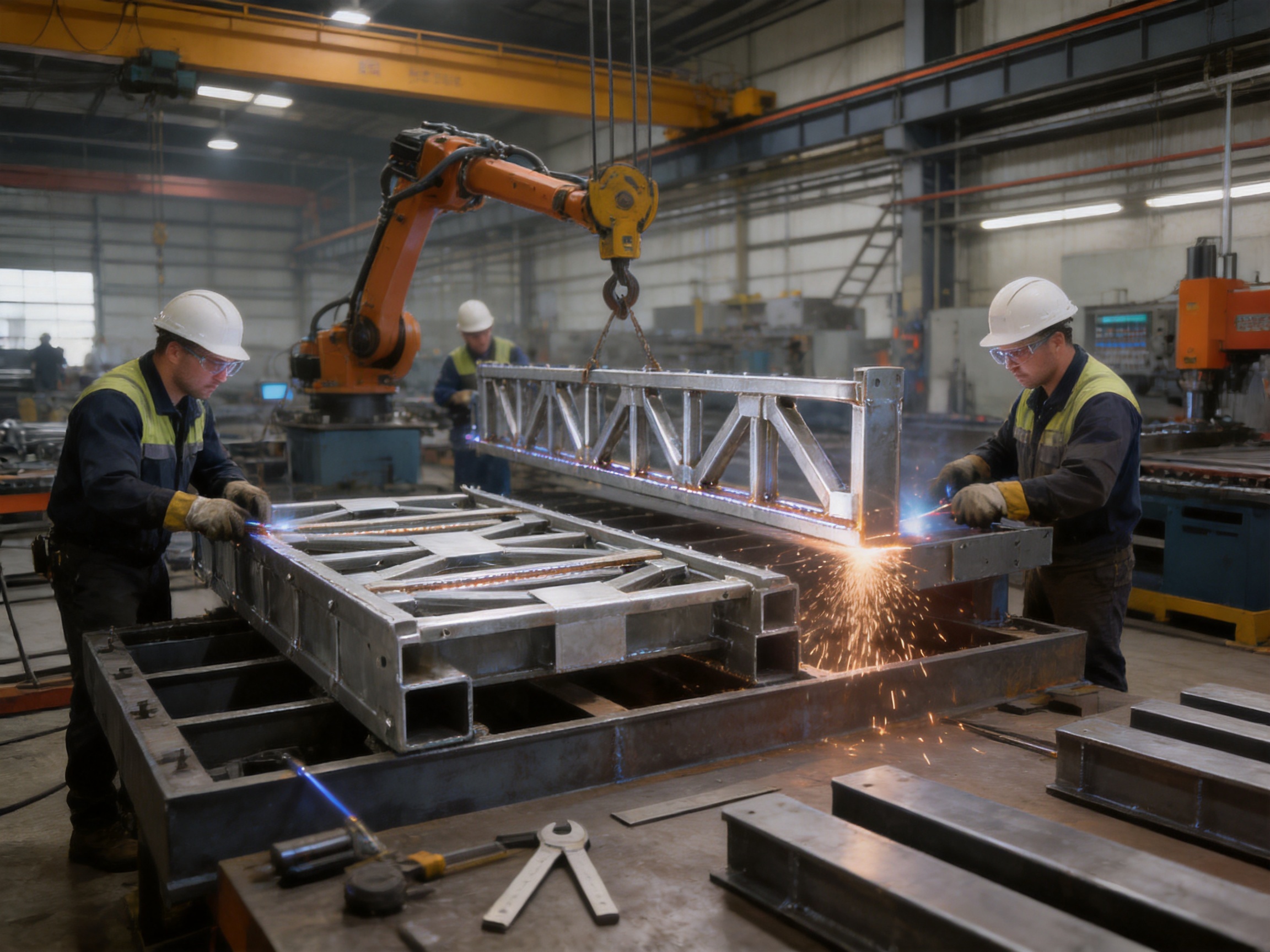
Welding joins the primary members and the externally attached reinforcing plates into a unified structural panel. The welding procedure should be selected according to the steel grade, member thickness, joint design, and production environment. Parameters such as current, voltage, travel speed, preheating, interpass temperature, and consumable selection may be controlled according to the approved welding procedure.
Welders should be appropriately qualified for the work they perform. The welding sequence is planned to limit distortion and distribute heat input. Where necessary, temporary restraints or balanced welding sequences may be used to maintain panel flatness and dimensional accuracy.
Quality control may include visual inspection and, where required by the project or applicable standards, nondestructive testing such as magnetic particle, ultrasonic, dye penetrant, or radiographic examination. The inspection method depends on the joint type, structural importance, customer requirements, and applicable code.
Dimensional Inspection
After welding, each panel is checked against the required outer dimensions and center-distance dimensions. The inspection may include panel length, height, thickness, member alignment, connection-hole location, diagonal geometry, straightness, squareness, and local distortion.
Dimensional control provides two important benefits. First, it confirms that the panel can be integrated with other bridge components. Second, it identifies deformation or fabrication problems before coating and shipment. Corrective action is more efficient at the factory than after the component reaches a remote construction site.
Surface Treatment and Protection
Steel bridge panels may be exposed to rain, humidity, mud, salt, industrial pollutants, and repeated wet-dry cycles. Surface treatment is therefore an important part of long-term durability. Depending on the project specification, the steel may be cleaned, blasted, primed, painted, or otherwise protected against corrosion.
Surface preparation must be compatible with the selected coating system. Weld spatter, sharp edges, oil, scale, and contaminants should be removed before coating. Coating thickness and visual coverage can be checked during production, while damaged areas caused by handling can be repaired before shipment or at the construction site according to the maintenance procedure.
Final Inspection and Shipment Preparation
Before delivery, the manufacturer reviews the completed panel against the purchase order, approved drawings, inspection requirements, and packing plan. Components are checked for identification, quantity, dimensions, connection details, surface condition, and visible damage.
Packaging and loading are planned to prevent deformation during transport. Panels should be supported at suitable points, restrained against movement, and separated where necessary to protect coated surfaces. Proper loading is especially important for bridge components because they may be transported over long distances and unloaded using cranes or other lifting equipment.
7. Quality Management and Manufacturing Strengths
Zhenjiang Jinhao Road & Bridge Supporting Engineering Co., Ltd. has developed from a company involved in construction materials, industrial materials, and metal processing materials into a comprehensive enterprise serving the bridge engineering sector. Established in 2017, the company focuses on the design, manufacture, erection, and leasing of Bailey bridges, bridge launching gantry systems, hanging baskets, pier formwork, and related steel formwork products.
This broader product experience is valuable because a Bailey bridge panel is rarely used as an isolated product. It forms part of a larger system that may include bridge launching equipment, temporary support structures, formwork, deck components, and erection accessories. A manufacturer familiar with these related products can better understand how panel geometry and strength affect the complete construction method.
The company’s production capabilities include Type 321 Bailey truss sections, HD200 and Type 200 Bailey truss sections, triangular and diamond hanging baskets, bridge steel formwork, and other engineered steel structures. This product range demonstrates experience with modular trusses, heavy steel fabrication, construction support systems, and project-specific structural requirements.
Quality management should be considered across the entire production chain. It begins with design review and material selection, continues through cutting, assembly, welding, inspection, coating, and packaging, and concludes with technical support during delivery and erection. This system-oriented approach is more reliable than focusing only on the appearance of the finished panel.
For international customers, documentation and communication are also important manufacturing strengths. Clear drawings, packing lists, inspection records, installation guidance, and technical responses help reduce uncertainty during procurement and construction. A supplier that can coordinate design planning, fabrication, delivery, and site support can provide greater value than a supplier that only offers uncoordinated steel components.
8. Applications in Temporary and Semi-Permanent Bridges
Emergency Transportation
After floods, landslides, earthquakes, bridge failures, or other disasters, restoring transportation quickly is often a priority. A modular Bailey bridge can provide an interim crossing while a permanent bridge is repaired or rebuilt. Reinforced panels are particularly useful when emergency routes must support construction vehicles, supply trucks, rescue equipment, or other demanding traffic.
The ability to store panels in advance and deploy them rapidly makes modular bridge systems suitable for emergency preparedness programs. Components can be inspected, maintained, and organized before an incident occurs, allowing the response team to focus on foundations, access, and erection rather than waiting for extensive fabrication.
Construction Access
Large infrastructure projects frequently require temporary crossings over rivers, drainage channels, roads, railways, or excavation areas. A reinforced Bailey bridge can provide access for cranes, concrete trucks, excavators, and material transport. It can also support temporary detours while permanent structures are under construction.
Because the bridge is assembled from prefabricated components, the contractor may be able to adjust the crossing arrangement as the project progresses. After the access requirement ends, the bridge can be dismantled and reused at another location, supporting more efficient utilization of the equipment fleet.
Municipal and Water Conservancy Projects
Municipal works often take place in congested environments where traffic disruption must be minimized. A modular bridge can be installed as a temporary diversion or access route during road reconstruction, drainage improvement, pipeline work, or bridge replacement.
Water conservancy projects may also require temporary crossings over channels, irrigation systems, reservoirs, and construction zones. The bridge panel’s modular design allows the structure to be adapted to the site layout, provided that the hydraulic, geotechnical, and structural conditions are fully evaluated.
Railway and Specialized Engineering
Railway construction and maintenance can involve demanding logistics, restricted access, and short work windows. Modular steel structures can be used for temporary access, equipment movement, construction staging, and support operations. The panel may also form part of a guide beam or launching arrangement when integrated into an engineered bridge erection system.
Such applications require detailed coordination with railway operating requirements, clearance limits, vibration considerations, construction sequencing, and safety procedures. The panel provides the structural building block, while the complete system design determines the final application.
9. Use in Bridge Launching and Temporary Support Systems
Bailey bridge panels are not limited to completed road bridges. Their standardized truss geometry allows them to be incorporated into bridge launching gantries, guide beams, tower columns, gantry hangers, arch support arrangements, and climbing formwork systems.
In a launching operation, the panel may form part of a temporary nose, guide structure, or support frame that assists the main bridge in moving across a gap. The reinforced configuration can be useful where the temporary structure must resist significant bending and shear during launching. However, every launching arrangement must be analyzed for the changing load path as the bridge moves from one support condition to another.
Temporary support structures may experience loads that differ substantially from those in the final bridge. Eccentric lifting forces, wind, impact, construction equipment, uneven support settlement, and temporary bracing conditions can create critical load cases. The reinforced panel gives the system a stronger component, but the engineer must still verify the complete configuration and erection sequence.
10. Installation and Field Assembly Considerations
Successful field installation begins with site preparation. Foundations, abutments, temporary supports, access roads, drainage, lifting areas, and component storage zones should be prepared before the panels arrive. The site team should confirm that the support locations match the approved bridge design and that the ground can safely support erection equipment.
Panels should be inspected upon delivery. The inspection should look for bent members, damaged connection areas, coating damage, missing components, transport deformation, and contamination that could affect bolted connections or welding repairs. Any significant defect should be recorded and reviewed before the panel is incorporated into the bridge.
During assembly, panels are positioned according to the erection drawings and connected using the specified bolts, pins, braces, transoms, and other components. Connection fasteners must be installed and tightened according to the applicable requirements. Temporary bracing should not be removed until the permanent or designated structural arrangement is complete.
Launching requires additional planning. The bridge may be assembled behind an abutment and pushed or pulled across the gap, or it may be lifted into position in sections. The chosen method depends on span length, site access, water conditions, available equipment, and the capacity of temporary supports. The launching sequence must account for the changing reactions and bending effects experienced by the bridge during movement.
After the panel assembly is complete, the deck, guardrails, ramps, walkways, and traffic-control features are installed. A final inspection should verify panel connections, bracing, deck seating, support conditions, clearances, alignment, and safety equipment before the bridge is opened for use.
11. Maintenance, Inspection, and Reuse
The reusable nature of Bailey bridge panels is one of their main economic advantages. However, reuse requires disciplined inspection and maintenance. Panels should be examined after dismantling and before redeployment. Particular attention should be given to connection holes, welded joints, chord members, diagonal members, reinforcement plates, lifting points, and areas exposed to impact.
Corrosion should be removed and repaired according to the coating and maintenance specification. Local coating damage may be treated with compatible repair materials, while widespread corrosion or section loss may require engineering evaluation. Components with significant deformation, cracking, or damaged connection areas should be quarantined until they have been assessed.
Storage conditions also affect service life. Panels should be stored on stable supports above standing water and arranged to permit drainage and inspection. Direct contact with soil, chemicals, or corrosive debris should be avoided. Proper stacking reduces the risk of accidental bending and makes future inventory checks more efficient.
Maintenance records can include panel identification, project history, inspection dates, repairs, coating work, and service conditions. Such records help owners make informed decisions about reuse and replacement. They also support traceability when panels are leased or shared among several projects.
12. Selecting a Reinforced Bailey Bridge Panel
Project owners and contractors should evaluate the panel as part of a complete bridge solution rather than selecting it based only on nominal dimensions. The first consideration is the required span and loading. Vehicle type, traffic frequency, construction equipment, pedestrian use, impact risk, and environmental conditions all influence the required arrangement.
The second consideration is compatibility. The panel should match the intended transoms, deck system, bracing, end posts, launching equipment, and connection accessories. Center-distance dimensions are particularly important because they determine how the panels align with other modular components.
The third consideration is manufacturing quality. Buyers should ask about material certificates, welding procedures, inspection plans, dimensional tolerances, coating systems, and packaging methods. They should also confirm whether the supplier can provide technical drawings, installation support, replacement parts, and customized fabrication where required.
The fourth consideration is lifecycle value. A panel with stronger structural performance, reliable geometry, durable protection, and good reuse potential may deliver greater value than a lower-cost component that requires frequent repair or creates assembly delays. Procurement decisions should therefore consider transportation, erection, maintenance, dismantling, storage, and redeployment costs.
13. Engineering Responsibility and Safety
A reinforced panel is a high-performance structural component, but safe bridge operation depends on the complete engineered system. The bridge designer must verify the panel arrangement, longitudinal and lateral stability, connections, deck behavior, support reactions, foundations, approach conditions, wind effects, impact loads, fatigue considerations, and construction sequence.
Load ratings should be established for the actual bridge configuration. The number of panels, panel spacing, span length, deck type, support layout, bracing arrangement, and traffic restrictions can all affect capacity. The stated bending moment and shear force values should be treated as product performance information and incorporated into project-specific calculations by qualified professionals.
Construction personnel should follow approved erection procedures and use appropriate personal protective equipment. Lifting operations require suitable cranes, slings, spreader arrangements, exclusion zones, and communication protocols. Work over water, roads, railways, or unstable ground requires additional controls.
Before opening a bridge to traffic, the completed structure should be inspected by competent personnel. Any temporary erection equipment, incomplete bracing, loose fasteners, damaged coatings, or unsuitable approach conditions should be corrected. Traffic management should clearly identify vehicle restrictions, speed limits, width limits, and other operating requirements.
14. Why Choose an Integrated Bridge Engineering Supplier
Purchasing a reinforced panel from an integrated bridge engineering supplier can simplify project coordination. Instead of dealing separately with a steel fabricator, a bridge designer, an erection contractor, and an equipment rental provider, customers may obtain a coordinated package of products and services.
Zhenjiang Jinhao provides design, manufacturing, erection, leasing, technical support, and quality management related to Bailey bridges and engineered steel structures. Its experience with bridge launching gantries, hanging baskets, pier formwork, and bridge steel formwork strengthens its ability to understand temporary works and construction support requirements.
This integrated approach is particularly useful for customers working on projects with demanding schedules. The supplier can assist with system planning, product selection, customized fabrication, component organization, and erection guidance. Such cooperation reduces the possibility that individual components will be technically acceptable but difficult to assemble into a practical working system.
The company serves contractors, government organizations, infrastructure developers, and engineering companies. Its product range and project-oriented services support applications in transportation engineering, municipal construction, water conservancy, railway engineering, and emergency infrastructure.
15. Q&A
Q1: What is the primary purpose of the ZK-Bailey Bridge Panel?
The panel serves as a main truss component in modular Bailey bridge systems. Multiple panels can be connected with compatible bridge components to form temporary, emergency, semi-permanent, or construction access bridges.
Q2: What makes this panel different from a conventional Bailey panel?
The reinforced design uses rectangular tubes for the vertical and diagonal members, while the channel steel is strengthened with externally attached steel plates. This configuration improves structural stiffness and increases the stated bending and shear performance.
Q3: What is the panel’s bending performance?
The stated overall structural bending moment is 1,593.2 kilonewton meters. This is described as a 1.54-fold improvement compared with the referenced conventional performance.
Q4: What is the panel’s shear performance?
The stated shear force is 384.6 kilonewtons, representing a 1.73-fold improvement compared with the referenced conventional performance.
Q5: What material is used to manufacture the panel?
The panel is manufactured from Q355B structural steel. Customers should request the applicable material certificates and project-specific documentation during procurement.
Q6: What are the panel dimensions?
The outer dimensions are 3,163 by 2,234 by 176 millimeters. The center-distance dimensions are 3,048 by 2,134 millimeters.
Q7: Can the reinforced panel be used with existing Bailey bridge components?
Its standardized modular dimensions are intended to support compatibility with related Bailey bridge arrangements. However, the complete bridge configuration must be checked to confirm compatibility between panels, transoms, braces, deck units, connections, and launching equipment.
Q8: Is the panel suitable for permanent bridges?
The panel is primarily suited to modular temporary, emergency, semi-permanent, and construction-related bridge systems. Whether it can be used in a long-term or permanent application depends on the project design, applicable standards, corrosion protection, inspection program, and approval requirements.
Q9: Can the panel be reused?
Yes, modular Bailey bridge panels are commonly designed for repeated use. Reuse depends on inspection results, deformation, corrosion, weld condition, connection-hole condition, coating quality, and compliance with the requirements of the next project.
Q10: What quality checks should buyers request?
Important records may include material certificates, approved drawings, welding procedure information, welder qualifications, dimensional inspection reports, nondestructive testing records where required, coating records, packing lists, and final inspection documents.
Q11: Can the manufacturer provide customized solutions?
The company provides customized fabrication, design and system planning, technical support, erection services, leasing, and quality management. Customization should be discussed according to the required span, loading, bridge width, environmental conditions, erection method, and applicable technical standards.
Q12: What applications are suitable for this panel?
Potential applications include emergency bridges, temporary road crossings, semi-permanent access bridges, municipal projects, water conservancy works, railway construction, construction access routes, guide beams, tower columns, gantry support structures, bridge launching systems, and climbing formwork arrangements.
16. Conclusion
The ZK-Bailey Bridge Panel is designed to improve the performance of modular steel bridge systems while preserving the practical advantages of standardized Bailey bridge construction. Rectangular tube vertical and diagonal members provide a stable structural configuration, while externally attached steel plates reinforce the channel steel and strengthen the panel assembly.
Its stated structural bending moment of 1,593.2 kilonewton meters and shear force of 384.6 kilonewtons demonstrate a substantial improvement over the referenced conventional performance. Combined with Q355B steel, standardized dimensions, modular compatibility, and factory-controlled fabrication, these features make the panel suitable for demanding temporary and semi-permanent bridge applications.
The product’s value extends beyond its material and geometry. Reliable manufacturing, dimensional control, welding management, surface protection, inspection, packaging, and technical support are all essential to successful field performance. Zhenjiang Jinhao’s experience in Bailey bridges, launching gantries, hanging baskets, bridge formwork, and related engineered steel structures provides an integrated foundation for supplying both components and complete construction support solutions.
For contractors, infrastructure authorities, and engineering companies, the reinforced panel offers a practical path toward stronger, faster, and more adaptable modular bridge construction. Final selection and use should always be based on project-specific structural calculations, approved erection procedures, applicable standards, and inspection by qualified engineering personnel.
References
1. Modular steel bridge design principles and temporary bridge engineering practice.
2. Structural steel fabrication, welding, inspection, and dimensional control procedures.
3. Q355B structural steel material specifications and mechanical property requirements.
4. Bailey bridge assembly, launching, bracing, decking, and maintenance guidance.
5. Temporary works design principles for bridge construction and infrastructure projects.
6. Quality management practices for prefabricated steel bridge components.
7. Bridge loading, structural analysis, connection design, and construction-stage verification principles.
8. Corrosion protection, coating inspection, storage, and maintenance practices for fabricated steel structures.


 Français
 Español
 عربى