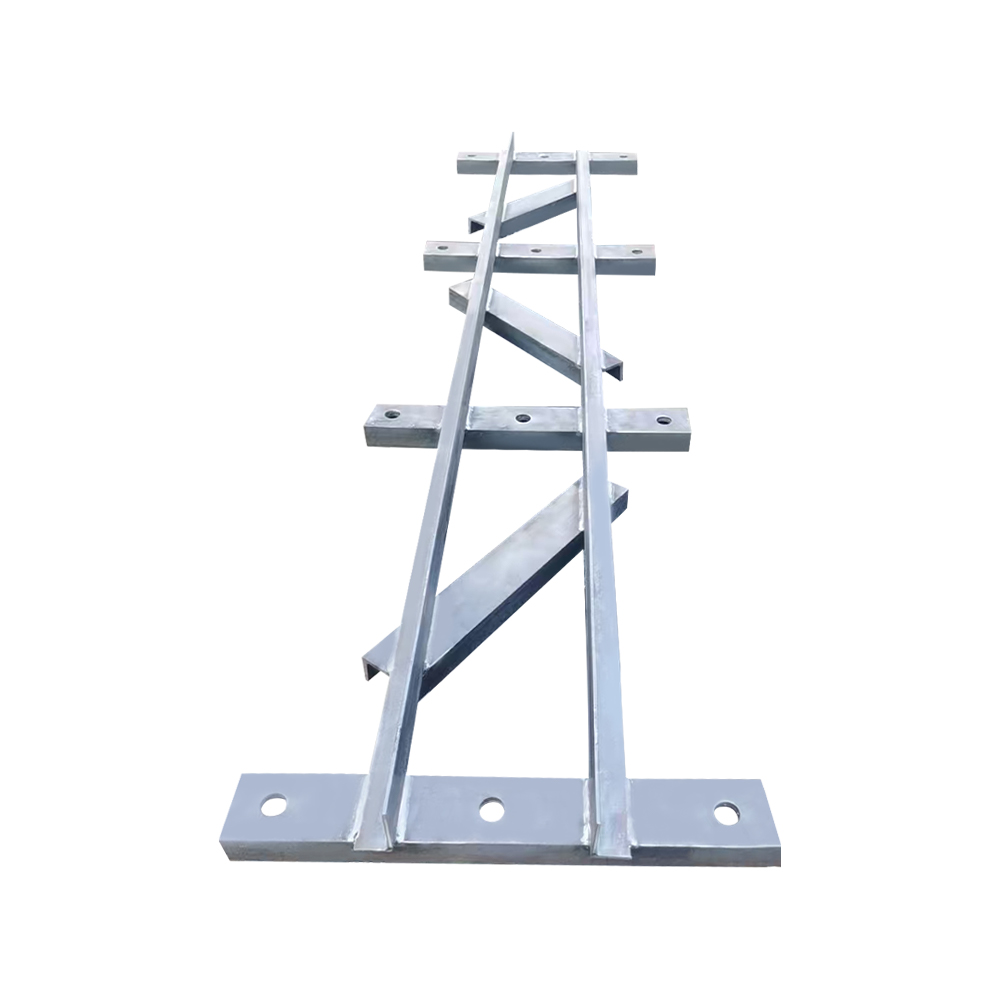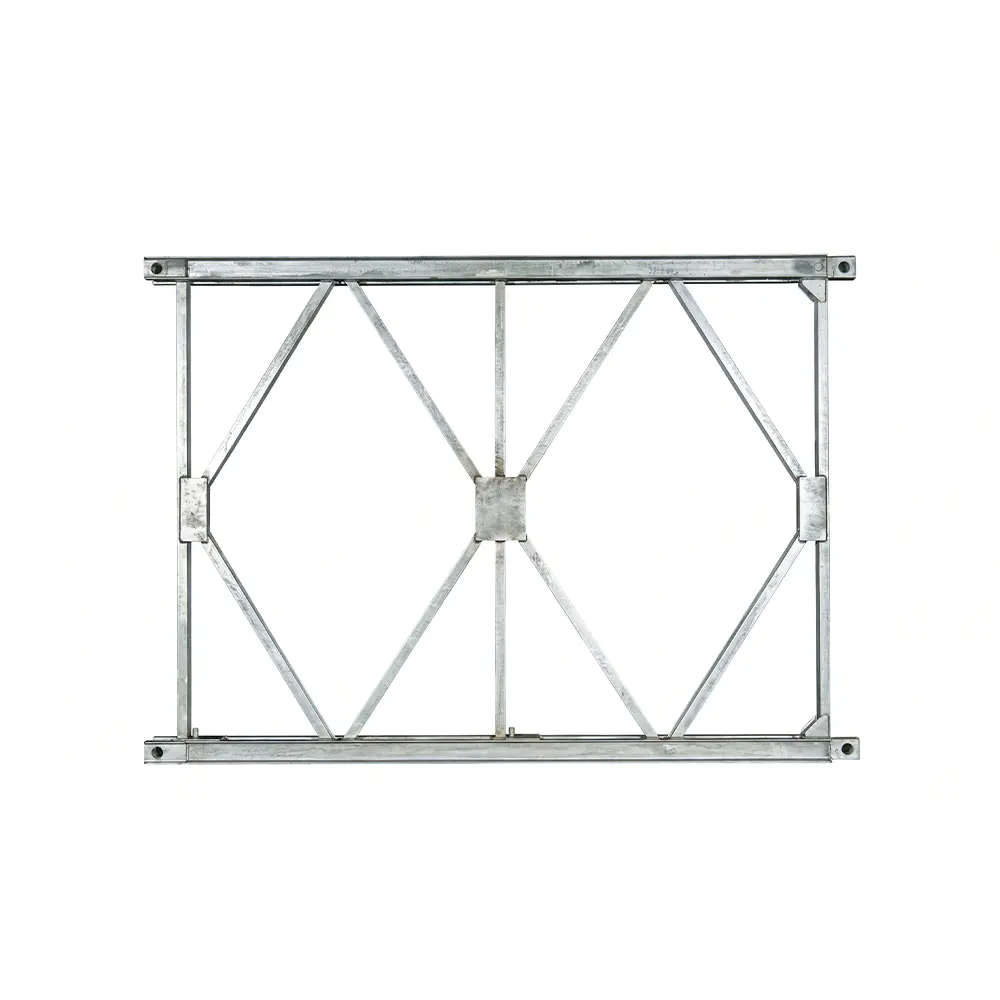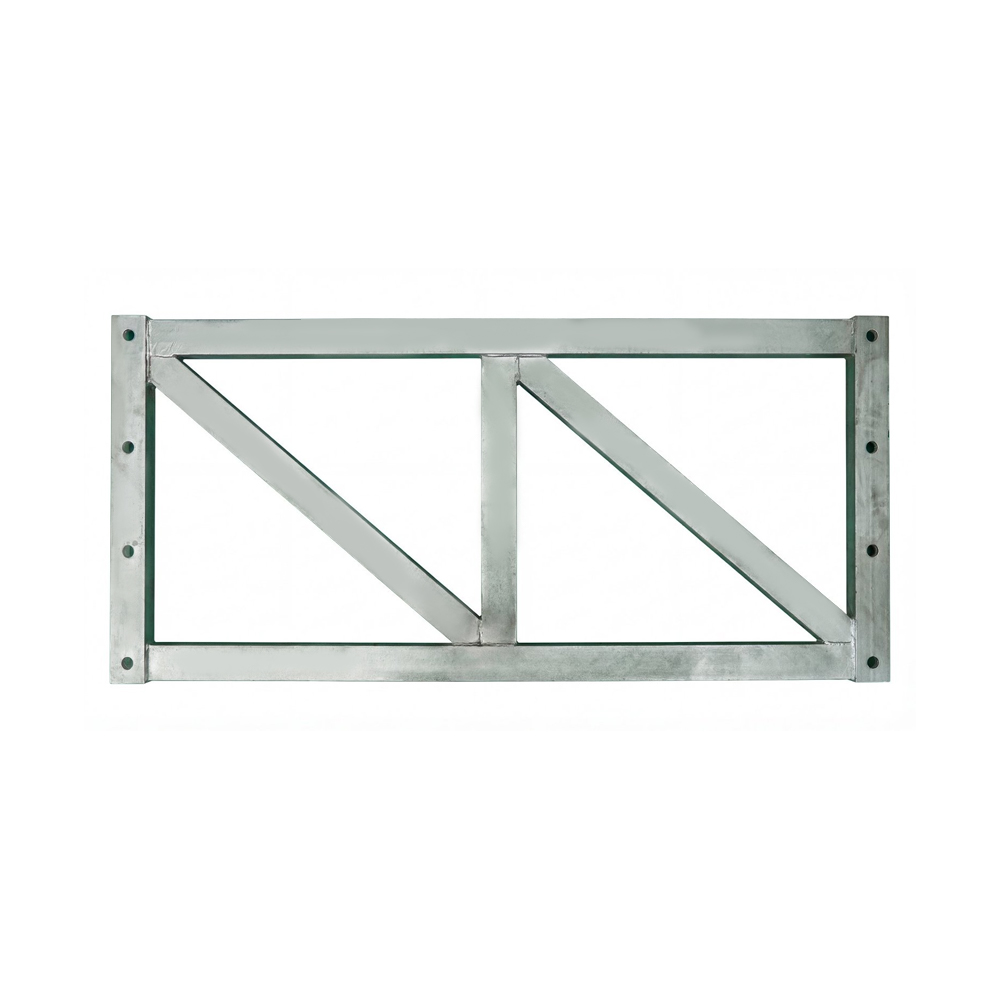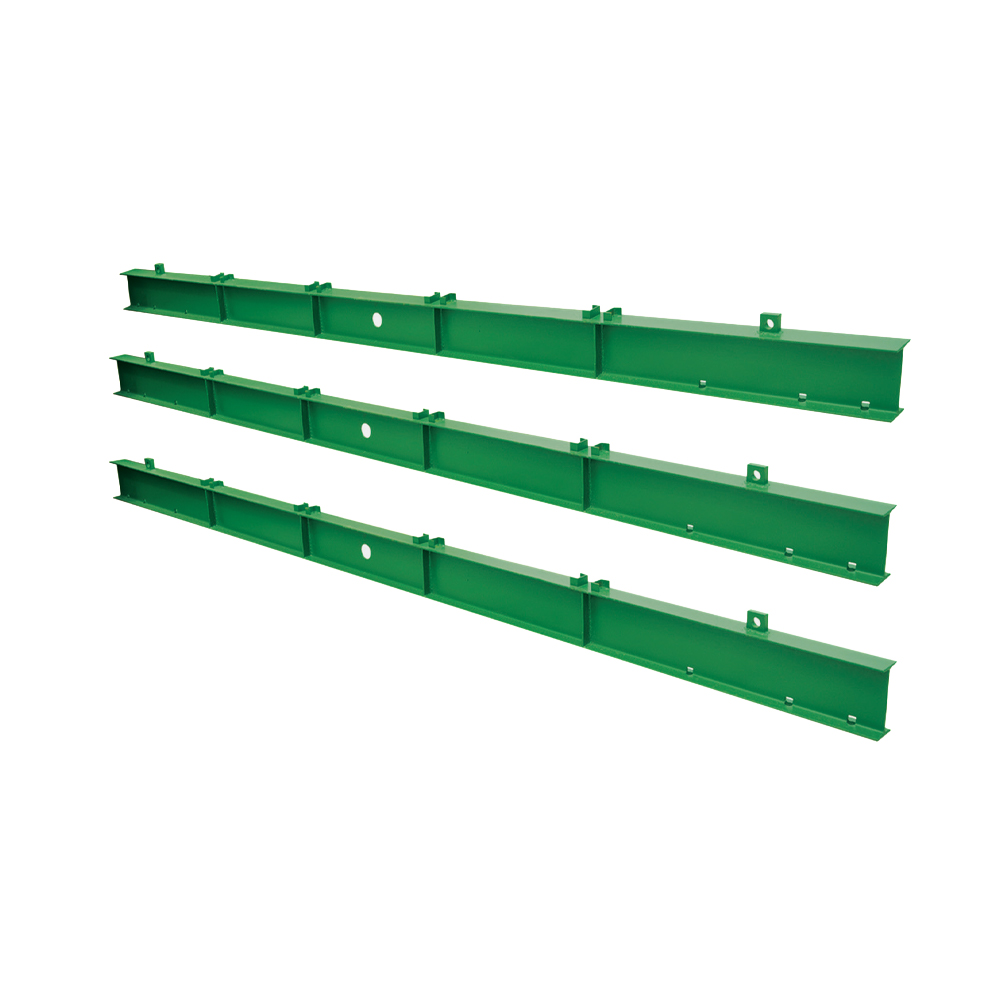
Temporary and semi-permanent bridge projects require components that combine structural reliability, dimensional accuracy, rapid installation, and practical adaptability. The Type HD200 crossbeam for Bailey bridges is designed to meet these demands as a critical transverse member within a modular steel bridge system. Manufactured from Q355B structural steel, the crossbeam provides a dependable load-transfer path between Bailey truss sections, bridge deck components, and supporting structural elements.
With available external dimensions of 5.8 meters, 6.2 meters, and 9.63 meters, the Type HD200 crossbeam can be selected for different bridge widths, structural arrangements, and engineering conditions. Its standardized configuration supports efficient assembly and interchangeability, while its upgraded strength and rigidity make it suitable for medium-to-heavy-duty applications. The product is intended for contractors, bridge specialists, infrastructure authorities, and engineering companies that need reliable prefabricated steel bridge components with practical fabrication and deployment advantages.
Unlike a conventional custom-fabricated beam that may require lengthy design, cutting, welding, inspection, and site adjustment for every project, a modular HD200 crossbeam is produced around repeatable dimensions and a coordinated bridge system. This approach helps shorten the preparation period, reduce uncertainty during installation, and simplify the replacement or expansion of bridge components. When properly designed, fabricated, erected, and inspected, it can support temporary bridges, emergency crossings, construction access bridges, and semi-permanent bridge structures.
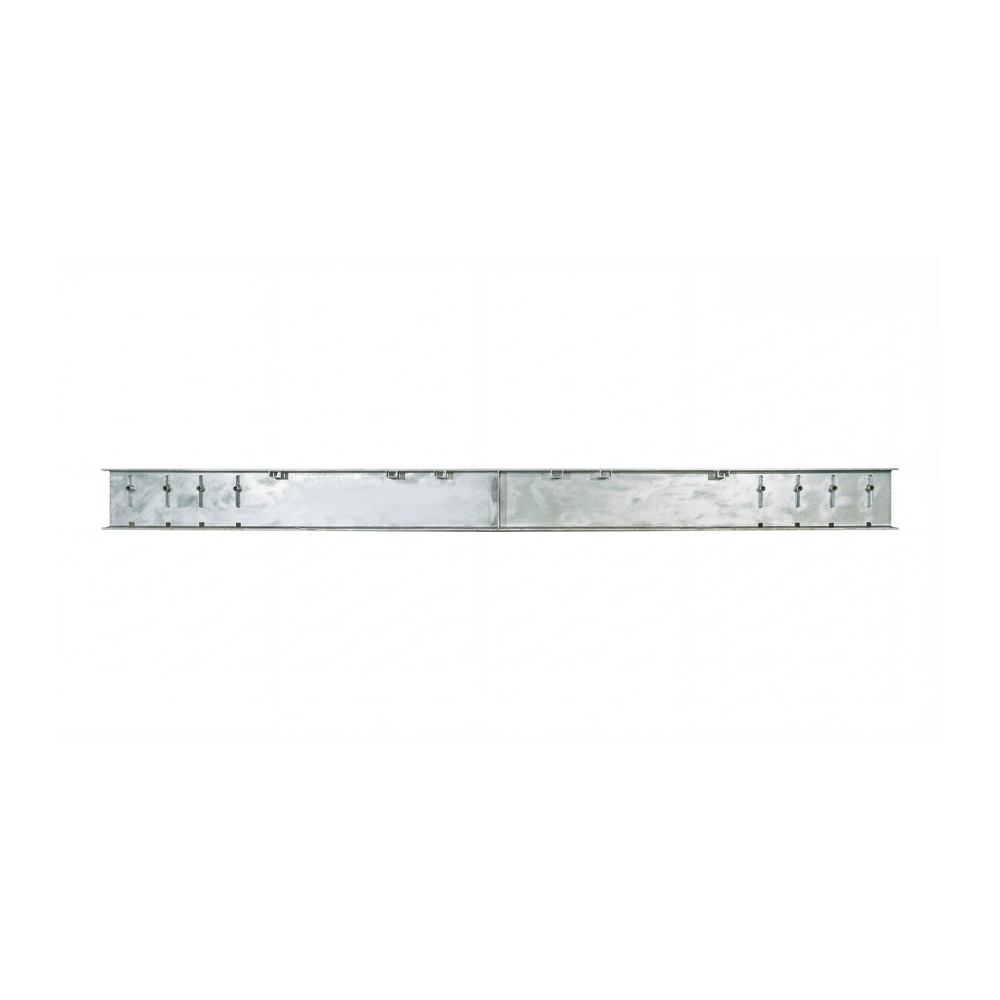
Type HD200 - Crossbeam For Bailey Bridge
1. Product Overview
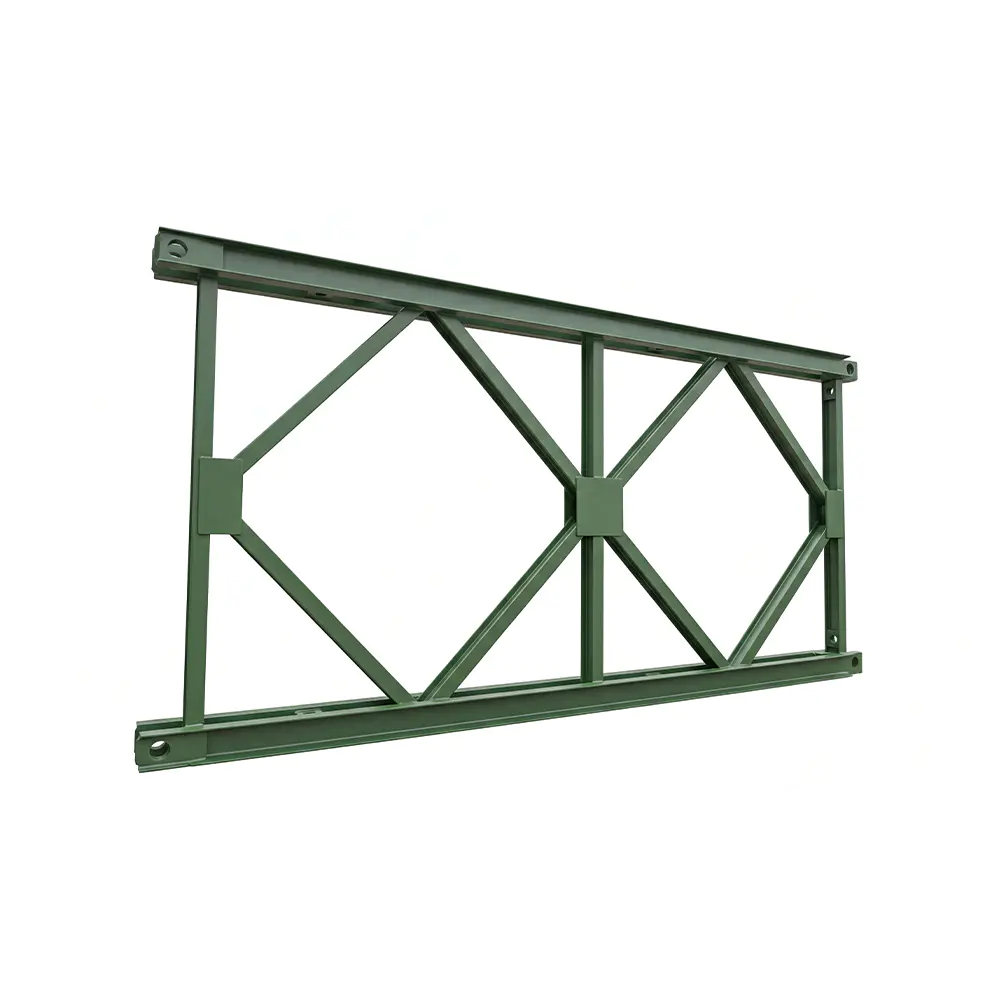
The Type HD200 crossbeam is a transverse steel member used as part of a Type 200 or HD200 Bailey bridge arrangement. In a completed bridge, crossbeams connect and support the longitudinal truss system while helping distribute deck loads across the bridge width. Depending on the structural design, crossbeams may work together with deck units, stringers, bracing systems, bearings, ramps, and other bridge accessories.
The principal role of the crossbeam is to provide a stable and accurately positioned support line for the bridge deck and associated components. Vehicle loads, construction equipment loads, pedestrian loads, and other service loads are transferred through the deck and supporting members to the crossbeams, then into the Bailey trusses, bearings, piers, abutments, or temporary supports. The crossbeam must therefore offer sufficient stiffness, connection accuracy, and material performance for the intended design conditions.
The Type HD200 crossbeam inherits the modular philosophy of prefabricated steel bridges. Components are manufactured in a controlled environment, transported to the project location, and assembled using standardized connection methods. This can reduce dependence on extensive site welding and minimize the need for complicated field fabrication. It also allows bridge systems to be dismantled, relocated, repaired, reconfigured, or stored for later use.
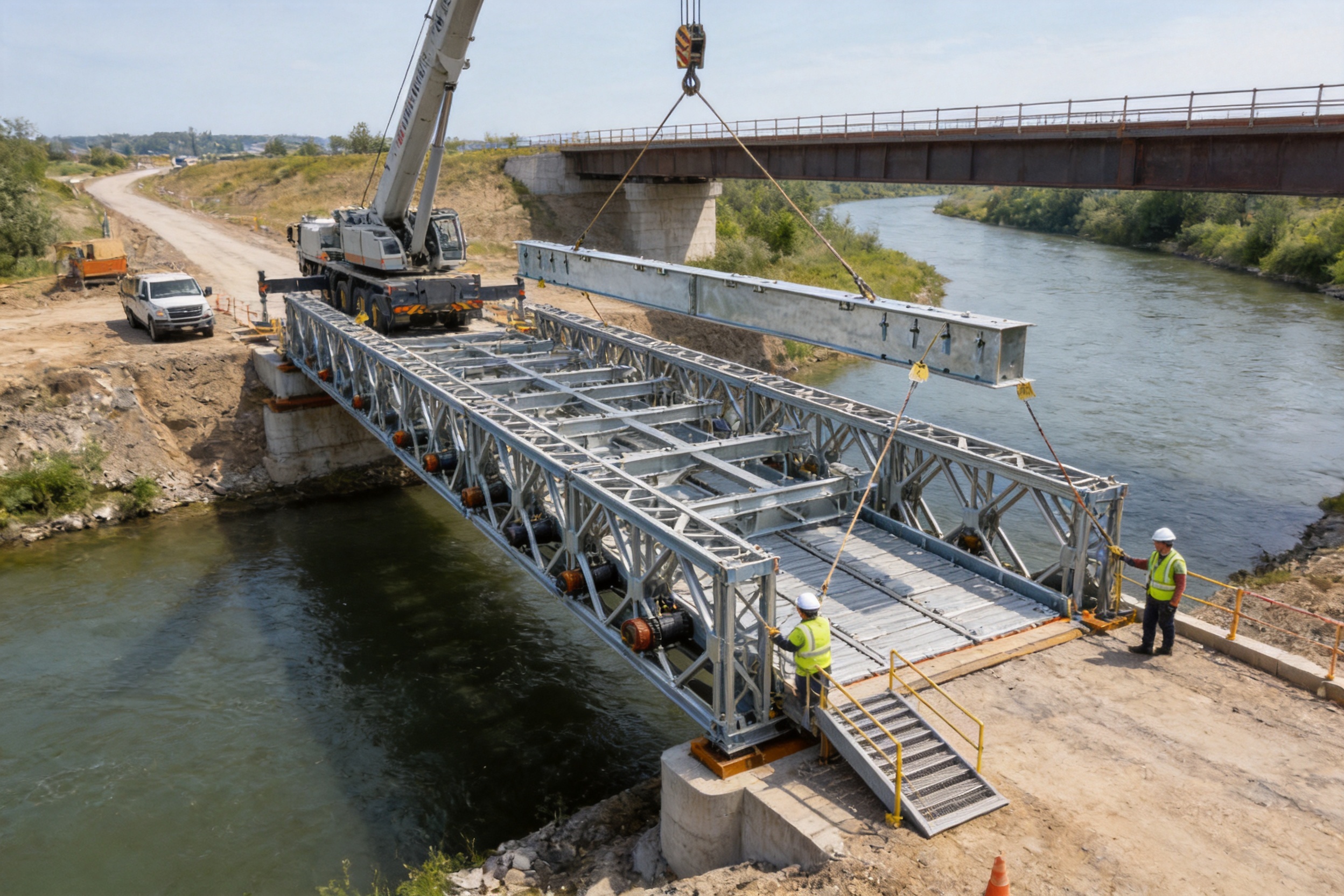
The product is especially useful where construction speed, access flexibility, and structural repeatability are important. Typical situations include temporary traffic diversions, emergency restoration after floods or infrastructure damage, construction access over rivers and roads, temporary crossings for industrial sites, and semi-permanent bridge applications where a modular steel solution is more practical than a fully cast-in-place structure.
2. Main Technical Specifications
The available Type HD200 crossbeam configurations include several external sizes. These options allow engineers and contractors to select a crossbeam that corresponds to the required bridge arrangement and span or width conditions. Final selection should always be based on an approved structural design, applicable loading requirements, connection details, support conditions, and project-specific calculations.
| Specification Item |
Available Information |
Engineering Significance |
| Product |
Type HD200 crossbeam for Bailey bridge |
Transverse support member for a modular steel bridge system |
| External Dimensions 1 |
5800 × 200 × 400 mm |
Compact crossbeam configuration for selected bridge arrangements |
| External Dimensions 2 |
6200 × 200 × 400 mm |
Extended crossbeam option for wider or alternative layouts |
| External Dimensions 3 |
9630 × 200 × 600 mm |
Larger and deeper configuration for demanding structural applications |
| Center Distance Arrangement 1 |
250 + 230 + 250 + 4540 + 250 + 230 + 250 mm |
Specified spacing arrangement for a compatible HD200 bridge layout |
| Center Distance Arrangement 2 |
250 + 230 + 250 + 7900 + 250 + 230 + 250 mm |
Specified spacing arrangement for a longer or wider compatible layout |
| Material |
Q355B structural steel |
High-strength steel grade selected for structural fabrication |
The listed dimensional arrangements indicate that the product is not limited to one fixed bridge geometry. Different projects may require different transverse spacing, truss positions, deck widths, or load paths. The 5.8-meter and 6.2-meter configurations provide useful options for common bridge layouts, while the 9.63-meter configuration provides a substantially larger structural envelope for specialized arrangements.
The center-distance information should be treated as part of the interface and layout data. Accurate center spacing is essential because even a small deviation can affect truss alignment, deck placement, bracing installation, bearing contact, and the fit of connecting components. For this reason, dimensional control during fabrication and inspection before shipment are important parts of the production process.
For a specific project, engineers should confirm which center-distance arrangement corresponds to the selected external dimension, bridge width, truss combination, and deck system. Product drawings, connection details, allowable loads, support conditions, and installation procedures should be reviewed before fabrication and erection.
3. Structural Function in a Bailey Bridge
A Bailey bridge is assembled from standardized steel components that work together as a structural system. The truss sections primarily carry longitudinal bending and shear, while crossbeams and deck-supporting elements distribute loads across the bridge width and maintain the relative position of the trusses. The overall behavior depends on the combined performance of all components rather than on any single member in isolation.
The Type HD200 crossbeam supports this system by providing a transverse connection between the truss lines. Its geometry helps establish the bridge width and creates a stable base for deck units or longitudinal supporting members. Properly installed crossbeams can help maintain alignment and reduce unwanted movement of the bridge deck under service conditions.
Crossbeams also contribute to load distribution. A concentrated wheel load or construction equipment load applied to the deck should be transferred to more than one supporting line whenever the deck and connection arrangement allow it. The crossbeam acts as an important part of this transfer mechanism. Its stiffness, connection integrity, and contact condition influence how effectively loads are shared within the bridge assembly.
In addition to vertical load transfer, crossbeams can participate in maintaining the lateral stability of the bridge. They work with lateral bracing, sway bracing, deck elements, and truss connections to resist transverse movement. The actual level of contribution depends on the design, the connection type, the spacing of crossbeams, and the bracing arrangement selected by the project engineer.
For these reasons, crossbeam selection should not be based only on nominal length. The designer must consider the complete load path, including bridge span, truss configuration, deck width, live loads, impact effects, wind, braking forces, temperature effects, support settlement, erection conditions, and the intended service period.
4. Advantages of the Type HD200 Crossbeam
4.1 High-Strength Q355B Material
The Type HD200 crossbeam is manufactured using Q355B steel. This structural steel grade offers a higher nominal yield strength than many ordinary structural steel grades commonly used for general fabrication. The material is therefore suitable for applications where strength-to-weight efficiency, structural reliability, and controlled fabrication are important considerations.
Using a defined structural steel grade also improves consistency in engineering review and procurement. Designers can work with known material properties, while manufacturers can apply established welding, inspection, surface preparation, and quality-control procedures. Material traceability can further support project documentation and acceptance requirements.
Material strength alone does not determine the capacity of a finished crossbeam. Section geometry, weld quality, connection design, local buckling resistance, fabrication tolerance, corrosion protection, and support conditions must also be considered. The advantage of Q355B is that it provides a strong material foundation within a properly engineered and manufactured component.
4.2 Standardized Modular Design
Standardization is one of the most important advantages of a Bailey bridge component. A standardized crossbeam can be produced repeatedly, inspected using consistent criteria, and integrated with compatible truss sections and deck components. This reduces the uncertainty that may arise when every bridge member is designed and fabricated as a one-off product.
Standardized dimensions also support inventory management. Contractors and bridge rental companies can keep commonly used crossbeams in stock, deploy them on short notice, and combine them with other modular parts. If a component is damaged or requires replacement, an interchangeable part can often be sourced without redesigning the entire bridge system.
For emergency works, this advantage can be especially valuable. A bridge system assembled from familiar components can be mobilized more quickly than a fully customized structure. Crews who are trained in modular bridge installation can use established procedures, lifting plans, connection methods, and inspection checklists.
4.3 Multiple Dimensional Options
The availability of 5.8-meter, 6.2-meter, and 9.63-meter external dimensions gives the HD200 crossbeam a broader application range than a single-size transverse member. Projects with different deck widths, truss layouts, or structural arrangements can be matched with a more appropriate crossbeam configuration.
This dimensional flexibility can reduce the need for improvised extensions or field modifications. Avoiding unnecessary field cutting and welding helps preserve dimensional accuracy and reduces the risk of introducing unverified changes into the structural system. It also makes planning more straightforward because the component dimensions are known in advance.
4.4 Efficient Assembly and Installation
Prefabricated crossbeams are manufactured before arriving at the project site. As a result, much of the cutting, drilling, welding, dimensional checking, and surface preparation can be completed under factory conditions. The site team can focus on lifting, positioning, bolting, alignment, deck installation, and inspection.
Reduced site fabrication can offer several practical benefits. It may decrease the need for temporary workshops, reduce hot-work activities over water or roadways, shorten traffic interruptions, and make the installation sequence easier to coordinate. These benefits are particularly relevant to emergency bridge projects and construction sites where access windows are limited.
Assembly time depends on the complete bridge system, site access, lifting equipment, weather, foundation readiness, crew experience, and local regulations. However, the modular character of the HD200 crossbeam supports a more predictable installation process than many conventional site-built alternatives.
4.5 Strong Interchangeability
Interchangeability allows compatible crossbeams, truss sections, deck units, and accessories to be used within a coordinated bridge system. This can simplify maintenance and reduce downtime. A damaged or worn component can be removed and replaced without necessarily dismantling the entire bridge.
For contractors operating multiple projects, interchangeable components can also improve asset utilization. Equipment can be transferred between sites, reconfigured for different bridge widths, and adapted to changing construction schedules. This creates value over the service life of the equipment rather than only during the first installation.
4.6 Suitable for Temporary and Semi-Permanent Applications
The HD200 crossbeam can be used in bridge systems intended for temporary, emergency, construction, or semi-permanent service. It is suitable for projects where speed and adaptability are priorities, while still requiring a robust steel structure and controlled engineering design.
Temporary use does not mean that design discipline can be reduced. Temporary bridges may carry heavy vehicles, operate under difficult weather conditions, or remain in service longer than initially planned. The crossbeam and the complete bridge must therefore be designed, installed, inspected, and maintained in accordance with the relevant project requirements.
5. Comparison with Conventional and Less Adaptable Alternatives
The most important competitive advantage of the Type HD200 crossbeam is its combination of standardized modularity and structural capacity. Conventional reinforced concrete crossmembers may offer durability in permanent structures, but they generally require formwork, reinforcement installation, concrete placement, curing time, and heavier foundation or lifting arrangements. A prefabricated steel crossbeam can be transported and installed more rapidly where the project requires immediate access.
Compared with ordinary low-strength steel fabrication, the use of Q355B provides a stronger material basis for demanding structural applications. The benefit is not simply a higher material grade. It also allows the component to be developed as part of a coordinated system with defined dimensions, repeatable interfaces, and controlled manufacturing procedures.
Compared with completely custom-made beams, standardized HD200 crossbeams can reduce engineering repetition and procurement complexity. A custom beam may be appropriate for unusual geometry, permanent major bridges, or highly specialized load cases, but it can involve longer lead times and greater dependence on project-specific drawings. The modular crossbeam is advantageous when the bridge arrangement falls within a compatible standardized system.
Compared with lighter temporary bridge components, the HD200 crossbeam is intended for more demanding medium-to-heavy-duty applications. Its available deeper 600-millimeter configuration provides an option for structural arrangements requiring a larger section envelope. The exact capacity must be verified for every project, but the product range is positioned to serve applications beyond light pedestrian or low-load access crossings.
Compared with components fabricated entirely on site, factory-produced crossbeams offer better opportunities for controlled welding, dimensional inspection, material verification, and surface treatment. Factory conditions do not eliminate the need for field inspection, but they can reduce exposure to weather, limited access, poor lighting, difficult positioning, and inconsistent site workmanship.
6. Manufacturing Process and Quality Control
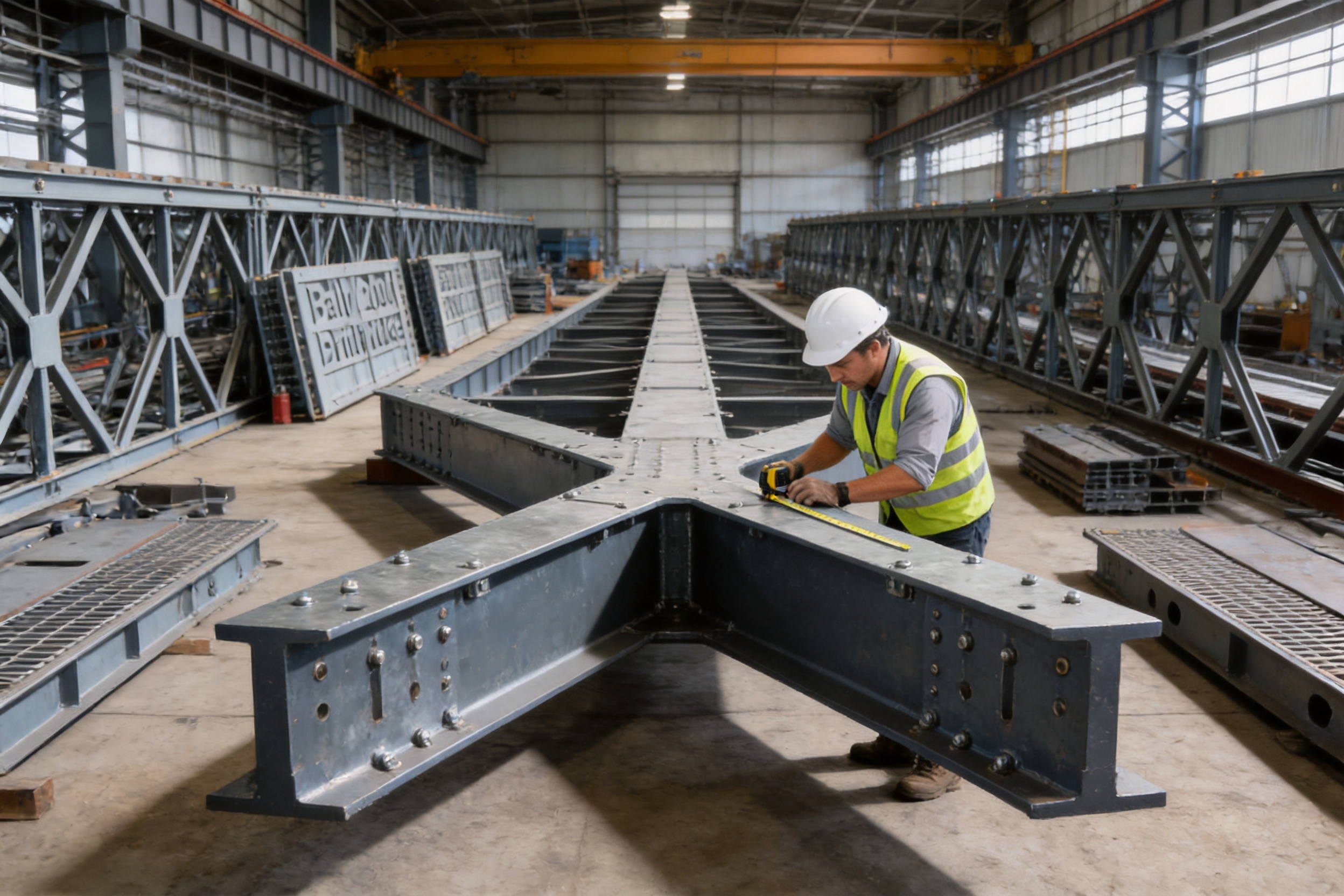
The performance of a steel crossbeam depends heavily on the manufacturing process. A reliable production system begins with approved drawings, suitable raw materials, controlled cutting, accurate assembly, qualified welding, dimensional verification, surface preparation, and final inspection. Each stage contributes to the quality of the finished component.
6.1 Engineering Review and Production Planning
Before fabrication begins, the product drawings and technical requirements should be reviewed for dimensions, center distances, connection points, material specifications, weld details, lifting points, and interface requirements. Production planning should identify the required steel sections, plates, stiffeners, fasteners, welding consumables, inspection points, and finishing requirements.
For a modular bridge component, interface accuracy is especially important. The crossbeam must fit the compatible truss and deck arrangement. Production planning therefore needs to control not only the overall external dimensions but also hole positions, connection faces, center lines, bearing surfaces, and any components that influence assembly alignment.
6.2 Material Procurement and Traceability
Q355B steel should be procured from qualified sources with appropriate material documentation. Plates and sections should be checked against purchase requirements before they enter production. Identification marks or batch records can help maintain traceability from the raw material stage through cutting, assembly, welding, inspection, and dispatch.
Material traceability is useful for quality records, project acceptance, future maintenance, and replacement planning. It also supports a more disciplined manufacturing culture in which each major component can be linked to its production documentation.
6.3 Cutting and Component Preparation
Steel plates and sections are cut according to approved fabrication drawings. Depending on the equipment and design, cutting may be performed using automated thermal cutting, mechanical cutting, or other controlled methods. Cut edges should be inspected for excessive roughness, unacceptable notches, distortion, or other conditions that could affect fit-up or weld quality.
Prepared parts may require edge beveling, drilling, slotting, marking, or straightening. Accurate preparation reduces the need for force-fitting during assembly. It also helps ensure that welded components remain within the specified dimensional tolerances.
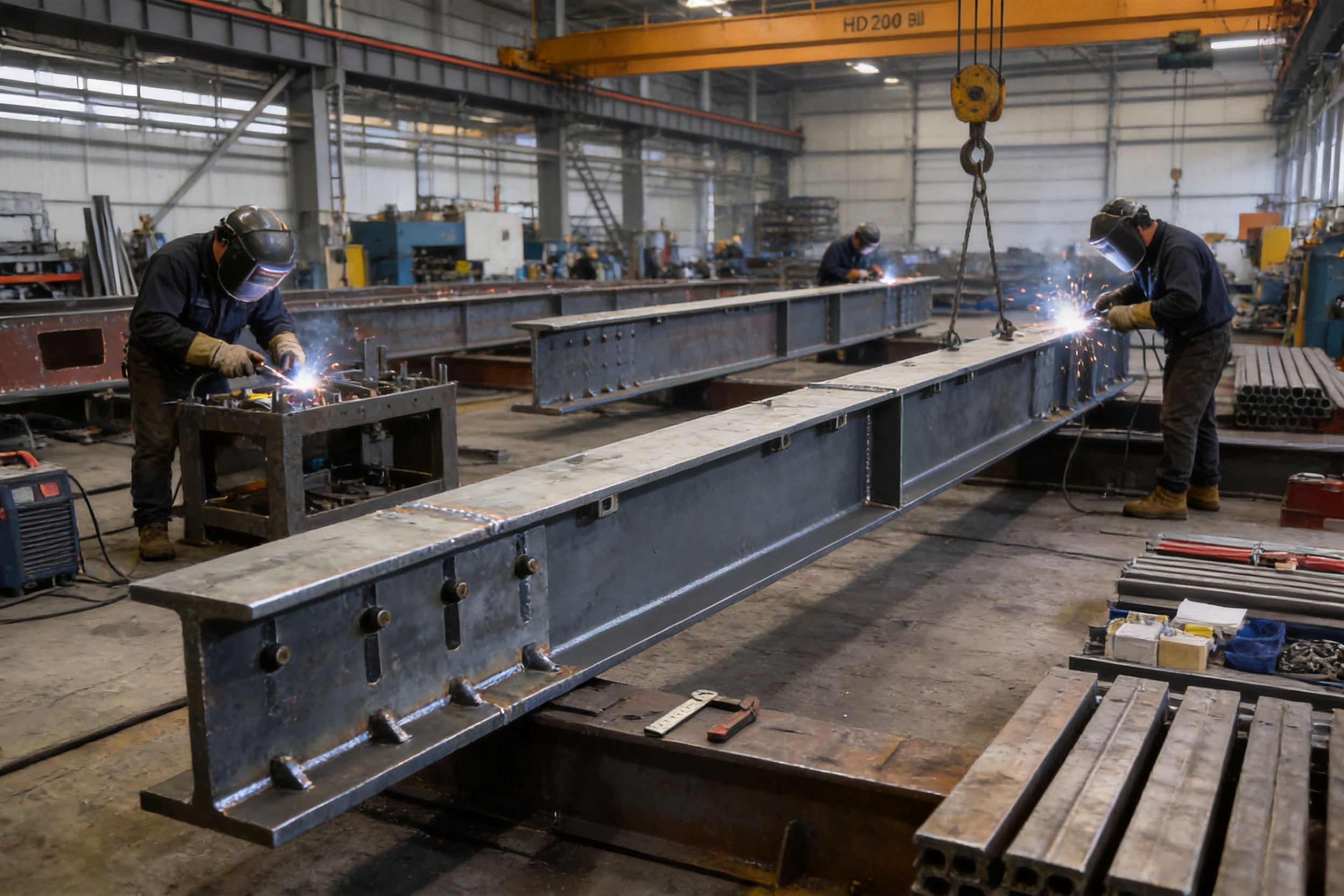
6.4 Jig Assembly and Dimensional Control
Fixtures, jigs, and assembly platforms can be used to position plates, stiffeners, connection components, and other members before welding. A controlled assembly method improves repeatability and reduces variation among production batches.
During fit-up, technicians should verify the overall length, width, depth, squareness, straightness, center distances, connection locations, and support surfaces. Temporary tack welds or mechanical restraints may be used to maintain alignment during the welding sequence.
6.5 Controlled Welding
Welding is one of the most important operations in crossbeam production. Welding procedures should be selected according to the steel grade, thickness, joint design, and applicable standards. Welders should be qualified for the relevant process and position, and welding consumables should be stored and handled in accordance with technical requirements.
A planned welding sequence helps control heat input and distortion. For larger crossbeams, welds may be arranged in a balanced sequence so that shrinkage forces do not pull the member significantly out of alignment. Interpass cleaning, preheating where required, and visual monitoring help support consistent weld quality.
Inspection may include visual examination and, where specified by the project or applicable standards, nondestructive testing such as magnetic particle, ultrasonic, or other suitable methods. The appropriate inspection level depends on the structural importance of the weld, the design requirements, and the project acceptance criteria.
6.6 Straightening and Finishing
After welding, the crossbeam may be checked for distortion and straightness. Controlled mechanical or thermal straightening may be applied when necessary and permitted by the manufacturing procedure. The objective is to bring the component within approved tolerances without damaging the steel or reducing the quality of the welded structure.
Sharp edges, weld spatter, burrs, and temporary attachment points should be removed or treated as required. Connection surfaces and areas intended for bolting or bearing should be cleaned and checked carefully because contamination or deformation can affect installation.
6.7 Surface Preparation and Corrosion Protection
Steel bridge components are exposed to rain, humidity, road spray, mud, condensation, and other corrosive conditions. Surface preparation and protective coating are therefore essential for long-term serviceability. The treatment system should be selected according to the intended service period, environmental exposure, transportation conditions, and maintenance plan.
Typical steps may include degreasing, abrasive cleaning, dust removal, primer application, intermediate coating, and top coating. Coating thickness, curing time, surface cleanliness, and environmental conditions should be monitored. Areas that will be covered by connections or require special treatment should be addressed in accordance with the approved coating system.
6.8 Final Inspection and Dispatch
Before dispatch, the finished crossbeam should be checked against the approved drawings and inspection plan. Important checks may include material records, overall dimensions, center distances, weld appearance, connection holes, straightness, coating condition, identification marks, and lifting or transport arrangements.
Components should be protected against impact, abrasion, water accumulation, and deformation during loading and transport. Proper packing and lifting are important because a well-manufactured crossbeam can still be damaged if it is handled incorrectly before reaching the job site.
7. Company Manufacturing and Engineering Strengths
Zhenjiang Jinhao Road & Bridge Supporting Engineering Co., Ltd. operates from an industrial location in Dantu District, Zhenjiang City, Jiangsu Province, China. Established in 2017, the company has developed from a construction and industrial materials business into an enterprise involved in the design, manufacturing, erection, and leasing of modular bridge and steel formwork products.
The company’s product range includes Bailey steel bridges, Type 321 Bailey truss sections, HD200 or Type 200 Bailey truss sections, bridge launching gantry systems, triangular and diamond hanging baskets, bridge steel formwork, pier formwork, and related engineered steel structures. This range provides a broader technical context for producing and supplying crossbeams because the company works with multiple bridge components rather than treating the crossbeam as an isolated product.
Experience across bridge systems can support better interface coordination. Crossbeams must work with trusses, deck systems, erection equipment, supports, and sometimes formwork or launching equipment. A supplier familiar with these related products can provide more practical assistance during system planning, component selection, transportation, and site erection.
The company provides customized fabrication, design and system planning, technical support, quality management, bridge erection, and leasing services. This combination is useful for contractors that need more than a single shipment of steel. A project may require assistance with bridge configuration, component quantities, installation sequence, equipment selection, or future dismantling and relocation.
Manufacturing strength is also supported by the ability to serve different project categories. Bailey bridges are used in transportation engineering, municipal works, water conservancy projects, railway construction, emergency access, and national defense readiness. Each application may involve different site restrictions, loading requirements, erection methods, and service periods. Experience across these conditions can improve the practical value of technical support.
The company’s emphasis on standardization, interchangeability, and quality management aligns with the core requirements of modular bridge construction. Its approach is focused on providing steel bridge solutions for contractors, government agencies, and engineering companies that need dependable products and coordinated project support.
8. Applications of the HD200 Crossbeam
8.1 Temporary Highway Bridges
The crossbeam can be used in temporary highway bridge systems where an existing bridge is under repair, a roadway is being expanded, or traffic must be diverted across an obstacle. The modular construction allows the temporary bridge to be erected and later dismantled when the permanent infrastructure is ready.
Traffic loading, lane width, vehicle type, approach geometry, guardrail requirements, and bridge inspection procedures should be determined before installation. The crossbeam forms only one part of the complete structure, so the entire bridge must be checked for the intended traffic conditions.
8.2 Emergency and Disaster-Relief Crossings
Floods, landslides, earthquakes, bridge collisions, and other events can disrupt transportation routes. A modular steel bridge may provide an emergency connection while permanent reconstruction proceeds. The standardized HD200 crossbeam can support rapid deployment when compatible trusses and deck components are available.
Emergency projects often involve unstable ground, restricted access, uncertain water levels, and limited equipment. Site surveys, foundation checks, lifting plans, and temporary stability measures remain essential. Rapid installation should be achieved through preparation and standardized procedures, not by skipping engineering controls.
8.3 Construction Access Bridges
Large infrastructure projects may need temporary access over rivers, drainage channels, rail lines, excavation areas, or active roads. A Bailey bridge assembled with HD200 crossbeams can provide access for construction vehicles, cranes, material deliveries, and work crews.
The design should consider the heaviest vehicle, wheel loads, turning movements, braking forces, construction vibration, and the frequency of use. A bridge used by loaded dump trucks may require a substantially different arrangement from one used only by light service vehicles.
8.4 Municipal and Water Conservancy Projects
Municipal works often require temporary crossings during road reconstruction, utility installation, flood-control construction, or drainage improvement. Water conservancy projects may require access across canals, rivers, reservoirs, or temporary diversion channels. In these environments, a modular steel bridge can reduce the duration of disruption and provide an adaptable working platform.
Environmental exposure should be considered carefully. Water, humidity, sediment, and fluctuating levels can accelerate corrosion or affect supports. Coating protection, drainage, inspection access, and maintenance planning should be incorporated into the project design.
8.5 Railway and Industrial Applications
Railway construction and industrial development may require temporary bridge structures for materials, equipment, and construction traffic. The HD200 crossbeam can be included in bridge systems designed for controlled access and defined load conditions.
Where a temporary bridge is installed near active railway lines, pipelines, power facilities, or industrial equipment, the erection plan must address clearance, vibration, exclusion zones, lifting operations, and operational safety. The modular nature of the component supports planned installation, but site-specific coordination remains necessary.
9. Design and Installation Considerations
The Type HD200 crossbeam should be selected only after confirming the bridge arrangement and design loads. Important parameters include the bridge span, number of truss lines, truss panel configuration, roadway width, deck type, vehicle loading, impact factor, wind, seismic conditions where applicable, support spacing, foundation capacity, and expected service period.
Connection details should be reviewed before production. The crossbeam must align with the compatible truss sections and deck supports. Bolt grades, hole diameters, bolt tightening procedures, bearing surfaces, connection plates, and bracing elements should follow approved drawings and project specifications.
Transportation and lifting also require planning. The crossbeam dimensions and weight should be confirmed for available trucks, cranes, trailers, access roads, and storage areas. Lifting points should be identified, and slings or spreader beams should be selected to prevent local damage or excessive bending during handling.
During erection, the bridge should be supported and stabilized in accordance with the installation sequence. Temporary supports, launching noses, rollers, cranes, or gantries may be used depending on the site and bridge arrangement. The installation team should verify alignment, connection completion, deck seating, bracing, approach transitions, and clearance before the bridge is opened to traffic.
After installation, an acceptance inspection should be completed. This may include checking bolt installation, component identification, truss alignment, crossbeam position, deck condition, guardrails, approach ramps, drainage, and signs. A controlled load test or proof inspection may be required by the responsible engineer or local authority.
10. Maintenance and Service Life
Regular inspection helps preserve the performance of a modular steel bridge. Crossbeams should be checked for corrosion, coating damage, deformation, cracks, loose connections, impact marks, water accumulation, and unusual movement. Inspection frequency should reflect traffic intensity, environmental exposure, bridge importance, and the intended service period.
Areas near deck joints, drainage points, supports, and connection interfaces may require particular attention. Dirt, mud, standing water, and deicing chemicals can accelerate corrosion if they remain on the steel surface. Cleaning and drainage improvements can help extend the service life of the component.
Any visible deformation, damaged weld, significant corrosion loss, or loose connection should be assessed by a qualified engineer before the bridge continues operating under normal loads. Repairs should be performed according to an approved method. Uncontrolled field welding, drilling, cutting, or heating can alter the structural behavior and should not be carried out without technical authorization.
When a temporary bridge is dismantled, the crossbeams should be inspected before storage. Components should be cleaned, identified, stacked to avoid distortion, and protected from prolonged contact with standing water or corrosive materials. A well-managed inventory can allow the components to be reused efficiently on future projects.
11. Why Choose a Specialized Modular Bridge Supplier?
Purchasing a crossbeam from a supplier experienced in modular bridge systems offers advantages beyond the fabrication of steel. A specialized supplier understands how component dimensions influence bridge configuration, erection sequence, deck compatibility, transportation, and maintenance. This system-level knowledge can reduce coordination problems between separate manufacturers.
Technical communication is also important when project conditions change. Bridge contractors may need different widths, alternative truss arrangements, additional components, replacement parts, or leasing options. A supplier with design, manufacturing, erection, and rental capabilities can respond more flexibly than a general steel workshop focused only on fabrication.
Quality management provides another important advantage. A bridge component should be supported by clear specifications, material information, inspection records, drawings, and installation guidance. These documents help the contractor, engineer, and owner verify that the component is appropriate for the intended use.
Jinhao’s experience with Bailey bridges, launching gantries, hanging baskets, pier formwork, and bridge steel formwork supports a practical understanding of construction conditions. The company’s services are intended to help customers move from product selection to system planning and implementation.
12. Procurement Checklist
Before ordering a Type HD200 crossbeam, the purchaser should confirm the required external dimension and center-distance arrangement. The selected configuration must match the truss system, bridge width, deck units, and connection details. If more than one dimension is technically possible, the final selection should be based on the approved bridge design rather than on nominal length alone.
The purchaser should also confirm the steel grade, quantity, surface-treatment requirements, inspection documentation, packaging, delivery schedule, lifting points, and accessories. If the bridge will be leased or reused, the contract should define responsibilities for inspection, maintenance, repair, transportation, and return condition.
For international projects, the buyer should review applicable design standards, customs documents, packing requirements, shipping dimensions, site unloading arrangements, and local certification needs. Technical drawings should be exchanged early enough to resolve interface issues before fabrication begins.
A clear procurement process reduces the possibility of receiving components that are dimensionally correct in isolation but incompatible with the bridge system. It also helps ensure that manufacturing, transport, and installation are coordinated around the actual project schedule.
13. Frequently Asked Questions
Q1: What is the Type HD200 crossbeam used for?
The Type HD200 crossbeam is a transverse supporting member used in a Type 200 or HD200 Bailey bridge system. It helps support the bridge deck, connect longitudinal truss lines, distribute loads across the bridge width, and maintain the alignment of the modular structure.
Q2: What material is used to manufacture the crossbeam?
The specified material is Q355B structural steel. This high-strength steel grade provides a suitable material foundation for medium-to-heavy-duty bridge applications when the component is correctly designed, fabricated, inspected, and installed.
Q3: What dimensions are available?
The listed external dimensions are 5800 × 200 × 400 millimeters, 6200 × 200 × 400 millimeters, and 9630 × 200 × 600 millimeters. The suitable option depends on the bridge layout, truss arrangement, deck width, connection details, and design loading.
Q4: What are the center-distance dimensions?
The supplied center-distance arrangements are 250 + 230 + 250 + 4540 + 250 + 230 + 250 millimeters and 250 + 230 + 250 + 7900 + 250 + 230 + 250 millimeters. The correct arrangement should be confirmed against the approved drawings and the selected crossbeam configuration before production.
Q5: Can the crossbeam be used for an emergency bridge?
Yes. Its prefabricated and modular design makes it suitable for emergency bridge systems when the complete bridge is properly designed for the required loads and site conditions. Emergency installation still requires engineering review, foundation assessment, controlled erection, and final inspection.
Q6: Is the crossbeam suitable for semi-permanent use?
It can be used in semi-permanent bridge arrangements when the structural design, corrosion protection, inspection program, foundation system, and maintenance plan are appropriate for the intended service period. The classification of a bridge as temporary or semi-permanent does not replace the need for safe design.
Q7: How does it compare with a custom-fabricated beam?
A standardized HD200 crossbeam offers repeatable dimensions, easier interchangeability, faster procurement, and more predictable assembly. A custom beam may still be preferable for unusual geometry or specialized permanent structures. The best choice depends on the project design, schedule, loading, and compatibility requirements.
Q8: Can the crossbeam be modified on site?
Field modification should not be performed without approval from the responsible engineer or manufacturer. Cutting, drilling, welding, or heating can affect strength, stiffness, corrosion protection, and compatibility. Any modification should follow an approved technical procedure.
Q9: Does the crossbeam include the complete bridge system?
No. The crossbeam is one component of a Bailey bridge system. A complete bridge may also require truss sections, deck units, stringers, bracing, bearings, supports, ramps, guardrails, bolts, launching equipment, and other accessories. The exact bill of materials depends on the project design.
Q10: What services can the supplier provide?
Zhenjiang Jinhao Road & Bridge Supporting Engineering Co., Ltd. provides customized fabrication, design and system planning, technical support, quality management, bridge erection, and leasing services. These capabilities can help customers coordinate product supply with broader bridge construction requirements.
Q11: What should be checked before installation?
Before installation, the project team should verify the component dimensions, center distances, connection holes, material and inspection records, coating condition, lifting arrangements, support readiness, truss configuration, deck compatibility, and erection sequence. The bridge should not be opened until the completed structure has been inspected and accepted.
Q12: How should the crossbeam be maintained?
Maintenance should include regular visual inspections, cleaning, corrosion control, coating repair, connection checks, and examination for deformation or impact damage. Any serious defect should be evaluated by a qualified engineer before continued service or repair.
14. Conclusion
The Type HD200 crossbeam for Bailey bridges is a practical structural component for modular bridge projects that require strength, adaptability, and efficient construction. Its Q355B material, multiple dimensional options, standardized interfaces, and compatibility with HD200 bridge systems make it suitable for a broad range of temporary, emergency, construction, municipal, water conservancy, railway, and semi-permanent applications.
Its principal advantages over less adaptable alternatives include repeatable fabrication, rapid assembly, strong interchangeability, reduced site fabrication, and the ability to integrate with a broader family of Bailey bridge components. The 5.8-meter, 6.2-meter, and 9.63-meter configurations provide useful flexibility, while the specified center-distance arrangements support coordinated bridge planning.
The value of the product is strengthened by controlled manufacturing practices, including material verification, precision cutting, jig assembly, qualified welding, dimensional inspection, surface treatment, and final quality checks. Supported by a company experienced in bridge systems, formwork, launching equipment, erection, leasing, and technical planning, the HD200 crossbeam can serve as part of a complete and professionally managed bridge solution.
For every project, final suitability must be confirmed through structural design, applicable standards, connection review, foundation assessment, installation planning, inspection, and maintenance. When these requirements are properly addressed, the Type HD200 crossbeam can provide dependable support for fast, flexible, and efficient modular steel bridge construction.
References
1. Modular Steel Bridge Design and Construction Practices, technical reference for prefabricated steel bridge systems.
2. Structural Steel Fabrication and Welding Quality-Control Procedures, reference for steel preparation, assembly, welding, inspection, and finishing.
3. Temporary Works Engineering Principles, reference for temporary bridge design, erection stability, loading, inspection, and maintenance.
4. Bailey Bridge Component Interchangeability and Field Assembly Guidance, reference for modular truss systems and standardized bridge components.
5. Q355B Structural Steel Material and Fabrication Requirements, reference for high-strength structural steel selection and traceability.
6. Bridge Inspection, Corrosion Protection, and Maintenance Practices, reference for modular steel bridge serviceability and lifecycle management.


 Français
 Español
 عربى