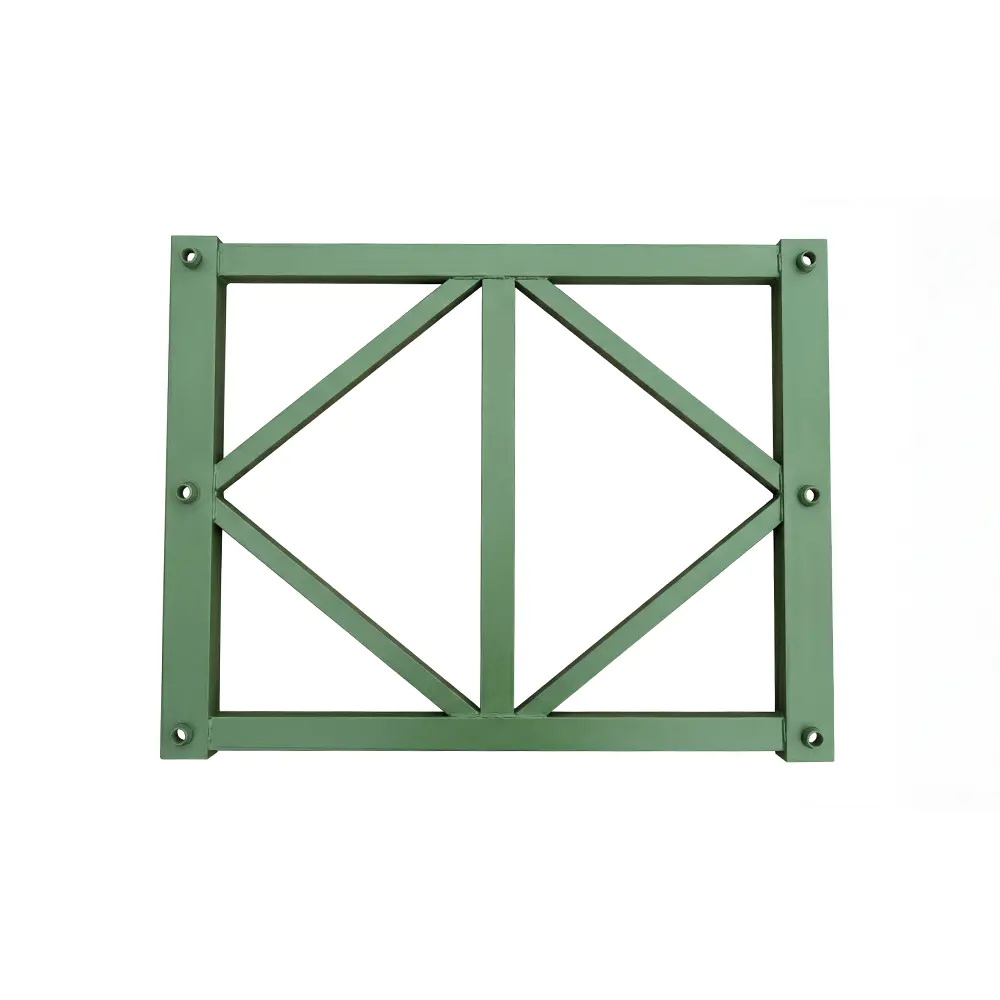
Type 321 Reinforced Bailey Truss: Design, Performance, Manufacturing, and Applications
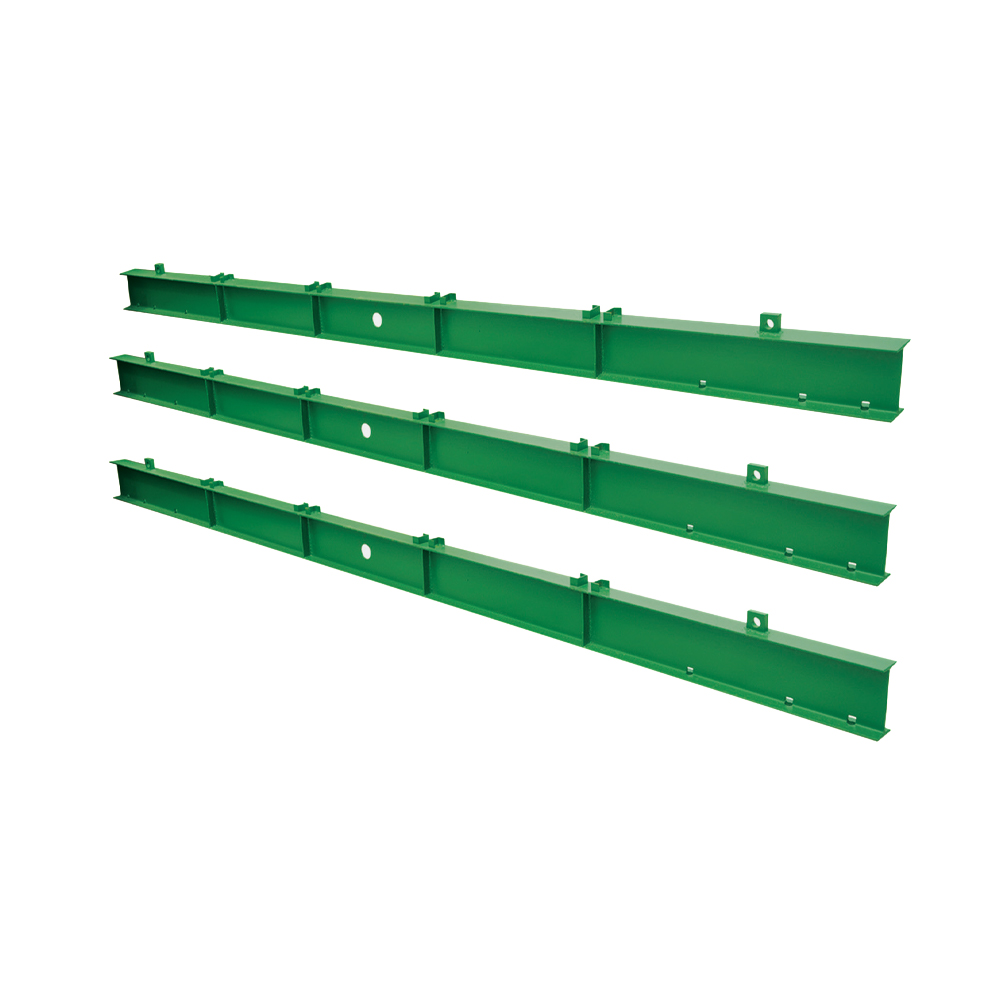
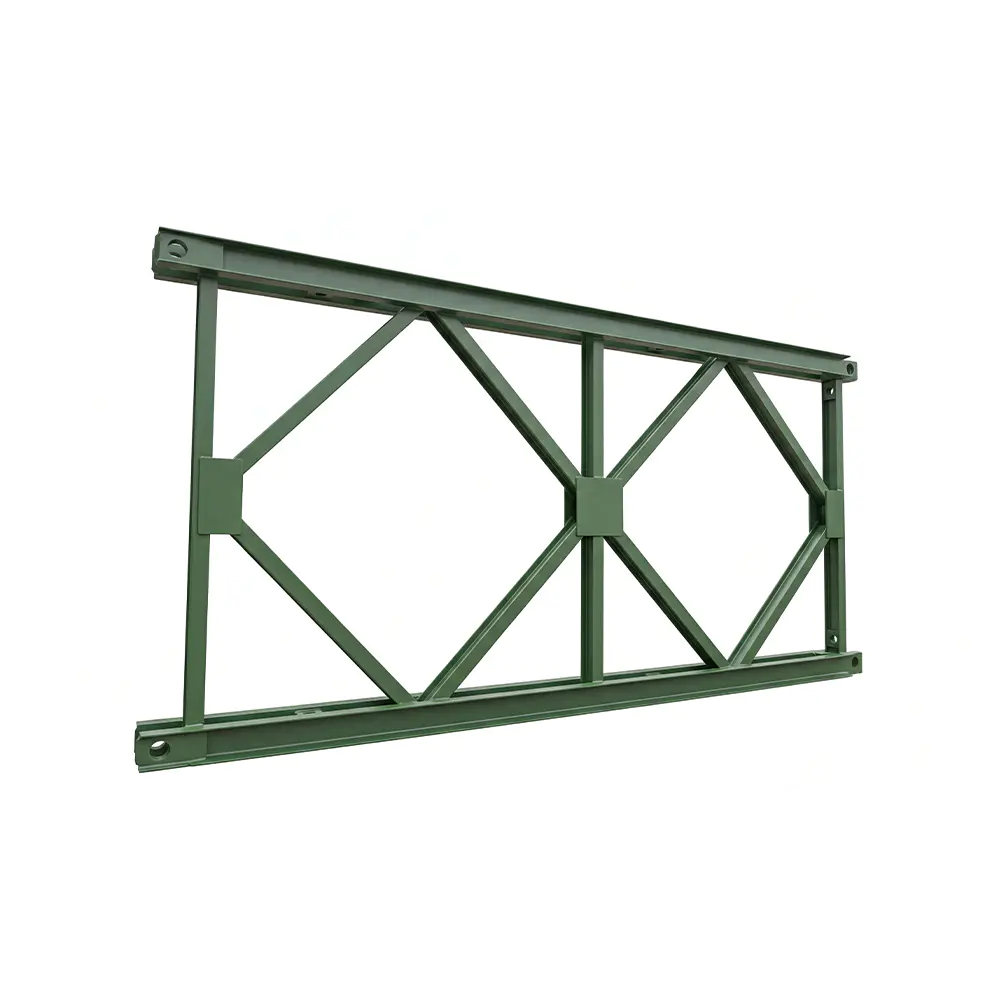
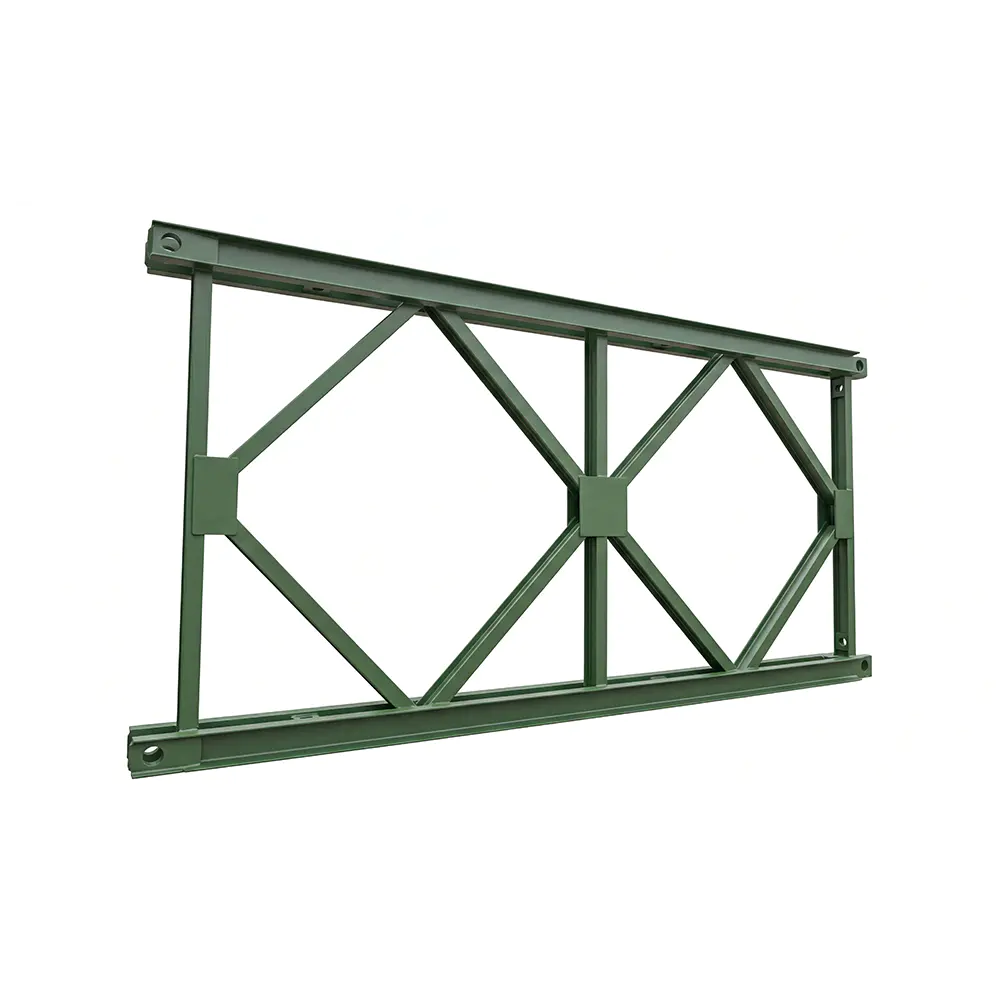
Type 321 Reinforced Bailey Truss is an important strengthening component for the Type 321 prefabricated highway steel bridge system. It is designed to work with standard Type 321 Bailey bridge panels and conventional span truss arrangements, improving the structural performance of the bridge where additional bending resistance, stiffness, and load capacity are required.
Although a Bailey bridge is assembled from standardized prefabricated components, its performance depends on the correct relationship between individual parts. Panels, transoms, stringers, bracing members, decks, bearings, and reinforcement elements must function as one coordinated structural system. The reinforced truss is therefore more than an accessory. It is a purpose-designed structural member that strengthens the upper and lower chord zones of the Type 321 Bailey bridge panels and helps the assembled truss resist bending and deformation under service loads.
This article examines the construction, function, technical characteristics, manufacturing considerations, installation value, and application advantages of the Type 321 Reinforced Bailey Truss. It also explains how Zhenjiang Jinhao Road & Bridge Supporting Engineering Co., Ltd. supports the product through engineering design, fabrication, quality management, customized production, technical assistance, bridge erection, and leasing services.
1. Overview of the Type 321 Reinforced Bailey Truss
The Type 321 Bailey bridge is a modular steel bridge system based on standardized truss panels. Its prefabricated design allows bridge components to be transported, assembled, dismantled, reused, and adapted to different temporary or semi-permanent applications. The system is widely associated with emergency access, construction access, highway diversion routes, municipal works, water conservancy projects, railway construction, and other situations where a bridge must be delivered quickly and efficiently.
In a conventional Type 321 arrangement, the bridge panels form the principal truss lines. When a bridge must carry higher loads, span a demanding distance, or limit deflection more strictly, reinforcement can be added to improve the behavior of the assembled truss. The Type 321 Reinforced Bailey Truss is developed for this purpose.
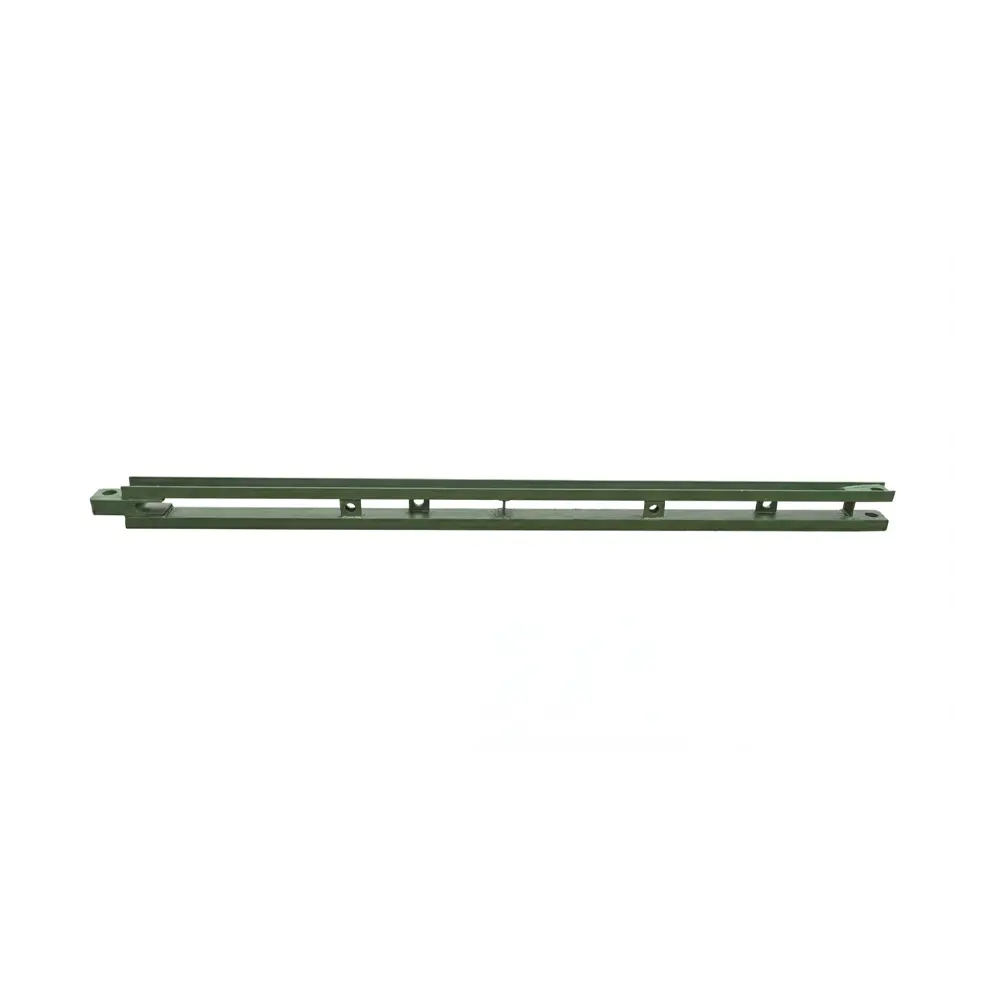
The component is rigidly connected to the upper and lower chords of the Type 321 Bailey bridge panels. By creating a stronger and more stable chord arrangement, it increases the effective bending stiffness of the truss. It also improves resistance to deformation, particularly in the mid-span region where bending effects are normally significant.
The product has the following stated technical characteristics:
Item |
Specification |
Product |
Type 321 Reinforced Bailey Truss |
Application |
Type 321 Bailey bridge reinforcement |
Outer dimensions |
3115 × 100 × 176 mm |
Center distance |
3000 mm |
Material |
Q355B steel |
Primary structural function |
Improving bending capacity, stiffness, and deformation resistance |
System compatibility |
Type 321 prefabricated highway steel bridge systems |
Its standardized dimensions make it suitable for integration with Type 321 modular bridge components. At the same time, its reinforcement function enables engineers to develop a stronger bridge configuration without abandoning the transport, assembly, and interchangeability advantages of the Bailey system.
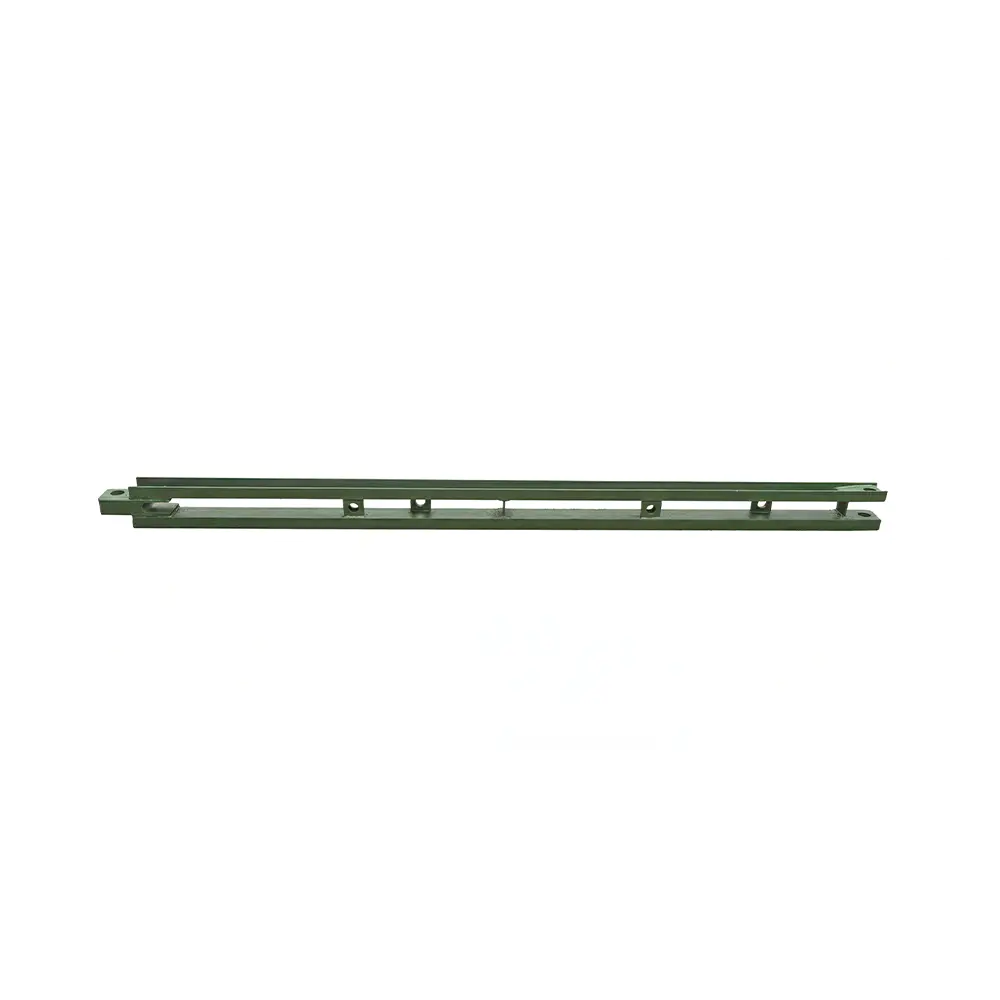
Type 321 - Reinforced Bailey Truss
2. Why Reinforcement Is Important in Modular Steel Bridges
Every bridge structure is affected by load, span, support conditions, material properties, connection details, and construction accuracy. In a modular steel bridge, these factors are combined with the need for rapid assembly and repeated use. A standard panel may be fully suitable for one project but require reinforcement when project conditions become more demanding.
Typical reasons for adding a reinforced truss include higher vehicle loads, greater traffic frequency, longer effective spans, more restrictive deflection requirements, difficult support conditions, or the need to extend the service period of a temporary bridge. In some projects, the bridge is classified as temporary, but it may still experience substantial traffic over several months or years. Strengthening the truss can provide a more suitable balance between speed of construction and structural reliability.
Bending is one of the most important actions in a simply supported or conventionally arranged truss bridge. Under vertical traffic loads, the upper and lower chord zones carry tension and compression forces that vary along the span. The central region of the span is especially important because bending moments may reach their maximum there. If the truss is not sufficiently stiff, excessive deflection can affect riding quality, deck alignment, drainage, connections, and user confidence.
A reinforcement component helps address these conditions by increasing the stiffness and strength of the chord system. A stronger chord arrangement can reduce deformation under a given load and improve the structural reserve available for changing traffic conditions. It can also contribute to more consistent force distribution between connected panels when the assembly has been properly designed and erected.
The Type 321 Reinforced Bailey Truss is therefore valuable because it upgrades the performance of a proven modular bridge concept. Rather than requiring an entirely different bridge system, the reinforcement allows project planners to continue using familiar Type 321 components, standard erection methods, and established logistics.
2.1 Improving bending load capacity
The principal role of the reinforced truss is to improve the bending load capacity of the Type 321 bridge panel assembly. By connecting firmly with the upper and lower chords, the component contributes to a stronger longitudinal load-carrying system.
This function is particularly useful when the bridge must carry construction vehicles, loaded trucks, emergency vehicles, plant equipment, or other traffic that produces higher effects than ordinary light-duty access. The exact allowable load must always be confirmed through project-specific structural calculation, but the reinforcement provides the physical basis for developing a higher-capacity configuration.
2.2 Increasing stiffness
Strength and stiffness are related but not identical. A bridge may possess adequate ultimate strength while still showing excessive movement during normal service. Reinforcing the truss increases resistance to elastic deformation and can improve the service behavior of the bridge.
Higher stiffness can support better deck stability, improved user comfort, and more predictable performance. It may also simplify decisions regarding approach transitions, road surfacing, expansion arrangements, and traffic control. These advantages are especially relevant for bridges used by mixed traffic or located on important temporary transport routes.
2.3 Controlling mid-span deformation
In conventional span arrangements, the middle portion of the bridge is often the critical area for vertical deflection. The Type 321 Reinforced Bailey Truss is designed to enhance the truss in this region by strengthening the chord relationship across the panel system.
Better deformation resistance does not eliminate the need for correct support, camber, bearing placement, connection inspection, or load assessment. It does, however, provide a more robust structural platform when the system has been engineered correctly.
3. Structural Compatibility with the Type 321 Bailey System
The strength of a modular bridge is partly derived from standardization. Type 321 panels, reinforcement parts, bracing, and deck components can be combined into different structural arrangements according to span, width, load, site restrictions, and erection method. The Type 321 Reinforced Bailey Truss is intended to preserve this modular philosophy.
Its 3000 mm center distance corresponds to the characteristic spacing used with Type 321 bridge panel arrangements. The stated outer dimensions of 3115 × 100 × 176 mm provide a defined geometric envelope for planning, transport, storage, and connection detailing.
Compatibility is important for several reasons. First, contractors can use existing handling equipment and erection procedures. Second, replacement and maintenance are simplified because the component belongs to a recognizable bridge family. Third, project teams can combine standard and reinforced configurations when the design requires different levels of capacity along a route or between separate bridge units.
In practical planning, engineers should confirm the following before ordering or installing the component:
1. The exact Type 321 panel configuration and bridge width.
2. The design span and support arrangement.
3. The required vehicle load, construction load, and accidental load cases.
4. The position and type of connections between the reinforcement and the bridge panels.
5. The required number of reinforced members for each truss line.
6. Deck, transom, bracing, bearing, and approach details.
7. Transport restrictions, lifting points, and site assembly conditions.
8. Corrosion protection and inspection requirements for the intended service environment.
A standardized component is most effective when it is integrated into a complete engineered system. The reinforcement should not be considered an isolated substitute for design verification. Instead, it should be selected as part of a bridge configuration that has been checked for strength, stiffness, stability, connection behavior, construction stages, and service conditions.
4. Material Selection: The Role of Q355B Steel
The Type 321 Reinforced Bailey Truss is manufactured from Q355B steel. Q355B is a structural steel grade commonly used in steel fabrication and bridge-related applications. The designation indicates a nominal yield strength level of approximately 355 MPa for relevant thickness ranges, subject to the applicable standard, product form, and inspection requirements.
For a bridge reinforcement component, material selection affects strength, weldability, toughness, fatigue behavior, dimensional stability, and long-term durability. Q355B offers a practical combination of structural performance and fabrication suitability for modular steel bridge components.
The “B” quality classification is associated with specified impact toughness requirements under defined test conditions. The actual mechanical properties, chemical composition, testing temperature, and acceptance requirements should be verified against the governing material standard and the project’s technical specification.
Using a recognizable structural steel grade provides several advantages:
Predictable design behavior: Engineers can use established material parameters during structural calculations, subject to the relevant design code.
Good fabrication suitability: The steel is suitable for cutting, forming, welding, drilling, and assembly when appropriate procedures are followed.
Efficient weight-to-capacity balance: Higher-strength structural steel can help achieve the required capacity without creating unnecessary weight, which is important for transport and manual or crane-assisted erection.
Supply and replacement convenience: A standardized grade makes procurement, quality verification, and future replacement easier than an unidentified or irregular material.
Adaptability to engineered structures: Q355B can be used in a broader range of bridge-related steel structures and supporting components, allowing manufacturers to maintain consistent material management.
Material performance is only one part of product quality. It must be combined with accurate cutting, correct welding procedures, controlled assembly, suitable surface preparation, dimensional inspection, and appropriate corrosion protection. A high-grade steel product can underperform if fabrication controls are poor. Conversely, disciplined manufacturing allows the material’s advantages to be used effectively.
5. Manufacturing Process and Quality Control
The performance of a reinforced Bailey truss begins with the manufacturing process. Because the component is intended to connect with standardized bridge panels, dimensional accuracy and connection consistency are especially important. Even small deviations can make assembly more difficult, increase erection time, or cause unintended stress concentrations.
Zhenjiang Jinhao Road & Bridge Supporting Engineering Co., Ltd. operates as a comprehensive engineering enterprise covering design, manufacturing, erection, leasing, and technical support for Bailey bridges, launching gantry systems, hanging baskets, pier formwork, and bridge steel formwork. This broad product scope supports an integrated understanding of steel bridge fabrication and construction requirements.
5.1 Engineering review and production planning
Before fabrication begins, technical personnel review the product specification, material grade, dimensions, connection requirements, order quantity, packaging requirements, and intended project use. For customized projects, the production plan may also consider span, bridge width, load configuration, environmental exposure, lifting capacity, and transportation limitations.
Production planning helps ensure that the correct steel grade is available, fabrication sequences are organized, inspection points are defined, and finished components can be delivered in a logical order. This is particularly valuable for bridge projects in which many modular parts must arrive at the site according to the erection schedule.
5.2 Steel material control
Steel plates, sections, and connection materials should be identified and tracked from receipt through cutting, fabrication, inspection, and dispatch. Material certificates and inspection records provide a basis for confirming compliance with the required grade and specification.
Proper storage protects steel from unnecessary contamination, distortion, and uncontrolled corrosion before fabrication. Materials should be arranged to permit identification and avoid mixing different grades or thicknesses. Traceability is an important part of quality management because it connects the finished product with its raw material records and inspection documentation.
5.3 Cutting and preparation
Accurate cutting is essential for achieving the specified outer dimensions and ensuring that connected parts align during assembly. Cutting methods should be selected according to thickness, geometry, production volume, and the quality requirements of subsequent welding or machining.
Cut edges may require cleaning, dressing, or preparation before welding. The removal of excessive burrs, slag, sharp irregularities, and surface contamination helps improve fit-up and reduces the possibility of defects. When holes or connection features are required, their position and diameter must be controlled carefully because modular bridge components depend on repeatable connection geometry.
5.4 Fit-up and welding
Fit-up is the stage at which individual steel elements are positioned and temporarily secured before final welding. Fixtures, jigs, reference lines, and dimensional checks help maintain the correct relationship between the upper and lower chord connection areas.
Welding procedures should be selected according to material grade, joint design, thickness, restraint, and applicable standards. Qualified welders and approved procedures help ensure consistent penetration, profile, strength, and appearance. Welding sequence is also important because uneven heat input can create distortion and residual stress.
Controlled welding may include preheating where required, calibrated equipment, appropriate consumables, interpass cleaning, and visual inspection. Depending on the project specification, additional nondestructive testing may be used for selected welds or critical joints.
5.5 Dimensional correction and assembly inspection
After welding, the component should be checked for straightness, twist, overall dimensions, center distance, connection alignment, and surface condition. If correction is required, it should be performed using controlled methods that do not damage the steel or create new defects.
Dimensional inspection is particularly important for the Type 321 Reinforced Bailey Truss because its purpose is to connect rigidly with Type 321 panel chords. Correct dimensions support faster erection, reduce field adjustment, and improve the consistency of the completed bridge system.
5.6 Surface treatment and corrosion protection
Steel bridge components may be exposed to rain, humidity, mud, road salt, industrial atmosphere, or water environments. Surface preparation and protective coating therefore contribute directly to service life and maintenance requirements.
The appropriate treatment depends on the project environment, expected service period, transportation conditions, and owner’s specification. Processes may include cleaning, abrasive preparation, primer application, intermediate coatings, topcoats, or other approved corrosion protection systems.
Coating quality should be checked for coverage, adhesion, dry film thickness, curing, and visible defects. Areas damaged during handling or erection should be repaired according to the coating manufacturer’s procedure. For temporary bridges, a suitable coating system can still be valuable because repeated reuse exposes components to many cycles of transport, assembly, weather, and dismantling.
5.7 Final inspection and documentation
Before delivery, finished components should be inspected against approved drawings, technical specifications, and order requirements. Typical records may include material certificates, welding documentation, inspection reports, dimensional records, coating records, packing lists, and dispatch information.
Clear documentation supports project acceptance, installation planning, maintenance, and future reuse. It also reflects a manufacturing culture based on traceability rather than appearance alone.
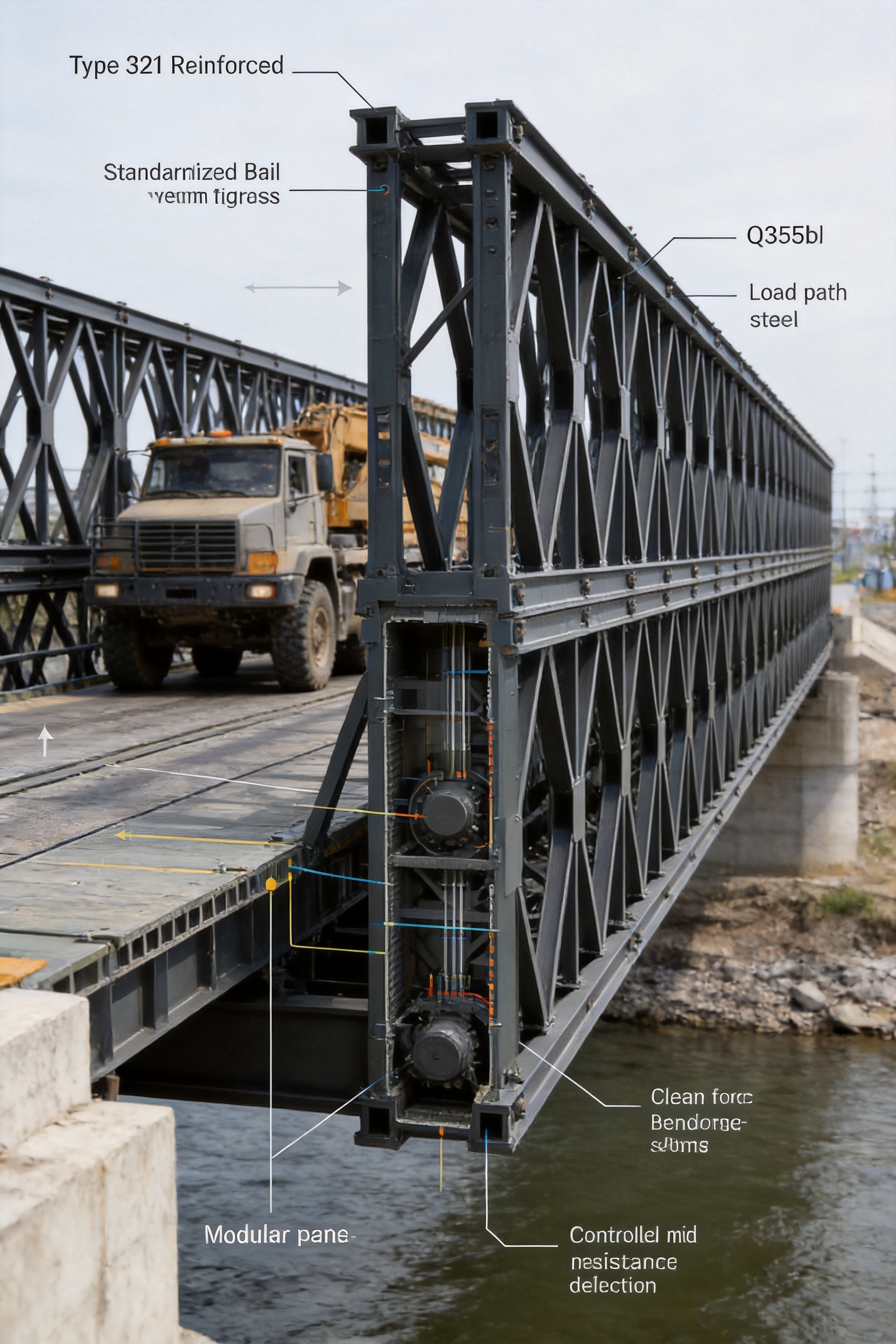
6. Advantages Compared with Less Integrated Reinforcement Solutions
The Type 321 Reinforced Bailey Truss offers several advantages over improvised strengthening methods or reinforcement components that are not designed specifically for the Type 321 system.
6.1 Purpose-designed compatibility
A purpose-designed reinforcement component is developed around the geometry and connection logic of the bridge system it serves. This is generally more reliable than adding unrelated steel members at the site and attempting to adapt them through drilling, welding, packing, or temporary restraint.
Compatibility reduces uncertainty during erection. It also helps ensure that reinforcement forces are transferred through intended structural paths rather than through accidental contact points or locally modified areas.
6.2 Standardized dimensions
The specified outer dimensions and center distance support consistent planning and repeatable assembly. Standardization is a major advantage in projects where components must be exchanged, reused, expanded, or combined with existing inventory.
Compared with one-off fabricated reinforcement, standardized components can reduce design time, shorten procurement decisions, and simplify site instructions. They may also support better spare-parts management for contractors operating several bridge projects.
6.3 Improved transport and handling efficiency
Modular bridge components must be moved efficiently from factory to site and from storage yard to erection position. A defined size and weight range allows transportation, lifting, stacking, and packaging to be planned more accurately.
Because the reinforced truss belongs to a modular family, it can be handled within the same general logistics framework as other Type 321 components. This may be more efficient than transporting large custom-built frames that require special vehicles or complex lifting arrangements.
6.4 Better structural stiffness than an unreinforced arrangement
The main performance advantage is the increased bending stiffness and deformation resistance provided by the reinforced chord arrangement. When compared with a standard configuration under the same design conditions, a properly engineered reinforced arrangement can provide a stronger basis for controlling mid-span movement and carrying higher load effects.
The specific improvement depends on the complete bridge configuration, including the number of trusses, span, deck system, bracing, bearings, connections, and load model. Nevertheless, the product is specifically intended to achieve a performance level beyond that of an unreinforced Type 321 panel arrangement.
6.5 Reusability and lifecycle value
Bailey bridge components are valued because they can be dismantled and reused. A reinforcement element that is manufactured to consistent dimensions can remain useful across different projects, provided it is inspected and maintained after each service period.
This can improve lifecycle economics for contractors, rental providers, governments, and infrastructure owners. Instead of treating reinforcement as a permanent part of one site-specific structure, the component can become part of a reusable modular inventory.
6.6 Faster project response
Temporary and emergency bridge projects often operate under strict time pressure. Flood damage, road closures, construction detours, military logistics, and remote access works may all require a dependable bridge solution without the long schedule associated with a conventional permanent bridge.
A standardized reinforced truss helps project teams respond quickly while retaining a stronger structural configuration. The benefit comes from the combination of prefabrication, known dimensions, modular connections, established erection practices, and manufacturer support.
7. Applications in Engineering Projects
The Type 321 Reinforced Bailey Truss can be used in a variety of bridge and temporary works applications. Its selection should always follow engineering assessment, but the following situations are especially relevant.
7.1 Temporary highway bridges
Temporary highway bridges are used when an existing bridge is being repaired, replaced, widened, or inspected. They may also provide a diversion route around construction work. If the temporary route must carry frequent commercial traffic or heavy vehicles, reinforcement can improve the suitability of the Type 321 system.
The modular arrangement allows the bridge to be erected with relatively limited disruption compared with building a conventional concrete or welded steel replacement. Once the permanent route is available, the temporary bridge can be dismantled and relocated.
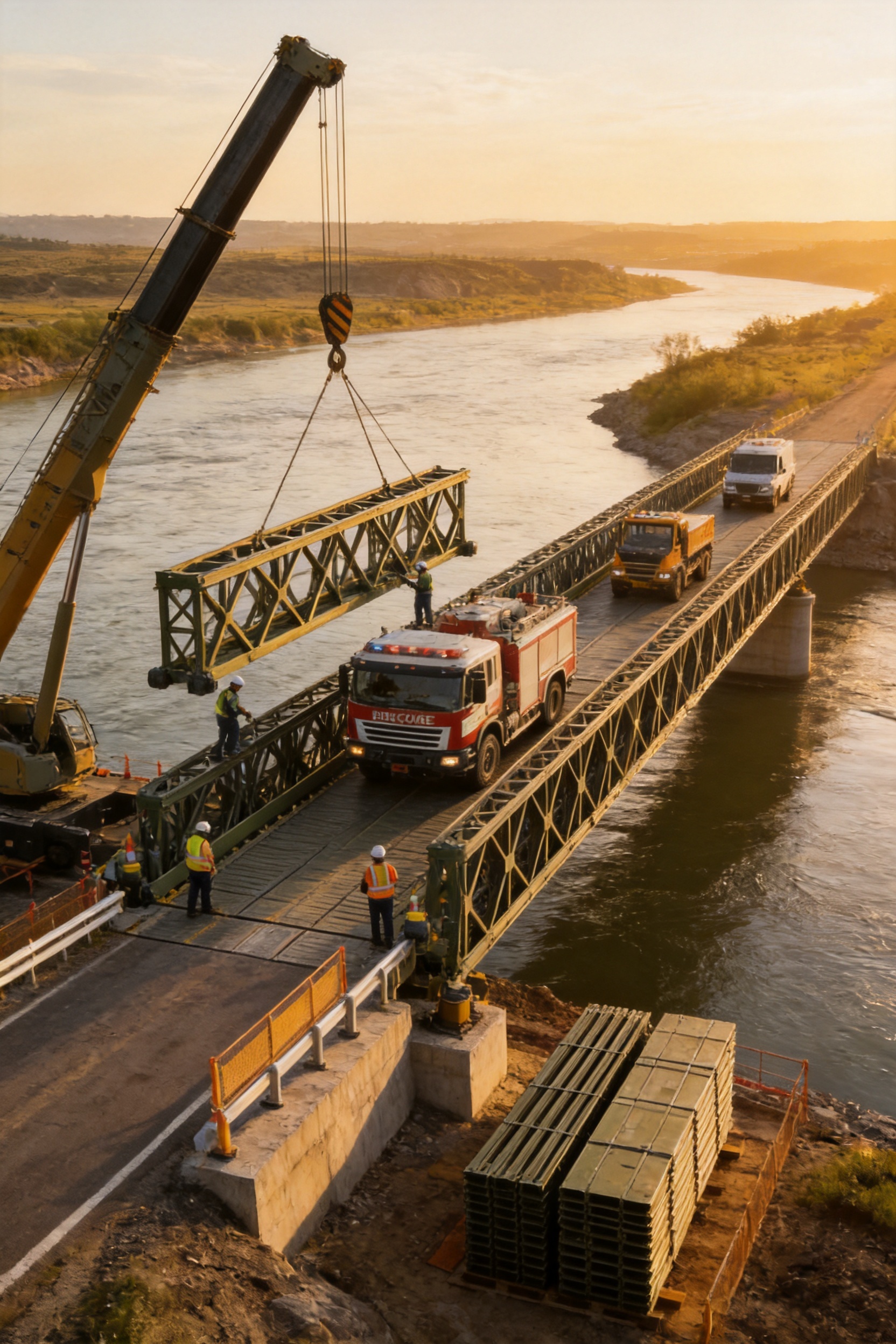
7.2 Emergency and disaster-relief access
Floods, earthquakes, landslides, storms, and other disasters can damage roads and bridges. Emergency access must often be restored before permanent reconstruction can begin. Prefabricated steel bridge components are valuable in these situations because they can be transported, assembled, and placed with a comparatively short construction cycle.
Reinforced trusses are useful where emergency traffic includes rescue vehicles, supply trucks, cranes, loaders, or other heavy equipment. Their use can support access to isolated communities, temporary hospitals, damaged industrial facilities, and construction zones.
7.3 Construction access bridges
Large civil engineering works frequently require temporary crossings over rivers, canals, railways, excavations, and existing roads. Construction access bridges may carry concrete trucks, steel deliveries, excavators, cranes, and other plant. These loads can be substantially greater than the loads associated with pedestrian or light-vehicle access.
The reinforced Type 321 arrangement can provide an efficient route for moving materials and equipment while allowing the main construction operation to continue. It may also be used as a temporary bridge during the construction of a permanent crossing.
7.4 Municipal and water conservancy projects
Municipal works often require short- or medium-term crossings during drainage construction, pipeline installation, road improvement, and utility relocation. Water conservancy projects may need access across canals, irrigation channels, flood-control works, reservoirs, or temporary diversion structures.
In these environments, the ability to install, inspect, relocate, and reuse a steel bridge is often more valuable than a permanently fixed structure. Protective coatings, drainage planning, and routine inspection are important because moisture exposure can accelerate corrosion.
7.5 Railway engineering and industrial access
Railway construction and maintenance projects may require temporary crossings for equipment, materials, and workforce access. Industrial facilities may also use modular bridges to connect work areas, provide access over process channels, or maintain traffic while permanent infrastructure is modified.
Where operating conditions involve heavy plant or repeated loading, the reinforced truss can support a more robust design approach than a basic unreinforced panel configuration.
7.6 Semi-permanent bridge solutions
Not every project classified as temporary is short-lived. Some bridges are expected to remain in service for extended periods while funding, land acquisition, planning, or permanent construction is completed. A semi-permanent Type 321 bridge may provide a practical intermediate solution.
For semi-permanent use, the project team should pay particular attention to foundation stability, drainage, corrosion protection, fatigue considerations, inspection access, deck maintenance, traffic management, and periodic structural review. The reinforced truss can contribute to the required structural performance, but long-term service depends on the complete system and operating environment.
8. Design and Engineering Considerations
Choosing a Type 321 Reinforced Bailey Truss is an engineering decision rather than a simple component purchase. Several factors should be assessed before finalizing the bridge arrangement.
8.1 Span and support conditions
The span determines the bending moment, deflection behavior, erection method, and required configuration. Support spacing should be surveyed carefully, and foundations or temporary supports should be capable of resisting vertical, horizontal, and possible uplift effects.
Uneven or poorly aligned supports can introduce additional forces into the truss and make connection assembly difficult. Bearing locations should be designed and installed so that the bridge is supported as intended.
8.2 Traffic and load models
The design should account for the actual traffic expected on the bridge. This may include standard vehicles, heavy trucks, construction equipment, emergency vehicles, braking forces, impact effects, pedestrian loading, and temporary storage loads.
Traffic control is also important. A bridge designed for a particular vehicle class should not be allowed to carry heavier or wider vehicles without engineering review. Signage, barriers, speed restrictions, and inspection procedures can help keep operating conditions within the design assumptions.
8.3 Number of truss lines and bridge width
Bridge width and load distribution influence the number and arrangement of truss lines. A wider bridge may require additional longitudinal trusses, stronger transverse members, or enhanced lateral bracing. The reinforced component should be incorporated consistently into the selected configuration.
8.4 Connections and erection tolerances
Connections are essential to the behavior of any modular bridge. Pins, bolts, plates, welds, and other connection elements must be installed correctly and inspected before the bridge is opened to traffic.
Erection tolerances should be defined in the project method statement. The sequence of assembly may affect temporary stability, launching forces, alignment, and the distribution of dead load. A bridge that is structurally adequate in its final condition may still be vulnerable during erection if temporary bracing and support arrangements are not properly designed.
8.5 Camber and deflection control
Depending on the span and loading, camber may be used to manage the bridge profile. The installation team should understand the relationship between the intended camber, dead load, live load, and final service geometry.
The reinforced truss can improve stiffness, but it does not replace proper camber planning. Survey checks during and after erection are recommended for important projects.
8.6 Environmental exposure
Water, salt, industrial chemicals, temperature changes, freeze-thaw cycles, and abrasive dust can affect the service life of steel bridge components. The coating system should match the exposure conditions, and inspection intervals should be adjusted accordingly.
Areas around connections, drainage points, contact surfaces, and damaged coating are often more vulnerable to corrosion. Cleaning and repair should be included in the maintenance plan.
9. Installation and Site Management
The modular nature of the Type 321 system supports efficient erection, but speed should not compromise safety or quality. A suitable installation plan should be prepared before components arrive on site.
The plan may include delivery access, unloading areas, temporary storage, lifting equipment, assembly platforms, launching procedures, exclusion zones, traffic controls, weather limitations, inspection points, and emergency arrangements.
Components should be checked for damage, distortion, missing connection parts, coating defects, and identification marks after delivery. Any issue that could affect assembly or structural performance should be recorded and resolved before installation.
During assembly, the reinforced truss should be positioned according to the approved drawings and connected to the Type 321 panel chords using the specified method. Contact surfaces should be clean and free from debris that could prevent proper seating. Bolts, pins, plates, and locking devices should be installed and secured correctly.
After the bridge is assembled, the inspection should cover alignment, truss spacing, bracing, deck installation, bearing position, connection security, approach transitions, guardrails, drainage, and signage. A controlled opening procedure should be used, particularly when the bridge will carry heavy traffic.
For projects involving launching, the temporary conditions during nose assembly, pushing, pulling, lifting, and landing require special attention. The reinforced truss may be part of a broader launching arrangement, but the complete launch method must be verified by competent engineering personnel.
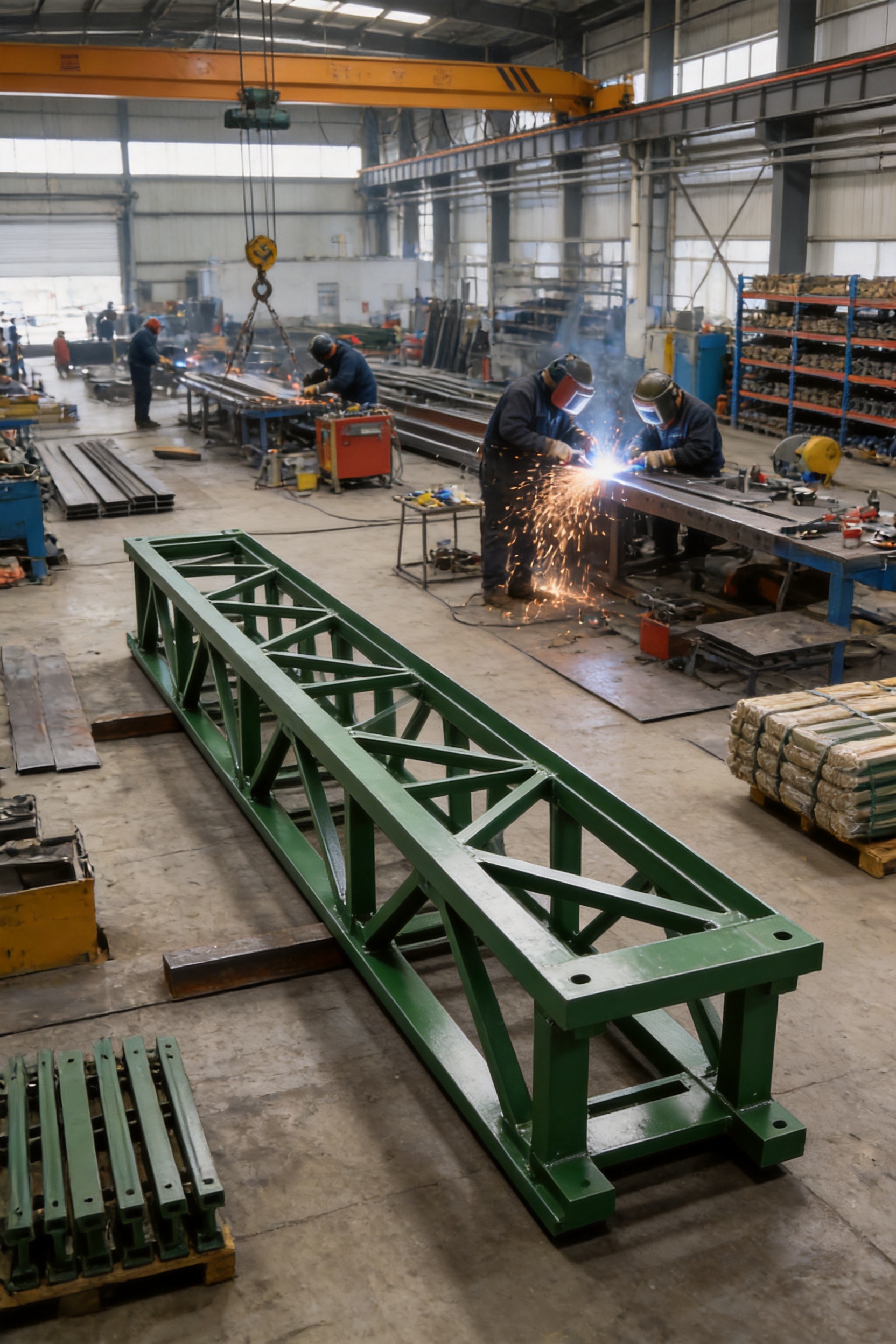
10. The Manufacturing and Service Strengths of Zhenjiang Jinhao
Zhenjiang Jinhao Road & Bridge Supporting Engineering Co., Ltd. was established in 2017 and is located in Shangdang Town Industrial Park, Dantu District, Zhenjiang City, Jiangsu Province, China. Its location near major transportation routes and the Beijing-Hangzhou Grand Canal supports the movement of steel materials, finished bridge components, and project equipment.
The company has developed from an enterprise involved in construction materials, industrial materials, and metal processing materials into a comprehensive supplier serving the bridge engineering sector. Its activities include the design, manufacturing, erection, and leasing of Bailey bridges, bridge launching gantry systems, hanging baskets, pier formwork, and various steel formwork products.
10.1 Integrated product knowledge
A manufacturer that produces several categories of bridge equipment can develop a broader understanding of project interfaces. Bailey bridges may be used alongside launching gantries, bridge formwork, pier formwork, and hanging baskets. Experience across these product groups helps the company understand the practical demands faced by contractors and bridge erection teams.
This integrated knowledge is valuable when customers require more than a single steel component. It supports system planning, component coordination, erection sequencing, and technical communication between the factory and the construction site.
10.2 Design and customization capability
Although the Type 321 Reinforced Bailey Truss is based on a standardized product concept, bridge projects differ in span, width, load, geography, transport access, and construction method. Jinhao provides customized fabrication, design assistance, system planning, and technical support to address these differences.
Customization may involve quantities, bridge configuration, reinforcement arrangement, coating requirements, packaging, documentation, or coordination with other bridge components. The purpose of customization is not to undermine standardization, but to apply standardized parts effectively within the specific engineering system.
10.3 Fabrication experience with engineered steel structures
Bridge steel products must satisfy more demanding requirements than general-purpose fabricated steel. They require accurate geometry, reliable joints, controlled materials, repeatable dimensions, suitable coatings, and careful handling. Experience with Bailey bridge sections and related steel structures contributes to a production process focused on these requirements.
For the Type 321 Reinforced Bailey Truss, fabrication quality directly affects field assembly. Accurate production can reduce site modification, prevent connection delays, and support more predictable project schedules.
10.4 Erection and technical support
Engineering support is especially important for temporary and modular bridges because the assembly method can affect the final structural condition. Jinhao provides technical support and bridge erection services, helping customers address practical questions related to component arrangement, assembly, launching, inspection, and project coordination.
Manufacturing and erection experience can also improve feedback between the factory and the site. If a recurring installation challenge is identified, it can inform future production, packaging, drawings, or technical instructions.
10.5 Leasing and lifecycle flexibility
Some users do not need to purchase a complete bridge inventory. They may require a bridge for one construction phase, emergency response period, or temporary traffic diversion. Leasing can reduce the initial capital burden and provide access to components without requiring long-term ownership.
For contractors and public agencies, leasing may also support short-term capacity expansion. The availability of standardized reinforced components can make it easier to respond to multiple projects or unexpected bridge requirements.
10.6 International project orientation
Jinhao provides steel bridge solutions for contractors, governments, and engineering companies worldwide. International supply requires attention to packaging, documentation, communication, shipping coordination, technical specifications, and local installation conditions.
A supplier with an international orientation can help customers clarify product requirements before production and coordinate the information needed for successful delivery. The customer’s local design code and approval requirements remain essential, but a responsive manufacturer can make the procurement process more efficient.
11. Quality, Reliability, and Lifecycle Management
Reliability is not created by material strength alone. It results from a chain of decisions extending from design and procurement to fabrication, delivery, installation, operation, inspection, and maintenance.
For the Type 321 Reinforced Bailey Truss, quality management should address at least the following areas:
Material verification: Confirm that the supplied steel corresponds to Q355B requirements and that the relevant certificates and records are available.
Dimensional accuracy: Verify the 3115 × 100 × 176 mm outer dimensions and 3000 mm center distance, together with all connection features required by the approved design.
Weld quality: Use qualified procedures and inspection methods appropriate to the joint type and project specification.
Surface protection: Apply an appropriate corrosion protection system and repair damage caused during transport or erection.
Identification: Mark and document components so that they can be tracked during delivery, assembly, dismantling, and reuse.
Field inspection: Check connections, alignment, bracing, bearings, deck condition, and visible damage at defined intervals.
Maintenance planning: Clean exposed surfaces, address coating defects, control corrosion, and replace damaged components when necessary.
For reusable modular systems, inspection after dismantling is particularly important. Components should be checked for permanent deformation, cracked welds, elongated holes, corrosion loss, impact damage, and missing hardware. Reuse should be permitted only when the component remains within the applicable technical requirements.
12. Economic and Operational Benefits
The Type 321 Reinforced Bailey Truss can provide economic benefits through a combination of capacity, modularity, speed, and reuse.
First, it allows a project to enhance the Type 321 system instead of commissioning an entirely new bridge type. This can reduce the need for new erection equipment, unfamiliar procedures, and separate training.
Second, prefabrication moves much of the production work into a controlled manufacturing environment. Factory fabrication can be more efficient and consistent than extensive field fabrication, especially where site conditions are congested, remote, wet, or unsafe.
Third, rapid assembly can reduce road closure periods, temporary traffic disruption, and the time required to establish access for construction operations. Time savings can have a direct economic value in highway, railway, municipal, and emergency projects.
Fourth, the component can be reused. Reusability supports a lower lifecycle cost when the owner or contractor operates a fleet of modular bridge equipment. Rental and leasing options may further improve financial flexibility.
Finally, the reinforced truss can help project planners match bridge capacity to actual requirements. A modular system with reinforcement options may provide more practical flexibility than a rigid one-size-fits-all solution.
13. Procurement Recommendations
Customers purchasing the Type 321 Reinforced Bailey Truss should provide clear technical and project information to the manufacturer. The following details can help the supplier prepare an accurate proposal:
1. Required bridge span and clear width.
2. Expected traffic and maximum vehicle load.
3. Number of lanes or traffic direction.
4. Intended service period.
5. Site location and environmental exposure.
6. Available lifting and erection equipment.
7. Delivery route and packaging restrictions.
8. Required coating or corrosion protection system.
9. Applicable design codes and inspection standards.
10. Required drawings, certificates, test reports, and installation documentation.
11. Whether the customer requires supply only, technical support, erection, or leasing.
Providing this information at an early stage helps the manufacturer recommend an appropriate configuration and identify issues before production. It also allows the project team to coordinate the reinforcement with foundations, bearings, decks, approach roads, and traffic management.
14. Safety and Responsible Use
The reinforced truss is a structural component, and its safe use depends on engineering design and qualified installation. Product information should not be used as a substitute for a project-specific structural calculation. Load capacity, allowable span, deflection, fatigue performance, stability, and connection requirements depend on the complete bridge arrangement and applicable regulations.
Before opening a bridge to traffic, the owner or responsible engineer should confirm that construction has followed the approved drawings and method statement. Any field modification, including drilling, cutting, welding, or unauthorized reinforcement, should be reviewed and approved by competent technical personnel.
During operation, users should comply with posted load limits, speed restrictions, lane controls, and clearance requirements. Inspection should be increased after flooding, collision, abnormal loading, severe storms, fire, or any event that may have affected the bridge.
Responsible use protects not only the structure but also workers, drivers, pedestrians, nearby communities, and the reputation of modular bridge technology.
15. Frequently Asked Questions
What is a Type 321 Reinforced Bailey Truss?
It is a strengthening component designed for Type 321 prefabricated highway steel bridge systems. It connects rigidly with the upper and lower chords of Type 321 Bailey bridge panels to improve bending capacity, stiffness, and resistance to deformation.
What are the main dimensions of the product?
The stated outer dimensions are 3115 × 100 × 176 mm, and the center distance is 3000 mm. The dimensions should be confirmed against the approved product drawing and project requirements before ordering.
What material is used?
The product is manufactured from Q355B structural steel. Material certificates and applicable test requirements should be reviewed as part of project quality control.
Does the reinforced truss replace the Type 321 Bailey bridge panel?
No. It is intended to reinforce the Type 321 panel system. It works with the bridge panels and other required components rather than replacing the complete bridge structure.
How does it improve bridge performance?
By connecting to the upper and lower chords, the reinforced truss strengthens the chord system and increases bending stiffness. This can improve load-carrying performance and reduce deformation, particularly in the mid-span region.
Can it be used for emergency bridges?
Yes. Its modular design is suitable for emergency, temporary, construction, municipal, water conservancy, and semi-permanent bridge applications when the complete bridge configuration has been properly designed and checked.
Can it carry any heavy vehicle?
No. The allowable vehicle load depends on span, bridge width, number of truss lines, deck arrangement, support conditions, connections, bracing, and the governing design standard. A project-specific calculation is required before heavy traffic is permitted.
Can the product be reused?
Modular Bailey bridge components are generally suitable for reuse when they remain within the applicable technical requirements. After dismantling, the component should be inspected for deformation, corrosion, cracked welds, damaged holes, and other defects before being placed into another bridge.
Does the manufacturer provide installation support?
Zhenjiang Jinhao provides technical support and bridge erection services. The exact scope should be confirmed according to the project location, contract, installation method, and customer requirements.
Is leasing available?
The company provides leasing services for Bailey bridges and related bridge equipment. Leasing availability, quantities, service period, transport, and installation support should be discussed during project planning.
What information should be supplied for a quotation?
Customers should provide the span, clear width, intended traffic, required capacity, service period, site conditions, delivery location, coating requirements, applicable standards, and whether they require design assistance, fabrication, erection, or leasing.
Can the product be customized?
The standard product has defined dimensions and material characteristics, but the manufacturer provides customized fabrication and system planning for project-specific requirements. Any modification should be reviewed technically before production.
Why is dimensional accuracy important?
The reinforced truss must connect correctly with Type 321 bridge panels. Accurate dimensions and connection locations reduce field adjustment, improve erection efficiency, and support more predictable structural behavior.
What maintenance is required?
Maintenance may include routine visual inspection, cleaning, coating repair, connection checks, corrosion control, deck inspection, and post-event examination after flooding, collision, or abnormal loading. The inspection interval should reflect the service environment and project requirements.
16. Conclusion
The Type 321 Reinforced Bailey Truss is a practical structural upgrade for Type 321 prefabricated highway steel bridge systems. Its purpose is clear: strengthen the connection between the upper and lower chord zones, improve bending load capacity, increase stiffness, and reduce deformation in demanding bridge applications.
With stated dimensions of 3115 × 100 × 176 mm, a 3000 mm center distance, and Q355B structural steel, the component combines standardized modular geometry with the performance advantages of reinforcement. It supports the continued use of a familiar Type 321 system while allowing engineers to respond to higher loads, more demanding service conditions, and longer temporary or semi-permanent operating periods.
Its advantages over improvised reinforcement include purpose-designed compatibility, standardized dimensions, easier transport, repeatable assembly, improved structural stiffness, and reusability. These benefits are strengthened when the product is supported by controlled material procurement, accurate fabrication, qualified welding, dimensional inspection, corrosion protection, technical documentation, and professional erection guidance.
Zhenjiang Jinhao Road & Bridge Supporting Engineering Co., Ltd. brings together design, manufacturing, erection, leasing, and technical support for modular bridges and related engineered steel structures. This integrated capability enables the company to serve contractors, governments, infrastructure owners, and engineering companies seeking complete or customized bridge solutions.
For any project, the reinforced truss should be selected as part of a complete structural design. When correctly specified, manufactured, installed, inspected, and maintained, it can provide a reliable and economical way to improve the performance of a Type 321 Bailey bridge and extend the usefulness of modular steel bridge technology.
References
1. General principles of modular steel bridge design and prefabricated truss construction.
2. Structural steel design practices for temporary, emergency, and semi-permanent bridges.
3. Technical information for Type 321 Bailey bridge panel systems and modular bridge components.
4. Q355B structural steel material standards and mechanical property requirements.
5. Welding procedure qualification and inspection practices for fabricated steel structures.
6. Corrosion protection and maintenance guidelines for exposed structural steel bridge components.
7. Construction planning principles for bridge erection, launching, temporary works, and traffic management.
8. Manufacturer product information for Type 321 Reinforced Bailey Truss supplied by Zhenjiang Jinhao Road & Bridge Supporting Engineering Co., Ltd.


 Français
 Español
 عربى