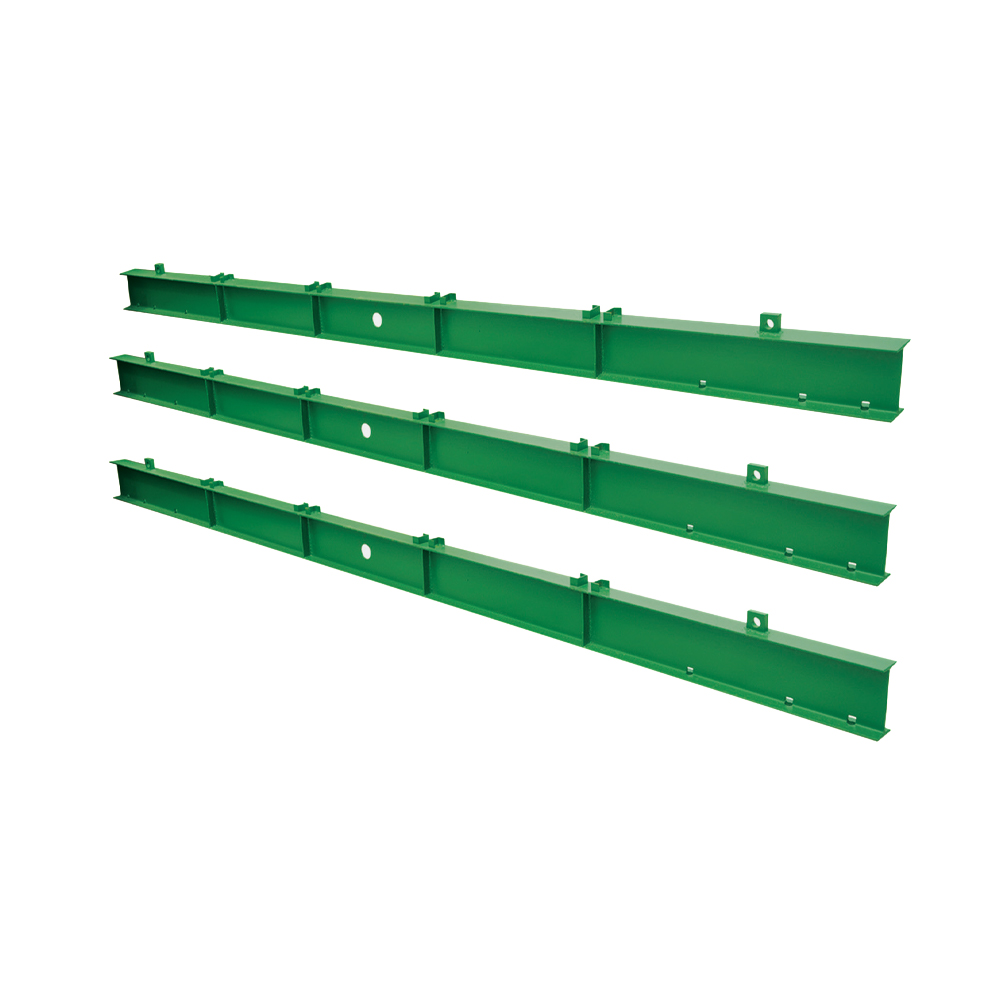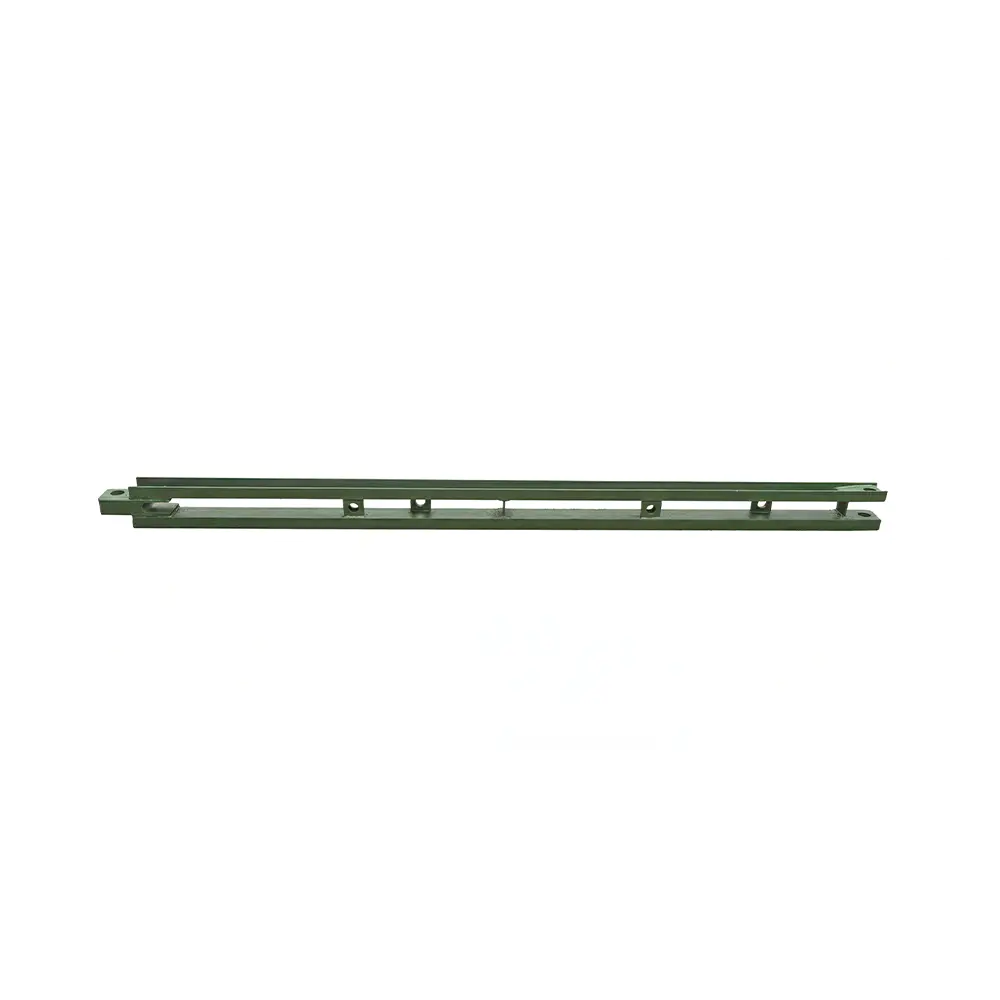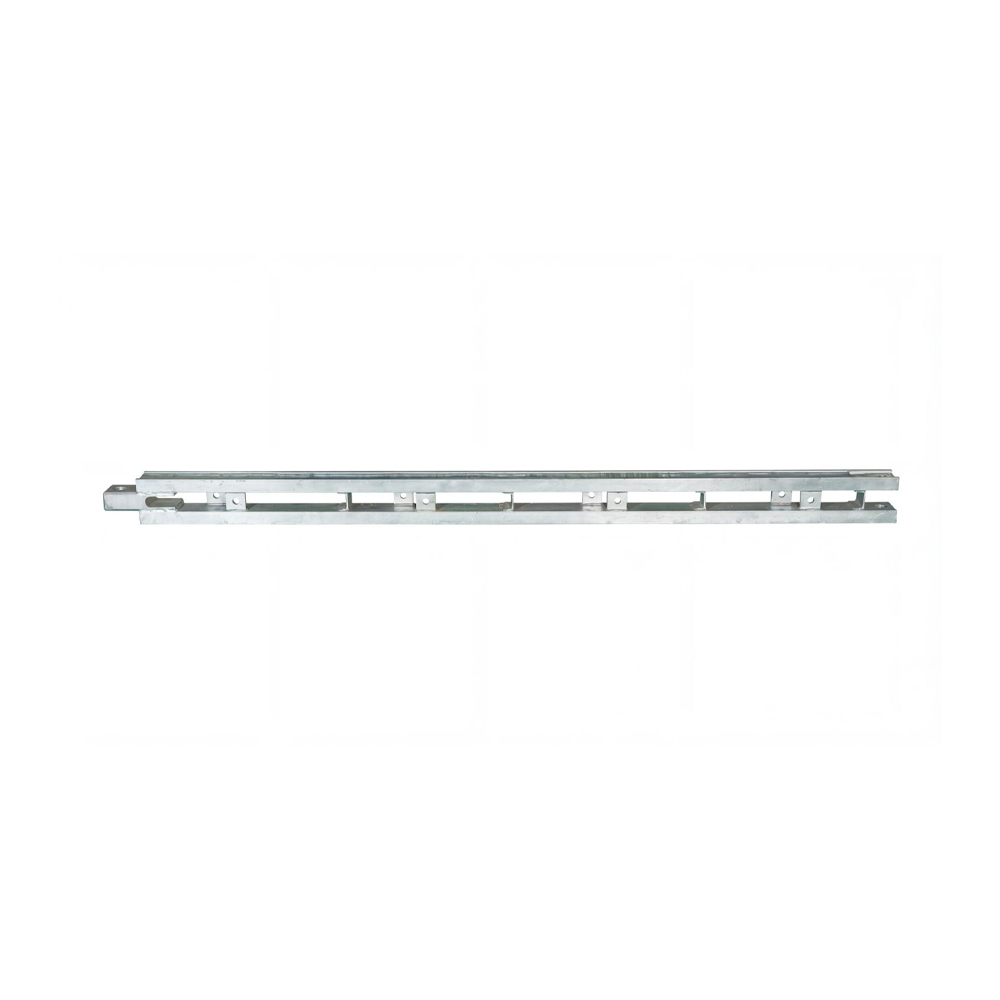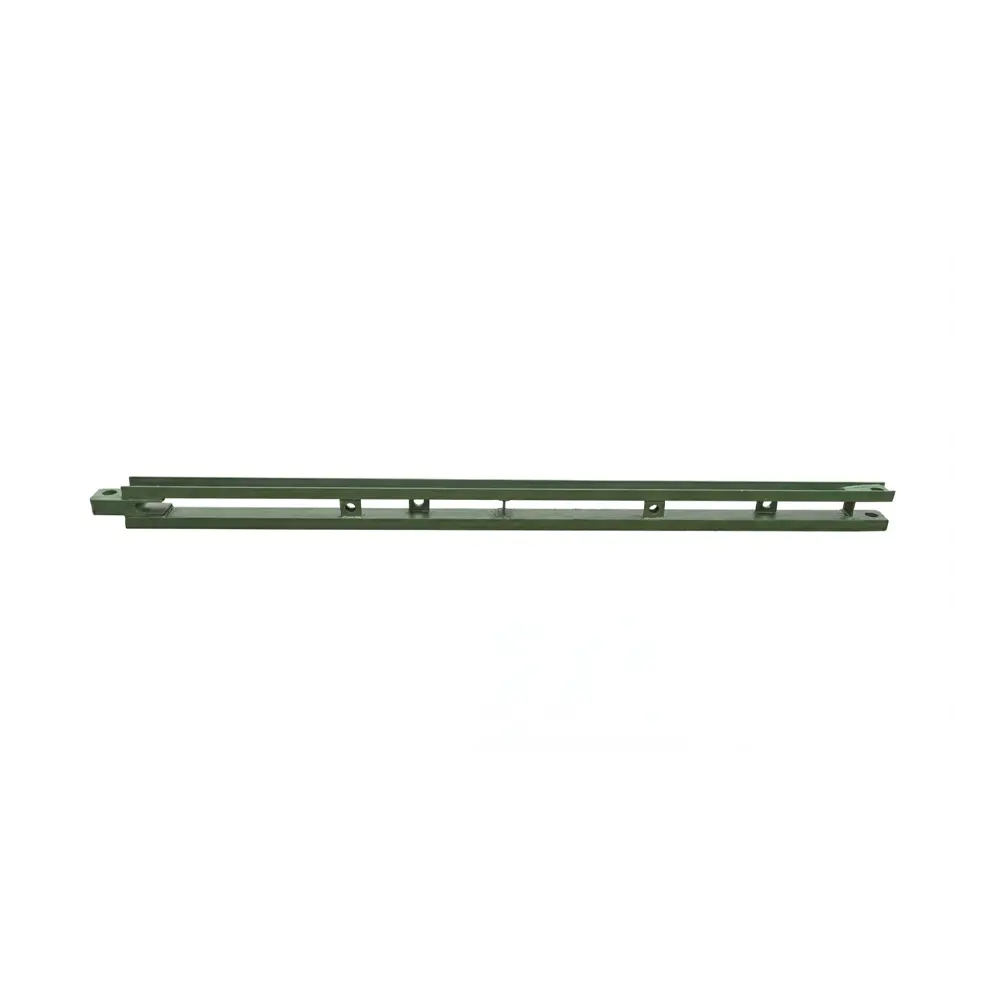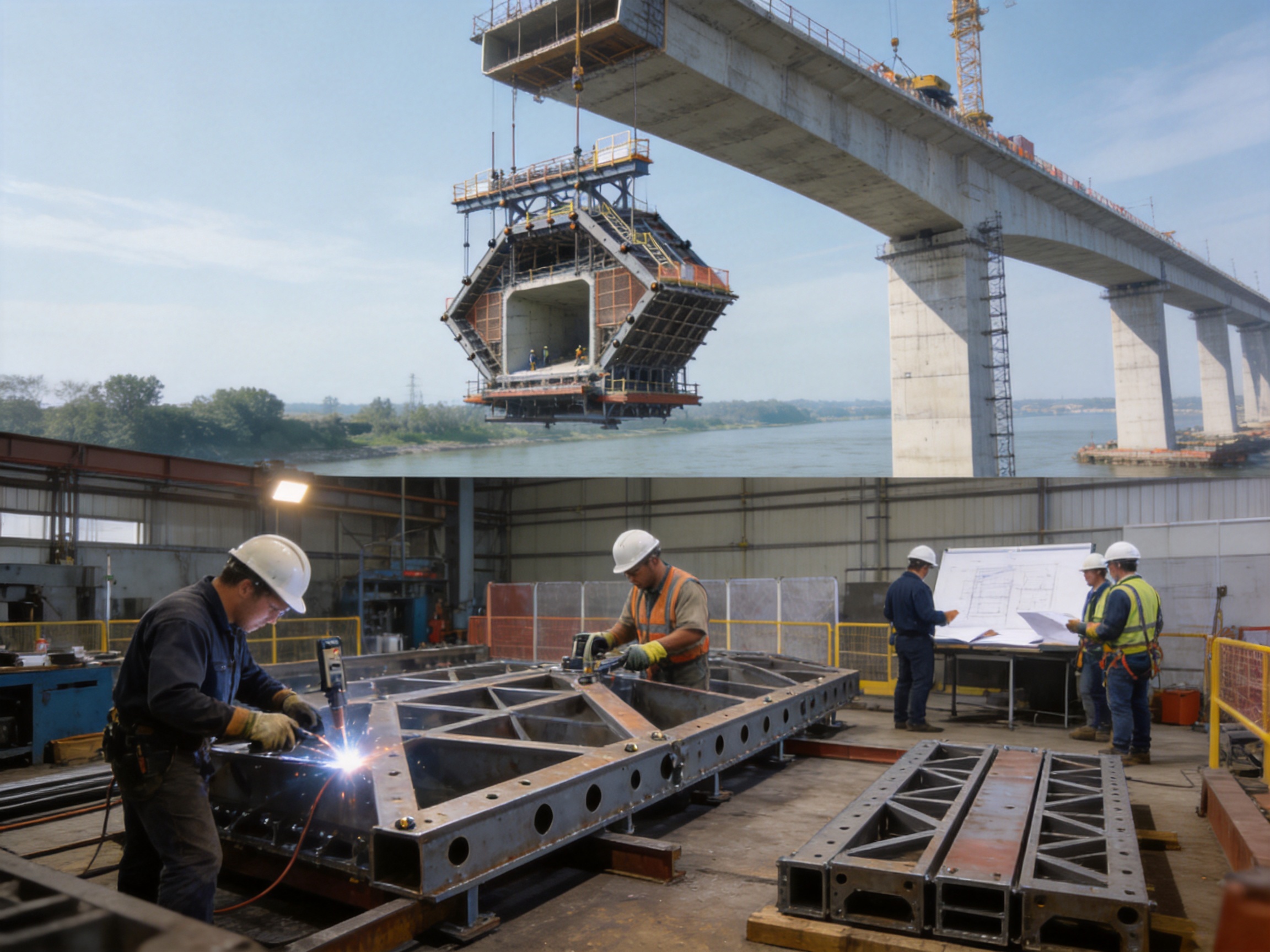
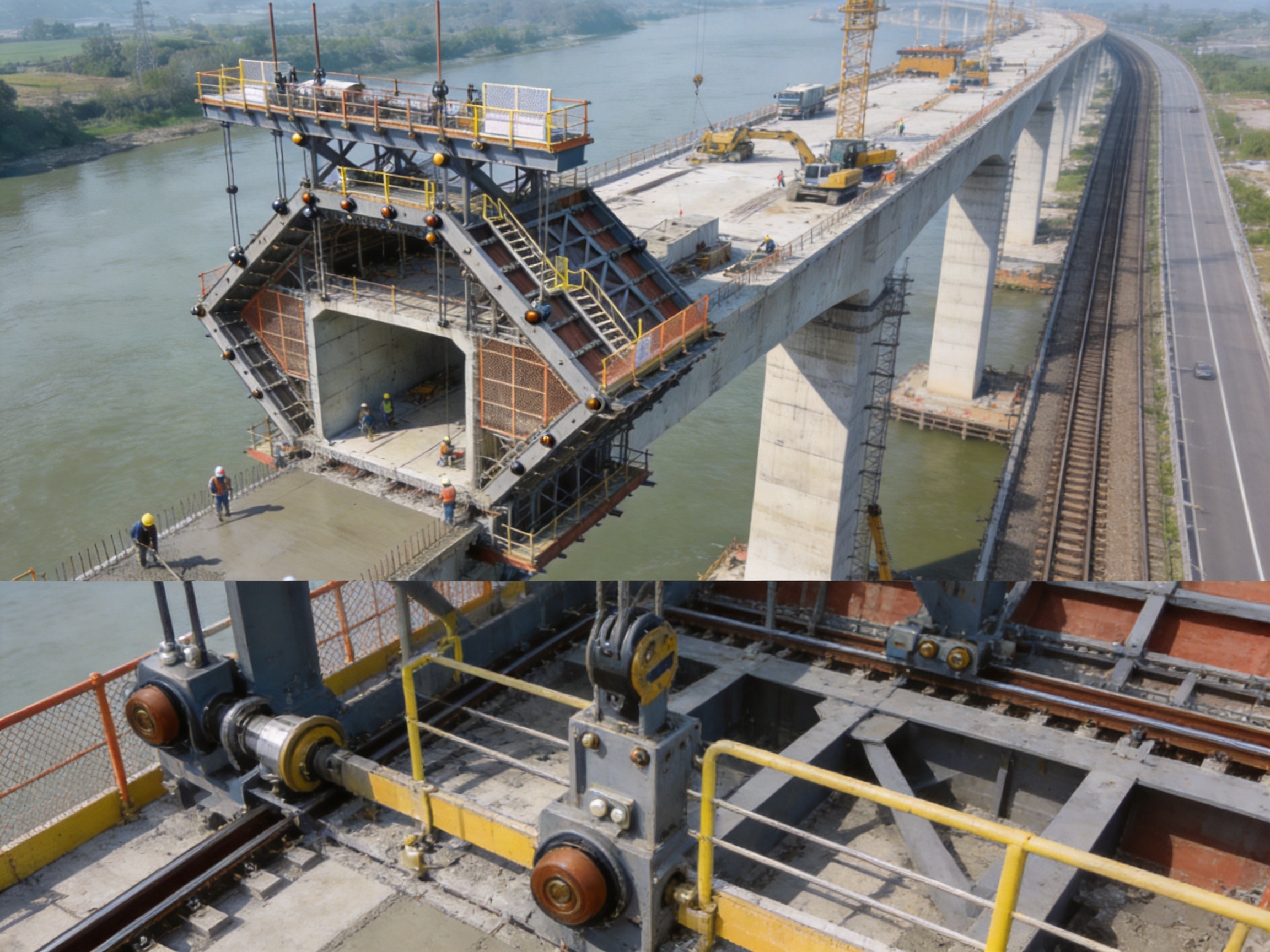
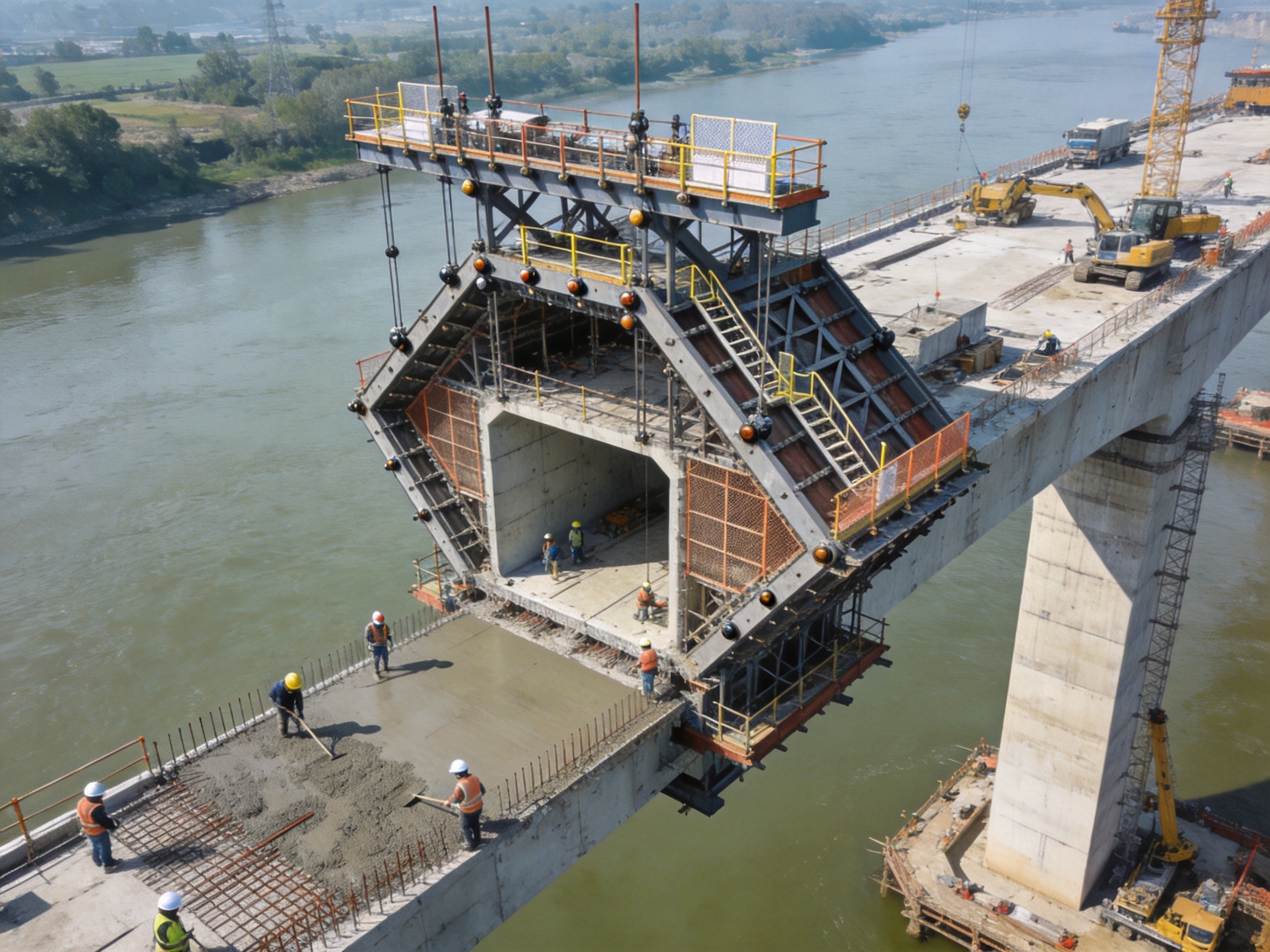
In modern bridge construction, long-span concrete box girders require equipment that can support heavy fresh concrete, maintain geometric accuracy, and move safely from one casting segment to the next. The form traveler is one of the most important systems used in balanced cantilever construction because it directly influences construction speed, structural quality, worker safety, and the final accuracy of the bridge.
The Diamond Form Traveler is designed around a rhombus-shaped load-bearing structure. This distinctive configuration provides a combination of high rigidity, low self-weight, stable load distribution, and strong adaptability. It is especially suitable for large-span, high-load, and complex-stress box girder structures where ordinary formwork systems may experience limitations related to stiffness, movement, or installation flexibility.
Developed and manufactured by Zhenjiang Jinhao Road & Bridge Supporting Engineering Co., Ltd., the Diamond Form Traveler forms part of a broader range of engineered bridge construction systems. The company provides design, fabrication, erection, leasing, technical support, and system planning for bridge equipment, including cantilevered launching gantries, Bailey bridges, bridge steel formwork, pier formwork, and related steel structures.
This article examines the structural concept, operating principle, technical advantages, manufacturing strengths, application value, safety features, and selection considerations of the Diamond Form Traveler. It also explains why a carefully engineered diamond-type system can provide significant benefits over conventional traveler arrangements in demanding bridge projects.
1. The Role of a Form Traveler in Balanced Cantilever Construction
Balanced cantilever construction is widely used for bridges that cross deep valleys, rivers, railways, highways, urban corridors, and other obstacles where extensive ground-based falsework is impractical. In this construction method, a pier is built first, and concrete girder segments are then cast symmetrically on both sides of the pier. Each segment is supported by a form traveler until the concrete reaches the required strength and the next segment can be constructed.
A form traveler normally supports the external formwork, internal formwork, working platforms, reinforcement operations, concrete placement activities, and temporary construction loads. Once a segment has been cast, cured, and stressed, the traveler is released from the completed segment and moved forward to the next position. The same equipment is then adjusted and reused repeatedly along the bridge span.
This repeated cycle makes the form traveler more than a simple steel frame. It is a precision construction system that must maintain the designed position of the formwork during loading, tolerate changing loads, move without damaging the completed concrete, and provide safe access for construction personnel.
The quality of the traveler affects several critical outcomes:
• The elevation and alignment of each concrete segment.
• The dimensional accuracy of the box girder cross-section.
• The amount of construction deflection and deformation.
• The efficiency of reinforcement, formwork, and concrete operations.
• The safety margin during casting and forward movement.
• The overall construction cycle time.
• The final appearance and structural performance of the bridge.
For these reasons, a traveler must be designed for the actual bridge geometry and construction sequence rather than treated as a generic piece of site equipment.
2. The Diamond-Shaped Load-Bearing Concept
The core feature of the Diamond Form Traveler is its rhombus-shaped load-bearing structure. The diamond configuration creates a stable geometric framework in which the primary members work together to transfer the loads from the formwork and fresh concrete toward the anchoring and support points on the completed bridge segment.
A rhombus-shaped frame can provide a deep and efficient load path without requiring an excessively heavy structure. Its geometry helps distribute vertical, longitudinal, and transverse forces through interconnected members rather than concentrating all loads in a single beam or a limited number of highly stressed components.
During concrete placement, the form traveler is subjected to the weight of fresh concrete, reinforcement, formwork, working platforms, construction tools, personnel, and possible dynamic effects. These loads are transferred through the traveler frame and supporting components to the completed girder segment. The diamond structure is intended to provide strong resistance to bending, lateral displacement, and deformation while maintaining a relatively low dead weight.
The geometric arrangement also supports efficient movement. A traveler that is excessively bulky or poorly balanced may require greater effort to advance and may impose unnecessary loads on the bridge. By combining structural depth with an economical arrangement of steel members, the diamond-type system can achieve a favorable relationship between stiffness and self-weight.
Its design is particularly valuable when the bridge has a nonstandard cross-section, variable segment length, changing depth, or other geometric conditions that require repeated adjustment. The traveler can be configured and fine-tuned to suit project-specific requirements, subject to engineering verification and the approved construction plan.
3. Main Advantages of the Diamond Form Traveler
3.1 High Overall Rigidity
High rigidity is one of the most important characteristics of a form traveler. When fresh concrete is placed, even a small amount of unwanted deformation can affect the elevation, camber, line, and cross-sectional dimensions of the segment. A rigid traveler helps reduce the movement of the formwork and maintains a more stable casting condition.
The diamond-shaped load-bearing system provides a structurally efficient frame with strong resistance to deformation. Its interconnected members create a stable load path, allowing the main structure to perform as an integrated unit. Compared with a less rigid arrangement, this can reduce excessive deflection and improve the consistency of segment construction.
High rigidity is also beneficial when construction loads vary during a casting cycle. Concrete placement is not always perfectly uniform, and local differences in reinforcement, formwork, personnel, or equipment can create temporary eccentric loads. A well-designed rigid frame can better tolerate these variations and reduce the risk of sudden changes in formwork position.
3.2 Low Self-Weight
The self-weight of a traveler directly affects the temporary load carried by the completed bridge segment and the supporting anchorage system. A heavy traveler increases the demand on the girder, anchoring devices, lifting equipment, and movement system. It may also increase the construction-stage bending moments and deflections of the cantilever.
The Diamond Form Traveler is designed to minimize unnecessary steel weight while preserving the required structural stiffness. This balance is important because low self-weight does not simply make the equipment easier to transport. It can also reduce additional stress on the main beam, limit the temporary load on the bridge, and improve the efficiency of the entire construction cycle.
Reduced self-weight can provide practical benefits during installation and relocation. Fewer heavy lifting operations may be required, and the equipment can be handled more efficiently on projects with restricted access. However, the final weight must always be determined through engineering design, because the traveler must include all required platforms, formwork interfaces, safety protection, adjustment mechanisms, and connection components.
3.3 Reduced Additional Stress on the Main Beam
During balanced cantilever construction, the bridge itself is part of the temporary support system. The traveler and the fresh concrete are carried by the completed portion of the box girder. Any unnecessary equipment weight increases the load on the cantilever and may influence the construction-stage stress condition.
A lightweight but rigid traveler helps reduce the additional stress imposed on the main beam. This can support better control of construction-stage deflection and make it easier for engineers to manage the relationship between calculated camber and actual site behavior.
Reducing additional stress is particularly important for long cantilevers, high piers, variable-depth box girders, and structures with complex stress conditions. It can also be valuable where the construction sequence includes strict limitations on temporary loads or where the bridge has a demanding structural design.
3.4 Adaptability to Irregular Beam Cross-Sections
Not all bridge box girders have a uniform, simple cross-section. Many projects include variable-depth girders, inclined webs, changing deck widths, curved alignments, different slab thicknesses, or unusual edge details. Conventional systems designed for a single standard geometry may require extensive modification or may not provide sufficient adjustment capacity.
The Diamond Form Traveler is intended to adapt to various irregular beam cross-sections. Its configuration can be coordinated with the required external formwork, internal formwork, working platforms, and adjustment points. This makes it suitable for projects where the cross-section changes along the span or where the structure includes complex geometric transitions.
Adaptability does not mean that one standard traveler fits every bridge without modification. Instead, it means that the system can be engineered, fabricated, and adjusted according to the project’s geometry. Accurate bridge drawings, segment dimensions, construction loads, anchoring conditions, and movement requirements must be reviewed before production.
3.5 Precise Synchronous Forward Movement
Forward movement is a critical operating stage. The traveler must be released from the completed segment, advanced to the next casting location, and accurately positioned before reinforcement and concrete work begin. If the two sides of a traveler do not move consistently, the frame may become skewed, connections may be overloaded, and the formwork may lose its intended position.
The Diamond Form Traveler uses a precise synchronous forward movement concept. Coordinated movement helps keep the system balanced and aligned as it advances. This is particularly important for large-width box girders, complex cross-sections, and construction sequences where several traveler components must move together.
Controlled movement can also reduce impact on the completed concrete and the temporary anchorage system. A smooth advancement process limits sudden shock loads and supports safer work around the traveler. Movement procedures should always follow the approved method statement, including inspection of rails, supports, anchors, hydraulic or mechanical devices, locking components, and clearance zones.
3.6 Comprehensive Safety Protection
Form traveler operations involve work at height, heavy lifting, temporary structural loading, concrete placement, reinforcement installation, and repeated movement of large steel assemblies. Safety protection must therefore be integrated into the system rather than added as an afterthought.
The Diamond Form Traveler can be equipped with comprehensive safety protection systems appropriate to the project. These may include working platforms, guardrails, access ladders, toe boards, protective screens, anti-fall arrangements, locking devices, inspection points, and secure operating areas. The exact configuration depends on the bridge design, construction method, site conditions, and applicable regulations.
Well-planned protection improves both safety and productivity. Workers can perform reinforcement, formwork, inspection, concrete placement, and stressing operations more efficiently when access is stable and protected. The equipment should also include clear identification of lifting points, anchoring locations, adjustment areas, and restricted zones.
4. Comparison with Conventional Traveler Systems
Different traveler systems may be suitable for different bridge projects. The most appropriate choice depends on span length, segment dimensions, box girder geometry, concrete weight, construction sequence, site access, and local safety requirements. The Diamond Form Traveler offers several advantages where rigidity, low weight, movement precision, and adaptability are important priorities.
| Evaluation Item | Diamond Form Traveler | Potential Limitation of a Conventional Basic Frame | Project Value |
|---|
| Load-bearing geometry | Rhombus-shaped integrated structure | May rely on simpler or less integrated member arrangements | Creates an efficient load path and supports structural stability |
| Overall rigidity | Designed for high stiffness and controlled deformation | May require additional reinforcement to achieve comparable stiffness | Supports accurate formwork positioning during casting |
| Self-weight | Engineered to reduce unnecessary dead load | Heavier systems can increase temporary bridge loading | Reduces additional stress on the main beam and supports easier handling |
| Cross-section adaptability | Can be configured for irregular or changing box girder sections | Standardized systems may need extensive field modification | Improves suitability for complex bridge geometries |
| Forward movement | Designed for precise synchronous advancement | Uneven movement may cause skewing or connection stress | Improves positioning accuracy and operating control |
| Safety integration | Can include comprehensive platforms and protective systems | Protection may be incomplete or added separately | Supports safer work at height and more organized operations |
| Customization | Can be engineered around project-specific requirements | Generic systems may have limited adjustment capacity | Improves compatibility with the construction method |
The comparison should not be interpreted as a claim that every conventional traveler is unsuitable. Many established systems perform effectively when correctly designed and operated. The key advantage of the diamond arrangement is its ability to combine high rigidity and low self-weight while offering a flexible basis for project-specific engineering.
For contractors and bridge owners, the decision should be based on verified calculations, construction conditions, quality requirements, safety provisions, lifecycle cost, and technical support. A reliable supplier should be able to discuss the complete system rather than only the visible steel frame.
5. Applications in Complex Bridge Construction
5.1 Large-Span Box Girder Bridges
Large-span bridges often require balanced cantilever construction because ground support beneath the span is difficult, expensive, or impossible. The traveler must support longer cantilevers and larger concrete segments while maintaining strict control of deflection and alignment.
The Diamond Form Traveler is well suited to this environment because its high rigidity helps resist deformation and its low self-weight limits the additional load carried by the cantilever. When combined with appropriate temporary anchorage and construction monitoring, it can support a controlled segment-by-segment erection process.
5.2 High-Load Structures
High-load box girder structures may involve large segment volumes, substantial reinforcement, thick slabs, heavy external formwork, or demanding construction-stage load combinations. The traveler must be designed to transfer these loads safely through its frame and anchoring system.
The diamond load-bearing structure provides a strong foundation for this type of engineering. The actual capacity must be confirmed by project calculations, including dead load, fresh concrete load, construction live load, wind effects, impact or movement effects, eccentric loading, and possible temporary conditions.
5.3 Irregular and Variable Cross-Sections
Architectural and engineering requirements may lead to box girders with changing depth, variable width, inclined surfaces, nonstandard web arrangements, or special edge geometry. Such structures require formwork equipment that can be adjusted accurately and repeatedly.
The Diamond Form Traveler can be adapted to these conditions through customized frame dimensions, formwork interfaces, adjustment mechanisms, and access arrangements. This is a major benefit for projects where a standard traveler would require extensive site modifications.
5.4 Bridges over Waterways and Transport Corridors
When construction takes place above rivers, canals, railways, expressways, or busy urban roads, the use of ground-supported falsework may interrupt traffic or create environmental and safety challenges. Balanced cantilever construction allows much of the work to be performed above the obstacle.
A traveler with integrated safety platforms and controlled movement helps reduce the need for temporary structures below the bridge. It can support a more organized construction zone and limit interference with navigation, road traffic, railway operations, or surrounding activities.
5.5 Projects with Repeated Segment Construction
The economic value of a form traveler increases when the same system is used across many segments or multiple bridge units. Repeated operation allows construction teams to standardize inspection, reinforcement placement, formwork adjustment, concrete placement, curing, stressing, and movement procedures.
The Diamond Form Traveler is designed for repeated cycles. Its durability, adjustment range, and maintenance condition are therefore important factors. Proper inspection between cycles helps ensure that the system continues to deliver consistent performance throughout the project.
6. Engineering Design and Customization
A form traveler should be selected only after the bridge geometry and construction sequence have been carefully reviewed. Jinhao’s engineering service covers design and system planning, allowing the equipment to be coordinated with the requirements of the project rather than supplied as an isolated standard product.
Important design inputs may include:
• Bridge span arrangement and pier spacing.
• Box girder width, depth, and shape.
• Segment length and concrete volume.
• Concrete grade, reinforcement arrangement, and construction sequence.
• Required casting cycle and forward movement method.
• Anchorage positions and available embedded components.
• Longitudinal and transverse adjustment requirements.
• Formwork type and access requirements.
• Wind, temperature, site access, and working-environment conditions.
• Applicable design codes, safety regulations, and inspection requirements.
Once these inputs are established, the traveler can be developed around a coordinated structural and operational concept. The main frame, support components, formwork interfaces, platforms, movement system, anchorage arrangement, and protection devices should be considered together.
Customization may include changes to the overall frame dimensions, support configuration, working platform arrangement, formwork connection details, movement rails, hydraulic or mechanical equipment, access systems, and safety protection. The purpose is to achieve compatibility with the bridge and reduce the need for uncontrolled field modifications.
7. Advanced Manufacturing Strengths
7.1 Integrated Design-to-Fabrication Capability
Jinhao Road & Bridge Supporting Engineering Co., Ltd. has developed from a company focused on construction materials, industrial materials, and metal processing materials into a comprehensive enterprise engaged in bridge equipment and engineered steel structures. Its business covers design, manufacturing, erection, and leasing of Bailey bridges, launching gantries, hanging baskets, pier formwork, and bridge steel formwork.
This integrated background is valuable for the manufacture of a Diamond Form Traveler. The traveler is not merely a collection of steel plates and profiles. It requires structural understanding, fabrication accuracy, assembly coordination, and knowledge of real construction-site conditions.
When design and fabrication are closely coordinated, potential conflicts between drawings, connections, access platforms, lifting points, and formwork interfaces can be identified earlier. This supports better production planning and reduces the likelihood of extensive rework during installation.
7.2 Experience with Engineered Steel Structures
The company’s product range includes Bailey steel bridges, Type 321 Bailey truss sections, HD200 or Type 200 Bailey truss sections, triangular and diamond hanging baskets, bridge steel formwork, and related steel structures. These products require attention to load transfer, modular connection, dimensional control, corrosion protection, transportation, erection, and site service.
Experience across these product categories contributes to a broader understanding of temporary bridge structures and construction support equipment. It allows the company to consider how the traveler will be transported, assembled, anchored, adjusted, moved, and maintained in real project conditions.
7.3 Fabrication Accuracy and Assembly Coordination
The performance of a form traveler depends on the accuracy of its fabricated components. Main frame members must fit correctly, connection holes must align, adjustment mechanisms must operate smoothly, and the formwork interface must correspond to the approved bridge geometry.
Manufacturing quality management should therefore cover material verification, cutting, forming, welding, drilling, assembly, dimensional inspection, surface treatment, and final review. Components should be identified and organized so that site assembly is clear and efficient.
For customized equipment, trial assembly can be an important part of the production process. It helps confirm the fit of major members, the operation of movement components, the arrangement of platforms, and the accessibility of bolted or pinned connections. Where required by the project, inspection records and quality documentation can be prepared to support acceptance and traceability.
7.4 Manufacturing for Transport and Site Installation
Large bridge equipment must often be transported in sections. The traveler therefore needs to be divided into manageable modules without compromising the integrity of the final assembly. Modular fabrication can simplify loading, shipping, lifting, and installation at the bridge site.
Jinhao’s experience with modular Bailey bridge components and other steel systems supports an understanding of transport-oriented fabrication. Connection details should be designed for efficient assembly, and components should be marked clearly to reduce confusion during erection.
7.5 Erection and Technical Support
Manufacturing is only one part of the equipment supply process. A form traveler must be correctly assembled, anchored, adjusted, inspected, and commissioned before it enters the casting cycle. Technical support during erection can help the construction team understand connection sequences, safety arrangements, operating limits, and inspection points.
Jinhao provides technical support and system planning as part of its service capabilities. Depending on the project, support may include equipment coordination, assembly guidance, operating recommendations, inspection assistance, and technical communication with contractors or engineering teams.
8. Quality Management from Raw Material to Finished System
Quality management should begin before fabrication. The steel, fasteners, pins, hydraulic or mechanical components, protective materials, and other purchased items must correspond to the approved specifications. Material certificates and inspection records provide important evidence of conformity.
During fabrication, welding quality is especially important because welded joints transfer significant forces within the main frame and support system. Welding procedures, welder qualifications, joint preparation, welding sequence, visual inspection, and any required nondestructive testing should be managed according to the project requirements.
Dimensional inspection is equally important. A frame that is structurally strong but geometrically inaccurate may create difficulty during assembly or fail to position the formwork correctly. Measurements should cover member lengths, hole spacing, connection locations, frame squareness, platform dimensions, and interfaces with the formwork and movement system.
Surface preparation and protective coating also influence service life. Bridge construction equipment may be exposed to rain, humidity, concrete slurry, dust, and repeated handling. Appropriate surface treatment and coating can help reduce corrosion and preserve the condition of the steel components.
Before dispatch, the completed system should be reviewed against the approved drawings and equipment list. Critical components should be checked for completeness, identification, damage, and proper packaging. A well-organized dispatch process reduces delays when the equipment arrives at the project site.
9. Installation and Commissioning
Installation should be carried out by personnel familiar with heavy steel structures and bridge construction equipment. The site must provide a stable and organized working area for unloading, temporary storage, assembly, lifting, and connection of the traveler components.
The installation process generally includes the following stages:
1. Review of drawings, method statements, lifting plans, and safety procedures.
2. Inspection of delivered components and confirmation of identification marks.
3. Preparation of the completed bridge segment, embedded items, anchorage points, rails, or support locations.
4. Assembly of the main diamond-shaped load-bearing frame.
5. Installation of support members, connection components, movement equipment, and formwork interfaces.
6. Installation of working platforms, guardrails, access systems, protective screens, and anti-fall measures.
7. Positioning and adjustment of the formwork.
8. Inspection of bolts, pins, welds, anchors, locking devices, and adjustment mechanisms.
9. Commissioning of the movement system without construction load.
10. Final review and approval before the first concrete casting cycle.
Commissioning should confirm that the traveler can move in a controlled and synchronized manner, that all locking devices function correctly, and that the formwork can reach the required position. Any interference with reinforcement, prestressing ducts, embedded components, or construction access should be resolved before concrete placement.
10. Operating Cycle
The operating cycle of a form traveler must be clearly planned and consistently followed. Although specific procedures vary by project, the general sequence includes formwork preparation, reinforcement installation, concrete placement, curing, prestressing, release, movement, and repositioning.
10.1 Formwork Positioning
After the traveler reaches the next segment location, the external and internal formwork are adjusted to the approved geometry. The elevation, transverse position, longitudinal position, cross-sectional dimensions, and construction camber should be checked before reinforcement is finalized.
10.2 Reinforcement and Embedded Components
Reinforcement, ducts, inserts, drainage elements, inspection openings, and other embedded components are installed after the formwork has been positioned. The traveler must provide sufficient access and working space for this activity without compromising safety protection.
10.3 Concrete Placement
Concrete should be placed according to the approved sequence to limit unbalanced loading. The traveler and formwork should be monitored during placement for unusual movement, leakage, vibration, or deformation. The diamond frame’s rigidity supports stable conditions, but operating discipline remains essential.
10.4 Curing and Prestressing
After casting, the concrete must reach the specified strength before the traveler is released or moved. The relevant stressing operations, inspections, and records should be completed in accordance with the construction design and quality plan.
10.5 Release and Forward Movement
Once release conditions are confirmed, the traveler is detached or repositioned from the completed segment. The movement path, support points, rails, anchors, and surrounding area must be inspected. The traveler is then advanced in a controlled and synchronized manner to the next segment location.
10.6 Repositioning and Final Checks
At the new position, the traveler is locked, supported, and adjusted. The formwork is brought to the designed location, and all connections are checked again. The next casting cycle begins only after the responsible technical and safety personnel approve the setup.
11. Safety Management
Safety depends on both equipment design and operating procedures. The traveler should be treated as a temporary load-bearing structure, and every casting cycle should be preceded by a documented inspection.
Important safety checks include:
• Condition and tightness of bolts, pins, anchors, and locking devices.
• Condition of main frame members, welds, brackets, rails, and support components.
• Capacity and operating condition of lifting, hydraulic, or mechanical movement devices.
• Stability of working platforms, guardrails, toe boards, ladders, and access routes.
• Clearance from the bridge edge, reinforcement, temporary supports, power lines, and surrounding structures.
• Weather conditions, particularly wind, heavy rain, lightning, and poor visibility.
• Communication arrangements between operators, supervisors, and workers.
• Load distribution and concrete placement sequence.
• Emergency stopping procedures during movement.
• Availability of rescue and fall-protection arrangements.
Movement should never begin while personnel, tools, loose materials, or unauthorized equipment remain in restricted areas. The work zone below the traveler should be controlled, particularly when construction takes place above public roads, railway lines, waterways, or occupied facilities.
12. Maintenance and Service Life
Regular maintenance helps preserve the performance and safety of the traveler. After each movement cycle, visible damage, deformation, concrete buildup, loose fasteners, and coating deterioration should be checked. Concrete residue should be removed from moving parts, connection areas, rails, and adjustment components.
Lubrication should be applied to suitable pins, rollers, bearings, threads, and movement components according to the equipment instructions. Hydraulic or mechanical systems should be inspected for leakage, abnormal noise, wear, and loss of synchronization.
Welded areas and highly loaded connection points should receive particular attention. Any crack, permanent deformation, excessive wear, or unexpected change in movement resistance should be investigated before the traveler is used again.
Maintenance records should identify the inspection date, equipment location, observed condition, corrective action, and person responsible. A documented maintenance system makes it easier to identify recurring problems and plan replacement components.
When a traveler is transferred between projects, it should undergo a complete technical review. The new bridge geometry, load conditions, anchorage method, and movement arrangement must be evaluated before reuse. Equipment suitable for one project may require modification or re-certification for another.
13. Why Choose Jinhao for a Diamond Form Traveler?
Jinhao’s strength lies in its combination of product manufacturing, engineering support, and bridge construction experience. The company is based in Zhenjiang, Jiangsu Province, and operates from an industrial environment with convenient access to major transportation routes. Its location supports the movement of fabricated steel products and equipment for domestic and international projects.
The company was established in 2017 and has developed a product and service portfolio covering temporary bridges, bridge erection equipment, hanging baskets, formwork, and related steel structures. This background provides a practical understanding of the relationship between temporary construction systems and permanent bridge structures.
For buyers, several advantages are particularly relevant:
• A broad product range that supports coordinated procurement of bridge construction equipment.
• Design and system planning for project-specific requirements.
• Fabrication capability for customized steel structures.
• Experience with modular, transportable, and site-assembled components.
• Technical support for erection and operation.
• Options for equipment manufacturing, erection, and leasing.
• Quality management focused on structural reliability and product consistency.
• Service for contractors, government projects, engineering companies, and international customers.
A supplier that understands Bailey bridges, launching gantries, hanging baskets, and steel formwork can contribute more effectively to projects requiring several types of temporary or permanent steel systems. This broader capability can simplify communication and help ensure that equipment interfaces are considered during project planning.
14. Procurement Considerations
Before ordering a Diamond Form Traveler, the purchaser should provide sufficient technical information. Incomplete data can lead to delays, changes in fabrication, or unsuitable interfaces at the construction site.
The procurement review should include the following questions:
1. What is the maximum concrete segment weight and volume?
2. What are the dimensions and changes in the box girder cross-section?
3. What is the planned segment length and casting sequence?
4. What anchorage points are available on the completed segment?
5. How will the traveler move forward?
6. What are the required working platforms and access arrangements?
7. What safety systems are required by the project and local regulations?
8. Will the equipment be purchased, leased, or reused on multiple projects?
9. What transport and lifting restrictions apply at the site?
10. What drawings, calculations, inspection documents, and technical manuals are required?
11. What commissioning and on-site support will be provided?
12. What spare parts and maintenance tools should be supplied?
These questions help transform a general equipment inquiry into a complete engineering request. They also allow the manufacturer to recommend an appropriate configuration instead of relying on assumptions.
15. Economic and Construction Benefits
The economic value of a form traveler should be measured across the complete construction cycle rather than only by its purchase price. A system with a lower initial cost may become more expensive if it causes frequent adjustment, slow movement, difficult installation, excessive maintenance, or poor segment accuracy.
The Diamond Form Traveler can support cost efficiency in several ways. Its reusable design allows the same equipment to serve multiple segments. Its low self-weight may reduce handling requirements and temporary loads. Its adaptability can limit field modification when the box girder geometry is irregular. Its high rigidity can support more consistent formwork positioning and reduce the risk of corrective work.
Precise synchronous movement can also contribute to a predictable construction cycle. When the traveler advances smoothly and is quickly repositioned, the construction team can better organize reinforcement, concrete placement, curing, and stressing operations.
Safety protection has an economic value as well. A safer work platform can reduce the likelihood of incidents, interruptions, equipment damage, and schedule disruption. Although safety should never be evaluated only in financial terms, integrated protection contributes to a more reliable project environment.
16. Environmental and Logistical Considerations
Balanced cantilever construction can reduce the need for extensive temporary supports below the bridge. This is especially useful in environmentally sensitive areas, waterways, urban locations, and transport corridors. A lightweight traveler may also reduce the number of heavy lifting operations required during installation and relocation.
Modular fabrication supports efficient transportation. Components can be arranged according to available truck or container capacity, and clear identification can simplify unloading and assembly. Proper packaging is important for protecting machined surfaces, connection plates, hydraulic equipment, and safety components during shipment.
At the end of a project, the traveler can potentially be disassembled, inspected, refurbished, and reused. This supports a more sustainable approach to construction equipment by extending the useful life of the steel structure and reducing the need to manufacture a completely new system for every bridge.
17. Frequently Asked Questions
Q1. What is a Diamond Form Traveler?
A Diamond Form Traveler is a mobile bridge construction system used primarily for balanced cantilever casting of concrete box girder segments. Its main load-bearing structure has a rhombus or diamond-shaped configuration designed to provide high rigidity, low self-weight, and efficient load transfer.
Q2. What types of bridges can use this traveler?
It is suitable for large-span, high-load, and complex-stress box girder structures. It can be adapted for bridges with irregular or changing cross-sections, provided that the equipment is designed and verified for the specific project conditions.
Q3. How does the diamond structure improve performance?
The diamond-shaped frame creates an integrated load-bearing arrangement with strong structural depth and interconnected members. This helps resist deformation, distributes loads efficiently, and provides a favorable balance between rigidity and self-weight.
Q4. Does a low-weight traveler have sufficient strength?
Low self-weight does not mean reduced safety or capacity. The traveler must be engineered to meet the required load conditions. Its objective is to eliminate unnecessary weight while maintaining the required stiffness, strength, stability, and safety margin through an efficient structural design.
Q5. Can the traveler accommodate a variable-depth box girder?
The system can be customized for variable-depth and irregular box girder sections. The manufacturer must review the bridge drawings, segment dimensions, formwork requirements, anchorage conditions, and movement sequence before confirming the final configuration.
Q6. How is forward movement controlled?
The traveler is designed for precise synchronous movement. Depending on the project arrangement, movement may use hydraulic or mechanical equipment, rails, support components, and locking devices. The approved operating procedure should define the movement sequence, communication method, inspection requirements, and emergency stop process.
Q7. What safety equipment can be included?
Safety provisions can include working platforms, guardrails, toe boards, ladders, protective screens, anti-fall systems, locking devices, access routes, and inspection points. The exact arrangement should comply with the construction plan and applicable safety requirements.
Q8. What information is needed for a quotation?
Important information includes the bridge layout, box girder cross-section, segment length, concrete weight, reinforcement and formwork details, anchorage arrangement, movement method, working height, safety requirements, delivery location, and whether the equipment will be purchased or leased.
Q9. Can the equipment be leased?
Jinhao provides equipment manufacturing, erection, and leasing services for bridge construction systems. Leasing suitability depends on the project geometry, equipment availability, required modifications, schedule, and commercial terms.
Q10. Is technical support available after delivery?
Technical support and system planning are part of the company’s service capabilities. The scope of support should be confirmed during procurement and may include assembly guidance, commissioning assistance, operating instructions, inspection recommendations, and project-specific technical communication.
Q11. Can the traveler be reused?
Yes, a traveler may be reused after suitable inspection, maintenance, and engineering review. The new project must be checked for compatibility because differences in segment weight, bridge geometry, anchorage, and movement method may require modification or re-certification.
Q12. What makes the Diamond Form Traveler different from a basic traveler?
Its principal distinction is the combination of a rhombus-shaped load-bearing structure, high overall rigidity, low self-weight, adaptability to irregular cross-sections, precise synchronous movement, and integrated safety protection. The exact advantage for a project should be confirmed through technical comparison and structural calculations.
18. Conclusion
The Diamond Form Traveler is a specialized solution for the demanding conditions of balanced cantilever bridge construction. Its rhombus-shaped load-bearing structure provides an efficient basis for high rigidity and stable load transfer, while its low self-weight helps minimize additional stress on the main bridge beam.
Its ability to accommodate irregular beam cross-sections makes it particularly useful for modern bridge designs with variable geometry and complex structural requirements. Precise synchronous forward movement supports accurate positioning and repeatable construction cycles, while comprehensive safety protection creates a more organized and secure working environment.
The value of the equipment depends not only on its structural concept but also on the quality of engineering, fabrication, assembly, inspection, and technical support behind it. Jinhao’s experience in Bailey bridges, launching gantries, hanging baskets, bridge steel formwork, pier formwork, and related steel structures provides a strong foundation for supplying customized bridge construction systems.
For contractors, governments, and engineering companies, the most effective approach is to select a traveler based on the complete project requirement. Geometry, loading, movement, anchorage, safety, transportation, maintenance, and technical service should all be considered together. When properly designed and operated, the Diamond Form Traveler can help improve construction accuracy, safety, efficiency, and adaptability on large-span concrete box girder projects.
References
1. AASHTO. LRFD Bridge Design Specifications. American Association of State Highway and Transportation Officials.
2. fib. Model Code for Concrete Structures. International Federation for Structural Concrete.
3. International Organization for Standardization. Quality Management Systems—Requirements.
4. International Organization for Standardization. Structural Steelwork and Execution Quality Principles.
5. American Welding Society. Structural Welding Code—Steel.
6. European Committee for Standardization. Execution of Steel Structures and Aluminium Structures.
7. Zhenjiang Jinhao Road & Bridge Supporting Engineering Co., Ltd. Product and Engineering Information for Bridge Construction Equipment.
8. Bridge construction engineering practice. Balanced Cantilever Construction Methods for Concrete Box Girder Bridges.


 Français
 Español
 عربى