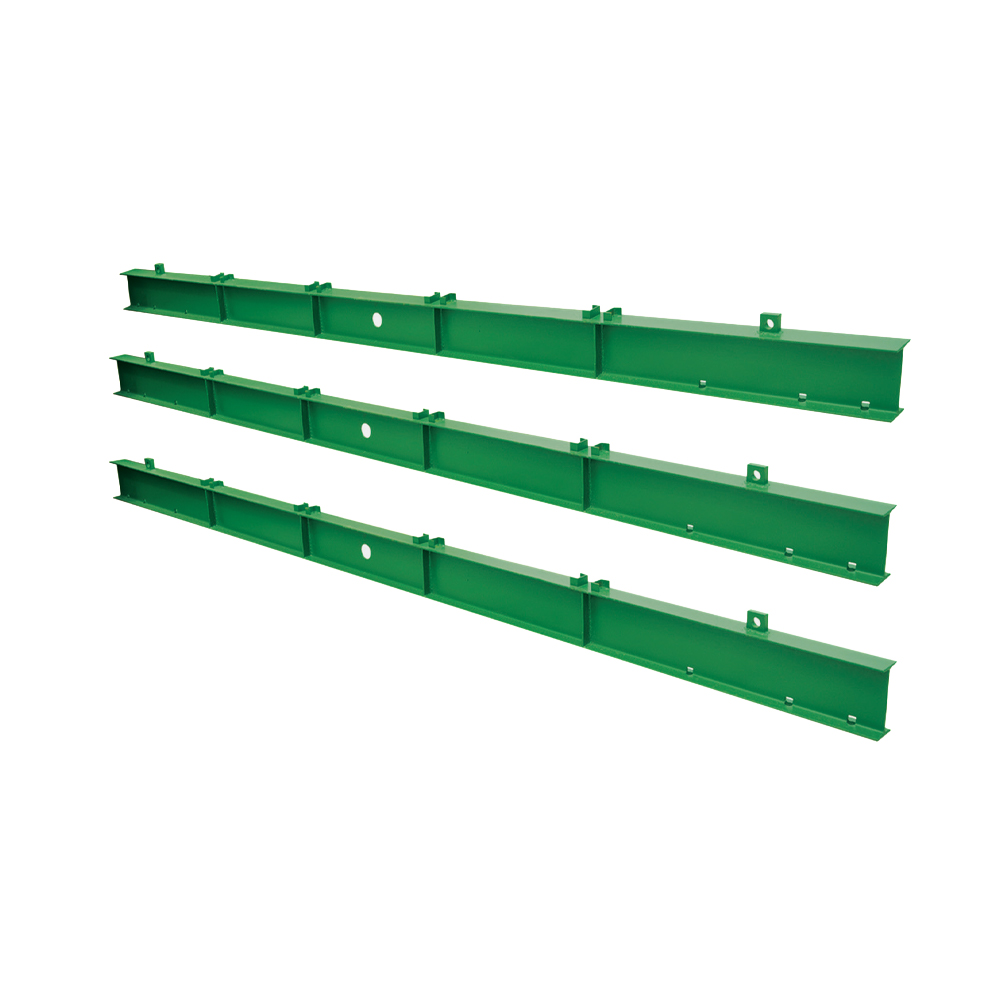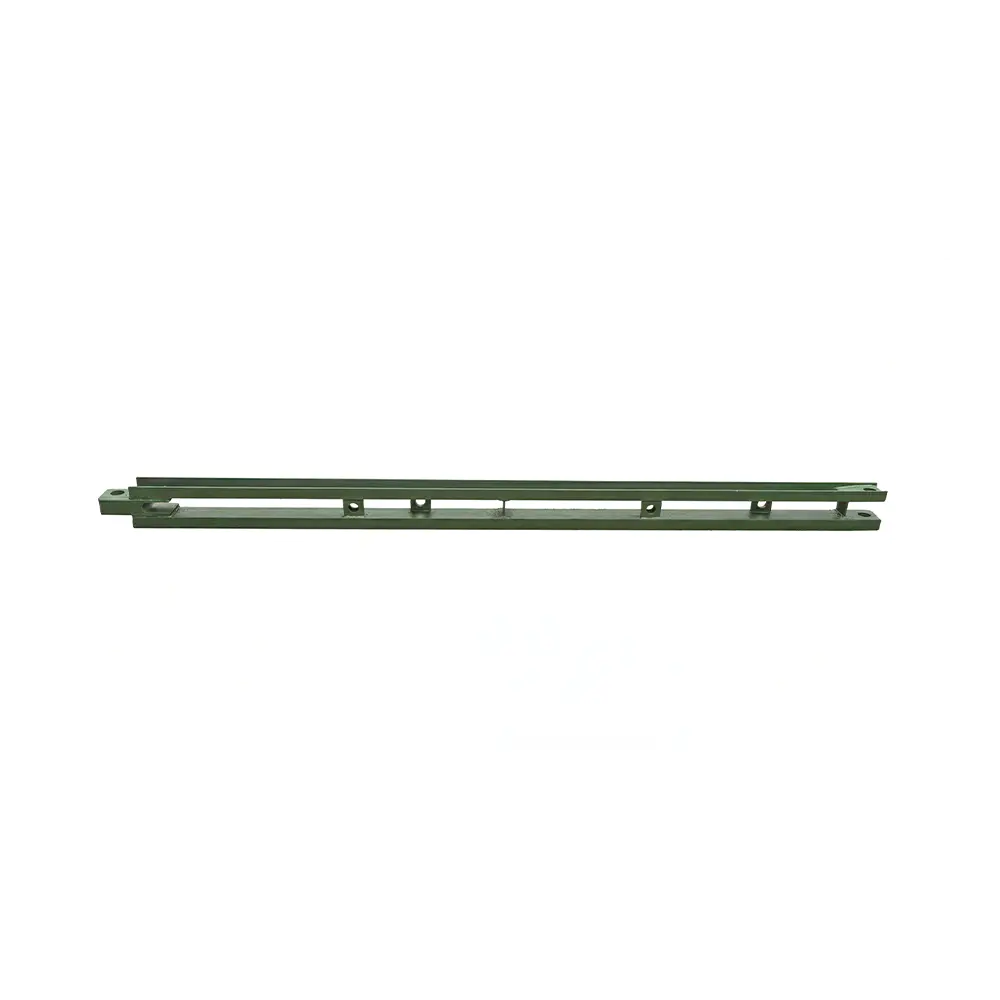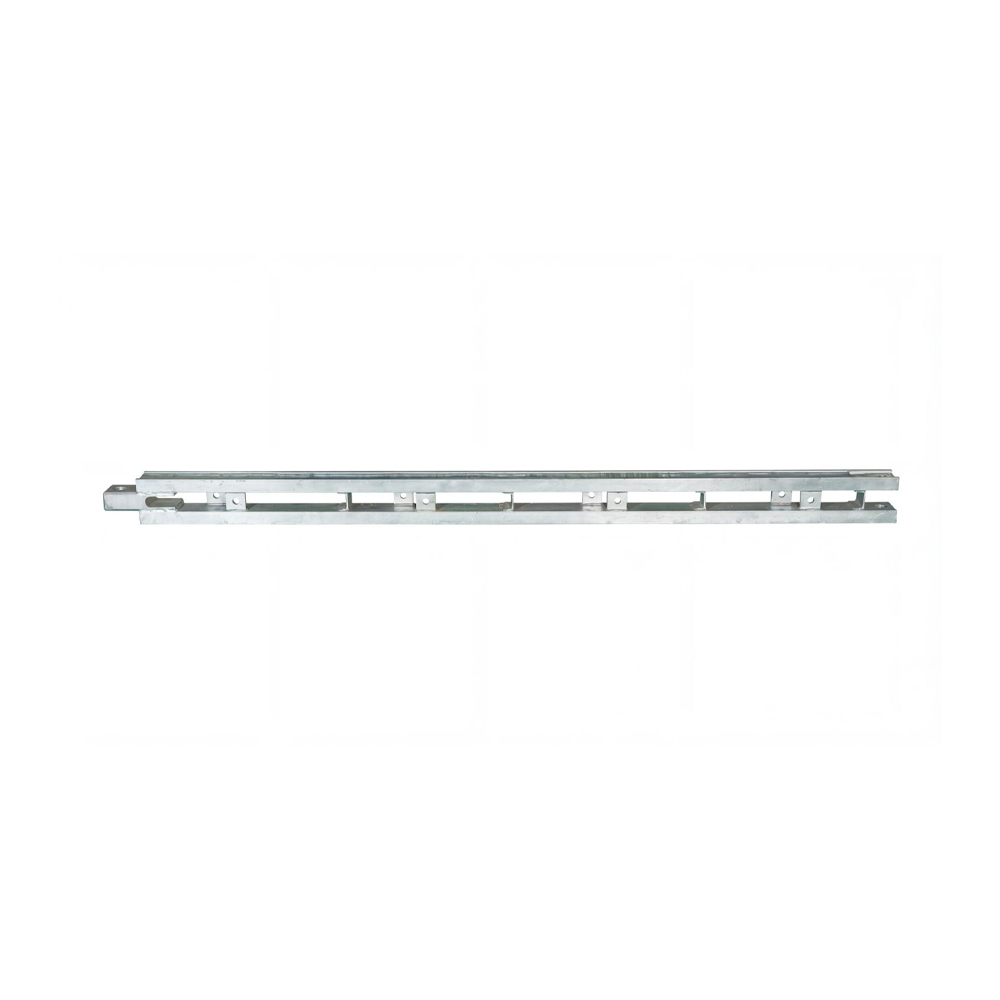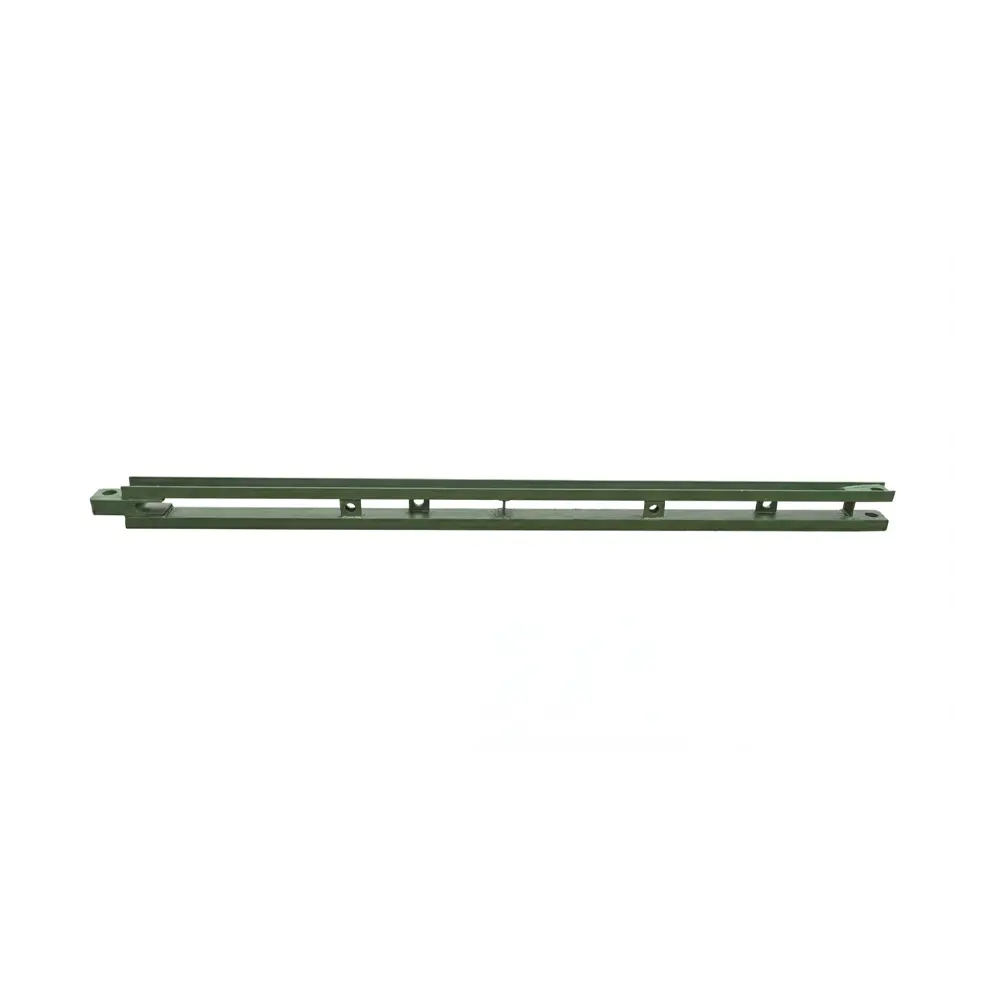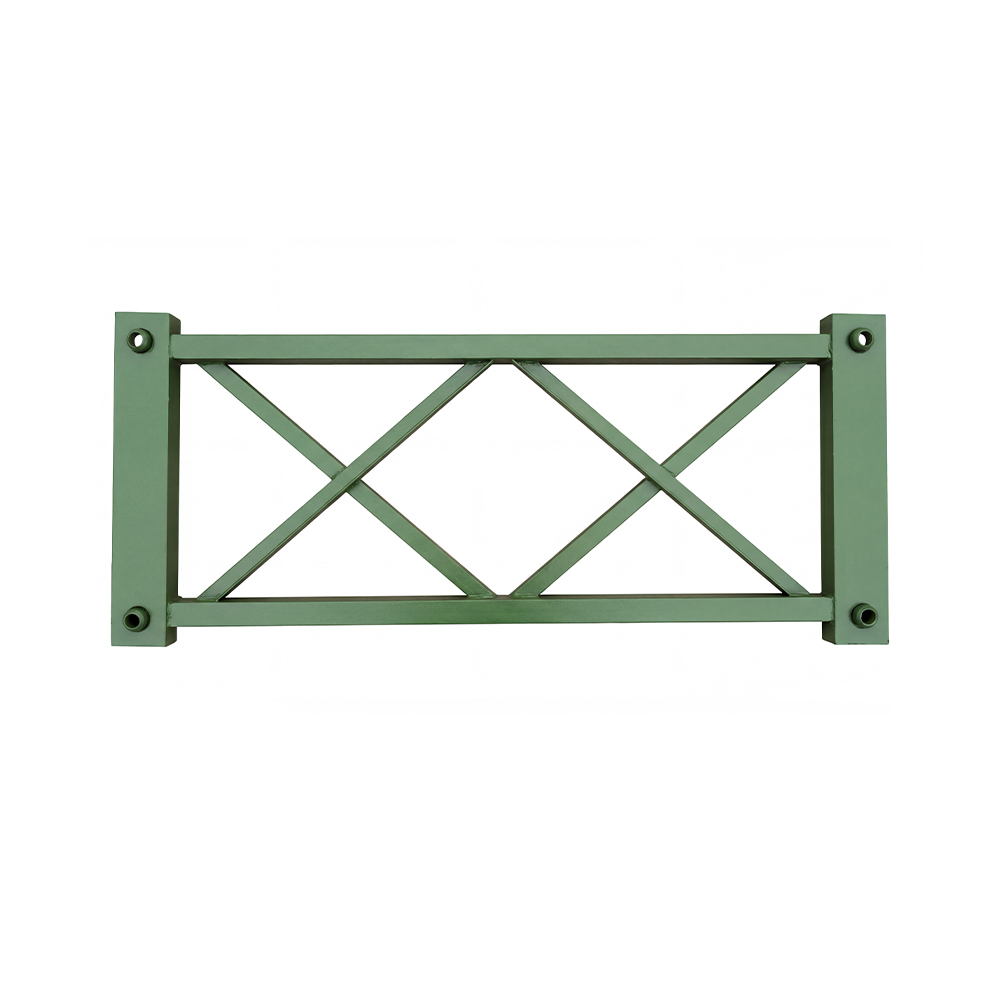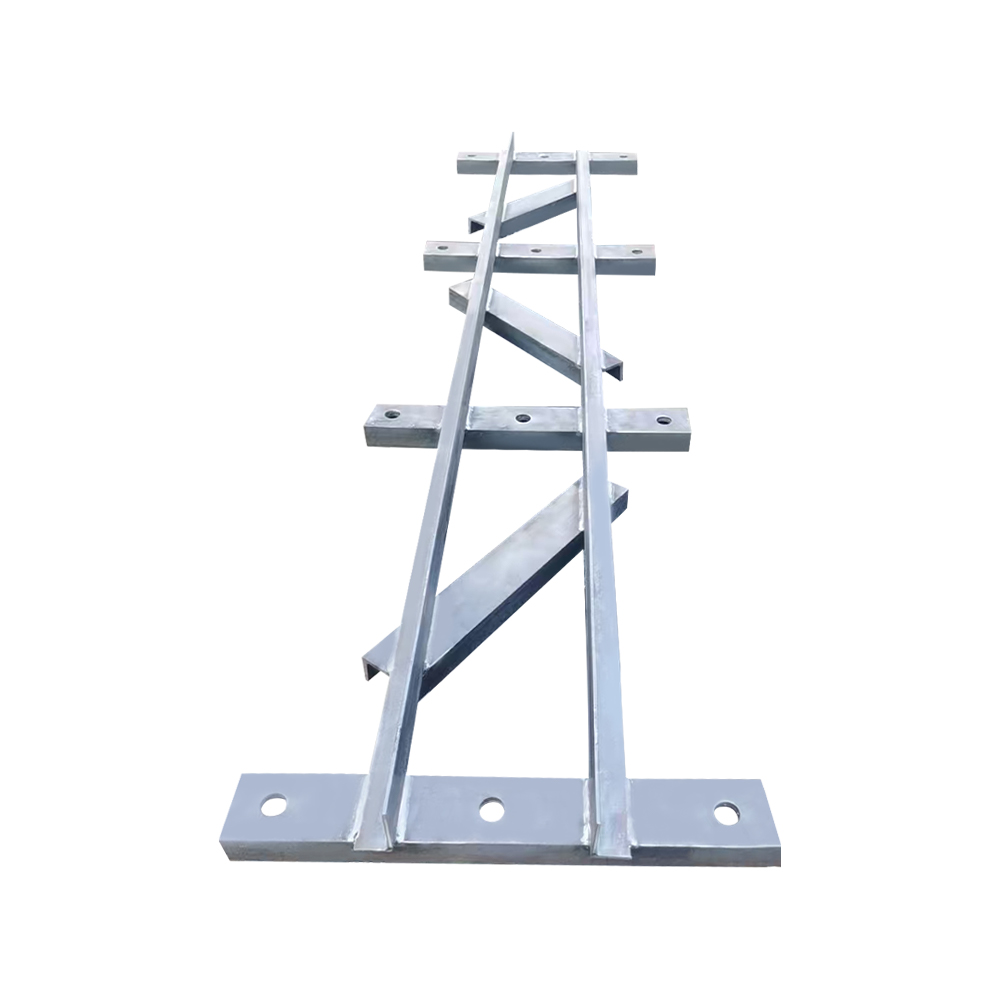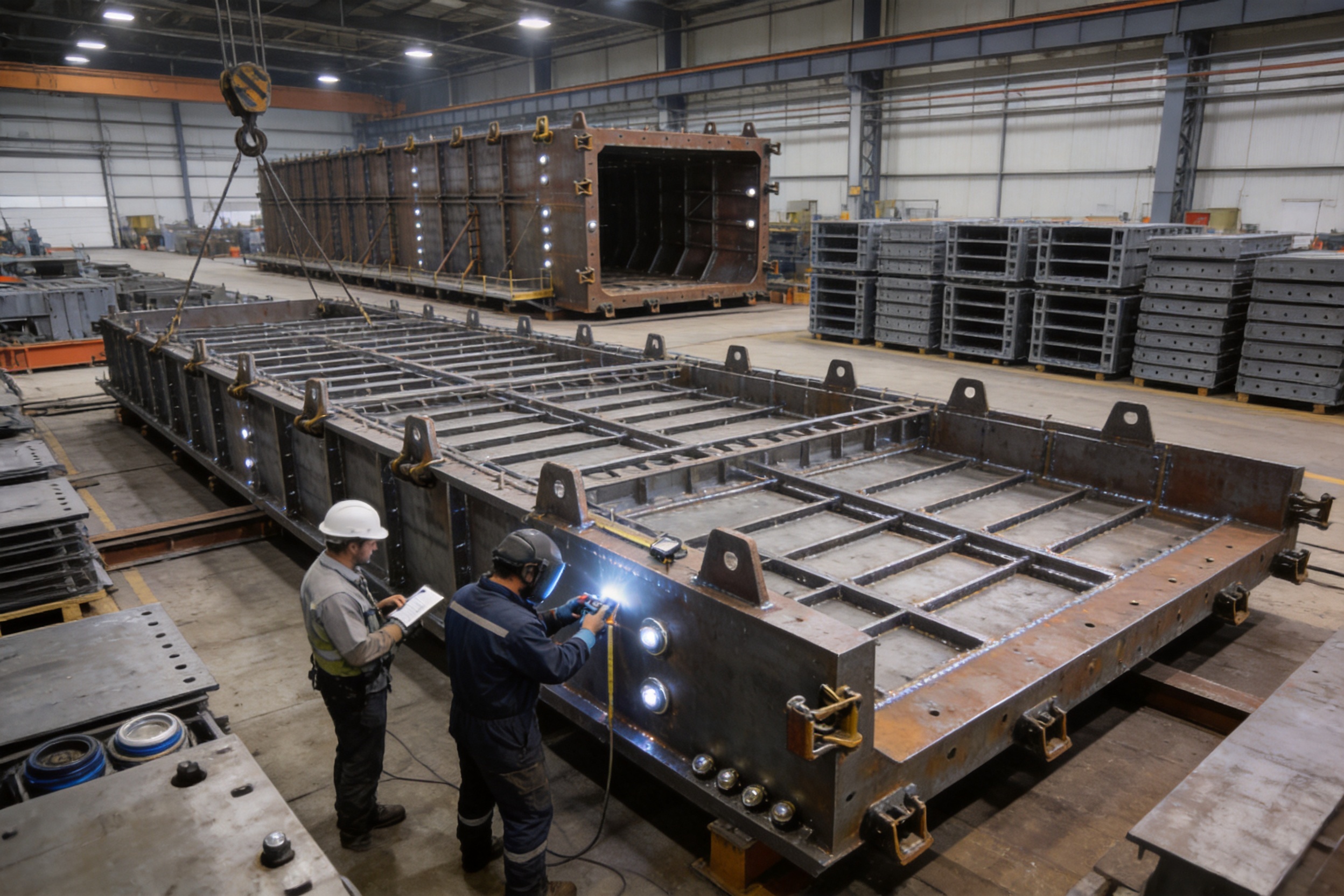
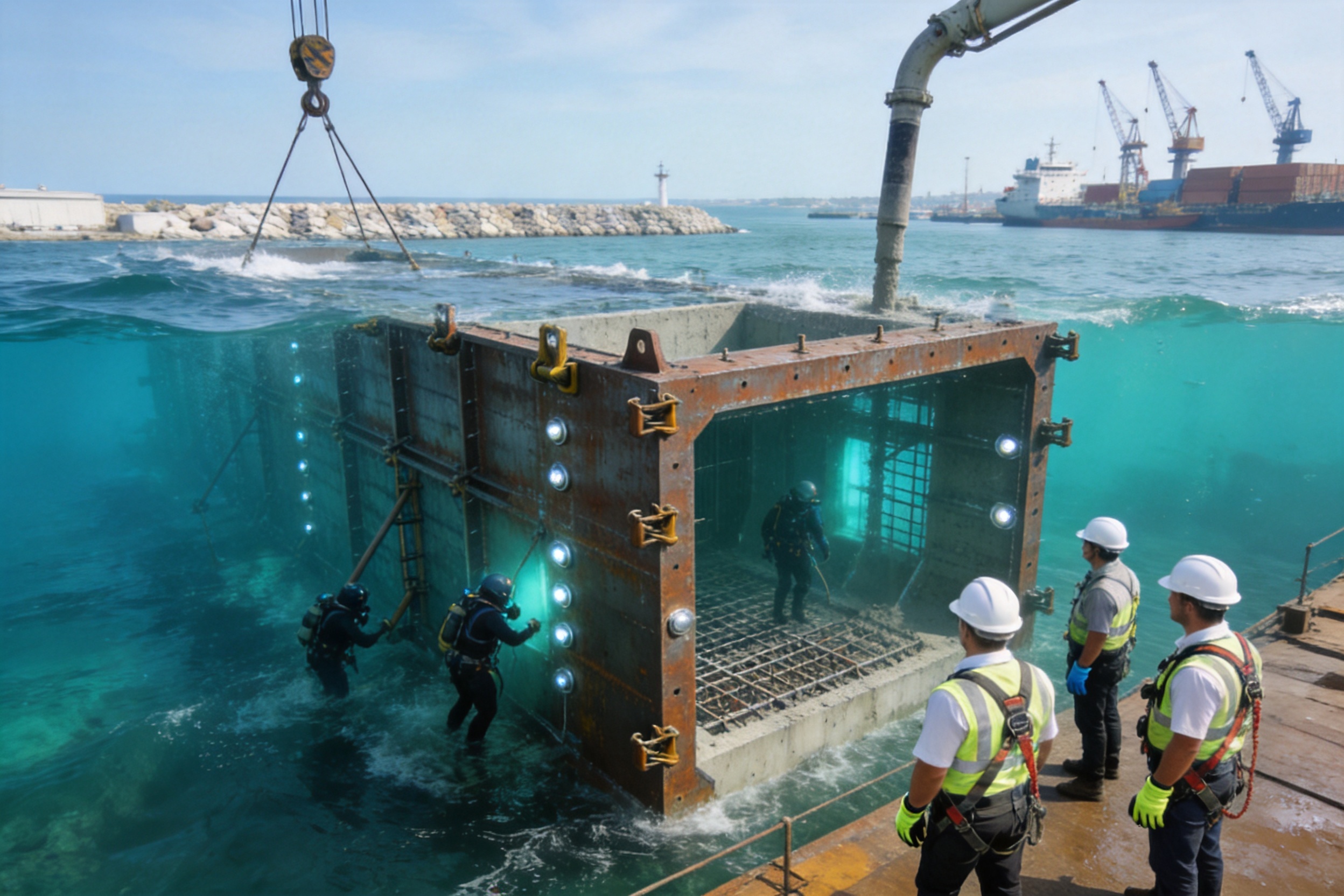
Caisson formwork is a specialized steel formwork system developed for the construction of large hollow or solid caisson structures used in ports, cross-sea bridges, offshore foundations, breakwaters, marine terminals, and other water-related infrastructure. Unlike ordinary construction formwork, caisson formwork must operate in demanding environments where water pressure, tidal movement, salt spray, seawater immersion, abrasion, corrosion, and difficult access can all affect construction quality. The formwork therefore has to provide much more than a temporary mold for concrete. It must create a stable, accurately controlled, and adequately sealed working system throughout fabrication, assembly, lifting, transportation, positioning, and underwater concreting.
Modern caisson construction requires formwork with high structural strength, dependable dimensional accuracy, controlled deformation, and strong resistance to water penetration. These characteristics directly influence the quality of the finished caisson and the long-term performance of the surrounding marine structure. A poorly designed system may leak, deform under pressure, complicate reinforcement installation, or create defects in the concrete surface. A properly engineered system helps contractors shorten construction cycles, reduce rework, improve worker safety, and maintain consistent quality across repeated caisson units.
Caisson formwork supplied by Zhenjiang Jinhao Road & Bridge Supporting Engineering Co., Ltd. is designed for these specialized requirements. The company manufactures bridge steel formwork and related engineered steel structures for complex infrastructure projects. Its experience in steel fabrication, formwork production, bridge construction equipment, and project support enables it to develop practical solutions for caisson prefabrication and underwater concreting. The system combines robust steel panels, reinforced support members, carefully controlled connections, and a sealed configuration suitable for marine environments.
Understanding Caisson Formwork
A caisson is a large structural unit used in marine and hydraulic engineering. Depending on the project, it may serve as a foundation element, quay wall component, breakwater unit, offshore support, bridge substructure, or prefabricated hollow body. Caissons are commonly produced in controlled environments and then moved to the required position, although some designs may be assembled or concreted close to the final site.
The formwork defines the external and internal geometry of the caisson during concrete placement. It may include side panels, internal cells, bulkheads, top edges, working platforms, access openings, lifting interfaces, bracing systems, sealing components, and adjustable connection assemblies. The exact configuration depends on the caisson dimensions, wall thickness, internal compartment arrangement, concrete placement method, reinforcement layout, and lifting or launching plan.
Marine formwork must be designed around the complete construction sequence rather than only the concrete-pouring stage. The system may be exposed to rain, salt spray, standing water, repeated washing, crane handling, vibration, temperature variation, and accidental impact. During underwater operations, water pressure and buoyancy can impose additional loads. Formwork that appears adequate in a dry workshop may not perform reliably when exposed to a marine construction cycle.
For this reason, caisson formwork is normally treated as an engineered temporary structure. Its panels and supports must transfer concrete pressure safely to the bracing and anchoring system. Its joints must maintain alignment and limit leakage. Its surfaces must support efficient stripping and reuse. Its lifting points and handling features must be coordinated with the project’s cranes, transport equipment, and installation procedures.
Core Advantages of Caisson Formwork
High Structural Strength
The first major advantage of caisson formwork is its high load-bearing capacity. Fresh concrete can generate substantial lateral pressure, particularly when placed rapidly or when the form is tall. Large caisson units can also create significant loads at corners, internal walls, openings, and connection points. A high-strength steel formwork system provides the rigidity needed to maintain the designed profile during concreting.
Strong panels and reinforcement members reduce the risk of bulging, local distortion, misalignment, or joint separation. Stable geometry is important because dimensional errors can affect reinforcement cover, structural tolerances, connection interfaces, and the final positioning of the caisson. A rigid system also provides a more consistent concrete surface, reducing the need for patching and corrective work.
Jinhao’s experience in the production of Bailey bridge components, bridge steel formwork, launching gantry systems, hanging baskets, and other structural steel products supports the development of robust caisson formwork. These product categories require practical knowledge of load transfer, steel connection design, fabrication tolerances, handling, and field assembly. The same capabilities are valuable when producing customized formwork for marine structures.
Resistance to Water Penetration
Water penetration is a critical concern during caisson fabrication and underwater concreting. Excessive leakage may wash cement paste from the concrete, create voids, reduce surface quality, and compromise the accuracy of the finished structure. Water entering through poorly fitted joints can also interfere with reinforcement placement and working conditions.
Caisson formwork uses a sealed design to limit water ingress at panel joints, corners, openings, and connection areas. Properly manufactured panels, carefully fitted interfaces, and suitable sealing arrangements help maintain the intended construction environment. The objective is not simply to keep water outside the formwork. It is also to maintain stable concrete placement conditions and prevent uncontrolled loss of cement paste or fine material.
The degree of sealing required depends on the construction method. A prefabrication yard may require protection from rainwater and groundwater, while underwater concreting may require more demanding control of water movement and pressure. By adapting panel joints, edge details, and support arrangements to the project conditions, the formwork can provide a more reliable barrier throughout the concrete placement process.
Corrosion Resistance in Marine Environments
Marine construction exposes steel equipment to chlorides, salt spray, seawater, humidity, and repeated wet-and-dry cycles. These conditions accelerate corrosion, especially at welds, bolt interfaces, crevices, cut edges, and damaged coating areas. Ordinary construction formwork may deteriorate quickly if it is not selected, protected, and maintained for marine use.
Caisson formwork is produced with materials and protective measures intended for challenging marine conditions. The steel configuration, surface treatment, coating approach, drainage considerations, and maintenance plan can be selected according to the project environment. This helps extend the service life of the formwork and supports repeated use across multiple caisson units.
Corrosion resistance provides both technical and economic benefits. It helps preserve panel stiffness, maintains the reliability of connections, reduces repair frequency, and protects the accuracy of reusable components. Contractors can obtain greater value from a durable system because the same panels and support assemblies may be used for a series of similar structures, subject to inspection and project requirements.
Adaptability to Complex Caisson Geometry
Caissons are not always simple rectangular boxes. They may include multiple internal chambers, sloped faces, tapered walls, curved corners, openings, lifting recesses, embedded items, service passages, and connection details. A practical formwork system must accommodate these features without creating unnecessary assembly complexity.
Engineered steel panels can be manufactured in modular sections and combined with customized components. Standardized members may be used where dimensions are repeated, while specially fabricated panels can address project-specific geometry. This balance between standardization and customization helps control cost while maintaining design flexibility.
Adjustable connections and modular support arrangements are especially useful when a project includes several caisson sizes. Instead of manufacturing an entirely independent system for every unit, selected elements may be reused or reconfigured. This can simplify logistics, reduce storage requirements, and support a more predictable production schedule.
Improved Concrete Quality
The quality of a caisson depends heavily on the quality of its concrete placement. Formwork that remains stable and properly sealed helps maintain the designed dimensions and supports uniform consolidation. Smooth and accurately fabricated panel surfaces can produce a more consistent finish and reduce surface defects.
Accurate formwork also helps maintain reinforcement cover. If panels move during concreting, the distance between the reinforcement and the concrete face may change. Such movement can create durability concerns, particularly in saltwater environments where insufficient cover may increase the risk of chloride penetration to the reinforcement. A rigid and correctly aligned system therefore contributes to the long-term durability of the caisson.
Good formwork design also assists with inspection. Clear panel layouts, accessible joints, defined reference points, and coordinated embedded-item locations make it easier for site teams to verify the installation before concrete placement. This improves construction control and reduces the chance that hidden defects will remain undiscovered.
Applications in Marine and Infrastructure Projects
Port and Harbor Construction
Caisson structures are widely used in port and harbor development. They may form quay walls, dock edges, berthing structures, breakwaters, revetments, or heavy foundation elements. These projects often require repetitive production of large units, making reusable and durable formwork particularly valuable.
Port construction also involves demanding loading conditions. Completed caissons may be exposed to vessel impact, wave action, tidal variation, cargo loads, and long-term hydrostatic pressure. Formwork must support accurate production so that each unit can be positioned, connected, and integrated with adjacent structures. Small dimensional inconsistencies can become significant when many units are installed in a continuous line.
Cross-Sea Bridges
Cross-sea bridges require foundations and substructures capable of withstanding waves, currents, corrosion, and dynamic environmental loads. Caissons may be used as foundation units, temporary construction elements, or permanent components of marine bridge structures. Their fabrication and positioning often take place under strict schedule and safety requirements.
Caisson formwork supports the production of these units by providing a controlled mold for large-scale concrete work. The system can be configured around reinforcement cages, embedded steel components, lifting devices, and installation interfaces. Its high strength is especially important where large wall sections or deep internal cells create significant concrete pressure during placement.
Offshore Engineering
Offshore projects place exceptional demands on construction equipment. Formwork and supporting systems may be exposed to strong winds, wave motion, high humidity, salt spray, and limited access to repair facilities. Reliable fabrication and careful pre-assembly are therefore essential.
Caisson formwork can be used for offshore foundations, marine platforms, artificial islands, protective structures, and other concrete units manufactured near the coast or at dedicated marine construction yards. A sealed and corrosion-resistant system helps maintain reliable performance during production and transfer operations.
Hydraulic and Water Conservancy Works
Caisson-type structures may also be applied in reservoirs, flood-control facilities, water-control structures, navigation works, and river infrastructure. Although freshwater environments are generally less aggressive than seawater, the formwork may still experience prolonged wetting, abrasion, sediment, and difficult site access.
A steel system with robust connections and high dimensional stability can support repeated construction under these conditions. When the project involves water diversion or underwater placement, leakage control and secure bracing remain important considerations.
Prefabrication and Underwater Concreting
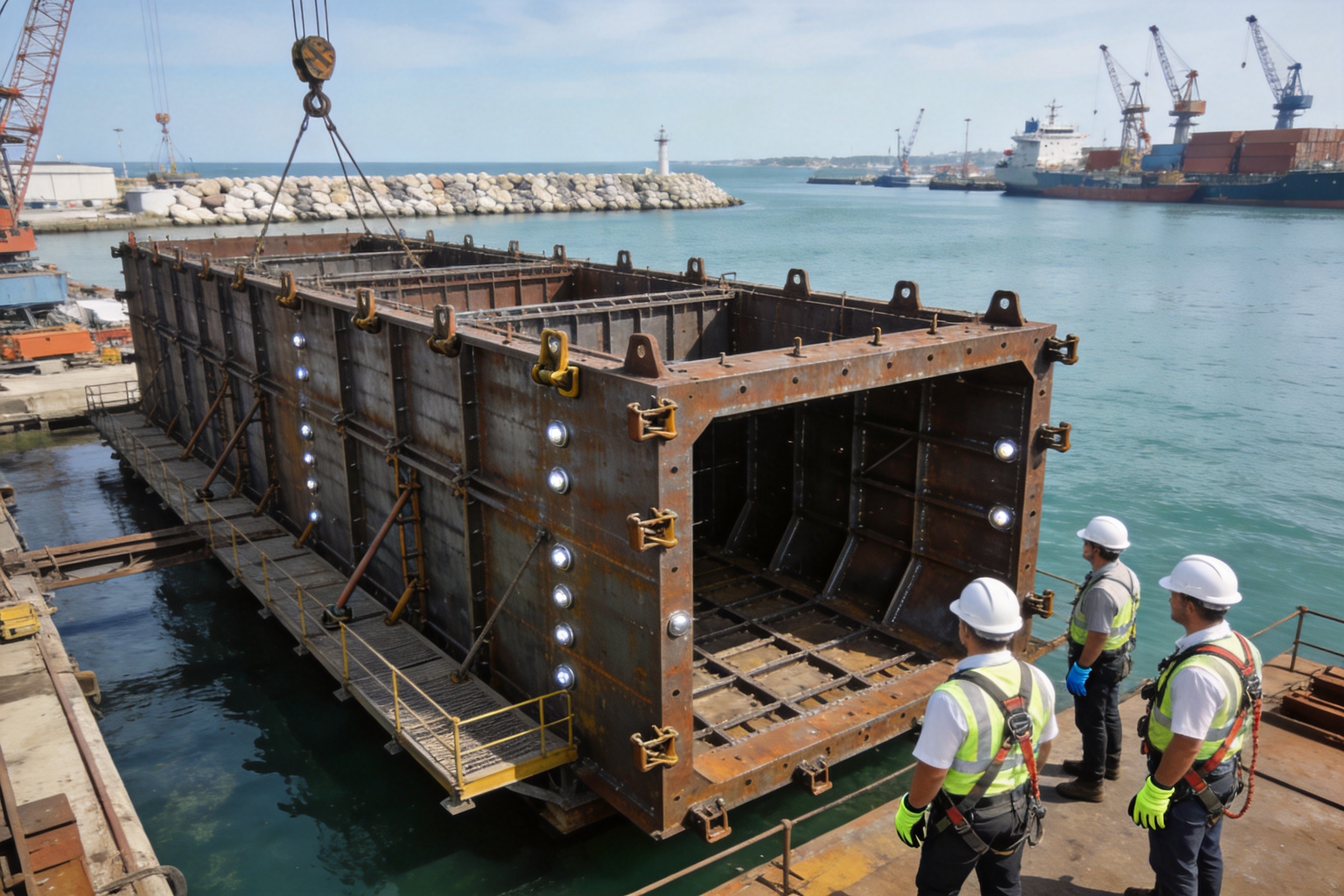
One of the most important uses of caisson formwork is controlled prefabrication. Producing caissons in a dedicated yard allows the contractor to organize reinforcement, concrete supply, inspection, curing, stripping, and storage in a planned sequence. The completed units can then be transported or floated to the installation location.
Underwater concreting requires careful coordination between the formwork, reinforcement, concrete mix, placing equipment, and environmental conditions. The form must maintain its geometry while limiting water movement and preventing the loss of cement paste. A properly sealed configuration supports more stable concrete placement and helps the construction team maintain control over the process.
Design Features That Improve Performance
Modular Panel Configuration
Modular panels allow the formwork to be assembled, dismantled, transported, and stored efficiently. Repeated dimensions can be manufactured as standard modules, while corner panels, end panels, internal bulkheads, and special inserts can be added for the individual caisson design.
Modularity is beneficial when a project includes many units with similar dimensions. It can reduce fabrication time for subsequent units, limit the number of unique components, and simplify inspection. It also enables contractors to replace individual panels or reinforcement members instead of discarding the entire system after localized damage.
Reinforced Ribs and Support Frames
Panel plates alone may not be sufficient for large caisson structures. Reinforcing ribs, stiffeners, walers, strongbacks, frames, braces, and tie systems distribute pressure and control deformation. Their arrangement is determined by the panel size, concrete pressure, form height, support spacing, and handling requirements.
Well-designed reinforcement avoids unnecessary steel weight while providing adequate stiffness in critical areas. Corners and openings require particular attention because stress concentrations and discontinuities can create local deformation. Support frames must also be arranged so that they do not interfere with reinforcement installation, concrete placement, vibration, stripping, or lifting operations.
Reliable Connections
Connections are essential to formwork performance. Bolted joints, pins, clamps, adjustable ties, welded interfaces, and other connection methods must be selected according to the load, assembly sequence, environmental exposure, and reuse requirements. The connection system should be strong enough for concreting and handling while remaining practical for site workers.
Accurate connections improve alignment and reduce the possibility of leakage. They also make it easier to dismantle and reassemble the formwork without damaging the panels. Where the formwork will be used repeatedly, connection durability and replaceability should be considered during the design stage.
Sealed Edges and Joint Treatment
Panel edges and joints are common points for water penetration and concrete leakage. The formwork therefore requires carefully controlled edge straightness, suitable joint interfaces, and sealing details compatible with the construction method. Corners should be designed to limit gaps and provide a consistent transition between surfaces.
Sealing materials and joint treatments should be inspected before every concrete placement. Damaged seals, accumulated debris, loose bolts, or distorted edges may reduce the effectiveness of the system. A practical design makes these areas visible and accessible for inspection and replacement.
Handling and Lifting Considerations
Large caisson formwork components must often be moved by cranes, forklifts, or other lifting equipment. Lifting points should be coordinated with the center of gravity and the expected handling loads. Improper lifting can twist a panel, damage connections, or create permanent deformation even when the formwork is strong enough for concrete pressure.
Handling features may include lifting lugs, spreader-beam interfaces, temporary braces, stacking supports, and designated attachment locations. These features should be identified clearly in the assembly drawings and used according to the approved lifting plan. Efficient handling reduces labor requirements and helps protect the formwork during repeated use.
Advanced Manufacturing Processes
Engineering Review and Project-Based Design
The manufacturing process begins with a review of the caisson geometry, construction sequence, environmental conditions, and project requirements. Important inputs include overall dimensions, wall thickness, internal cell arrangement, concrete placement rate, expected pressure, reinforcement layout, lifting method, stripping sequence, reuse frequency, and required surface finish.
Jinhao’s experience in design, manufacturing, erection, and leasing of bridge-related steel systems supports a project-based approach to formwork development. Instead of treating every order as a simple steel fabrication task, the company can coordinate the formwork with the broader construction method. This is particularly important when the formwork must be integrated with cranes, transport equipment, temporary supports, or underwater installation procedures.
Engineering review should also consider access for workers, inspection points, drainage, cleaning, corrosion protection, storage, and maintenance. These practical details influence productivity and safety throughout the project life cycle.
Material Selection
Material selection is based on the required strength, stiffness, fabrication method, environmental exposure, and intended service life. Steel plates, sections, stiffeners, frames, bolts, pins, and connection components must be compatible with the design loads and protective system.
Marine exposure places additional emphasis on surface condition and protective treatment. The manufacturing plan should identify areas requiring special attention, including weld zones, cut edges, bolt holes, drainage points, corners, and locations where water may accumulate. Appropriate preparation and coating procedures help reduce the risk of premature corrosion.
Computer-Aided Detailing
Computer-aided detailing allows the formwork to be developed as a coordinated assembly rather than as a collection of independent parts. Three-dimensional modeling and detailed shop drawings can help verify panel interfaces, reinforcement clearances, access routes, lifting points, and connection locations before fabrication begins.
Digital detailing is especially useful for complex caisson geometries. It helps identify clashes between formwork members and reinforcement cages, reduces fabrication changes, and improves the clarity of installation instructions. Accurate drawings also support quantity planning, cutting schedules, welding preparation, and quality documentation.
Precision Cutting and Preparation
Steel plates and sections must be cut accurately to achieve consistent panel dimensions. Controlled cutting helps maintain straight edges, correct angles, and reliable connection locations. Before assembly, components are checked for dimensions, flatness, surface condition, and identification marks.
Careful preparation reduces accumulated tolerances. In a large formwork system, small errors repeated across many panels can cause significant misalignment. Controlled cutting and clear part identification help ensure that the intended components are assembled in the correct position.
Controlled Welding and Structural Assembly
Welding is used to connect panel plates, ribs, frames, brackets, lifting points, and other steel components. Weld sequencing is important because uneven heat input can cause distortion. Fixtures and temporary supports may be used to maintain alignment during assembly and welding.
Qualified welding procedures, trained operators, suitable consumables, and appropriate inspection methods support the reliability of the finished system. Welds in high-stress areas and lifting components deserve particular attention. After welding, the assemblies may be checked for dimensional accuracy, visible defects, and local distortion.
Surface Treatment and Protective Coating
Surface treatment helps prepare the steel for use in wet and marine environments. Depending on the project specification, the process may include cleaning, removal of scale and contaminants, surface preparation, primer application, intermediate coating, and finishing layers. Coating thickness and continuity should be checked in accordance with the applicable quality plan.
Not every formwork surface has the same coating requirement. Concrete-contact surfaces may require a finish that supports stripping and does not adversely affect concrete quality, while external surfaces may require stronger environmental protection. The treatment must therefore be selected according to the location and function of each component.
Dimensional Inspection and Trial Assembly
Before delivery, critical dimensions should be inspected against approved drawings. These may include panel length and width, diagonal measurements, hole locations, connection spacing, corner angles, frame alignment, and lifting-point positions.
Trial assembly can provide additional assurance for complex or large systems. By assembling representative sections or the complete formwork in the workshop, the manufacturer can verify the fit of panels, braces, seals, access components, and connection hardware. Any adjustment made before shipment is generally less costly than a correction made at a marine construction site.
Manufacturing and Service Strengths
Integrated Steel Structure Experience
Zhenjiang Jinhao Road & Bridge Supporting Engineering Co., Ltd. operates as a comprehensive enterprise involved in the design, manufacture, erection, and leasing of bridge and construction steel systems. Its product range includes Bailey steel bridges, Type 321 Bailey truss sections, HD200 and Type 200 Bailey truss sections, triangular and diamond hanging baskets, bridge steel formwork, pier formwork, launching gantry systems, and related engineered structures.
This broad product experience is relevant to caisson formwork because many of the same technical principles apply: load-bearing steel design, modular assembly, field erection, connection reliability, dimensional control, lifting, and project-based customization. A manufacturer familiar with temporary and permanent construction systems can better understand how formwork will be transported, assembled, used, dismantled, and potentially reused.
Customized Fabrication Capability
Caisson projects often have individual design requirements. Dimensions, internal compartments, edge profiles, embedded components, access openings, and lifting methods may vary from one project to another. Customized fabrication allows the formwork to be adapted to the actual construction plan rather than forcing the project to fit a generic product.
Customization may involve changing panel sizes, adding internal formwork, modifying support frames, adjusting connection locations, providing special corner units, or preparing components for a particular crane and transport system. The objective is to achieve a practical balance between project-specific performance and the efficiency of modular steel production.
Design and System Planning
Formwork performance depends on the complete system. Panels, braces, seals, lifting points, access platforms, reinforcement cages, concrete equipment, and stripping tools must work together. Jinhao provides design and system-planning support to help coordinate these elements.
System planning can include layout development, component schedules, assembly sequencing, handling recommendations, and technical communication with the contractor. This service is valuable for international projects where a clear exchange of drawings, specifications, inspection requirements, and installation procedures is essential.
Fabrication, Erection, and Technical Support
A formwork manufacturer’s responsibility may extend beyond workshop fabrication. Depending on the project arrangement, support may include erection assistance, technical guidance, troubleshooting, component replacement, and advice on reuse. Practical field knowledge helps ensure that the manufactured system performs as intended.
Technical support is particularly important during the first assembly. Site teams need to understand the correct orientation of panels, tightening sequence, brace installation, sealing details, lifting points, and inspection procedures. Clear instructions help reduce assembly errors and improve safety.
Quality Management
Quality management should cover materials, fabrication, welding, dimensions, coating, connections, packaging, and delivery. Inspection records provide traceability and help contractors confirm that the system meets the agreed requirements.
A systematic quality process can include incoming material inspection, component identification, in-process checks, weld inspection, dimensional verification, coating checks, final assembly review, and pre-shipment documentation. These controls reduce uncertainty and provide evidence of conformity for project records.
Global Project Orientation
Jinhao provides steel bridge and formwork solutions for contractors, governments, and engineering companies worldwide. International project support requires more than manufacturing capacity. It requires attention to documentation, packaging, shipping dimensions, communication, technical terminology, local site conditions, and coordination with different construction standards.
The company’s commitment to customer-first service, integrity, pragmatic operation, innovation-driven growth, and win-win cooperation supports long-term cooperation with project owners and contractors. These principles are especially important for specialized products, where successful delivery depends on design clarification and close technical coordination.
Comparison with Ordinary Formwork Systems
Ordinary construction formwork may be suitable for small concrete elements, short-duration projects, or relatively mild environments. However, caisson construction creates a combination of scale, water exposure, structural pressure, repetition, and handling requirements that can exceed the capabilities of basic systems.
Timber formwork may be easy to modify, but it can absorb water, deform, deteriorate, and lose accuracy when exposed to repeated wetting. Lightweight panels may be convenient for manual handling, but they may require dense support spacing for large pours. General-purpose steel formwork may provide strength but lack the sealing details or corrosion protection required for marine use.
Purpose-designed caisson formwork is differentiated by its complete system approach. It combines structural capacity with water control, corrosion resistance, modularity, accurate fabrication, lifting compatibility, and repeat-use potential. This can provide stronger overall value even when the initial investment is higher than that of a basic temporary mold.
| Performance Requirement | Basic Formwork | Purpose-Designed Caisson Formwork | Project Benefit |
|---|
| Resistance to concrete pressure | May require extensive temporary reinforcement | Engineered panels, ribs, frames, and braces | Improved dimensional stability and reduced deformation risk |
| Water control | Standard joints may allow leakage | Sealed joints and coordinated edge details | More reliable concrete placement and surface quality |
| Marine durability | Limited protection in saltwater conditions | Materials and protective measures selected for wet environments | Longer service life and better reuse potential |
| Geometry flexibility | Limited adaptation to large or complex units | Modular and customized panel arrangements | Better fit for internal cells, corners, openings, and special profiles |
| Handling | May lack dedicated lifting interfaces | Planned lifting points and handling features | Safer and more efficient movement of large components |
| Repeated use | Frequent repair or replacement may be required | Durable steel components designed for inspection and reuse | Lower cost per caisson over multiple production cycles |
| Technical coordination | Often supplied as separate components | Designed as part of a complete construction system | Fewer interface problems during assembly and concreting |
Benefits for Contractors and Project Owners
Lower Rework Risk
Accurate and rigid formwork reduces the possibility of dimensional errors, surface defects, joint leakage, and reinforcement interference. Fewer defects mean less patching, grinding, adjustment, and repeated inspection. This can improve the predictability of the construction schedule.
Faster Repetitive Production
When a project contains multiple caissons, repeatable formwork becomes a production asset. After the first unit is completed and the system is proven, the panels can be cleaned, inspected, repositioned, and reused. Modular connections and organized component identification help shorten the cycle between units.
Improved Site Safety
Well-planned formwork reduces improvised bracing, uncontrolled lifting, and unsafe access arrangements. Dedicated lifting points, stable working platforms, clear assembly drawings, and predictable connections help the site team work more systematically.
Safety also benefits from reducing unnecessary manual handling. Large steel panels can be moved using planned lifting equipment instead of being repeatedly dragged or manually repositioned. Properly designed access features allow workers to inspect joints and install reinforcement without climbing on unstable components.
Better Lifecycle Value
The value of caisson formwork should be assessed over the complete project lifecycle. A durable system may be used for several units, stored for future projects, leased, modified, or integrated with other bridge and marine construction activities. Strong materials and maintainable connections can reduce the cost of ownership.
Jinhao’s involvement in the manufacture and leasing of bridge-related steel systems provides an understanding of asset utilization. This perspective can help contractors consider whether a project requires new fabrication, a reusable configuration, or a leasing arrangement supported by technical service.
Recommended Construction Workflow
Project Confirmation
The process begins with confirmation of the caisson drawings, construction location, environmental conditions, concrete method, production quantity, and schedule. The contractor and manufacturer should identify all special requirements before detailed design begins.
Formwork Engineering
The formwork layout is developed around the caisson geometry and construction sequence. Panel divisions, braces, internal forms, working access, lifting points, joints, and sealing details are coordinated with the reinforcement and concrete plans.
Shop Fabrication
Approved drawings are converted into cutting lists, assembly plans, welding procedures, and inspection documents. Steel components are processed, assembled, welded, inspected, coated, marked, and prepared for shipment.
Delivery and Site Assembly
Components should be packaged to prevent deformation and coating damage during transportation. At the site, the contractor assembles the panels according to the approved sequence, installs bracing and seals, checks dimensions, and confirms that all embedded items and reinforcement interfaces are clear.
Pre-Pour Inspection
Before concrete placement, the formwork should be checked for alignment, verticality, level, joint tightness, connection security, support stability, cleanliness, release treatment, and lifting or access hazards. Any visible gap, damaged seal, loose component, or unexpected interference should be corrected before pouring begins.
Concrete Placement and Monitoring
Concrete should be placed according to the approved method and at a rate compatible with the formwork design. The site team should monitor panel movement, leakage, brace behavior, concrete level, and access conditions. Any abnormal deformation or joint opening should be addressed safely and promptly.
Stripping, Cleaning, and Reuse
After the concrete has reached the required condition, the formwork is stripped according to the approved sequence. Panels should not be forced away from the concrete because excessive impact may damage both the formwork and the finished caisson. After removal, the components should be cleaned, inspected, repaired if necessary, and stored on suitable supports.
Inspection, Maintenance, and Long-Term Reliability
Regular inspection is essential when caisson formwork is used in marine conditions. Inspections should focus on panel flatness, welds, stiffeners, braces, bolts, pins, lifting points, seals, coating condition, and areas where water or sediment may collect. Components exposed to seawater should receive particular attention after each use.
Minor damage should be repaired before it develops into a larger problem. Bent panels may affect alignment, damaged lifting lugs may create a safety risk, and coating damage may become a starting point for corrosion. Replacing a seal, bolt, or small connection component is usually easier and less expensive than correcting a failure during concreting.
Cleaning is also important. Hardened concrete on panel surfaces can affect dimensions, prevent proper joint closure, and damage coating systems. Cleaning methods should remove residue without unnecessarily gouging or deforming the steel. Components should be stored above standing water and protected from avoidable mechanical damage.
For repeated caisson production, contractors should maintain a usage record for each major component. Records may include the number of uses, repairs, coating work, inspection results, and changes made to the configuration. This information supports better planning and helps determine when a component should be refurbished or replaced.
Selection Considerations for International Buyers
When selecting a caisson formwork supplier, buyers should evaluate more than product price. The supplier should be able to understand the project’s marine exposure, concrete method, lifting sequence, dimensional tolerances, reuse expectations, and documentation requirements.
Important questions include whether the supplier can provide customized design, whether the components are manufactured according to approved drawings, how welding and dimensions are inspected, what protective treatment is used, how the system will be packaged, and what technical assistance is available during assembly.
Buyers should also confirm the scope of supply. A complete system may include external panels, internal panels, corner units, stiffeners, support frames, braces, ties, seals, lifting lugs, access platforms, connection hardware, spare components, drawings, manuals, and inspection records. Clarifying these items at the beginning prevents delays and unexpected site modifications.
For projects outside China, shipping and installation logistics should be considered early. Large steel components may require special containers, flat racks, break-bulk shipping, or local assembly. The formwork can be designed in transportable modules so that the system arrives in manageable packages without sacrificing structural performance at the site.
Why Engineered Steel Formwork Is a Competitive Choice
Engineered steel formwork provides a strong combination of durability, repeatability, precision, and adaptability. In marine construction, these benefits are more valuable because the formwork is exposed to conditions that can quickly reveal weaknesses in ordinary systems.
The competitive advantage of a well-designed caisson system is not based on a single feature. It results from the interaction of high-strength steel, controlled fabrication, reliable joints, corrosion-conscious protection, modular organization, and technical support. If any one of these elements is neglected, the overall performance may decline. A strong panel with poor sealing, for example, may still create concrete defects. A corrosion-resistant panel with inadequate bracing may still deform under pressure.
Jinhao’s product portfolio and project experience provide a foundation for delivering this integrated solution. Its work with Bailey bridges, launching gantries, hanging baskets, pier formwork, and bridge steel formwork reflects a focus on practical infrastructure equipment rather than general-purpose metal products. This specialization supports more effective communication with contractors and engineering companies working on complex bridge and marine projects.
The company’s manufacturing and service capabilities also support different procurement models. Customers may require a fully customized new system, a modular arrangement for repeated caisson units, technical assistance for erection, or a broader steel construction solution coordinated with bridge works. A supplier able to provide design, fabrication, erection support, and quality management can reduce the number of interfaces in the project.
Environmental and Operational Considerations
Durable reusable formwork can contribute to more efficient use of construction materials. When panels remain serviceable for multiple units or projects, the amount of disposable timber and temporary material may be reduced. Reusable steel components can also be repaired, reconfigured, and recycled at the end of their useful service life.
Efficient formwork contributes to lower construction waste by reducing failed pours, excessive cutting, and repeated temporary modifications. A modular system may also reduce storage and transportation inefficiencies because components can be organized according to a defined assembly plan.
Operational efficiency is important in marine projects because access windows may depend on tides, weather, vessel availability, and local navigation conditions. Reliable formwork helps the contractor use available working periods more effectively. Stable panels, predictable joints, and clear handling arrangements reduce the time required for preparation and correction.
Q&A
What is caisson formwork used for?
Caisson formwork is used to shape and support concrete caisson structures during prefabrication, assembly, and underwater concreting. Typical applications include ports, harbor walls, cross-sea bridges, offshore foundations, breakwaters, marine terminals, hydraulic works, and other water-related infrastructure.
How is caisson formwork different from ordinary concrete formwork?
Caisson formwork is designed for larger loads and more demanding environmental conditions. It generally requires higher structural strength, better water control, stronger corrosion resistance, specialized lifting features, and greater adaptability to large or complex geometries. It is also often designed for repeated use across multiple caisson units.
Why is sealing important in caisson construction?
Sealing helps limit water penetration and uncontrolled leakage at panel joints and corners. This supports more stable concrete placement, reduces the loss of cement paste, helps protect the intended concrete geometry, and improves the quality of the finished surface.
Can the formwork be customized for different caisson sizes?
Yes. A modular system can combine standard panels with customized internal forms, corner units, bulkheads, braces, and connection components. The final configuration should be developed from the caisson drawings, construction method, reinforcement arrangement, lifting plan, and project reuse requirements.
What marine conditions can the formwork withstand?
The formwork is intended for demanding conditions such as salt spray, tides, humidity, seawater immersion, and underwater pressure. The exact performance depends on material selection, protective treatment, design loads, inspection, maintenance, and the way the system is used on the project.
Can caisson formwork be reused?
Yes. Steel caisson formwork is commonly designed for repeated use, particularly when a project includes multiple units with similar dimensions. Reuse requires proper cleaning, inspection, repair, seal replacement when necessary, coating maintenance, and confirmation that the components remain within the required dimensional tolerances.
What information should be provided when requesting a quotation?
Useful information includes caisson drawings, overall dimensions, wall thickness, internal cell layout, concrete placement method, expected pour rate, required surface finish, production quantity, marine exposure, lifting and transport method, schedule, applicable standards, and the desired scope of technical support.
What quality checks are important before concrete placement?
Important checks include panel alignment, dimensions, verticality, level, joint sealing, bolt and pin security, brace stability, surface cleanliness, release treatment, reinforcement clearance, embedded items, access safety, and the condition of lifting or support components.
Does the supplier provide more than fabrication?
Zhenjiang Jinhao Road & Bridge Supporting Engineering Co., Ltd. provides design, system planning, customized fabrication, erection support, technical assistance, and quality management for bridge and formwork products. The exact service scope should be confirmed according to the project contract and site requirements.
Why should contractors work with a specialized bridge steel manufacturer?
A specialized manufacturer understands the relationship between steel fabrication, structural loading, field assembly, lifting, temporary works, and construction sequencing. This experience can help produce a formwork system that is not only strong but also practical to transport, erect, inspect, reuse, and maintain.
Conclusion
Caisson formwork is a critical component in the construction of marine and underwater concrete structures. Its performance affects dimensional accuracy, concrete quality, project safety, production speed, and the long-term durability of the completed caisson. For this reason, the system should be designed specifically for high loads, water exposure, corrosive media, complex geometry, and repeated handling.
The main advantages of purpose-designed caisson formwork include high strength, effective resistance to water penetration, improved corrosion resistance, modular adaptability, reliable alignment, better concrete quality, and repeat-use value. These benefits distinguish engineered marine formwork from basic timber molds, lightweight general-purpose panels, or steel systems not prepared for seawater conditions.
Zhenjiang Jinhao Road & Bridge Supporting Engineering Co., Ltd. combines experience in bridge steel structures, formwork systems, fabrication, erection, leasing, technical support, and quality management. Its broader product range includes Bailey bridges, bridge launching gantries, hanging baskets, pier formwork, and engineered steel structures, creating a strong technical foundation for customized caisson formwork solutions.
For contractors, governments, and engineering companies involved in ports, cross-sea bridges, offshore works, and hydraulic construction, selecting the right formwork partner can improve both immediate construction performance and long-term project value. A well-engineered caisson formwork system provides the strength, sealing, durability, and flexibility needed to work confidently in complex marine environments.
References
American Concrete Institute. Guide to Formwork for Concrete. ACI guidance on formwork planning, design, construction, inspection, and safety.
British Standards Institution. Temporary Works and Falsework Design Principles. General principles for the design, stability, inspection, and management of temporary construction structures.
International Organization for Standardization. Corrosion Protection of Steel Structures by Protective Paint Systems. Principles for surface preparation, coating selection, and corrosion control.
International Federation for Structural Concrete. Recommendations for Concrete Construction and Durability in Aggressive Environments. Guidance on concrete quality, reinforcement protection, and durability planning.
Permanent International Association of Navigation Congresses. Recommendations for the Design and Construction of Port and Marine Structures. Technical considerations for marine infrastructure and water-related construction.
Project-specific structural drawings, marine construction specifications, approved lifting plans, concrete placement procedures, and inspection and test plans should be consulted for final design and application decisions.


 Français
 Español
 عربى