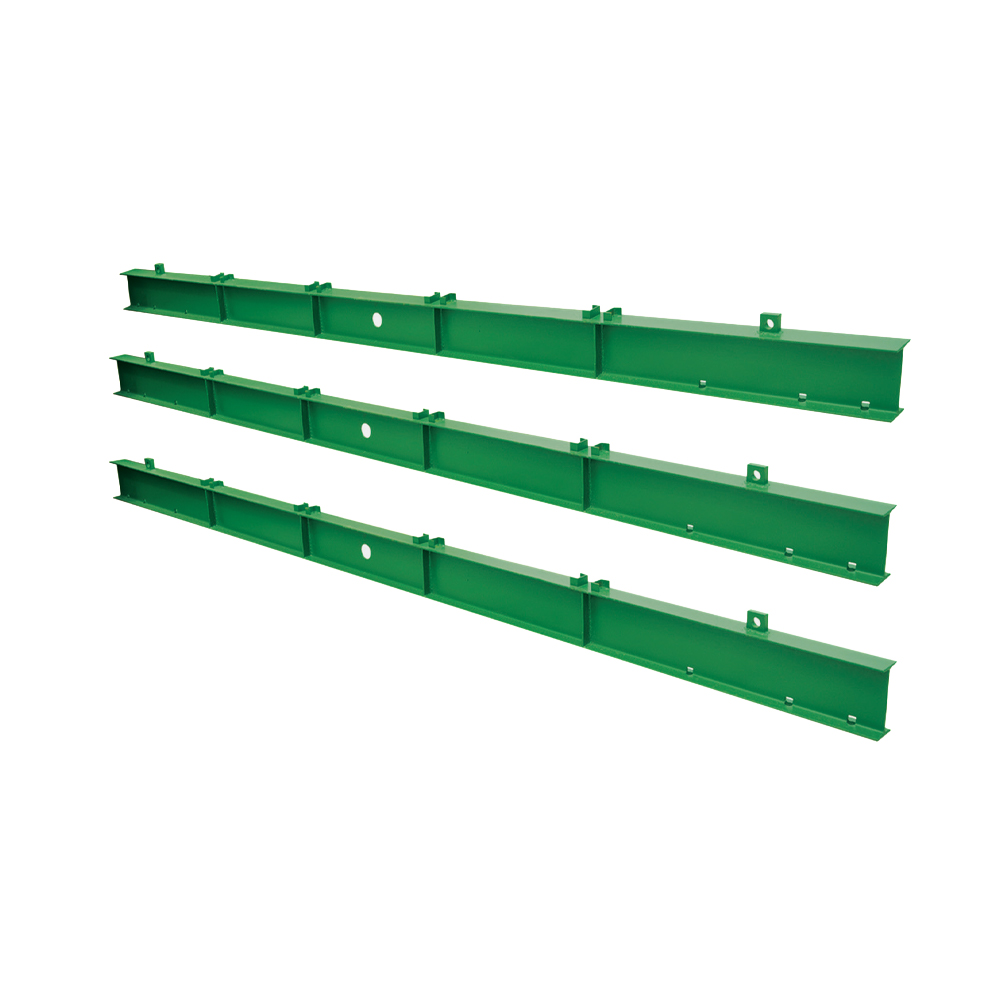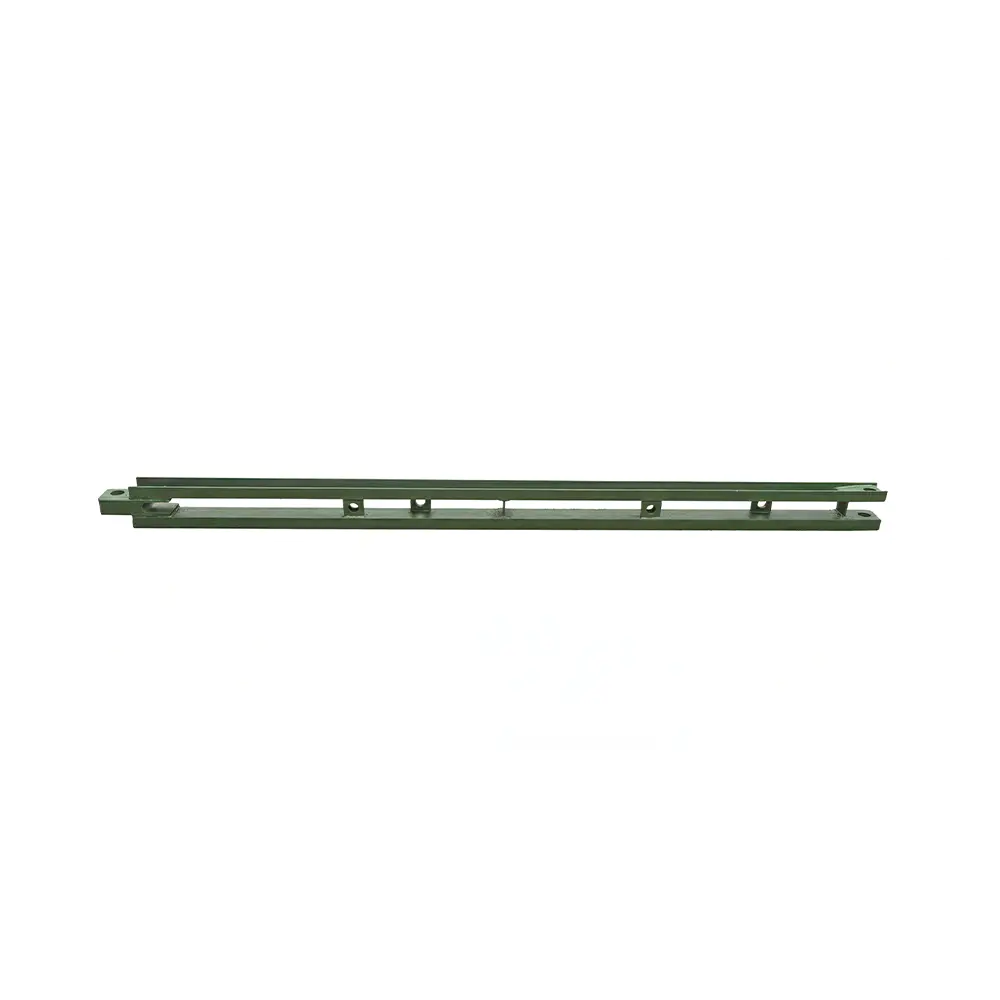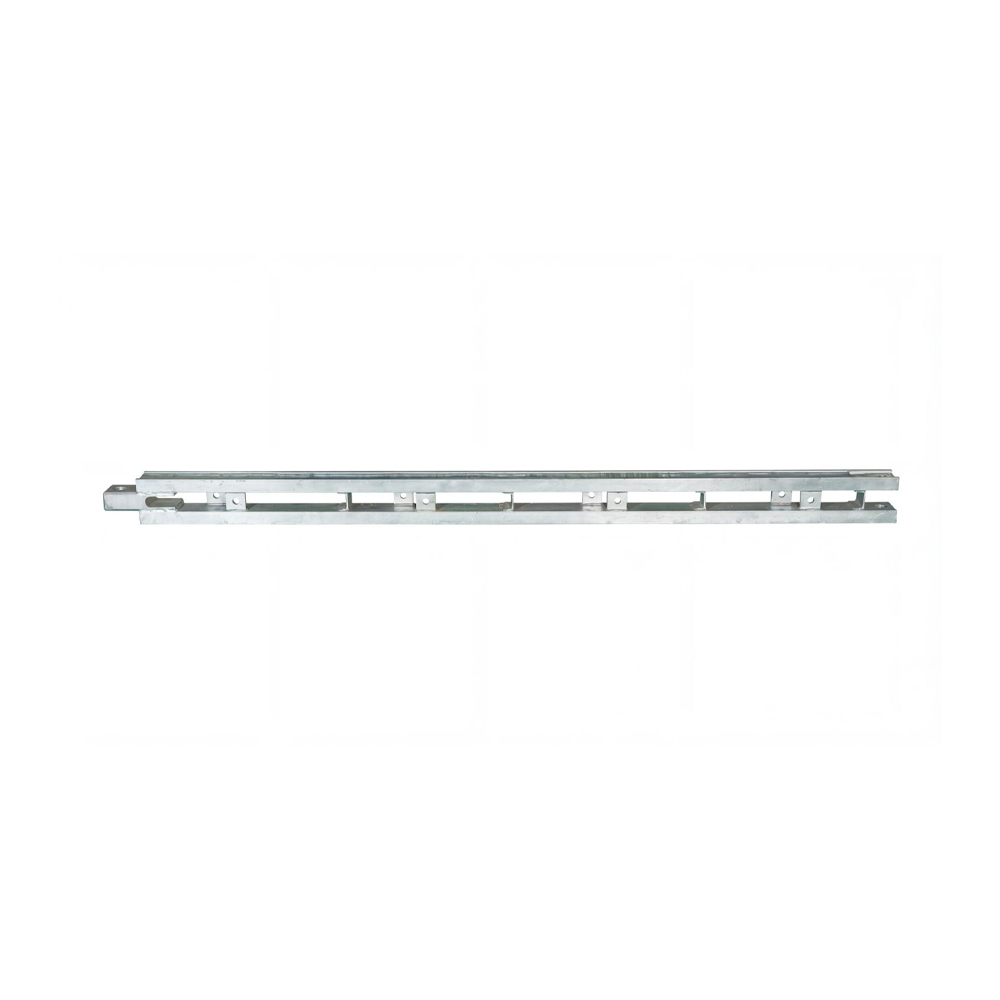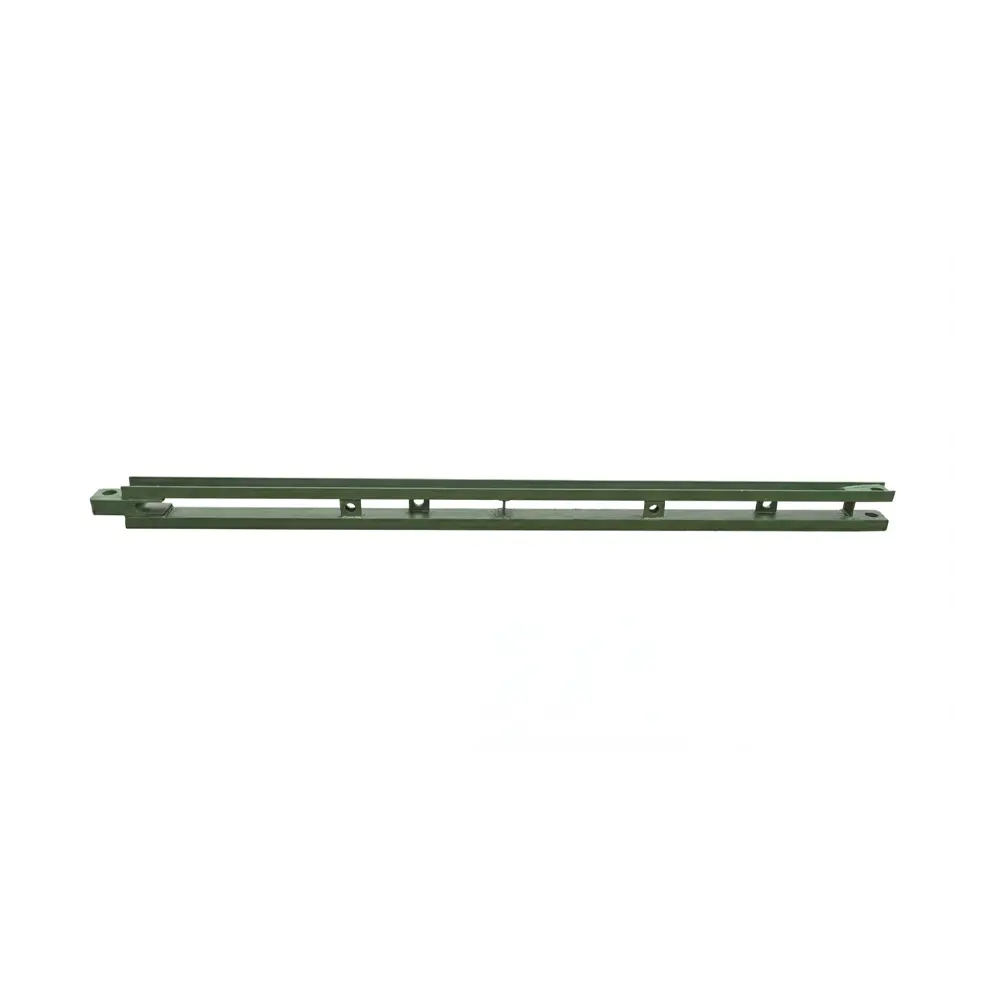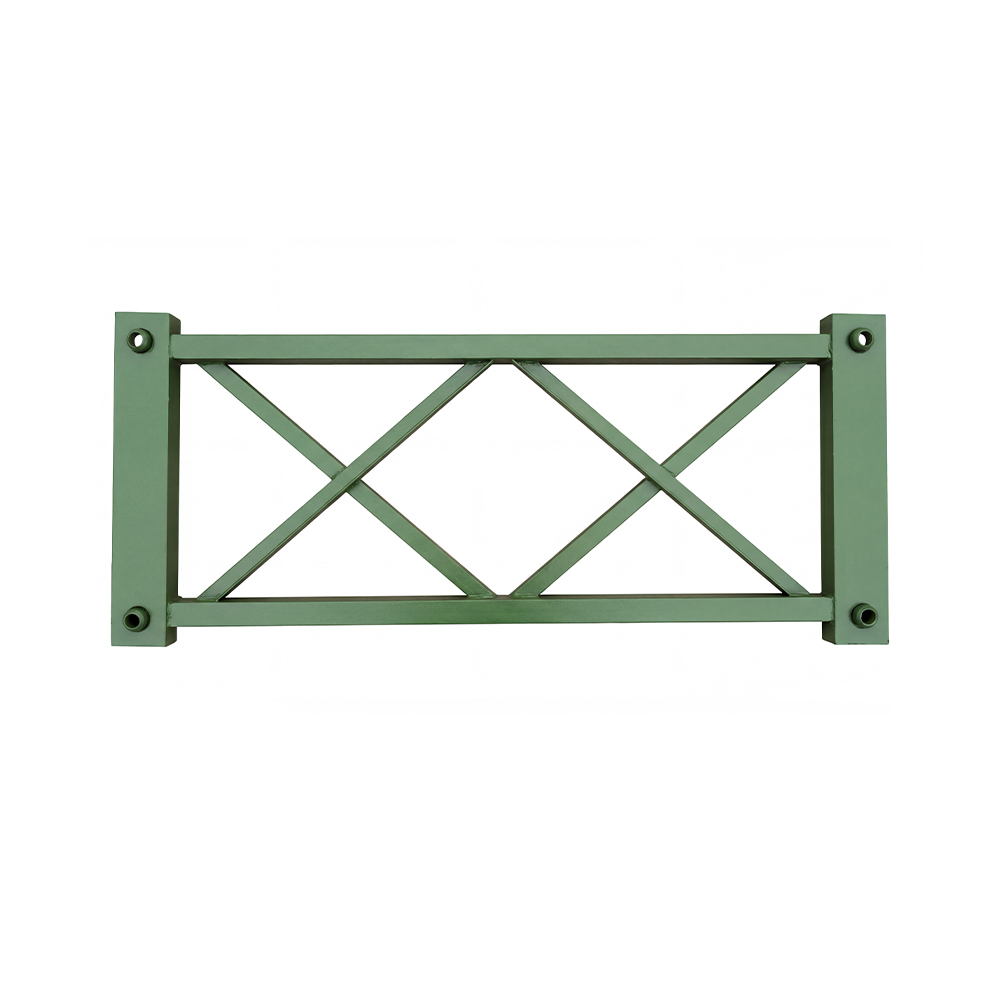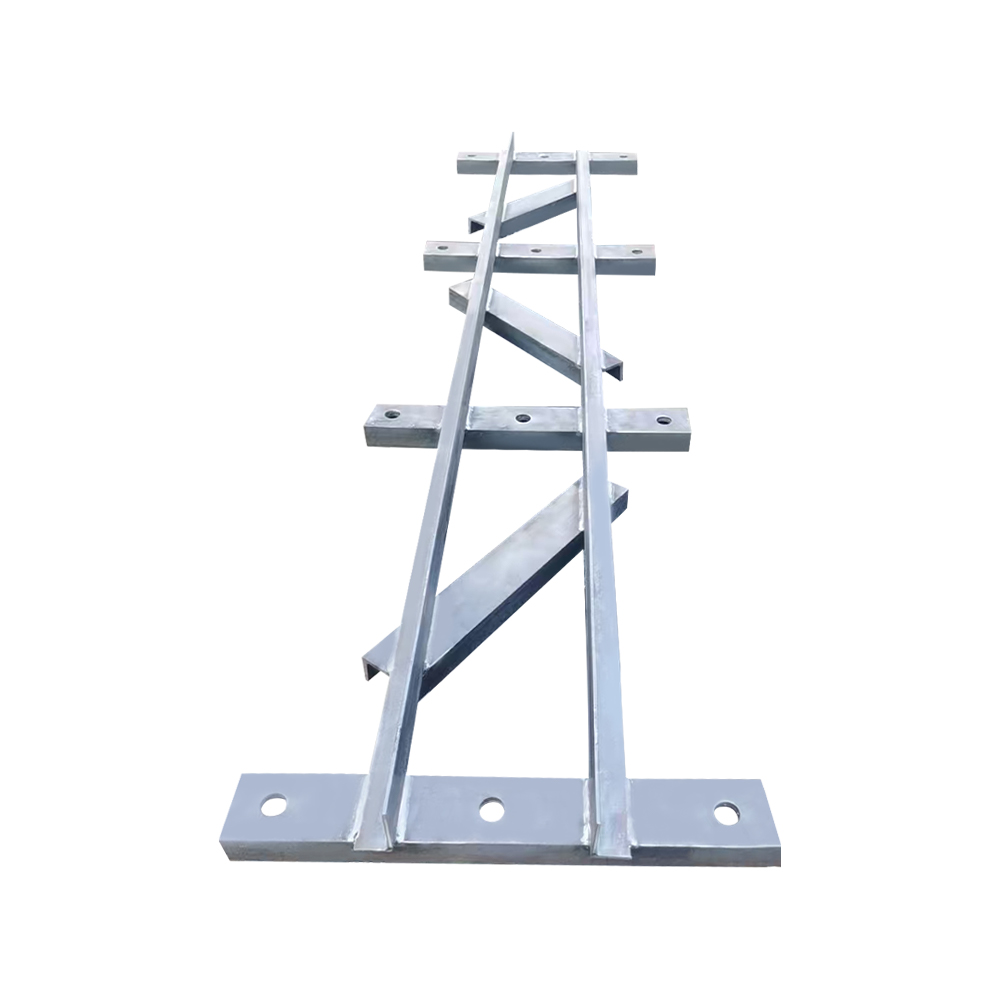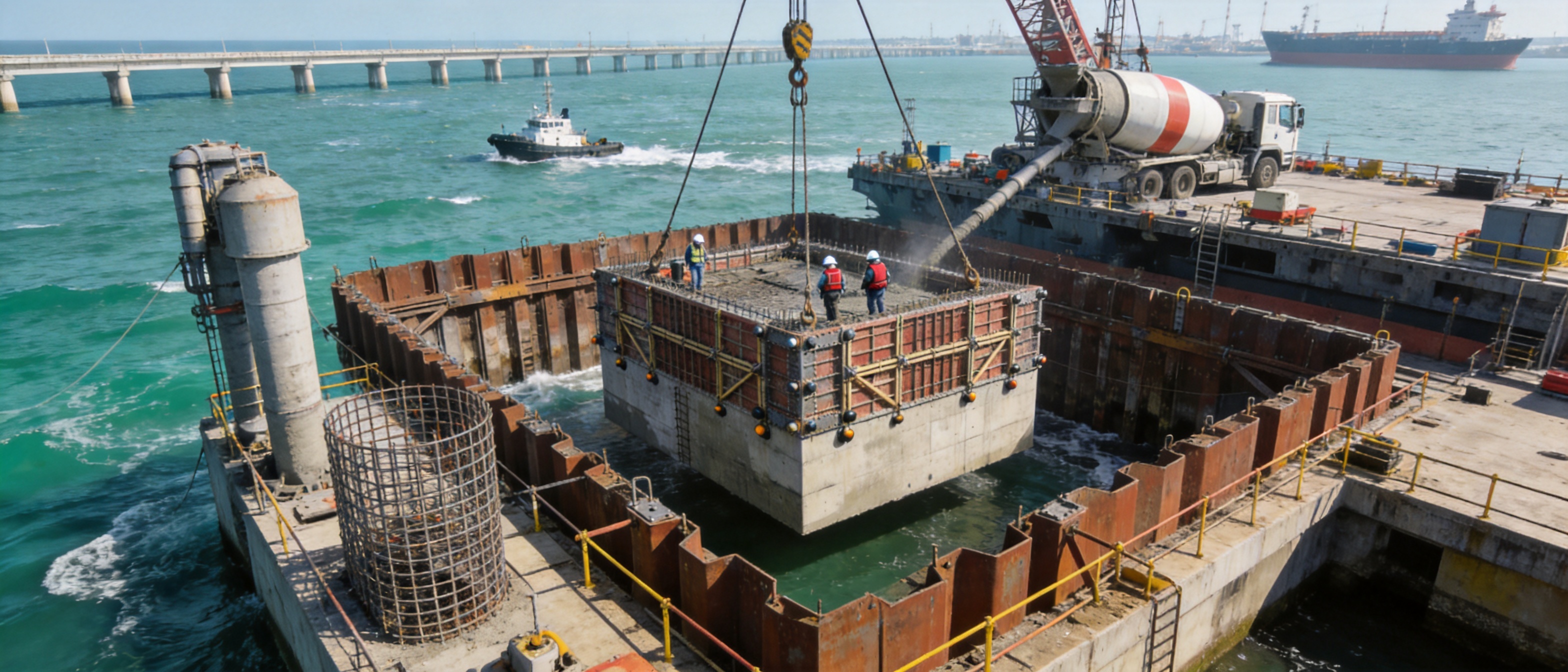
Caisson construction is one of the most demanding activities in civil and marine engineering. A caisson may be prefabricated on land, transported by water, installed in a harbor, sunk to a designed elevation, or used as a permanent structural element in a bridge foundation, breakwater, quay wall, offshore facility, or other underwater project. Throughout these operations, formwork must provide accurate geometry, high structural strength, dependable sealing, and sufficient durability to withstand water, pressure, corrosion, and repeated handling.
Caisson formwork is specially engineered to meet these requirements. Unlike ordinary construction formwork intended for dry-site concrete work, caisson formwork must perform in environments where seawater, tides, waves, splash zones, hydrostatic pressure, and restricted access create additional risks. Its design must support concrete placement while limiting water penetration and maintaining dimensional stability. It must also allow practical assembly, inspection, lifting, stripping, transportation, and reuse.
Advanced caisson formwork combines robust steel fabrication, marine-compatible materials, reinforced connections, carefully planned sealing details, and project-specific engineering. When these features are integrated correctly, the formwork helps contractors achieve accurate caisson structures, reduce construction interruptions, and improve the long-term reliability of underwater concrete works.
Zhenjiang Jinhao Road & Bridge Supporting Engineering Co., Ltd. provides caisson formwork as part of its bridge steel formwork and engineered steel structure product range. With experience in steel fabrication, bridge systems, pier formwork, hanging baskets, launching gantries, and related construction equipment, the company can support caisson projects from design planning through fabrication and technical service.
Understanding Caisson Formwork
A caisson is a large structural unit used in water-related construction. Depending on the project, it may be a hollow or solid reinforced concrete structure, a precast unit, a temporary working chamber, a foundation component, or a permanent part of a marine facility. Caissons are used in port construction, bridge foundations, offshore structures, seawalls, breakwaters, submerged foundations, and other applications where conventional open excavation is difficult or impossible.
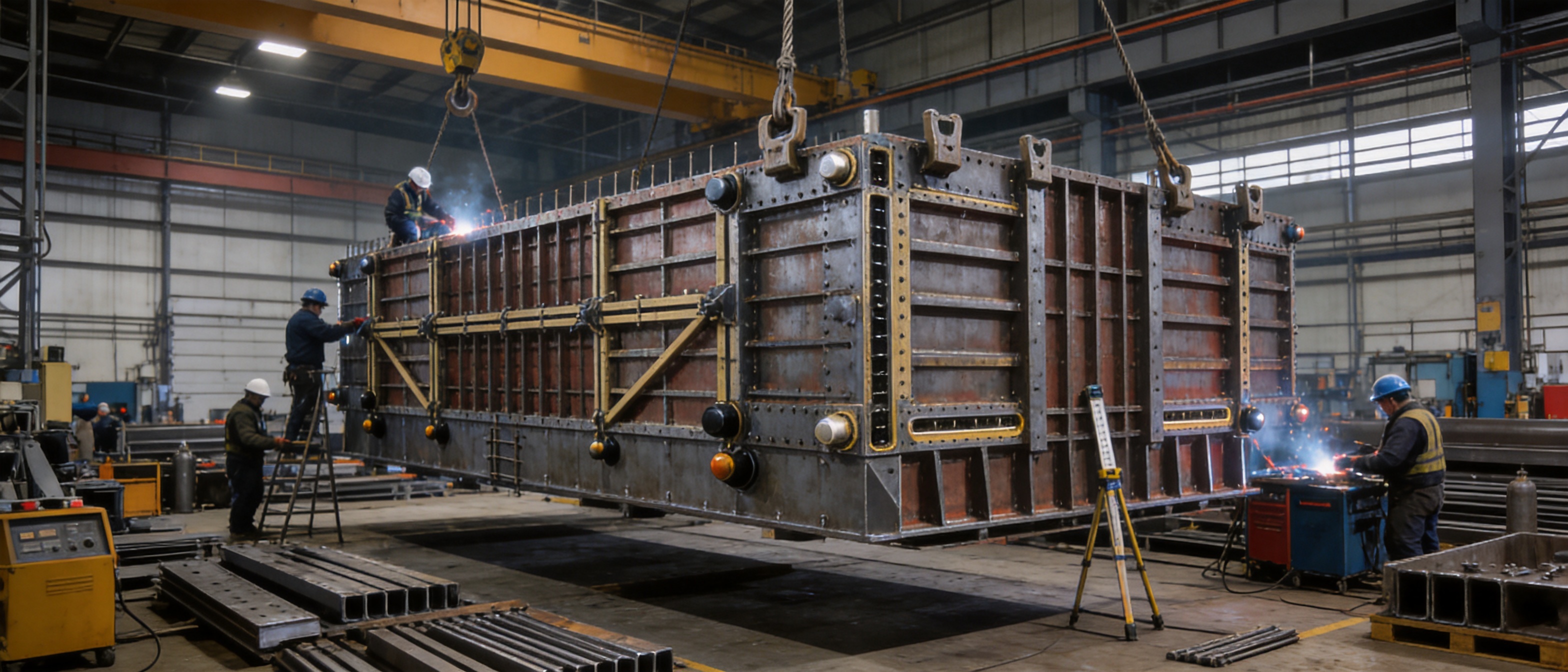
Caisson formwork is the temporary or semi-reusable mold system used to shape the concrete caisson. It may consist of external panels, internal panels, bulkheads, corner units, access components, stiffeners, walers, support frames, sealing components, lifting points, and connecting hardware. The exact configuration depends on whether the caisson is cast on land, fabricated in a dry dock, assembled on a barge, or concreted after partial immersion.
The formwork must maintain the required caisson dimensions during concrete placement. It must resist the lateral pressure of fresh concrete, forces from vibration, wind and handling loads, buoyancy-related effects, and possible hydrostatic pressure. If the structure is built in a tidal or submerged environment, the formwork may also need to limit water movement and prevent the loss of cement paste or fine particles.
Good caisson formwork is therefore more than a set of flat steel plates. It is a coordinated structural system that combines geometry control, load resistance, water management, safe access, and efficient construction sequencing.
Why Marine Construction Requires Specialized Formwork
Marine construction exposes equipment to conditions that are more severe than those found on ordinary land-based projects. Saltwater can accelerate corrosion on unprotected steel. Tidal changes can alter water levels and external pressure during a single working shift. Wave action can create movement and vibration. Seawater immersion can affect connections, seals, coatings, and lifting components. Limited visibility and difficult access can make inspection and adjustment more complicated.
Concrete placement in a caisson also requires careful control. Fresh concrete generates significant lateral pressure, especially when placed rapidly or when high-slump mixtures are used. If the formwork is not sufficiently stiff, panels can deflect, joints can open, and the final caisson may fall outside the required tolerance. In underwater or wet conditions, leakage can cause cement washout, voids, honeycombing, or uneven surfaces.
A specialized formwork system addresses these risks through reinforced panel construction, strong load-transfer paths, controlled joint details, durable surface treatment, and project-specific layout. The system must be designed for the actual dimensions, concrete mix, placement rate, water depth, handling method, and expected reuse cycle.
Core Advantages of Caisson Formwork
High Structural Strength
The primary advantage of caisson formwork is its ability to withstand demanding construction loads. Heavy-duty steel panels and reinforced frames can be designed to resist the pressure of fresh concrete without excessive deformation. Stiffeners, walers, ribs, and strong connection points distribute loads across the formwork and transfer them safely to supports or temporary foundations.
High strength is especially important for large caissons. As panel dimensions increase, unsupported areas become more vulnerable to deflection. A properly engineered system uses an appropriate combination of plate thickness, stiffener spacing, frame layout, tie arrangements, and bracing. This allows the formwork to maintain shape while keeping the system practical to assemble and handle.
Compared with lightweight formwork designed for small land-based elements, heavy-duty caisson formwork provides a more reliable margin of safety in large-volume concrete applications. It is suitable for repeated use where the formwork must preserve its geometry over multiple casting cycles.
Resistance to Water Penetration
Water control is a defining requirement for caisson construction. Formwork panels must be joined so that water movement and concrete leakage are minimized. Properly designed panel joints, reinforced connection zones, sealing strips, gasket arrangements, and closure details help maintain the integrity of the mold during casting.
Effective water resistance helps prevent cement paste from escaping through panel gaps. It also reduces the risk of unwanted water entering the casting area before or during concrete placement. This is particularly valuable when the project involves tidal fluctuations, wet working platforms, or underwater concreting procedures.
Water-resistant formwork does not eliminate the need for a complete marine construction plan. Pumping, dewatering, concrete mix design, tremie placement, water-stop systems, and inspection remain important. However, well-designed formwork provides a strong foundation for controlling these factors.
Corrosion Resistance in Marine Environments
Seawater contains salts and other substances that can accelerate corrosion. Caisson formwork intended for marine use should therefore use appropriate steel grades, protective coatings, surface preparation, drainage details, and maintenance procedures. Areas around bolt holes, welds, corners, lifting lugs, and exposed edges deserve particular attention because they may be vulnerable to coating damage or water retention.
Marine-compatible materials and protective treatment extend the service life of the formwork. They also help maintain the reliability of connections and reduce the frequency of repair during a project. When the formwork is reused at multiple sites, corrosion resistance becomes even more valuable because the system may be exposed to repeated cycles of saltwater contact, cleaning, storage, and transport.
Dimensional Accuracy
Caisson dimensions directly affect installation, alignment, structural performance, and connection with adjoining components. Small dimensional errors can become significant when large units must be positioned within tight tolerances or connected to piles, foundation slabs, bridge elements, or quay structures.
Steel formwork can be fabricated with accurately controlled dimensions, consistent panel geometry, and precise connection locations. Modern fabrication methods allow manufacturers to check cutting, drilling, welding, assembly, and final geometry before delivery. This quality control reduces the need for extensive adjustment at the construction site.
Accurate formwork also improves the quality of finished concrete surfaces. Properly aligned panels reduce uneven edges, unexpected offsets, excessive grinding, and remedial work. For caisson projects requiring a clean external profile or precise internal chamber dimensions, this benefit can have a direct impact on project efficiency.
Adaptability to Project Requirements
Caissons vary widely in shape and size. Some are rectangular, while others include tapered walls, internal chambers, curved surfaces, sloped faces, openings, ledges, or integrated structural details. A modular formwork system can be configured for different dimensions while retaining standardized connection concepts and reusable components.
Customized steel panels can be produced for unusual profiles or large single pours. Modular components can be combined with special corner pieces, bulkheads, access frames, and internal support systems. This approach gives contractors flexibility without requiring an entirely new construction method for every project.
Adaptability is also useful when project conditions change. If a casting sequence is modified, the system may be reconfigured to accommodate revised pour lengths, construction joints, lifting points, or access requirements. Final suitability must always be confirmed through engineering review, but a flexible base system can reduce redesign time.
Efficient Assembly and Reuse
Caisson formwork is typically designed for practical site assembly. Panels can be connected using bolts, pins, clamps, or other engineered components, depending on the application. Standardized interfaces make it easier to identify parts, organize transportation, and repeat the assembly sequence.
Reusable formwork reduces the need to fabricate a new mold for each casting cycle. This can lower material consumption, shorten preparation time, and improve cost control. Reuse is particularly advantageous for projects involving multiple similar caissons, repeated bridge foundation units, or standardized marine structures.
Efficiency also depends on stripping and cleaning. Surfaces should be accessible for inspection and maintenance, while connection points should allow controlled disassembly without unnecessary damage. A well-planned system supports a complete cycle from assembly and alignment to casting, curing, stripping, cleaning, storage, and reassembly.
Design Features of a High-Performance Caisson Formwork System
Heavy-Duty Panel Construction
Panel construction begins with the selection of suitable steel plates, frames, ribs, and edge members. The panel must be strong enough for the intended concrete pressure and handling loads while remaining practical to fabricate and lift. Excessive weight can make installation difficult, whereas insufficient stiffness can cause distortion or joint failure.
Engineering teams normally evaluate the panel as part of the complete formwork system rather than as an isolated component. Load paths must be considered from the concrete-facing skin through stiffeners, walers, ties, brackets, supports, and the foundation or working platform. This integrated approach helps prevent weak points and localized overstress.
Reinforced Corners and Connection Zones
Corners often receive concentrated loads and are exposed to impact during handling. They also influence the watertightness and final geometry of the caisson. Reinforced corner sections, accurately fitted plates, and suitable sealing details help preserve alignment at these critical locations.
Connection zones should be designed for repeated assembly and disassembly where reuse is expected. Bolt holes, access openings, and splice plates must be located so that workers can install fasteners safely and inspect them after tightening. Strong connections make the formwork more stable and reduce the risk of joint movement during concrete placement.
Sealing and Joint Management
Panel joints should be planned according to the water conditions, concrete placement method, and required surface quality. Depending on the design, joints may use compressible seals, gaskets, water-resistant strips, welded closures, or carefully fitted steel interfaces. The selected arrangement must be compatible with cleaning, stripping, and repeated use.
Joint design should also account for thermal movement, fabrication tolerances, surface irregularities, and site assembly conditions. A seal that performs well in a dry workshop may require additional protection or compression control when used in a tidal environment. For this reason, sealing details should be reviewed together with the full construction method.
Internal Supports and Bracing
Large caissons may require internal walers, braces, frames, ties, or temporary support towers to control panel movement. These components must provide stiffness without obstructing reinforcement placement, concrete flow, vibration, inspection, or later removal.
Internal supports should be arranged to keep working spaces accessible. Where the caisson includes internal chambers or permanent walls, the temporary formwork may need to be coordinated with reinforcement cages, embedded items, access shafts, ducts, and lifting equipment.
Lifting and Handling Provisions
Caisson formwork is frequently moved by crane, gantry, barge crane, or other lifting equipment. Dedicated lifting lugs, spreader connections, and handling points should be designed for the actual weight and center of gravity of each panel or assembled module.
Safe lifting requires more than simply adding lifting eyes. The load path from the lifting point through the frame and panel must be checked. Lifting angles, sling arrangements, temporary bracing, wind exposure, and possible impact during positioning should be considered. Clear identification of lifting points and panel weights also improves site safety.
Access and Inspection Arrangements
Marine projects often have restricted access, making routine inspection more difficult. Walkways, ladders, platforms, handrails, inspection openings, and working clearances can be incorporated where appropriate. These features help workers check connections, seals, reinforcement placement, concrete flow, and surface conditions.
Access components must be coordinated with the construction sequence. They should not interfere with cranes, concrete pumps, tremie pipes, reinforcement cages, or stripping operations. Temporary access systems should also be assessed for stability and corrosion exposure.
Comparison with Conventional Formwork Solutions
Conventional timber formwork can be economical for small or simple concrete elements, but it may not provide the dimensional consistency, water resistance, or durability needed for large marine caissons. Timber can absorb moisture, change shape, deteriorate after repeated use, and require significant site modification. It may also be difficult to maintain accurate geometry over a large panel area.
Lightweight modular plastic or aluminum systems may offer quick handling, but they are not always suitable for the high pressures and heavy-duty conditions associated with large caissons. Their performance depends on the specific design, and additional support may be needed for large pours or complex underwater applications.
Ordinary steel formwork can provide strength, but not every steel system is designed for seawater exposure or water-sensitive construction. Marine caisson formwork distinguishes itself through the combined use of heavy-duty structural design, protective treatment, reinforced connections, water-control details, and project-specific engineering.
The most important difference is not simply the material. It is the integration of material selection, fabrication accuracy, load analysis, sealing, corrosion protection, handling design, and construction planning. A well-integrated system can offer better reliability than a basic formwork arrangement assembled without marine-specific considerations.
| Evaluation Factor | Caisson Formwork | Basic Timber Formwork | General Lightweight Formwork |
|---|
| Marine environment suitability | Designed for water, salt spray, tides, and immersion-related exposure | Limited unless specially protected and carefully maintained | Dependent on material and project conditions |
| Structural capacity | High capacity through steel panels, stiffeners, frames, and engineered supports | Suitable mainly for smaller or less demanding pours | May require additional bracing for large caissons |
| Dimensional stability | High when accurately fabricated and properly assembled | Can change with moisture, wear, and repeated use | Generally consistent, but system capacity varies |
| Water control | Uses planned joints, seals, gaskets, and reinforced interfaces | Often depends on field-applied sealing and workmanship | Depends on panel and connection design |
| Reuse potential | High when maintained, cleaned, and handled correctly | Usually lower after repeated exposure and modification | Often high for compatible project sizes |
| Customization | Can be fabricated for special profiles, chambers, openings, and large dimensions | Flexible on site but less consistent for complex high-load applications | Best for standardized geometries |
Manufacturing Process for Caisson Formwork
Project Review and Engineering Planning
Manufacturing begins with a review of the caisson geometry, concrete placement sequence, water conditions, lifting method, expected loads, and reuse requirements. Drawings and technical information are examined to identify external dimensions, internal chambers, openings, chamfers, construction joints, embedded items, and access requirements.
The manufacturer should clarify whether the formwork will be used for dry casting, wet casting, tidal construction, underwater concreting, or a combination of these methods. The anticipated concrete type, pour rate, temperature, vibration method, and curing sequence can influence panel design and support requirements.
At this stage, the project team also develops an assembly and stripping plan. The objective is to ensure that the formwork can be fabricated, transported, erected, aligned, inspected, and removed in a logical sequence. Early planning reduces the risk of producing panels that are technically strong but difficult to install or reuse.
Structural Design and Load Analysis
After the project requirements are established, engineers develop the formwork layout and structural details. The design may include panel thickness, stiffener arrangement, waler spacing, tie locations, support frames, corner reinforcement, lifting points, and temporary bracing.
Loads considered may include fresh concrete pressure, hydrostatic pressure, water movement, wind, impact during handling, self-weight, construction traffic, vibration, and temporary eccentricity. The design should also consider the condition of the formwork during assembly, when some components may not yet be fully connected.
Where the caisson includes large internal spaces, the formwork arrangement must be coordinated with reinforcement and concrete placement. Design reviews help identify potential clashes before fabrication begins. This reduces rework and improves the efficiency of site installation.
Material Preparation and Cutting
Steel plates, profiles, stiffeners, frames, and connection components are prepared according to approved drawings. Accurate cutting is important because panel dimensions and edge alignment affect both final concrete geometry and joint performance.
Material identification and traceability support quality management. Plates and structural sections should be checked for dimensions, visible defects, and suitability for the intended fabrication process. Cut edges may require cleaning, grinding, or preparation before welding and assembly.
Welding and Frame Assembly
Welding joins the panel skin, stiffeners, frames, brackets, and reinforcement components into a unified structure. Controlled welding sequences help reduce distortion and maintain dimensional accuracy. Welds in highly loaded or water-sensitive areas require particular attention, including corners, lifting points, support brackets, and connection interfaces.
Frame assembly is performed using jigs, temporary fixtures, measuring tools, and alignment procedures. Proper fixturing helps hold components in position while welding and reduces cumulative tolerances. For large panels, staged assembly may be used to maintain control over flatness, squareness, and overall dimensions.
After welding, surfaces may be inspected for visible defects, excessive spatter, undercut, distortion, or incomplete areas. Additional inspection methods may be specified according to project requirements and applicable standards.
Machining, Drilling, and Connection Preparation
Connection holes, slots, access openings, lifting points, and interface details are produced with controlled equipment. Accurate hole positions are important because misalignment can delay assembly or force workers to modify components in the field.
Where panels are designed for repeated use, connection areas should be reinforced against wear. Bolt holes and contact surfaces must remain functional after multiple assembly cycles. Edges and openings should be treated to minimize sharp projections and reduce coating damage.
Trial Assembly and Dimensional Inspection
A trial assembly can be carried out before shipment, especially for complex or large formwork systems. Panels, corner sections, bulkheads, walers, and support members are assembled to verify fit, connection accessibility, alignment, and overall dimensions.
Dimensional inspection may include checking panel length and width, diagonals, flatness, corner angles, hole locations, frame spacing, and lifting-point positions. Trial assembly helps identify conflicts between adjacent components and confirms that the intended erection sequence is practical.
For customized caisson formwork, this stage provides valuable assurance that the manufactured system corresponds to the design model. Any necessary adjustment can be made in the factory rather than under difficult marine site conditions.
Surface Preparation and Protective Treatment
Steel surfaces are prepared before protective coating or other treatment. Preparation may include removal of oil, rust, mill scale, welding residue, dust, and other contaminants. Proper surface preparation supports coating adhesion and improves resistance to water and salt exposure.
Coating systems should be selected for the intended service environment, handling requirements, and maintenance plan. Edges, welds, corners, lifting points, and connection areas may require special attention because these locations are more likely to experience mechanical damage or coating discontinuity.
Protective treatment does not replace maintenance. After use, the formwork should be cleaned, inspected, dried where practical, and repaired if coating damage is found. A clear maintenance routine helps preserve performance over repeated casting cycles.
Final Inspection, Packing, and Delivery
Before delivery, the formwork is checked against drawings, part lists, and quality records. Components should be marked to support efficient site identification. Packing must protect machined surfaces, coated areas, seals, and connection hardware during transport.
Large panels may be shipped individually or in manageable modules. The transport plan should account for dimensions, weight, lifting points, loading stability, and site unloading equipment. Clear packing lists help the contractor confirm that all panels, fasteners, brackets, seals, and accessories have arrived.
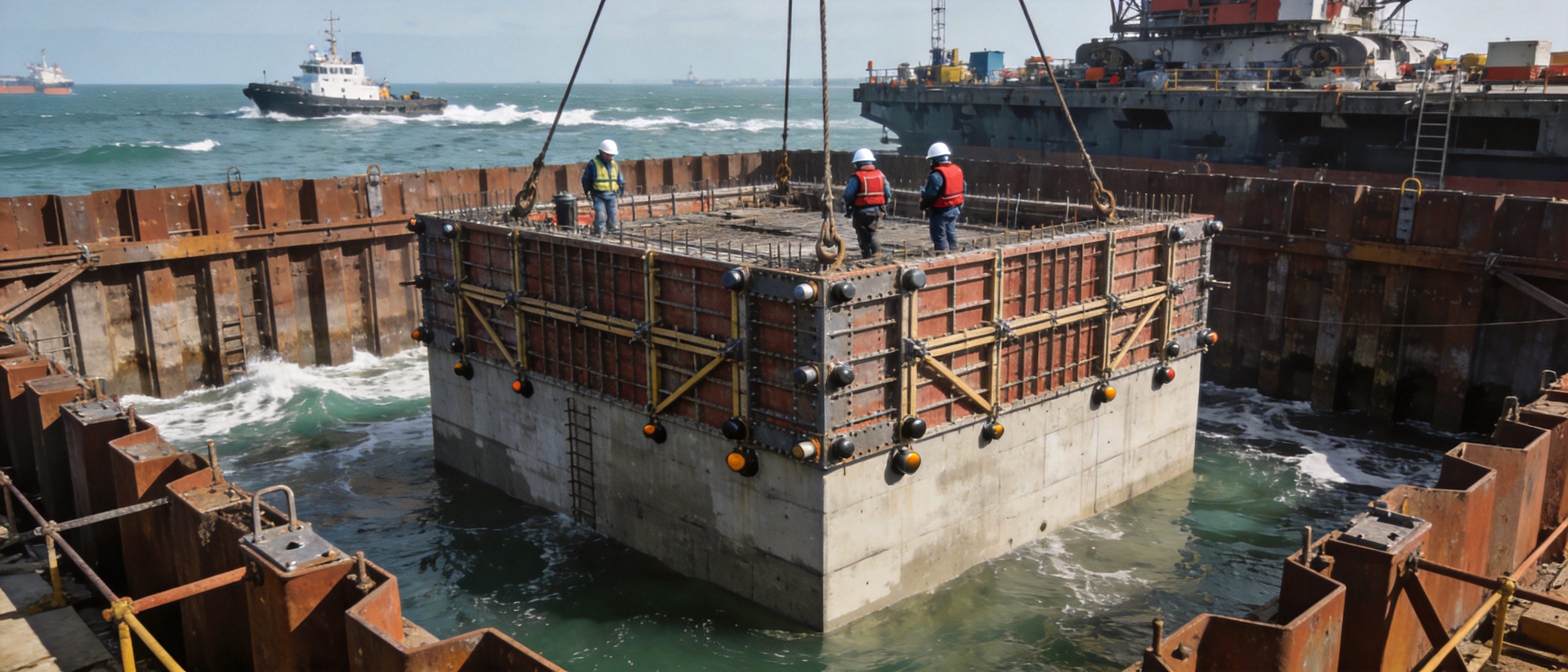
Manufacturing Strengths and Engineering Capabilities
Zhenjiang Jinhao Road & Bridge Supporting Engineering Co., Ltd. has developed from a company focused on construction, industrial, and metal processing materials into a comprehensive enterprise serving bridge and infrastructure projects. Its business covers design, manufacturing, erection, and leasing of Bailey bridges, bridge launching gantries, hanging baskets, pier formwork, and various steel formwork products.
This broader product experience is relevant to caisson formwork because many of the same capabilities are required: structural steel design, plate and profile fabrication, connection engineering, dimensional control, heavy component handling, surface treatment, and field installation support.
Integrated Design and Fabrication
An integrated design and fabrication approach allows technical decisions to be evaluated against real manufacturing conditions. Panel sizes, welding access, stiffener arrangements, connection details, transport limits, and lifting methods can be considered together rather than separately.
This practical approach helps create formwork that is not only structurally capable but also manufacturable and usable. It can reduce unnecessary complexity, improve component standardization, and support more efficient assembly at the project site.
Experience with Engineered Steel Structures
The company’s product range includes Bailey steel bridges, Type 321 Bailey truss sections, HD200 and Type 200 Bailey truss sections, triangular and diamond hanging baskets, bridge steel formwork, and related engineered steel structures. These products require attention to load-bearing performance, component interchangeability, fabrication accuracy, and site erection.
Experience with modular bridge systems can support the development of caisson formwork with standardized parts and clear assembly logic. Experience with bridge steel formwork can also help address the practical needs of concrete construction, including panel alignment, surface quality, reinforcement clearance, stripping, and reuse.
Customization for Different Projects
Marine projects rarely have identical requirements. The company can review project information and develop customized fabrication for specific caisson dimensions, concrete sequences, internal configurations, and handling methods. Customization may involve panel geometry, corner details, bulkheads, support frames, lifting points, access arrangements, and sealing interfaces.
Customization should be based on a clear technical exchange with the contractor, designer, or project owner. Drawings, site conditions, construction schedules, and applicable standards should be reviewed before final production. This process helps ensure that the formwork is appropriate for the actual project rather than based on assumptions.
Technical Support and System Planning
Caisson formwork performance depends on the entire construction system. Technical support may include formwork layout, component identification, erection sequence, alignment procedures, stripping recommendations, maintenance guidance, and coordination with concrete placement.
System planning is especially valuable for projects involving multiple caissons or complex marine access. A coordinated plan can reduce crane movements, organize temporary storage, optimize panel reuse, and identify inspection points before each pour.
Quality Management
Quality management should cover the complete process from design review through final inspection. It includes material checks, welding control, dimensional inspection, connection verification, coating inspection, packing, and documentation.
Consistent quality is important because a small defect in a panel or joint may be repeated across several caissons. Factory inspection and trial assembly can prevent such issues from becoming site problems. A disciplined quality process also helps contractors plan installation with greater confidence.
Application Areas
Port and Harbor Construction
Ports and harbors often require quay walls, breakwaters, berth foundations, submerged blocks, and marine retaining structures. Caisson formwork can be used to produce large concrete units with controlled external dimensions and robust surfaces suitable for installation in tidal or seawater conditions.
For port construction, the formwork must often support repetitive production and efficient handling. Standardized panels with special end sections or corner elements can help produce multiple units while maintaining consistent quality.
Cross-Sea Bridges
Cross-sea bridges involve foundations, piers, approach structures, and temporary works exposed to waves, currents, and saltwater. Caisson formwork can support the construction of bridge foundation components or large underwater concrete elements where dry-site formwork is not practical.
Bridge projects also require close coordination with reinforcement, embedded components, pile arrangements, temporary platforms, lifting systems, and construction vessels. A customized formwork system can be designed around these interfaces.
Offshore Engineering
Offshore engineering projects may include energy facilities, marine platforms, artificial islands, underwater protection structures, and other installations. These projects demand materials and construction systems capable of handling difficult access, transportation constraints, and harsh environmental exposure.
Caisson formwork can be adapted for prefabricated units or cast-in-place elements, subject to the project’s structural and installation method. Corrosion protection, lifting design, water management, and inspection access are particularly important in offshore applications.
Caisson Prefabrication
Prefabrication allows caissons to be produced in a controlled yard, dry dock, or sheltered construction area before transportation to the installation site. This can improve production consistency and reduce the amount of work required in open water.
For prefabrication, reusable formwork can support a sequence of repeated casts. The system should be designed for rapid turnover while allowing sufficient time for concrete curing, formwork stripping, cleaning, inspection, and preparation for the next unit.
Underwater Concreting
Underwater concreting requires careful control of concrete flow, water movement, cement washout, and placement continuity. Formwork must maintain its shape and limit leakage while allowing the selected placement method to operate effectively.
The formwork is one part of a larger underwater concreting system. Concrete mix design, tremie pipes, pumps, anti-washout measures, water-stop details, reinforcement arrangement, and inspection procedures must all be coordinated.
Installation and Site Use Recommendations
Before erection, the contractor should confirm that the foundation, working platform, temporary supports, and lifting equipment are ready. All components should be checked against the packing list, and damaged or missing parts should be reported before assembly.
Panels should be assembled on a stable and adequately prepared surface whenever possible. Connections should be installed according to the approved sequence, and alignment should be checked before final tightening. Temporary braces should remain in place until the permanent or final support arrangement is secure.
Seals and joint interfaces should be clean and free from debris. Damaged gaskets, sealing strips, or protective elements should be replaced before casting. Any field modification should be reviewed by the responsible technical team because unauthorized cutting or drilling can weaken the system or compromise watertightness.
Reinforcement placement should be checked against the formwork before concrete placement. Workers should confirm cover dimensions, embedded items, openings, access provisions, and clearance for concrete flow. Concrete should be placed at a controlled rate appropriate to the formwork design.
During casting, the formwork should be monitored for movement, unusual noise, leakage, excessive deflection, or connection loosening. If abnormal conditions are observed, placement should be paused and the cause investigated. After casting, the system should remain supported until the concrete has achieved the strength required for safe stripping.
Stripping should be performed in a controlled sequence. Excessive impact, prying against finished concrete, or lifting from unsuitable points can damage both the formwork and the caisson. Once removed, panels should be cleaned, inspected, repaired if necessary, and stored in a manner that prevents distortion and water accumulation.
Safety and Quality Considerations
Safety is central to marine formwork operations. Workers may operate near open water, on temporary platforms, around cranes, or inside restricted caisson spaces. The project should establish procedures for fall protection, life jackets where required, lifting operations, confined-space access, emergency response, weather monitoring, and communication between vessel and site crews.
Every lifting operation should use equipment with suitable capacity and inspected slings, shackles, spreaders, and lifting points. Panel weights and centers of gravity should be known. Workers should remain clear of suspended loads and avoid standing between moving panels and fixed structures.
Quality control should include inspection of formwork before each use. Important checkpoints include panel flatness, frame condition, welds, bolt holes, connection hardware, seals, coating damage, lifting points, and identification marks. Repeated reuse can gradually produce wear, so inspection should not be limited to the first casting cycle.
Concrete quality must also be controlled. Formwork cannot compensate for unsuitable concrete, poor placement, inadequate vibration, or insufficient curing. The formwork supplier, contractor, concrete supplier, and structural designer should coordinate their responsibilities before construction begins.
Maintenance and Service Life
Regular maintenance helps preserve the formwork’s structural and water-control performance. After each use, concrete residue should be removed without damaging the panel surface or protective coating. Cleaning methods should be selected according to the coating and steel condition.
Bolts, pins, clamps, hinges, lifting lugs, and other mechanical components should be inspected for deformation, corrosion, thread damage, and wear. Seals should be checked for cuts, permanent compression, hardening, and loss of elasticity. Damaged components should be replaced rather than reused when their performance is uncertain.
Storage is also important. Panels should be supported evenly to prevent distortion. They should be kept off the ground where possible, and drainage should be provided so that rainwater or seawater does not remain in pockets or connection areas. Protective covers may be used, but they should not trap condensation against the steel.
Coating repairs should be completed promptly after damage is identified. Weld repairs, structural modifications, or changes to lifting points should be performed only under appropriate technical control. Maintaining accurate records of inspection and repair can help determine when a panel should be refurbished or removed from service.
How to Select the Right Caisson Formwork
Selection should begin with the caisson’s geometry and construction method. The contractor should define whether the unit will be cast on land, in a dry dock, on a barge, within a temporary enclosure, or directly in water. The water depth, tidal range, current, wave exposure, and working platform should also be considered.
The expected concrete pressure and placement rate are essential design inputs. High-speed placement may require greater stiffness and stronger restraint than slow placement. Concrete temperature, mix consistency, vibration method, and pour height can also affect lateral pressure.
Handling and logistics should be evaluated at the same time. Panel size must match available cranes, transport routes, storage areas, and access conditions. Oversized modules may reduce assembly time but create lifting and transportation challenges. Smaller panels may be easier to handle but require more joints and assembly work.
Reuse requirements should influence material selection, connection design, coating, and maintenance planning. A formwork system for one casting cycle may be different from a system intended for dozens of caissons. The expected number of uses should be stated clearly during the quotation and design stages.
The supplier’s engineering and fabrication capabilities are also important. Contractors should review the supplier’s experience with bridge steel formwork, marine-compatible fabrication, customized steel structures, quality management, technical support, and site service. A supplier that can support the complete process may reduce coordination risks.
Project Evaluation Checklist
| Category | Questions to Confirm |
|---|
| Geometry | What are the external dimensions, internal chambers, corners, slopes, openings, and required tolerances? |
| Construction method | Will the caisson be cast on land, in a dry dock, on a barge, in a tidal area, or underwater? |
| Loads | What concrete pressure, hydrostatic pressure, wind, wave, vibration, and handling loads must the formwork resist? |
| Water control | What joint, gasket, seal, water-stop, and drainage arrangements are required? |
| Marine exposure | How long will the formwork contact seawater, salt spray, tides, or other corrosive media? |
| Handling | What cranes, lifting points, spreaders, transport vehicles, and storage areas are available? |
| Reuse | How many casting cycles are expected, and what cleaning and maintenance process will be used? |
| Technical support | Who will provide drawings, assembly instructions, inspection support, and site coordination? |
Why Choose a Specialized Steel Formwork Manufacturer
A specialized manufacturer can combine structural engineering with practical fabrication and construction knowledge. This is important because caisson formwork must be safe, accurate, durable, transportable, and efficient to assemble. Focusing on only one of these aspects may create problems elsewhere in the project.
For example, a very heavy panel may have excellent strength but be impractical for the available crane. A lightweight panel may be easy to handle but require excessive bracing. A watertight joint may be difficult to strip. A corrosion-resistant coating may be damaged by an unsuitable packing method. Integrated engineering helps balance these requirements.
Zhenjiang Jinhao’s experience across Bailey bridges, launching gantries, hanging baskets, bridge steel formwork, pier formwork, and engineered steel structures supports this type of integrated approach. Its capabilities include customized fabrication, design and system planning, technical support, erection, leasing, and quality management.
The company serves contractors, government organizations, and engineering companies with steel bridge and formwork solutions. Its manufacturing and service model is built around customer requirements, practical engineering, dependable quality, and long-term cooperation. For caisson formwork, these strengths can help clients develop a system suited to the actual marine environment and construction sequence.
Frequently Asked Questions
What is caisson formwork used for?
Caisson formwork is used to shape concrete caisson structures for ports, cross-sea bridges, offshore engineering, breakwaters, marine foundations, and underwater construction. It can support caisson prefabrication, wet-site casting, and selected underwater concreting applications.
How is caisson formwork different from ordinary bridge formwork?
Caisson formwork must address additional conditions such as water penetration, hydrostatic pressure, saltwater corrosion, tidal movement, wave action, and difficult access. It normally requires stronger sealing, marine-compatible protection, reinforced connections, and a construction plan adapted to marine operations.
Can caisson formwork be customized?
Yes. The system can be customized according to caisson dimensions, internal chambers, wall thickness, openings, corners, slopes, concrete placement sequence, lifting method, and expected reuse. Customized details should be finalized through engineering review and approved drawings.
Can the formwork be reused?
Yes. Steel caisson formwork is generally suitable for repeated use when it is correctly designed, handled, cleaned, inspected, and maintained. Reuse potential depends on the panel design, coating, number of casting cycles, exposure conditions, and maintenance procedures.
How does the formwork resist water penetration?
Water control is achieved through accurately fitted panels, reinforced joints, suitable gaskets or sealing strips, closure details, and proper assembly. The exact arrangement depends on the water conditions and concrete placement method. Formwork water resistance should be coordinated with dewatering, concrete mix, tremie, pumping, and water-stop measures.
What materials are used in caisson formwork?
Heavy-duty steel is commonly used for panels, frames, stiffeners, walers, brackets, and lifting components. Protective coatings and marine-compatible surface treatments may be applied to improve resistance to saltwater and corrosion. The specific material and coating system should be selected according to the project environment.
What information is needed for a quotation and design review?
Useful information includes caisson drawings, dimensions, concrete grade and placement rate, water depth, tidal range, marine exposure, casting location, handling equipment, lifting restrictions, expected number of uses, delivery location, and applicable design or quality standards.
Does caisson formwork eliminate the need for other underwater construction controls?
No. Formwork is one component of the construction system. The project still requires suitable concrete, reinforcement, water management, placement procedures, inspection, curing, lifting controls, and safety planning. Successful performance depends on coordination among all these elements.
Why is trial assembly valuable?
Trial assembly verifies panel fit, connection alignment, access, lifting arrangements, and overall dimensions before delivery. It can identify manufacturing or design issues in the factory, where corrections are generally easier and less costly than modifications at a marine construction site.
Can a supplier provide erection and technical support?
Technical support may include system planning, fabrication drawings, assembly guidance, component identification, inspection recommendations, and site coordination. The exact scope should be agreed during the project planning stage.
Conclusion
Caisson formwork is a critical tool for reliable marine and underwater concrete construction. Its performance depends on high structural strength, resistance to water penetration, corrosion protection, dimensional accuracy, secure connections, practical handling, and efficient reuse. These requirements are more demanding than those of ordinary land-based formwork and should be addressed through specialized design and manufacturing.
A well-engineered caisson formwork system helps contractors control concrete geometry, reduce leakage, improve construction efficiency, and manage the risks associated with saltwater, tides, hydrostatic pressure, and restricted access. Its value is particularly clear in port construction, cross-sea bridges, offshore engineering, caisson prefabrication, and underwater concreting.
Through capabilities in bridge steel formwork, Bailey bridge systems, launching gantries, hanging baskets, pier formwork, and related steel structures, Zhenjiang Jinhao Road & Bridge Supporting Engineering Co., Ltd. can provide a practical foundation for customized caisson formwork solutions. Its integrated services cover design planning, fabrication, erection, leasing, technical support, and quality management.
For contractors and engineering organizations, the best solution is one that matches the actual caisson geometry, concrete process, marine environment, lifting resources, and reuse plan. Early technical coordination with an experienced steel formwork manufacturer can improve reliability from the first drawing through final installation and repeated project use.
References
American Concrete Institute. Guide to Formwork for Concrete.
American Concrete Institute. Specifications for Structural Concrete and Concrete Construction.
British Standards Institution. Falsework and Formwork: Guidance and General Principles.
European Committee for Standardization. Execution of Concrete Structures.
International Organization for Standardization. Corrosion Protection of Steel Structures by Protective Paint Systems.
International Maritime Organization. Guidelines for Safety in Marine Construction and Related Operations.
Port and marine engineering practice guides covering caisson construction, underwater concrete placement, temporary works, lifting operations, and corrosion control.
Technical information supplied for the design, manufacture, erection, leasing, and quality management of bridge steel formwork and related engineered steel structures.


 Français
 Español
 عربى